How Many EV Chargers Can a Commercial Building Support
Most commercial owners ask the same thing when they start planning upgrades: how many EV chargers can a commercial building support without tripping breakers, upsetting tenants, or turning parking lots into an expensive science experiment. And that question matters, because the answer depends on your building’s electrical capacity, your site layout, and how future demand will grow.
At Kord Electric, we look at these details the way our team of field technicians and expert service staff would, calmly and thoroughly, because the goal is simple: reliable charging that works every day. So while others guess with a rough rule of thumb, we plan with real load math, smart placement, and a future ready approach you can stand behind. Now let’s walk through what the numbers actually mean.
What limits how many EV chargers a commercial site can carry
To understand how many ev chargers can commercial building support, we start with the electrical bottleneck. In most commercial and industrial facilities, the limiting factor is not the parking space. It is the service size, distribution equipment, and the available capacity in panels and feeders.
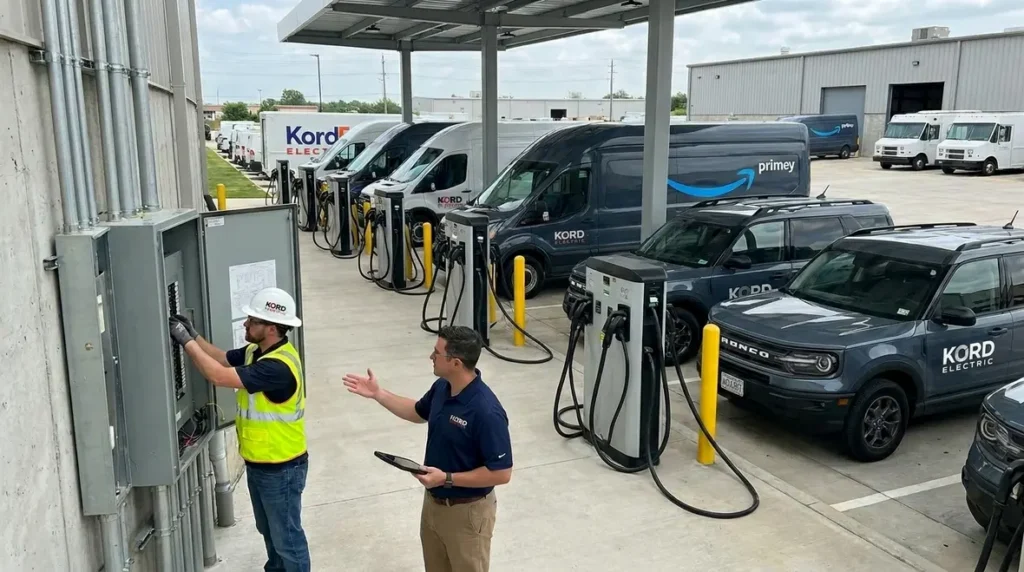
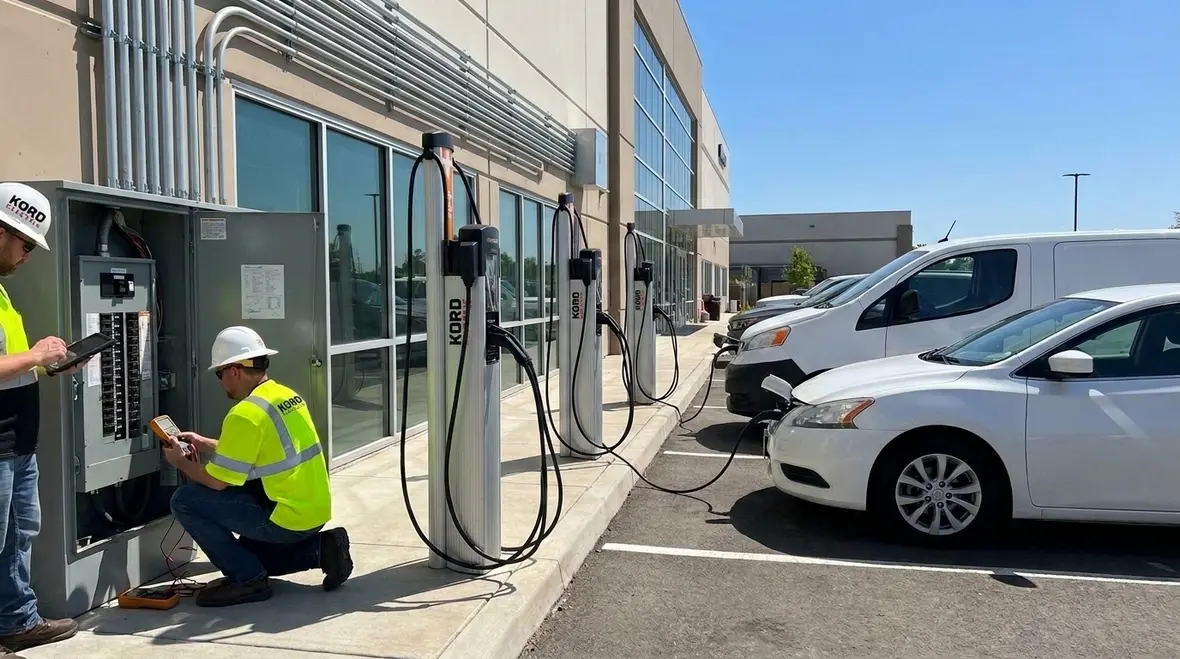
First, we evaluate the utility service and the building’s main switchgear. Then we consider what the building already uses at peak times. After that, we check the capacity in panels that would feed the chargers. If you ignore this step, you get the kind of surprise no one wants, like a pop quiz during the workday. You know, the kind where you only realize you forgot to study after you have already started answering.
Additionally, load behavior matters. Some tenants pull big power at certain hours. HVAC systems can swing usage hard. Elevators and pumps also create demand spikes. Therefore, we plan charger power based on the building’s real load profile, not just the nameplate rating.
For facility teams who want to see how this kind of capacity thinking scales across a property, it often helps to pair a charger capacity review with a broader commercial electrical load capacity assessment. That way, EV plans stay aligned with your building’s overall power strategy, not isolated from it.
Building electrical capacity: the real starting line
When our technicians review a site, they treat electrical capacity like the foundation of a bridge. If it is weak, everything above it becomes a risk. So we confirm:
- Service entrance size and available spare capacity
- Panel and feeder ratings for the locations where chargers will connect
- Short circuit and arc fault considerations where applicable
- Grounding and bonding to keep the system safe and stable
Next, we map the charging loads to the infrastructure. For commercial buildings, this often means balancing several charge points rather than building a one off “everything at max speed” fantasy. Most of the time, charging demand spreads across the day. However, peak overlap can happen, especially at offices with scheduled commuting, warehouses with shift changes, or mixed use logistics properties.
In other words, we build plans that reflect how people actually arrive. And while it is tempting to promise the highest number of ports possible, we prioritize stable operation. That is how we keep the lights on and the chargers ready.
For owners thinking several phases ahead, Kord Electric’s Commercial EV Charging Planning Guide: Scaling Infrastructure With Confidence ties this capacity work into long term charger rollout, so early design choices support future growth instead of limiting it.
How load management affects charger count and customer experience
Here is where things get interesting, and where many plans fall apart. A commercial site can often support more chargers than its raw electrical capacity suggests, but only when it uses proper load management.
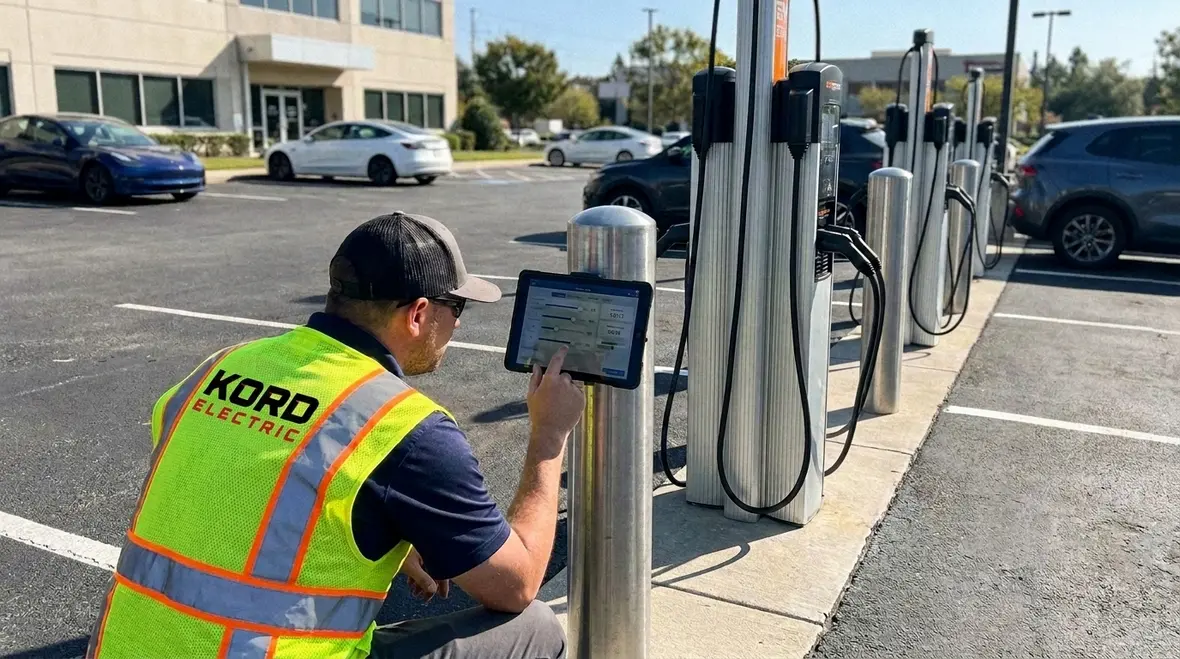
Load management coordinates power so chargers share available capacity. Instead of every unit pulling full demand at the same moment, the system distributes energy based on what the building can handle. As a result, the facility reduces the risk of tripping breakers and avoids expensive electrical upgrades that might not be necessary right away.
At Kord Electric, our expert service staff explains this concept with practical examples during planning calls. We do not just say “use load management.” We explain how smart distribution changes the total number of ports and how it improves uptime. Think of it like traffic control. If you let every car floor it at once, you get chaos. If you coordinate flow, the system moves smoothly, even during busy hours.
Additionally, we review how charging will be used. Fleet depots with predictable routes may benefit from different settings than retail centers where drivers come and go. Therefore, our design choices account for real behavior, not generic assumptions.
For teams ready to turn that managed strategy into concrete project steps, Kord Electric’s dedicated EV charging infrastructure planning for commercial sites guide walks through how load management, panel capacity, and field conditions come together in real installations.
Site layout, conduit runs, and the hidden costs nobody budgets for
Even when electrical capacity looks promising, the site layout can limit scalability. We often see plans that focus only on the electrical room and forget the distance to the parking bays.
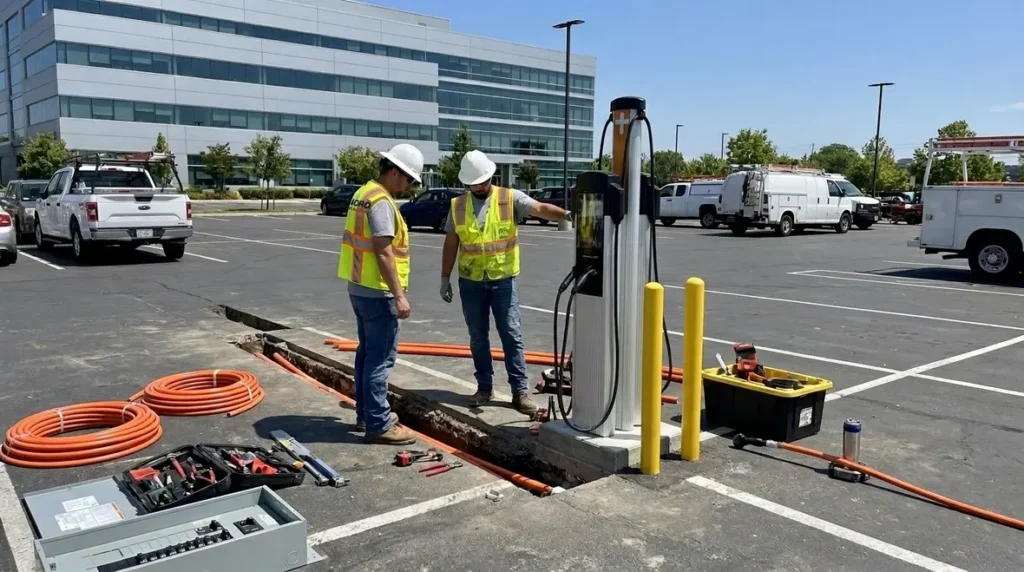
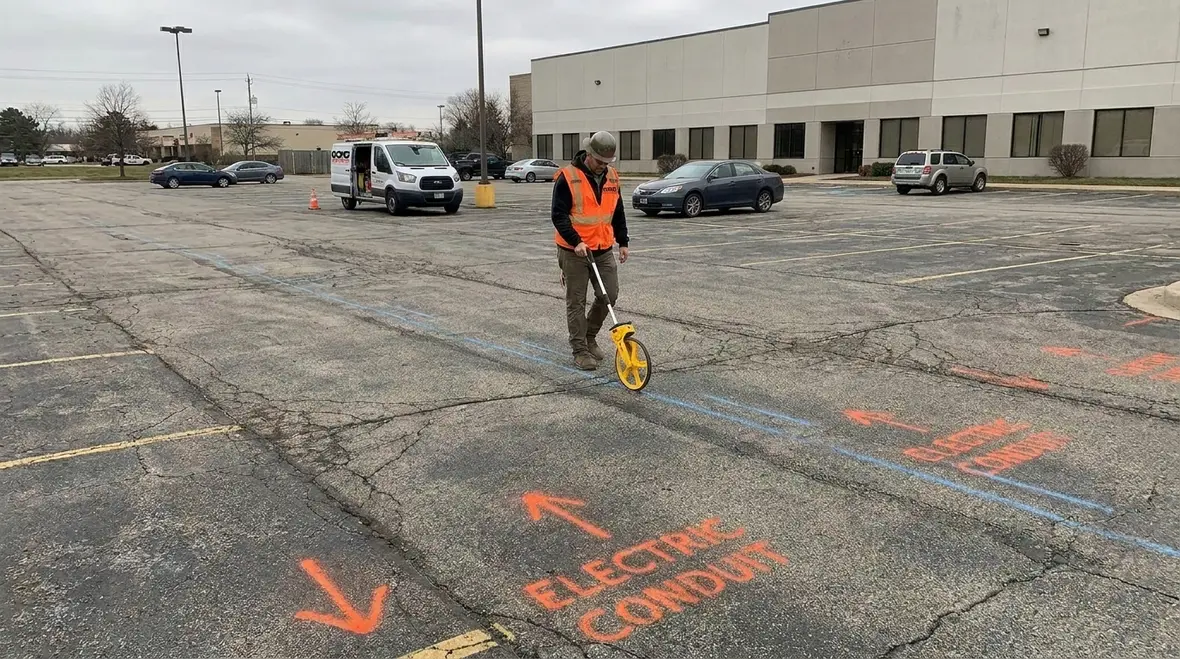
Long conduit runs can increase cost and schedule time. Surface constraints can impact cable routing. Site lighting, landscaping, stormwater requirements, and pedestrian paths can all affect installation complexity. And in some cases, the building may need trenching permits or a coordinated work plan to avoid disrupting ongoing operations.
That is why we plan in full context. We confirm mounting locations, trench routes, and the best paths for conduit and cable. Then we choose hardware and installation methods that fit the site. So while your chargers might be “electrically possible,” they also must be buildable in real world conditions.
We also consider future expansion during the initial build. For major property buildings, this often means reserving space for added circuits, designing a conduit strategy that allows straightforward expansion, and placing equipment so it can grow without major demolition. That way, your next phase does not feel like remodeling the entire planet.
Owners who want a deeper dive into how these physical constraints intersect with budget and schedule can pair this view with Kord Electric’s commercial EV charging infrastructure planning breakdown, which connects conduit paths, panel locations, and phasing into one practical roadmap.
From design to permits: scaling without delays
Scaling EV charging in commercial and industrial facilities requires more than wiring and equipment. It requires a process that respects permitting, inspections, and operational constraints. Our approach helps keep timelines realistic.
First, we prepare a plan that aligns charger circuits, panel connections, and load management settings with your site goals. Next, we coordinate documentation for permitting and inspections. After that, we schedule installation in a way that reduces downtime and maintains normal facility operations.
Our technicians bring the field perspective that makes the paperwork behave. Because once the design meets the real world, adjustments sometimes become necessary. When that happens, we handle it with clear communication and expert judgment. That is also why we keep service staff engaged during the planning stage, so stakeholders understand what will be done and why.
In addition, we plan for safety and compliance from the start. That includes correct labeling, testing, and commissioning. So the system does not just turn on. It performs reliably when drivers plug in.
For facilities in Southern California, this kind of end to end approach often pairs well with ongoing support from Los Angeles County electrical services, so EV charging stays aligned with broader electrical maintenance, upgrades, and troubleshooting.
What a practical capacity forecast looks like for commercial properties
Owners want a number. While we cannot guarantee a universal count, we can deliver a forecast that you can use for budgeting and phased rollout. To do that, we consider:
- Current peak demand and how it changes across seasons
- Planned electrical upgrades already on your roadmap
- Charger power levels and how they run under load management
- Expected charger utilization based on tenant and fleet patterns
- Future growth window such as 12 to 36 months
Then we build a phased plan. Phase one covers the chargers you need now, while still protecting the ability to expand. Phase two adds capacity as demand grows, often with less disruption. This is a smarter path than installing everything at once, then discovering the facility cannot support peak overlap.
Put simply, we help you scale with confidence. And yes, we keep it professional. No, we do not rely on fortune telling, even if it feels like that sometimes in the planning meetings. We use data, electrical analysis, and careful installation design.
If you want to see how that kind of phased thinking plays out across larger portfolios or multi-site rollouts, Kord Electric’s EV charging infrastructure scalability for commercial sites article shows how capacity forecasts translate into long term buildouts, not just single-project decisions.
FAQ about EV charging capacity for commercial buildings
Conclusion: get a clear charger capacity plan with Kord Electric
When you plan EV charging for commercial and industrial facilities, guessing creates risk and delays. We at Kord Electric take a steady, expert approach: we analyze your electrical capacity, design for load management, and plan installation for real site conditions and future growth. If you want a confident forecast for how many EV chargers can commercial building support at your property, contact us. Our technicians and expert service staff will map a practical path from today’s demand to tomorrow’s expansion.
When you are ready to move from capacity questions into action, our dedicated commercial and industrial EV charger installation services turn planning into engineered drawings, field work, and fully commissioned systems that keep drivers moving and facilities stable.