Commercial EV Charger Maintenance Requirements
Commercial EV charger maintenance requirements are not optional for sites that rely on uptime, revenue, and tenant trust. For major property buildings and industrial facilities, Kord Electric builds schedules and service routines that keep charging reliable, safe, and ready for the next vehicle line. In our work, we treat maintenance like preventative care, not a surprise visit. And yes, even chargers can act like they have a “mood,” especially when moisture, dust, and heavy use pile up. Still, our expert service staff stays calm, checks the details, and explains what we found in plain language. In this article, we walk through what others often overlook, and we show the steps that protect equipment, reduce downtime, and support the scale plans we discuss in our commercial EV charging planning guide.
Start With a Maintenance Plan That Matches Real Usage
First, our technicians understand that commercial sites vary. Therefore, the right maintenance plan depends on load patterns, the mix of chargers, and how often vehicles plug in. A distribution yard that sees constant use needs a tighter rhythm than a campus where demand spikes during business hours. Next, we align maintenance with site operations so service tasks do not interrupt critical work. Then we use usage data and fault logs to decide what to inspect first.
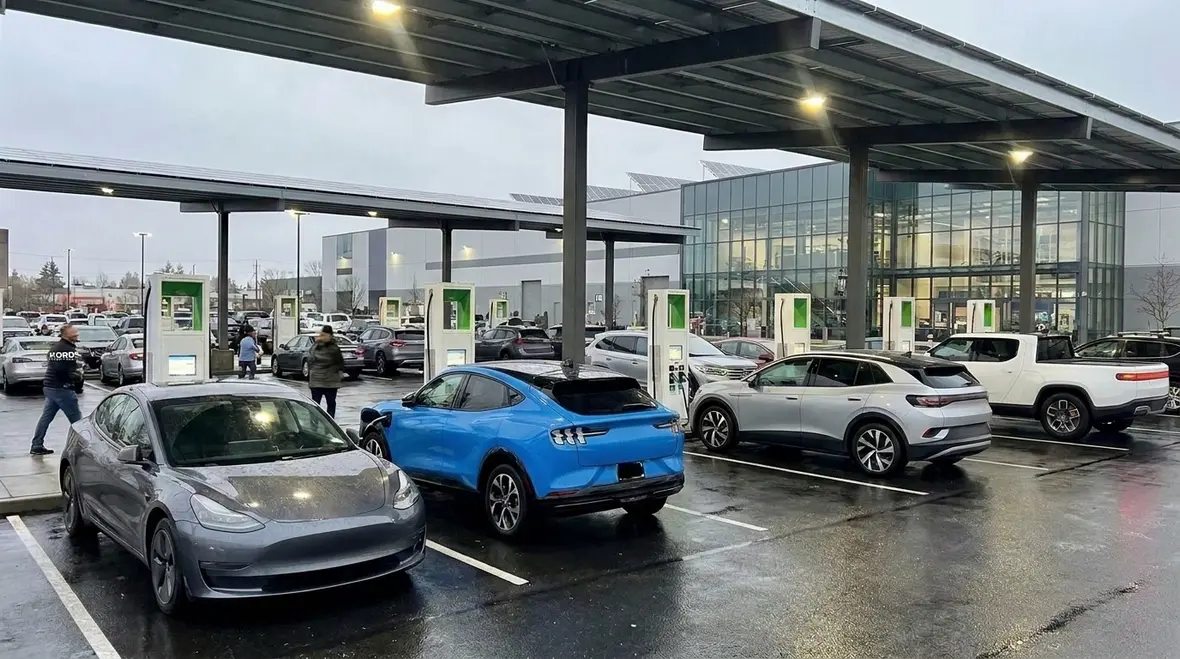
In many cases, we recommend a layered approach. Routine checks handle the basics on a schedule, while deeper inspections follow a periodic cycle. Additionally, Kord Electric reviews the layout and protection around each unit. If a charger sits where water splashes or where debris collects, we adjust the plan. We also coordinate with building managers so every visit fits the facility’s rules and safety requirements.
What We Inspect to Keep Hardware Safe and Reliable
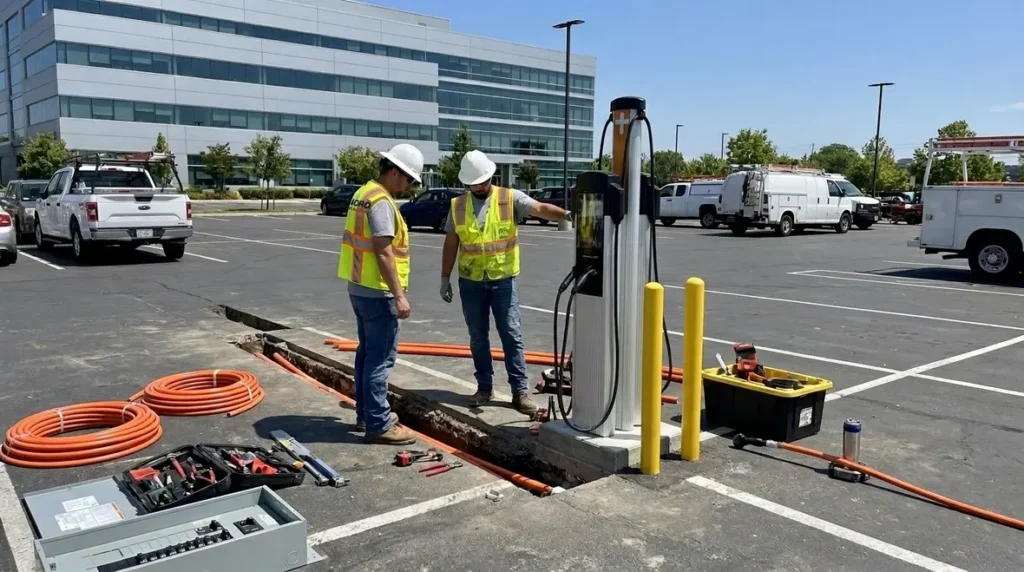
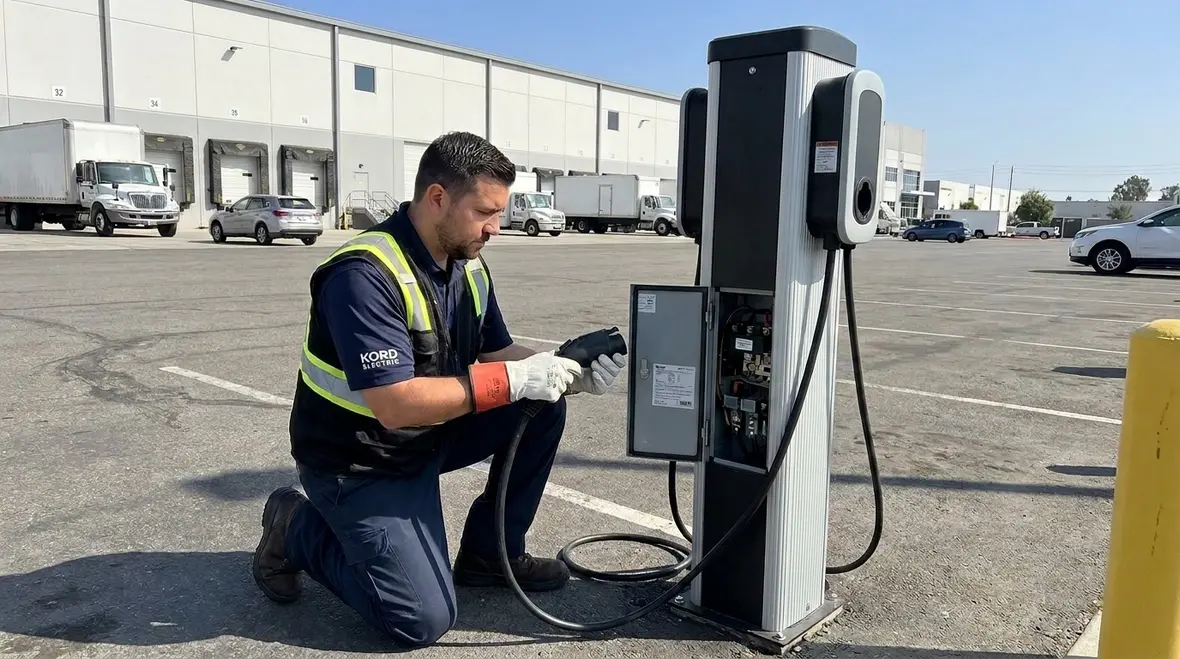
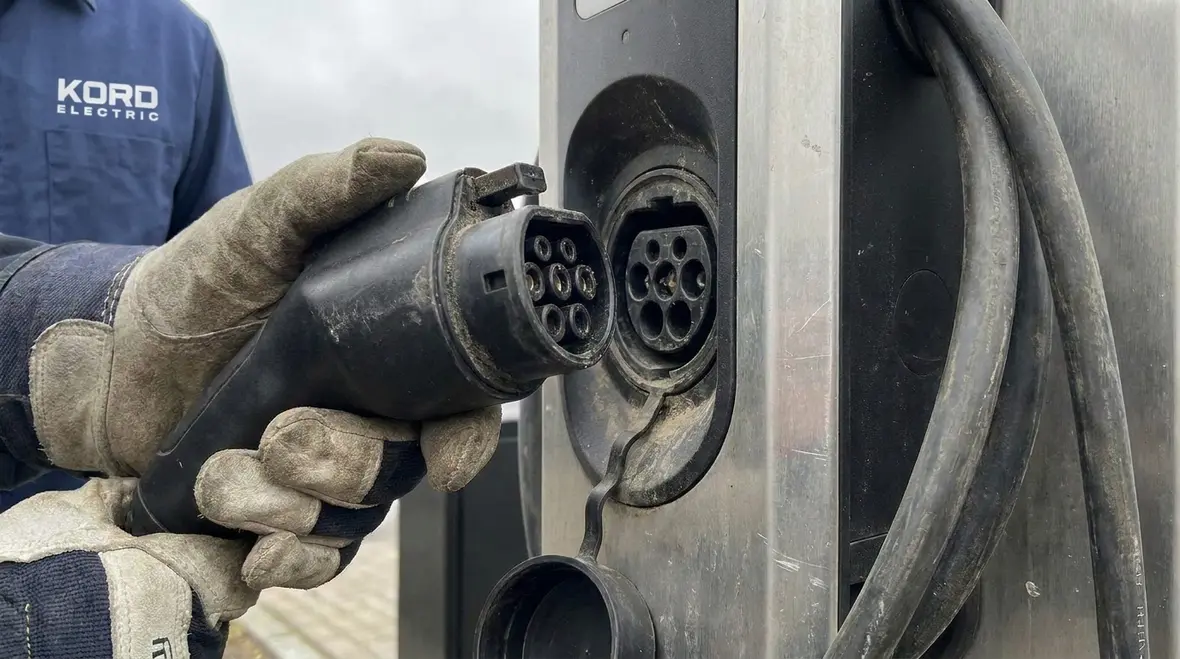
Our expert service staff treats the charger like a system, not a single box. As a result, inspections cover both the visible parts and the internal components that most people never think about. We verify physical mounting, check cable condition, examine connectors for wear, and look for signs of heat damage. Then we inspect the charging interface and protective components that help the unit handle power fluctuations.
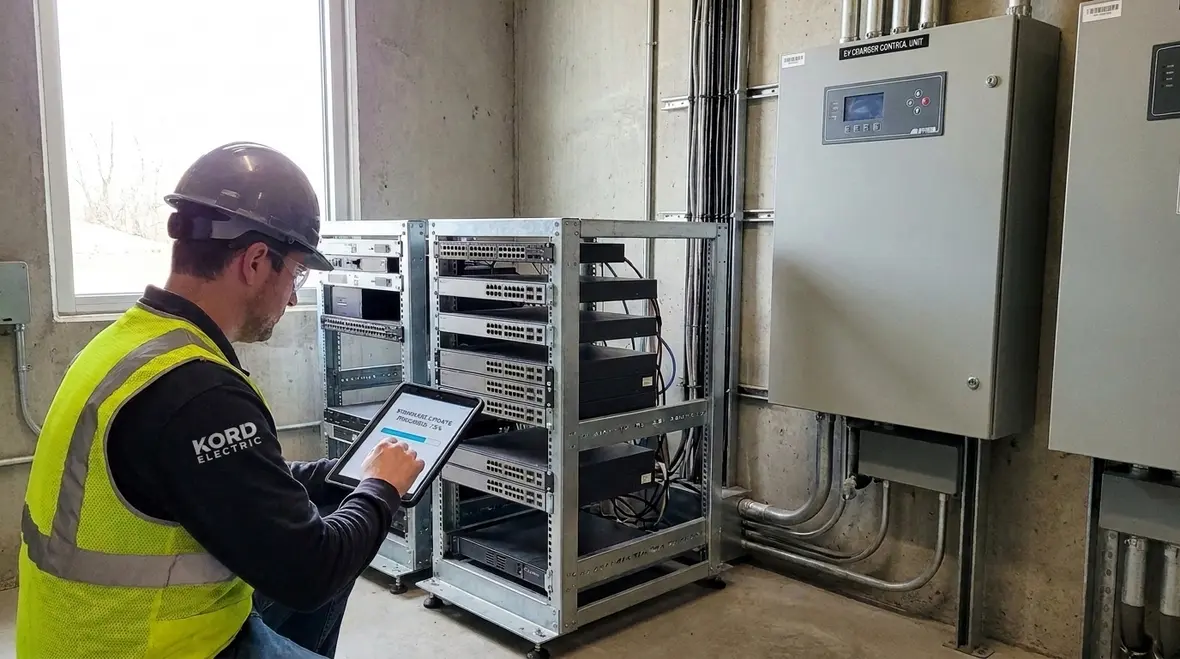
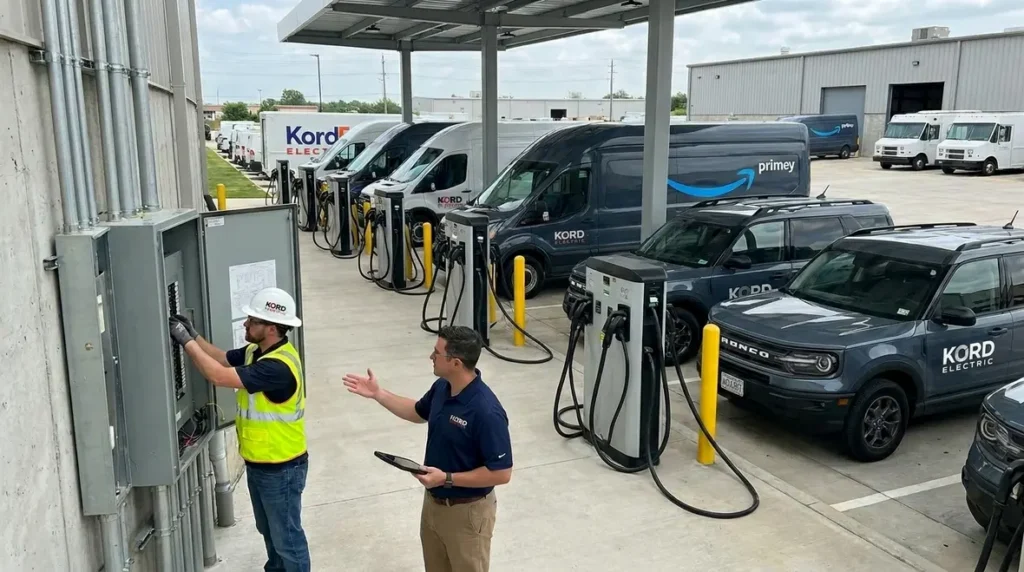
Beyond that, we review grounding and bonding. This step matters because electrical safety relies on clean paths for fault current. Also, we inspect the surrounding electrical hardware, including disconnects and conduits, because failures rarely stay in one place. If something looks off, we explain the likely cause and what it means for uptime. We do not use mystery language. If a component is nearing end of life, we say so.
Inspection details that keep uptime predictable
During commercial EV charger maintenance requirements reviews, we also verify labeling, clearances, and accessibility. That means checking that disconnects are easy to reach, that bollards or wheel stops actually protect the hardware instead of blocking service access, and that site lighting supports safe night-time work. These details may feel small, but they shape how fast a technician can respond when something goes wrong.
How Often Should a Site Schedule Service Visits
When a facility asks about commercial EV charger maintenance requirements, the practical answer comes down to risk and duty cycle. High throughput ports usually need more attention. For example, frequent plug cycles can cause connector wear faster than expected. Likewise, harsh weather and dust increase the need for cleaning and enclosure checks.
In most commercial and industrial setups, we plan service visits using three layers. Routine visits focus on cleaning, visual checks, and basic verification. Periodic visits include deeper electrical testing and firmware review. Finally, corrective service addresses issues that appear between planned visits. Meanwhile, we build escalation steps so faults get handled quickly, especially when chargers support tenant needs or customer access.
Also, our scheduling accounts for seasonal shifts. During wet months, we increase attention to seals, cable routing, and water intrusion points. In dry and dusty periods, we focus on airflow paths and debris buildup. This approach keeps maintenance proactive instead of reactive, and it helps prevent “works today, fails tomorrow” situations that nobody enjoys, not even a superhero with heat vision.
Aligning maintenance cadence with real operations
For busy commercial sites, we often coordinate maintenance windows around shift changes, delivery gaps, or off-peak visitor hours. That way, required maintenance never feels like a surprise outage. When facilities have multiple locations or a high charger count, we extend this strategy into a rolling program so different areas rotate through maintenance without putting the whole charging network at risk on the same day.
Firmware, Network Health, and Data for Faster Fixes
Modern chargers talk to a system. Therefore, maintenance must include software and network health, not just hardware. Kord Electric checks charger firmware status and updates when it improves safety or stability. We also confirm that the site’s connectivity supports monitoring. If the chargers cannot report faults, then maintenance becomes guessing, and guessing is fun only in trivia night.
Our technicians also review performance trends. If charging sessions slow down, if a unit frequently drops connection, or if error codes repeat, we trace the pattern. Then we take action that fits the equipment and the facility. Sometimes the issue is as simple as signal strength or a misconfigured setting. Other times, it points to a component that needs replacement. Either way, we document the findings and explain the next step clearly.
Additionally, we help facilities use the data for planning. When chargers scale, the network and electrical system must keep up. That is why our service approach connects to the same kind of planning thinking we cover in the charging planning guide, scaling infrastructure, and readiness for growth. Measured performance data from current equipment helps validate decisions in your broader EV infrastructure strategy and supports smoother coordination with other projects like commercial EV charging infrastructure planning.
Using data to refine commercial EV charger maintenance requirements
Over time, fault logs and performance reports reveal which chargers carry the heaviest loads, which parking zones feel the harshest weather, and which units produce the most alerts. We fold that information back into the commercial EV charger maintenance requirements so high-risk equipment gets extra attention. This data-driven loop helps facilities spend maintenance effort where it produces the biggest uptime benefits instead of applying the same checklist everywhere.
Cleaning, Weather Protection, and Vandal-Resistant Practices
Cleaning is not glamorous, but it keeps chargers operating smoothly. We remove dirt from vents and surfaces, check that covers and enclosures stay sealed, and verify that cable entry points stay protected. If a charger sits in a high traffic area, we also check for physical strain on cables and connectors. Over time, repeated minor impacts can create problems. So, we treat those signs as early warnings.
Weather protection matters too. Water intrusion can damage internal parts and cause intermittent faults. For facilities that experience freeze thaw cycles, we pay extra attention to seals and drainage around mounting points. Then we confirm that any cable routing limits water retention. This protects equipment and reduces service calls that nobody planned for.
As for vandal-resistant practices, we consider the reality of busy sites. We check for signs of tampering and verify protective barriers and mounting stability. If a facility wants stronger protection, we advise on options that fit the property type. Our job stays practical. We aim for reliability, safety, and a solution that the site can live with.
Site design details that protect charging assets
Sometimes, the best maintenance move is a small design improvement. That can mean adjusting bollard placement, improving lighting near chargers, or rethinking how snow removal and sweeping equipment moves around pedestals. When we see patterns of scuffs, dents, or repeated seal damage, we flag those issues and work with facility teams to reduce the chances of a repeat performance.
Coordination With Facility Staff and Upgrade Planning
Even the best service plan fails if the facility cannot coordinate. So, Kord Electric trains and communicates with on site contacts. Our technicians walk through what they will do, what they will not do without approval, and how they will manage safety steps before work begins. Then they explain results after the visit, including what we found, what it means, and what we recommend next.
We also connect maintenance to upgrade planning. Many facilities do not add chargers all at once. They expand over time. As a result, existing equipment and electrical capacity must work with new ports. Therefore, maintenance records help guide upgrade decisions. If a feeder shows stress or if a charger model behaves differently under load, we plan around it. This supports scaling without chaos.
And yes, we know some people treat charger upgrades like they treat “assemble the IKEA furniture.” They assume it will be fine until it is not. We prefer a steadier approach: measure, plan, maintain, then expand with confidence.
Planning maintenance alongside future EV charging phases
Commercial EV charger maintenance requirements become even more important as facilities prepare for additional charging phases. Coordinating records, as-built drawings, and maintenance reports with your broader infrastructure roadmap reduces surprises when you decide to add ports, increase power, or introduce new charging hardware. It also aligns neatly with regional support through Los Angeles County electrical services that keep panels, feeders, and protection equipment ready for that future growth.
FAQ: Commercial EV Charger Maintenance Requirements
Commercial EV Charger Maintenance Requirements You Can Rely On
Facilities that invest in EV charging deserve service that stays ahead of problems. Kord Electric provides commercial and industrial support with expert technicians who inspect, test, clean, and verify both hardware and software health. We coordinate visits with your site operations, document results clearly, and recommend the next right step for uptime and safety.
If your chargers need a reliable maintenance program or a scaling plan review, Kord Electric is ready to help. From early maintenance strategy discussions to full infrastructure planning with our commercial EV charging planning guide on scaling infrastructure, we connect day-to-day inspections with long-range capacity goals. When you are ready to design or expand your charging footprint, you can also explore how dedicated EV charger installation services take those plans into the field and turn them into commissioned systems built for long-term performance.
For organizations that want one coordinated partner for both EV charging and broader electrical reliability, Kord Electric’s Los Angeles County electrical services support panels, switchgear, lighting, and troubleshooting alongside your charging network. That way, your maintenance strategy does not stop at the pedestal; it supports the entire path that keeps electrons moving safely from the service entrance to each vehicle.