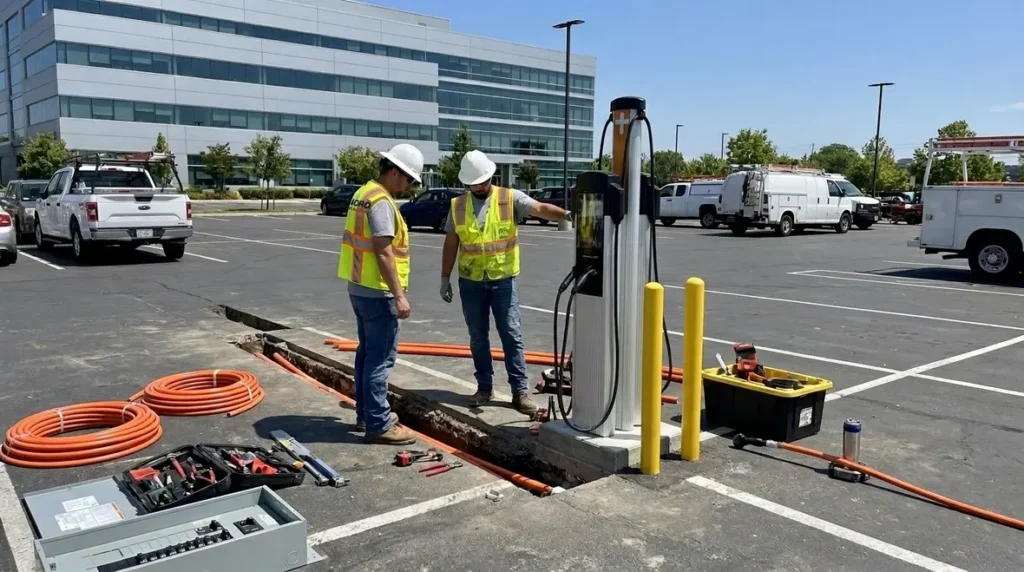
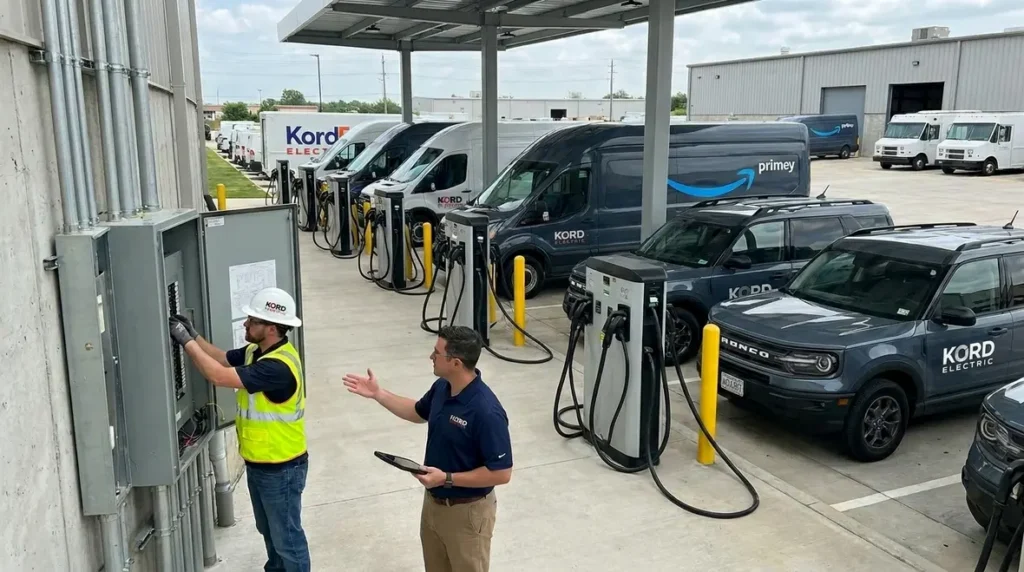
Workplace EV Charging Requirements California Guide
Workplace EV Charging Requirements California can feel like a moving target, especially for commercial and industrial facilities. Yet our team at Kord Electric helps employers meet the rules, plan the electrical load, and scale charging as demand grows. In this guide, we walk through what California expects of workplace charging, how those expectations link to real site work, and how we make it practical for major property buildings. Our technicians and expert service staff explain the “why” in plain terms, because nobody enjoys reading policy like it is a spy thriller. And honestly, even a smart charger cannot fix a wrong circuit plan.
Workplace EV Charging Requirements California for commercial sites
In California, workplace charging rules mostly land on commercial and industrial properties, and large buildings with public facing operations. Employers must plan for charging access in a way that fits both state direction and site conditions. At the same time, they need charging that performs well, not charging that exists only as a photo opportunity.
According to our planning approach, we start by mapping the facility’s parking layout, electrical capacity, and future growth. Then we connect those site realities to what the workplace charging framework asks for. This matters because the “requirements” are not just legal boxes. They show up as electrical design decisions, permits, utility coordination, and construction timing.
Our expert service staff often hears the same story: a property manager approved a plan, the site got busy, and later they discovered the electrical system could not support the next wave of chargers. So, we focus early on capacity, conduit routing, and load planning, before the project turns into a late night puzzle. And yes, we have seen that puzzle sold as “value engineering.”
Know the site facts that drive charger counts and placement
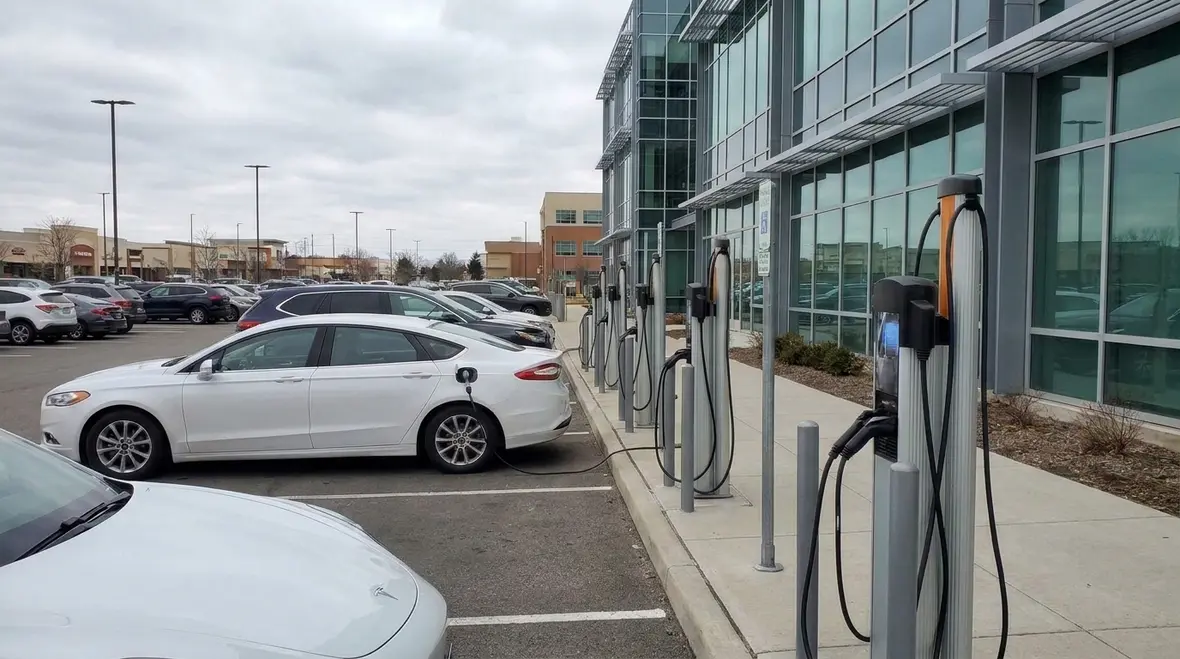
Before any electrician touches a panel, we gather practical data. For major property buildings, charger quantity and placement depend on more than square footage. They depend on how people move through the site, how vehicles park, and how long they stay.
First, our team evaluates parking zones, vehicle types, and turnover patterns. Then we check the electrical rooms and service equipment. We verify available capacity, conductor sizing options, and space for breakers and feeders. After that, we confirm whether transformers, switchgear, and meter setups can handle the charging load now and later.
Next, we look at cable paths and physical constraints. Even the best design fails if the conduit route crosses future construction zones or violates clearance rules. As we plan, we keep a clean design path to minimize downtime for maintenance and tenant work.
Finally, we align the charging layout with workflow. If workers need charging during a shift, we favor designs that support steady output and safe access. If a building serves a broader mix of vehicles, we plan for a mix of chargers so the site stays useful, not just compliant.
Translating workplace requirements into real site design
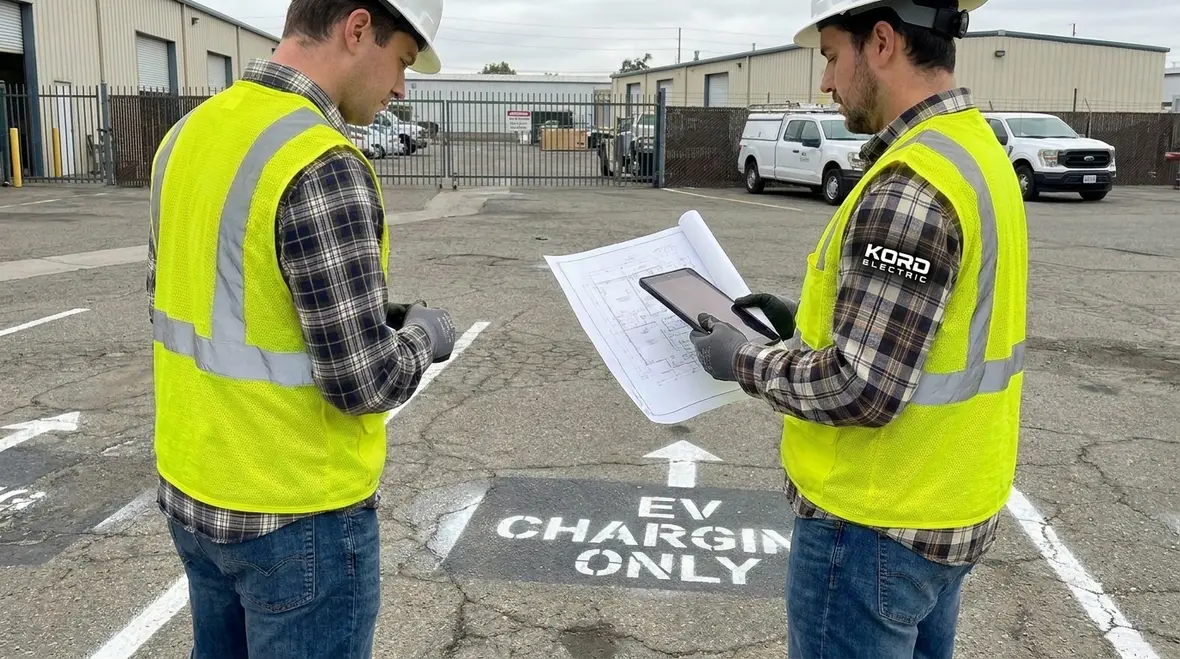
For many sites, workplace EV charging requirements California guidance ties into local code, utility programs, and broader state policies that favor safe, reliable infrastructure. Our role is to translate those expectations into layout drawings, panel schedules, and phasing plans that a construction crew can actually build without guesswork.
That is also why we often reference our commercial EV charging planning guide for scaling infrastructure during early conversations. When everyone understands how charger counts, parking behavior, and panel capacity interact, it becomes much easier to choose the right starting footprint and avoid overbuilding or underbuilding on day one.
How load planning keeps the electrical system safe
Load planning is where compliance meets real life. California workplace charging expectations tie into how systems handle demand. Therefore, the electrical design must do more than “add chargers.” It must manage how those chargers draw power together.
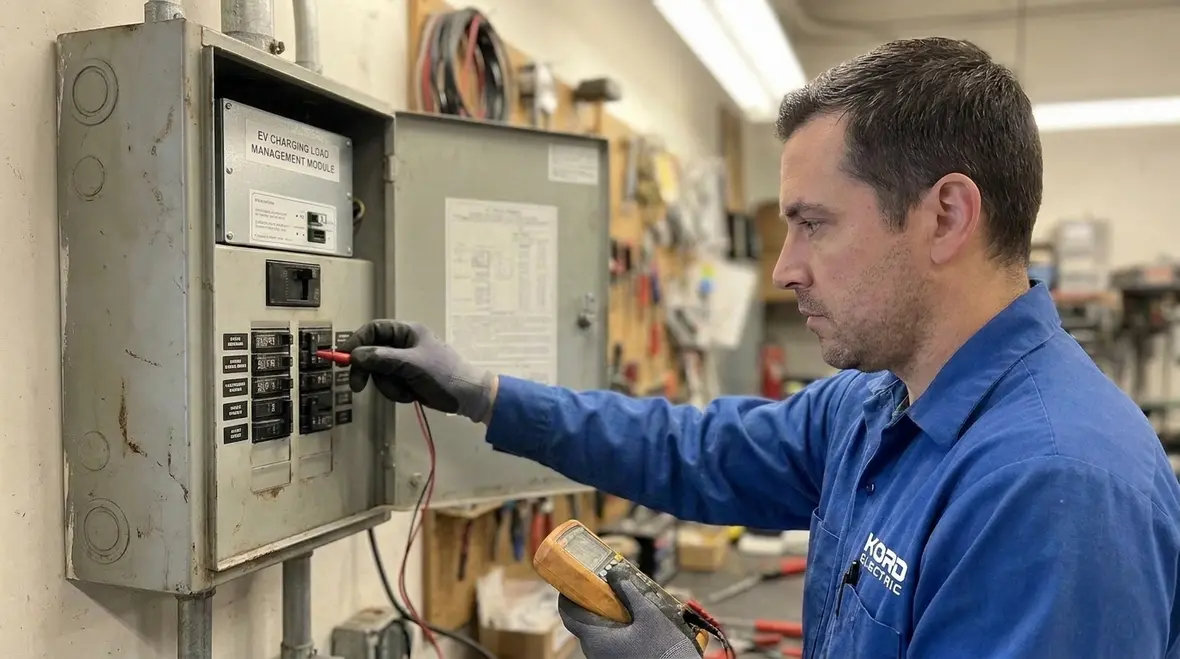
Our technicians and engineering partners evaluate demand from existing equipment, including HVAC, lighting, elevators, and any process loads common in commercial and industrial settings. Then we model EV charging use scenarios. We do this so the facility can avoid overloads, nuisance trips, and expensive emergency upgrades.
To manage load, we often use smart load management and circuit grouping strategies. Moreover, these methods help ensure charging supports the site schedule. For example, if most vehicles arrive in a short window, the peak demand strategy must reflect that. Otherwise, the site can see power spikes that stress the electrical system.
Additionally, we plan for expansion. Many employers start with a pilot to test adoption, and then the site grows. So, we size raceways, plan for future branch circuits, and reserve panel space when feasible. In other words, we design for tomorrow, not just for today’s rollout.
Managed charging and demand strategies for busy facilities
For high traffic workplaces, managed charging becomes a core safety and performance tool. Instead of letting every vehicle pull maximum power at once, a managed system spreads charging across time, balances priority vehicles, and respects the electrical limits of the building. This protects transformers, switchgear, and panels from the kind of abuse that can turn a simple upgrade into an unplanned outage.
Our team explains these strategies in plain language, using the specific shift patterns, tenant schedules, and fleet behaviors of your site as examples. When stakeholders understand why certain limits exist, they are far more likely to support policies and practices that keep both people and equipment safe.
Scaling EV charging infrastructure like a real business plan
Most facilities do not want a one time install. They want a system that scales with utilization. Our commercial EV charging planning philosophy mirrors the logic in our commercial EV charging planning guide for scaling infrastructure. The idea is simple: start with a smart baseline, then expand in stages as the fleet and demand grow.
In practice, scaling means preparing for more circuits, more chargers, and more power needs without ripping out the whole installation. Therefore, we take a structured approach. We identify a phased deployment plan tied to vehicle adoption and employee schedules. Then we design electrical distribution and conduit runs so the later phases connect cleanly.
We also consider the operational side. If a building adds chargers later, the facility still needs safe access for maintenance, and the chargers need reliable network performance. Our team accounts for charger mount locations, cable strain relief, and weather protection for outdoor deployments.
One more point that property teams overlook. They often assume every “future upgrade” is just a hardware swap. However, in many cases, future expansion requires upstream electrical changes. So, we coordinate early with utilities when needed and we plan the right path for permits, inspections, and energization.
Pop culture reference aside, EV infrastructure is less “instant teleportation” and more “season one to season two.” You need the script, not just the special effects.
Connecting workplace EV charging requirements California to long term growth
For California employers, planning around growth is not just smart—it often aligns with how incentives, rate structures, and sustainability goals evolve over time. A phased plan lets you respond to policy shifts without scrambling to rebuild the system from scratch. Instead of guessing, you match new phases to clear triggers such as EV adoption milestones, lease renewals, or capital budgeting cycles.
We help facilities decide when to move from pilot to phase two, and from phase two to a mature, high capacity network. Along the way, you maintain a clear story for finance, operations, and sustainability teams: here is what we built, why we built it, and when the next expansion makes sense.
Permits, utility coordination, and inspections without the chaos
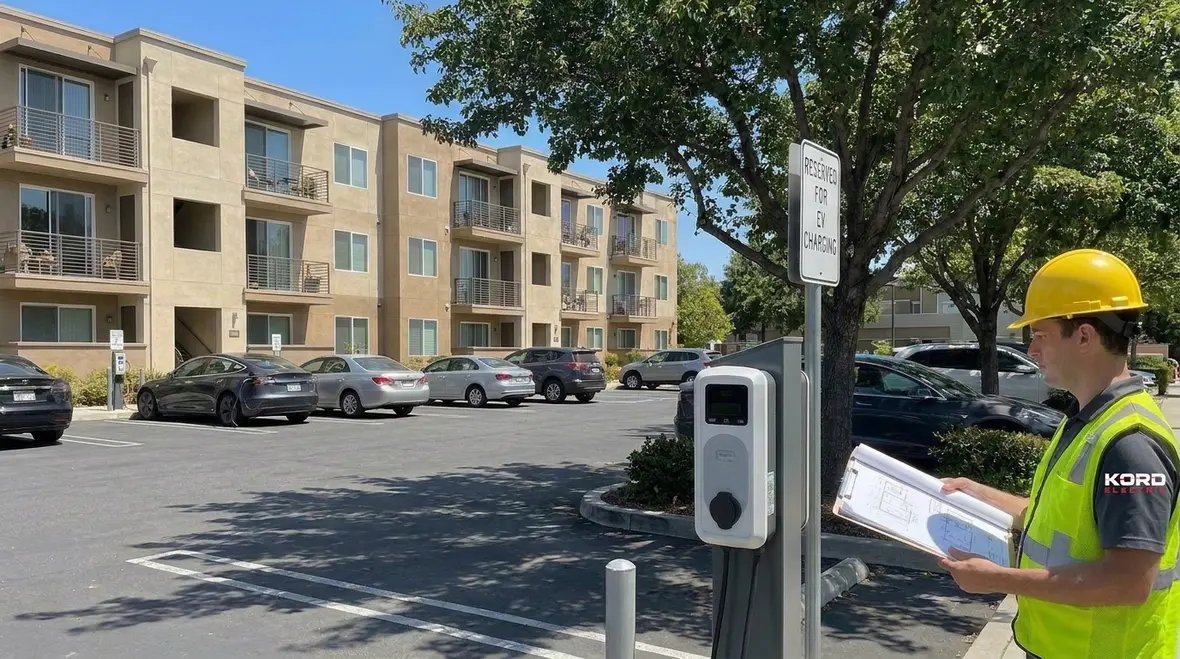
Even the strongest design can stall if the permit process and utility steps fall behind. For commercial and industrial employers, timelines matter. Tenants, operations teams, and construction schedules do not stop because a charger needs a permit. So, we help manage the path from design to approvals with a calm, step by step workflow.
First, we confirm site requirements for permits. Then we coordinate the electrical scope and documentation needed for review. After that, we support inspections by preparing the job for compliance checks and safe energization.
In addition, utility coordination can shape the schedule. Some sites need service upgrades, transformer work, or meter changes. And if the utility process takes longer than expected, the charging rollout falls apart. Therefore, we start the conversations early when the site conditions point that direction.
Our expert service staff stays available for questions from property managers and facility leads. We explain what happens at each stage, so the team does not feel like they are guessing through a foggy movie scene. With EV charging, clarity is not just polite. It is project insurance.
Coordinating inspections and keeping operations online
Because workplace charging often sits inside busy properties, we also plan construction sequences around occupancy, deliveries, and shift work. That means scheduling shutdowns carefully, staging equipment thoughtfully, and walking inspectors through the site so they see a clear, code ready installation instead of a scramble.
When needed, we connect EV charging plans with broader electrical service strategies, including the kind of support outlined on our Los Angeles County electrical services page. That way, facility leaders keep one coordinated picture of how EV charging fits alongside panels, lighting, and other critical infrastructure.
What employers should include in an EV charging policy
Compliance is only one part of a workplace charging program. Employers also need a policy that supports fairness, uptime, and predictable operations. When companies plan only for the electrical install, they often face issues like chargers occupied longer than expected or confusion around access.
We recommend an internal EV charging policy that covers the basics. Who can use the chargers, how long vehicles can stay, and what happens when a vehicle blocks access. Also include rules on charging etiquette for users who need guidance. Many facilities reduce conflicts simply by posting clear instructions and defining expectations.
Next, employers should assign operational ownership. A building lead should know who contacts the charger network team, who handles troubleshooting, and who schedules maintenance. We can support the technical side, but ownership helps facilities move faster when problems happen.
Moreover, employers should align charger growth plans with procurement and fleet timelines. If HR or operations buy new vehicles without telling facilities, the electrical system becomes the surprise character in an office sitcom. It shows up late, uninvited, and nobody knows the lines.
Finally, consider reporting and data. Many modern charging systems provide usage data. That data helps employers understand adoption, plan future phases, and justify ongoing investment.
Linking policy, training, and workplace culture
A strong policy becomes more effective when it is paired with short trainings, onboarding materials, and onsite signage that reinforce expectations. Simple touches like clear wayfinding to charger bays, posted time limits, and contact information for support can prevent small issues from turning into daily friction between drivers.
When we design a system, we often suggest where signage, striping, and access controls should live so the policy can be seen and followed, not just filed away. The technical design, the written rules, and the employee experience all work together to keep charging predictable and fair.
FAQ
Dual column snapshot: what Kord Electric usually reviews
Site and design
Parking layout and user flow
Conduit and cable routing paths
Electrical room capacity checks
Charger placement for safety and access
Project execution
Permits and inspection readiness
Utility coordination when required
Phased scaling strategy
Commissioning and ongoing support
Final thoughts: build compliance into your plan, not your headache
California workplace charging rules can feel complex, yet they become manageable when a commercial property treats EV charging as an infrastructure program. We at Kord Electric design for capacity, scaling, and safe operations, and our technicians and expert service staff explain each step so teams stay confident. If your facility operates in California and you serve employees, tenants, or business fleets, reach out to us. We will review your site and map a practical, phased plan that supports compliance and performance. Let’s install the right system the first time.
As you evaluate your next steps, you can also connect this workplace focused planning with Kord Electric’s broader commercial and industrial EV charger installation services, which carry projects from early assessments through field work and commissioning. That way, your workplace EV charging requirements California strategy does not live in a vacuum—it lives inside a complete electrical roadmap that keeps your building ready for what comes next.
For facility leaders across the region, tapping into a coordinated electrical partner also simplifies long term maintenance, panel planning, and emergency response, so EV charging becomes one strong chapter in your infrastructure story, not the unexpected plot twist.