Backup Generator Load Management for Facilities
When a facility loses utility power, backup generator load management becomes the difference between “power on” and “power that actually runs the business.” At Kord Electric, we design and optimize how standby generators share demand across critical circuits, so motors start smoothly, sensitive electronics stay stable, and the whole building does not behave like a stressed out sitcom character trying to juggle too many things at once. In this article, our experienced technicians explain how we approach load control, sequencing, and monitoring for commercial and industrial facilities, along with major property buildings where downtime is expensive and reliability is non negotiable.
How backup generator load management prevents demand spikes
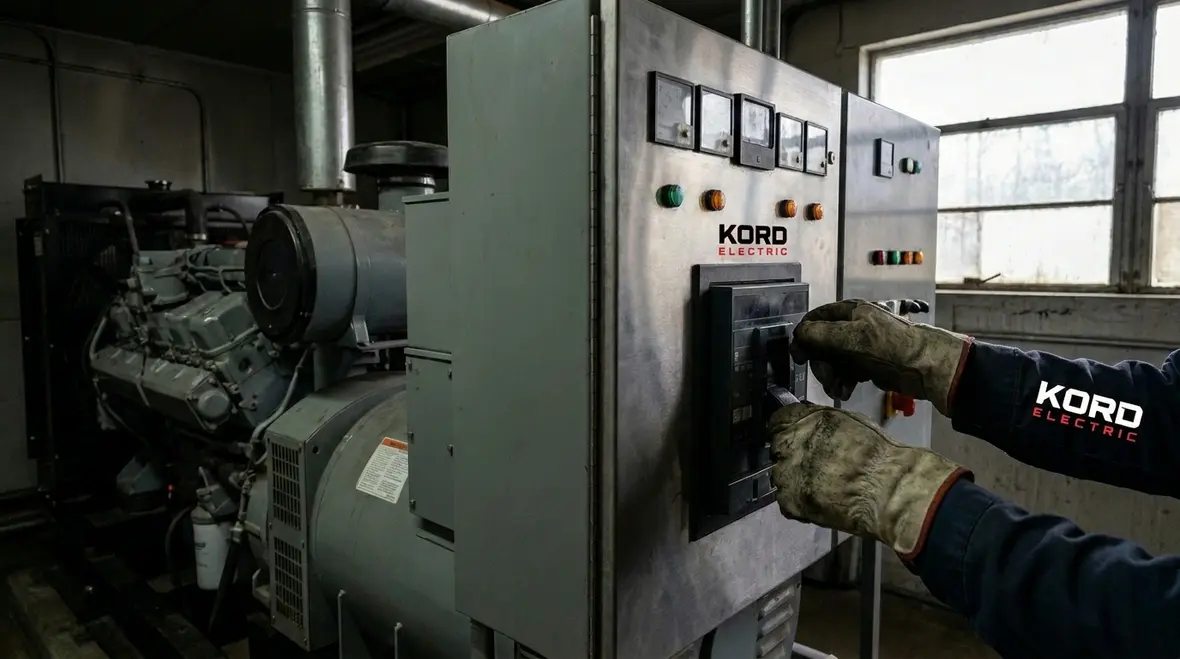
Third party power events can be messy, and that is the point. When utilities drop, loads do not all switch from off to on at the same time in a neat, orderly fashion. Instead, they often rush back online together, and that can create an inrush surge that trips protection devices or bogs down the engine. Therefore, we treat load management as a system, not a single setting.
First, our team identifies which loads are truly critical, and we confirm the starting and running characteristics for each. For example, HVAC compressors, pumps, and elevators may look like a simple line item, yet they carry high starting currents that can last longer than owners expect. Then we apply sequencing logic so the generator takes on the most important circuits first, and it adds other loads in steps.
Next, we confirm the generator capability under real operating conditions. We do not just rely on nameplate ratings. We review voltage regulation, allowable overload periods, and the site’s ambient conditions. As a result, the plant manager gets a plan that feels less like a guess and more like a controlled restart. For facilities that have already dealt with surprise outages, pairing this planning with a review of emergency power failures in commercial buildings helps connect generator behavior to broader reliability risks.
Finally, we document the load transfer behavior and verify it during commissioning. Our expert service staff will walk facility leadership through what they are seeing, why it matters, and what would happen if a particular sequence failed. In other words, we make the “why” as clear as the “what.”

Plan the load blocks by starting current and run time
Facility owners often ask for “balanced loads,” and we agree, but we define balance the right way. In backup generator systems, balance means the generator can handle each block without dropping frequency or voltage outside safe limits. So we group loads by both their starting impact and their runtime demand.
For instance, refrigeration and chilled water systems may start in cycles, but they can still draw heavy current when they kick in simultaneously after a transfer event. Meanwhile, lighting and small receptacle circuits are relatively gentle. So we build a load schedule that reflects physics, not optimism.
Then we apply time delays that make sense. Immediately turning on everything is the fastest way to create chaos, and we have seen it. One site tried to “simplify” by enabling broad restoration at once, and the generator response looked like a drummer hitting every cymbal at the same time. After our technicians reviewed the load profile, we adjusted the start delays and reduced the stress on the engine. The result was a smoother climb to stable operating power, with fewer nuisance trips.
Moreover, we consider operating modes. Some buildings run with occupancy schedules, others run with industrial process schedules. Therefore, we tune load blocks to the facility’s real patterns, not a generic template. Our engineers and technicians coordinate with operations staff so the system behaves like a reliable employee, not a vending machine that accepts coins but refuses service. For teams looking at the bigger picture of electrical infrastructure design, the perspective in Kord Electric’s article on data center electrical requirements for uptime applies just as well to backup generator planning: design for real load behavior, not just nameplate math.

Sequencing controls that feel automatic, not magical
Automation should remove thinking during an outage, yet it must still be predictable. That is where sequencing controls come in. Kord Electric configures controls so circuits restore in a logical order, based on generator readiness and operator defined priorities.
In practice, we implement steps that respect generator stabilization time. For example, we allow the generator to reach steady output before we energize motor loads that could otherwise cause a deeper voltage dip. We also include interlocks to prevent conflicts between systems that must not start together. This approach reduces nuisance trips and helps the generator remain within its intended limits.
Next, we align the sequencing strategy with how the facility operates. Hospitals, logistics centers, data heavy buildings, and industrial plants have different priorities, even when the electrical architecture looks similar on paper. Therefore, we ask the tough questions early and then translate the answers into a control sequence that the facility can trust.
Meanwhile, our technicians ensure the controls also support manual override where needed. Operations leaders should not feel locked out during an event. So we design a system where authorized staff can adjust priorities and safely manage abnormal conditions, without turning the electrical room into a live theater rehearsal. Sequencing becomes even more powerful when tied into broader reliability strategies, such as those described in Kord Electric’s guide to emergency power failures in commercial buildings, where standby systems either carry the load or leave teams scrambling.
Communications, telemetry, and diagnostics for faster response
Load management works best when it is visible. If a facility cannot see how the generator and transfer system behave, it cannot improve. For that reason, we prioritize communications and telemetry that help the right people act quickly.
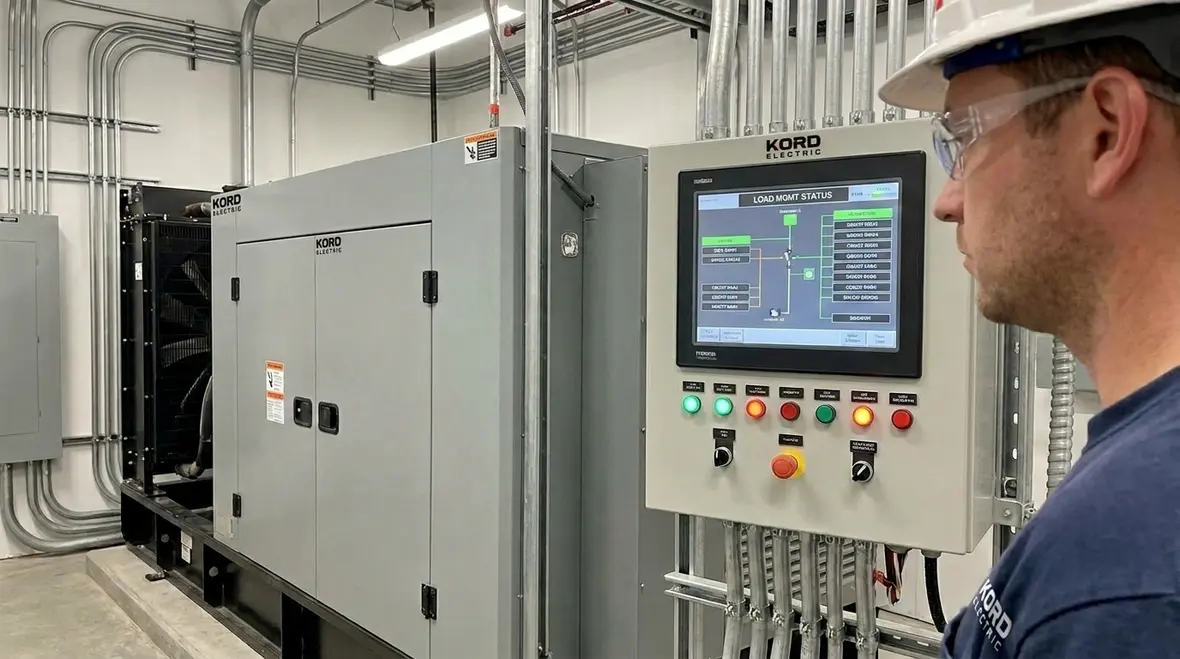
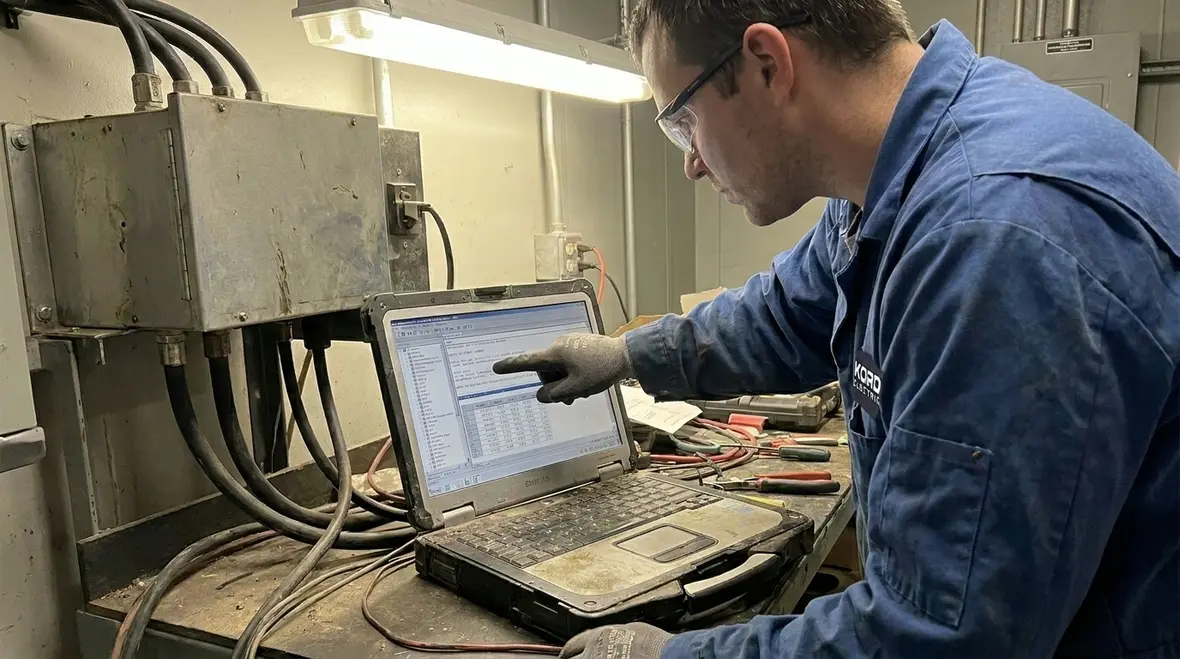
Our expert service staff reviews what the control system already reports and then expands it where gaps exist. We focus on signals that indicate performance and risk, such as generator kW loading, voltage and frequency behavior, transfer status, alarm events, and start attempt outcomes. Then we ensure that this data flows to the monitoring location that facility teams actually use.
In addition, we configure event logs to show the timeline of what happened. When a site experiences repeated issues, the cause often hides in the sequence timing. With clear logs, our technicians can correlate load restoration steps to voltage dips or protection operations. As a result, troubleshooting becomes faster and the next fix becomes more targeted.
Finally, we verify that alerts trigger at the right time. Over alerting trains teams to ignore warnings, which is the electrical equivalent of a smoke alarm that never sleeps. We tune alarms so they represent real issues, and we train the maintenance team on what each alert means and what actions to take first. When this telemetry is paired with structured inspection routines like those described in Kord Electric’s electrical preventive maintenance services, facilities gain both better visibility and a clear plan for acting on it.
Commissioning and testing: the part everyone underestimates
After design and installation, our work does not stop. Commissioning is where the theoretical plan becomes the real world behavior. Kord Electric runs acceptance tests that check both transfer performance and load restoration behavior across the generator’s expected operating envelope.
We test in a way that mirrors real outages. That means we simulate utility loss and we observe how each load block behaves as it connects. Then we confirm the system meets the site’s stability targets, including voltage regulation and frequency control. If the results show any mismatch, our technicians adjust the sequencing delays, priority tables, or control settings.
Moreover, we test edge cases, like partial generator capacity conditions or situations where certain loads remain unavailable. Industrial sites rarely have perfect uptime. So our approach anticipates normal site reality and ensures the system still performs safely when the plan cannot be followed exactly.
At the end, our team trains facility staff on how to interpret the behavior during an event. We explain what the controls did and why, using clear language that respects the people who keep the building running. Honestly, the best controls are the ones that make sense to the humans in the room, not just the engineers behind a laptop.
Maintenance practices that keep performance steady over time
Even well tuned systems drift. Components wear, loads change, and buildings evolve. Therefore, we build a maintenance approach that protects the load management strategy long after the initial startup.
Our service technicians review generator and control panel health, and we inspect transfer components, protective devices, and wiring integrity. Then we compare the current load reality to the original design assumptions. If a facility adds equipment, upgrades chillers, or shifts production schedules, the load profile changes. Without updates, the generator can face higher starting currents than the system expects.
We also recommend periodic functional testing of load restoration sequences. This helps catch timing changes, sensor drift, and control configuration issues. Furthermore, we keep a clear record of updates so the facility can understand what changed and when.
Most importantly, we communicate updates in a way that supports decision making. Our technicians do not just swap parts and disappear. They explain the electrical impact and help building leadership plan next steps, whether that means updating priorities, rebalancing load blocks, or refining generator settings. For facilities that want generator strategies tied to a disciplined maintenance culture, Kord Electric’s electrical preventive maintenance programs provide a structured way to keep backup generator load management aligned with real world conditions.
Frequently asked questions
Final call: optimize your generator performance with Kord Electric
When a facility relies on standby power, we should not hope the system performs under pressure. At Kord Electric, we optimize generator load management through smart load grouping, safe sequencing, clear telemetry, and rigorous commissioning, supported by our technicians and expert service staff. If your commercial or industrial building needs smoother transfers, fewer nuisance trips, and faster diagnosis, contact us today. Let us review your setup and build a plan that keeps operations steady when the grid stops playing nice. And if you want that plan to connect seamlessly with broader reliability efforts, our electrical preventive maintenance services can align generator testing, distribution inspections, and emergency response so backup generator load management becomes part of a larger reliability roadmap instead of a standalone project.