Business Electrical Disaster Recovery Plan Guide
When an outage hits a commercial or industrial facility, the clock starts ticking, and the damage often comes faster than people expect. At Kord Electric, we focus on business electrical disaster recovery so your operation can recover with control, not chaos. We help others plan before the lights go out, then we stand ready with skilled technicians and experienced service staff who explain what is happening in plain language, not mystery language. And yes, we all know “we will handle it later” is a classic line. Unfortunately, later usually arrives wearing a hardhat and a clipboard.
Why a Business Electrical Disaster Recovery Plan matters in the real world
Disasters do not only mean hurricanes and wildfires. A plan also accounts for transformer failure, fire damage, flooding in electrical rooms, and even a vehicle that decides your switchgear looks like a convenient target. Additionally, many incidents unfold in stages. First, power drops. Then systems fail. Finally, the wrong people try to do the right thing with the wrong tools.
With proper business electrical disaster recovery, others can keep critical loads online, verify safety, and restore service in an order that protects people, equipment, and production schedules. While some facilities think recovery is a single event, we see it as a sequence of decisions. Therefore, the plan must define roles, communications, load priorities, and restoration steps before the emergency.
Start with risk mapping for commercial and industrial sites
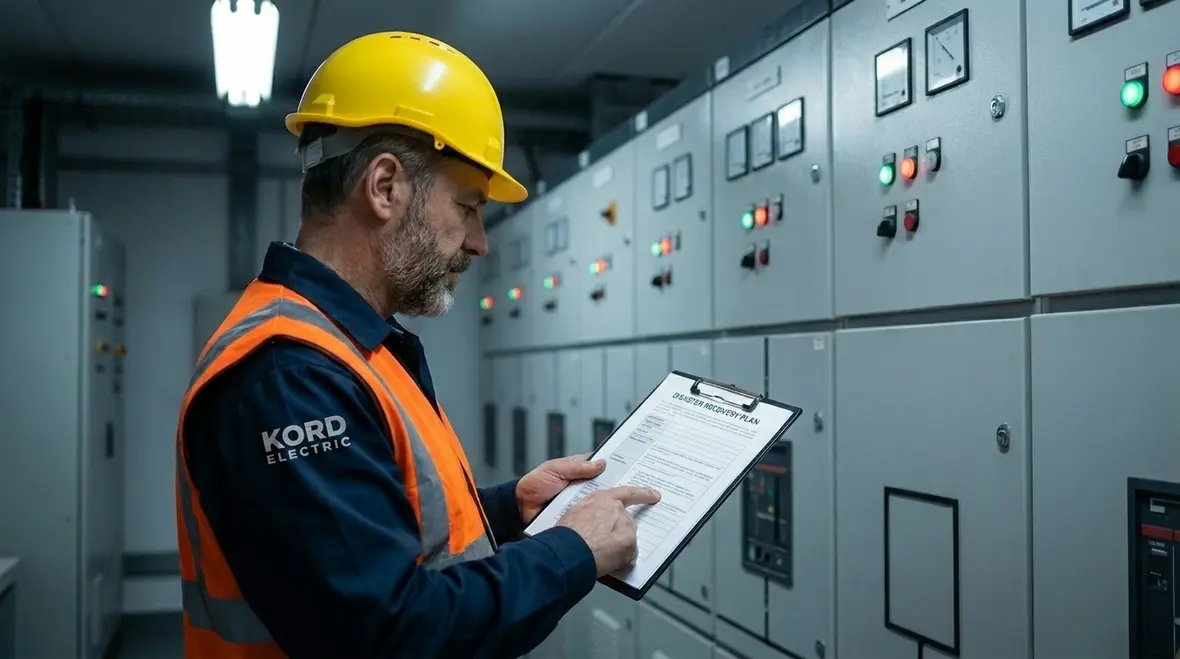
To build a recovery plan that actually works, we start with a clear view of what can go wrong and where it will hurt the most. For commercial and industrial facilities, we map electrical assets by location, criticality, and dependency. Then we link those assets to site risks. A data center does not share the same priorities as a manufacturing line, and a hospital service corridor does not behave like a warehouse distribution bay.
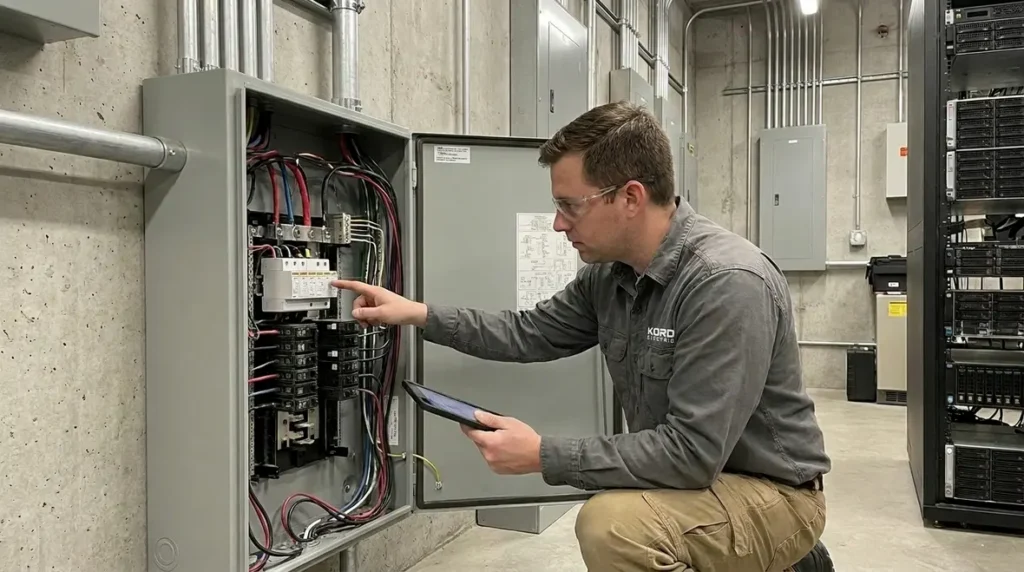
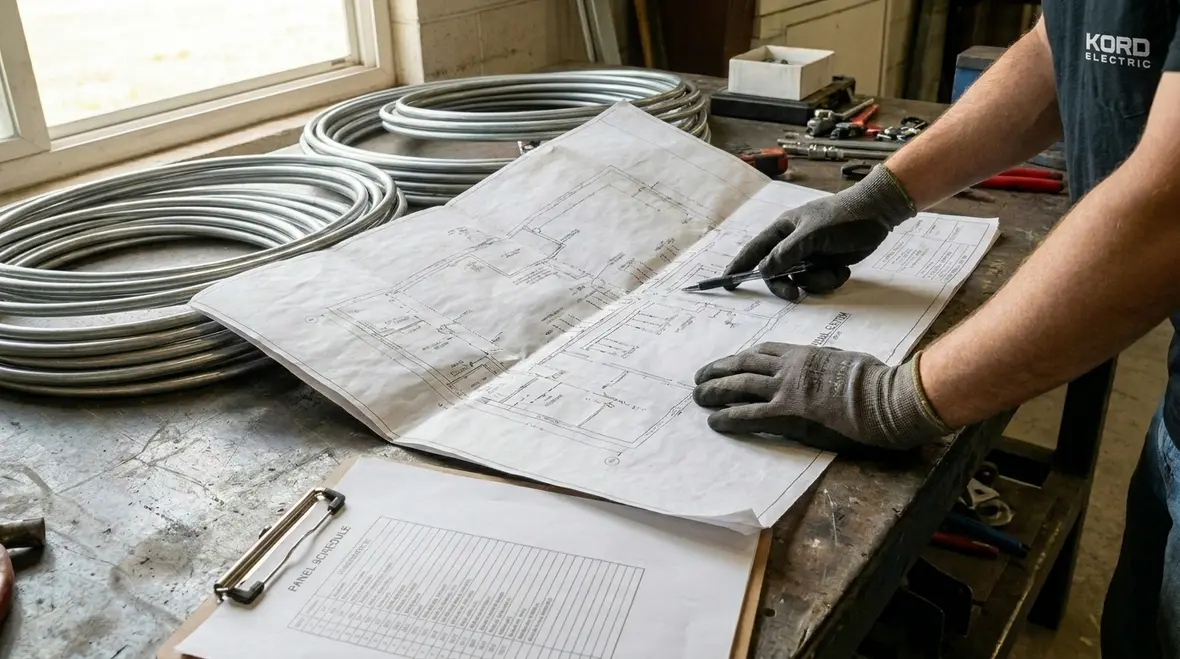
Our expert service staff typically helps others gather data like one line diagrams, panel schedules, generator specifications, UPS runtime, and historical outage notes. After that, we organize findings into a practical model: which loads must stay alive, which loads can wait, and what paths can reroute power safely.
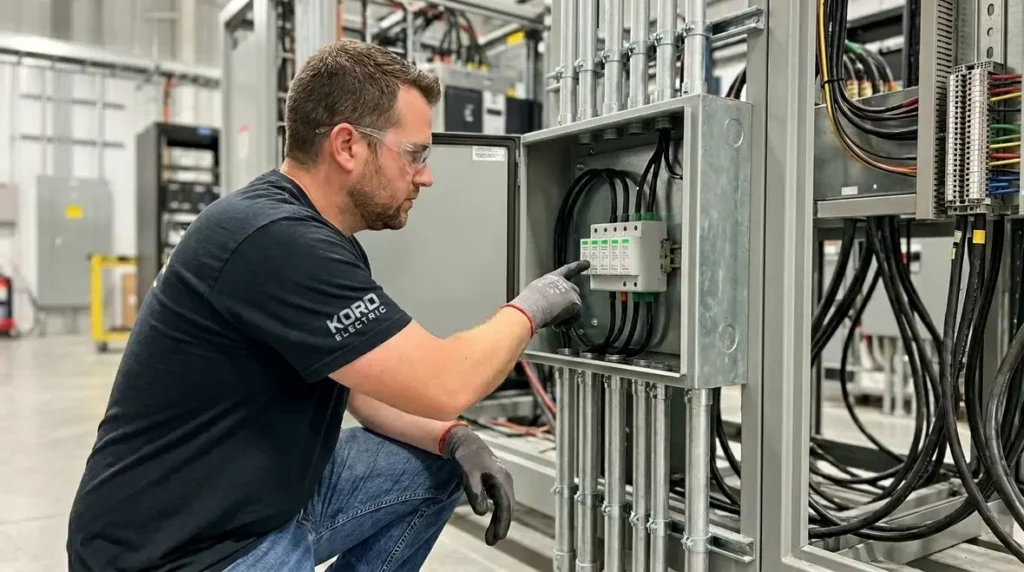
Also, we confirm what exists right now. Many buildings claim they have redundancy, but when power transfers under stress, the “redundancy” sometimes turns into a marketing slogan. So we verify the details, like ATS ratings, breaker coordination, and grounding integrity. In short, we do not just document systems. We validate how the systems behave when things go sideways.
If your electrical infrastructure already feels stretched, pairing disaster recovery planning with a structured preventive program can reduce surprise failures. Kord Electric’s electrical preventive maintenance services help major facilities catch weak points before the next outage puts them to the test.
Build roles, communications, and a decision rhythm
People often assume disaster recovery is mainly technical. To be fair, electrical work is the headline. However, the recovery outcome depends heavily on who decides, who reports, and who executes. Therefore, we design the plan around roles and a decision rhythm.
In practice, others need an incident lead, a safety officer, a power restoration lead, and a communications point person. Meanwhile, technicians must know what they can do without waiting on five approvals. Additionally, the plan should define triggers, like when to de-energize equipment, when to call external support, and when to escalate to emergency management.
We also build a simple communication workflow: who contacts the utility, who communicates with building operations, who updates leadership, and how updates get logged. Then we add a restoration log template so decisions do not get lost in frantic phone calls. Think of it like a calm storyboard, minus the popcorn and the dramatic music.
For facilities in high-demand regions, that decision rhythm works best when it is paired with a field team that already understands your local grid and permitting environment. If your operations rely on steady uptime in Southern California, Kord Electric’s Los Angeles County electrical services give you a local partner ready to slot into your recovery plan instead of scrambling to learn it during an emergency.
Preserve safety first, then prioritize critical loads
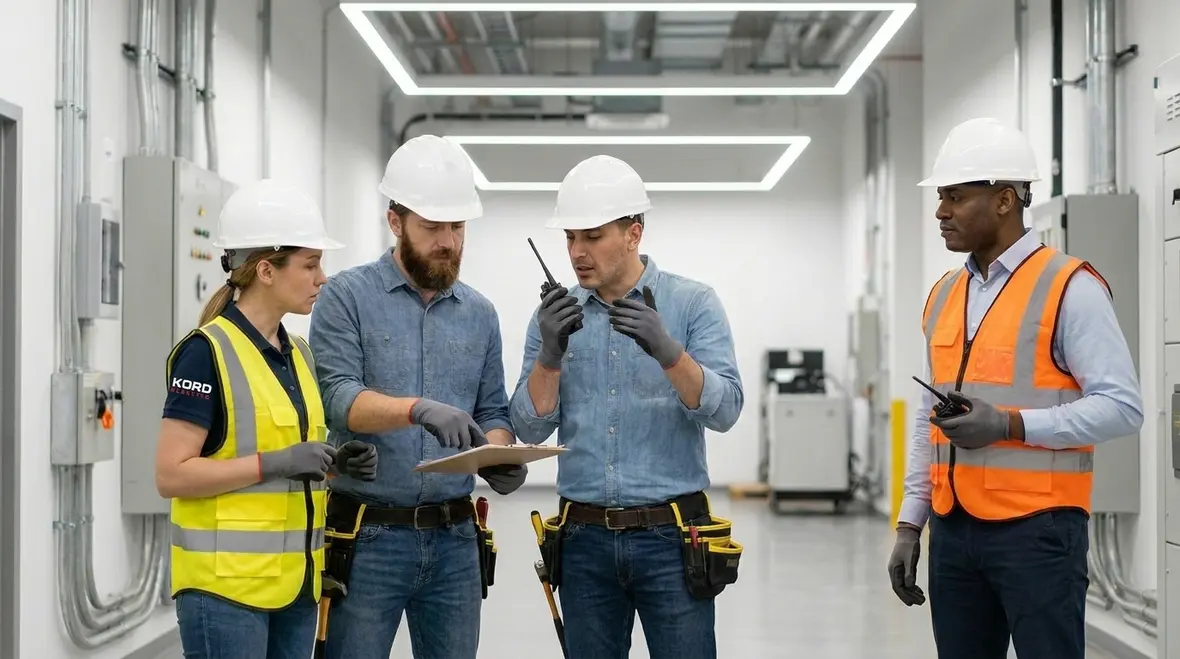
When power fails, safety becomes the non negotiable step. We include procedures for verifying absence of voltage, safe work boundaries, and lockout tagout alignment. Additionally, the plan addresses hazards that often show up after events like flooding, fire residue, or storm debris. Wet insulation, compromised conduits, and damaged cable terminations do not simply “heal.” They create new risks.
Next comes load prioritization. Others should categorize loads into tiers based on business impact and safety needs. Critical tiers often include fire alarm systems, emergency lighting, life safety circuits, network and security equipment, and specific production controls. Then we define a sequence for restoring them so the electrical system does not overload during return.
To support this, we help facilities evaluate generator and UPS capacity, transfer pathways, and restart behavior. For example, motor loads can demand a surge that trips protection if restoration occurs without coordination. Thus, the plan includes controlled ramp up steps and preplanned load shedding where appropriate.
For sites that already struggle with unstable power, pairing safety-first recovery steps with long-term corrections pays off. Many facilities strengthen their resilience by addressing chronic issues like voltage fluctuations in commercial and industrial systems before those weaknesses show up during a crisis.
Plan for standby power, grounding, and protection settings

Standby power keeps your operation alive, but it only works when it is sized, tested, and coordinated with the rest of the electrical system. Accordingly, we help others document generator details, including fuel type, run time, automatic transfer logic, and startup timing. We also cover UPS strategy, especially for panels that require clean power for controls and communications.
Protection and grounding matter just as much. After an incident, some equipment looks intact but behaves incorrectly. We include steps to inspect, test, and confirm protection settings before re-energization. That means reviewing breaker condition, verifying coordination assumptions, and checking grounding continuity.
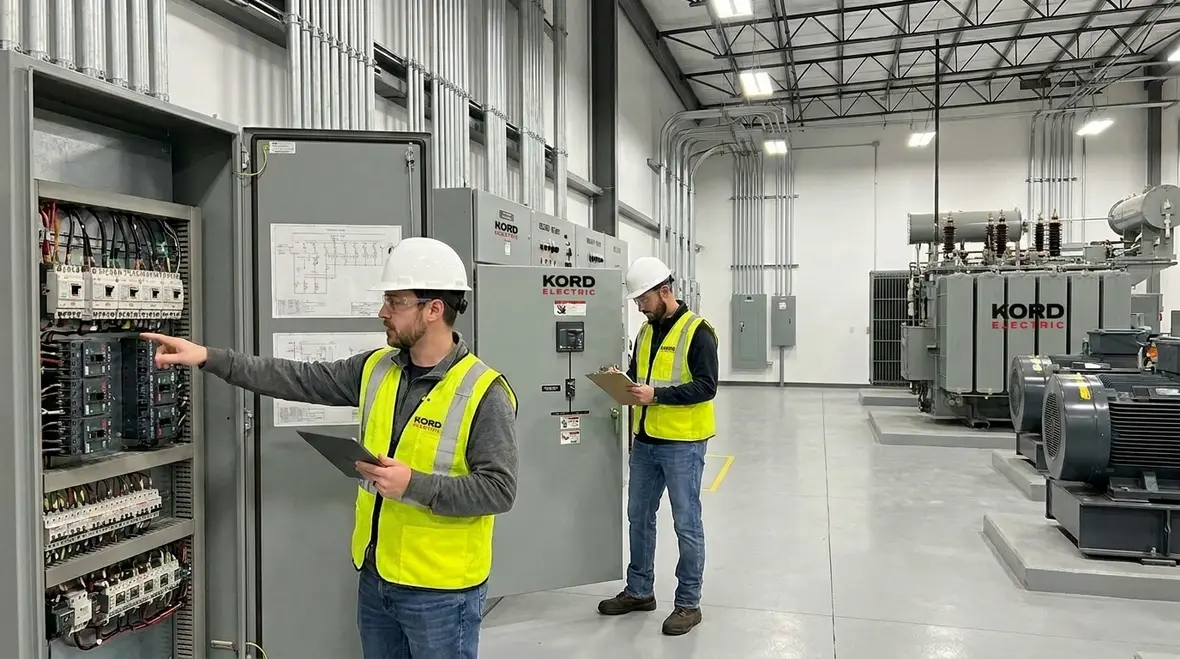
Our technicians and experienced service staff also advise on how to handle damaged electrical rooms and switchgear. In many cases, restoration cannot proceed until physical safety and insulation integrity get verified. So we plan the “stop points” in the timeline. That way, the recovery team does not rush to restore power and accidentally make the problem bigger. Nobody wins when the lights come back but the switchgear smokes later.
When severe failures do occur, having a team that already specializes in emergency electrical services makes those stop points safer and faster. Instead of guessing at settings in the dark, your plan calls in a crew that treats complex switchgear and standby systems like familiar territory.
Test the plan with drills and improvement cycles
A recovery plan that never gets used is like a fire extinguisher sealed in a box you forgot existed. To make sure business electrical disaster recovery stays effective, we recommend a drill schedule tied to your facility’s risk profile. Drills should test communications, safety actions, transfer to standby power, and load restoration order.
During drills, others should practice both the technical tasks and the decision steps. For instance, the team should know who authorizes de-energization, who confirms generator readiness, and how they document actions. Additionally, the plan should include variations, since not every event looks the same. A short outage differs from a substation failure. A generator can run, but that does not mean your distribution network is safe.
After each drill, we help others run a structured review. We track what worked, what delayed the team, and where confusion occurred. Then we update diagrams, checklists, contact lists, and restoration priorities. Over time, the plan becomes sharper and faster, which is exactly what you want when conditions are less than ideal.
Many facilities fold these drills into broader reliability programs. For example, pairing disaster simulations with a data center electrical maintenance checklist or factory troubleshooting routine lets teams practice both prevention and recovery without treating them as separate worlds.
Vendor coordination and parts readiness for major properties
Commercial and industrial facilities often rely on long lead times for switchgear components, breakers, relays, and specialty parts. Therefore, an effective recovery plan includes supply chain and vendor coordination. We help others identify critical spares, evaluate on site storage needs, and decide where to store replacement gear safely.
Additionally, we coordinate with utility contacts, standby power vendors, and field service providers. Others should keep documentation up to date, such as equipment serial numbers, warranty terms, and service history. Then the team can request help quickly and accurately, instead of trying to describe the problem like it is a plot twist.
In our experience, readiness also depends on paperwork. One line diagrams, panel schedules, and as built updates must exist when phones do not. So we encourage a controlled storage approach for recovery documents, including offline access and printed copies for field use.
When leaders want a broader roadmap that connects disaster readiness with long-term upgrades, resources like Kord Electric’s rewiring cost guide for commercial electrical systems can help them decide where to invest before parts shortages and failures dictate the timeline.
FAQ
Conclusion: Let us harden your recovery before the outage
Others should not wait for a storm, fire, or equipment failure to discover gaps in their electrical recovery. At Kord Electric, we help commercial and industrial facilities build and refine a practical disaster response that protects people, stabilizes critical loads, and speeds restoration. Our technicians and experienced service staff explain each step clearly, and we back the plan with testing and improvement. If you want your operation ready for the worst, contact Kord Electric today for an assessment and a recovery plan tailored to your site.
When you combine structured planning, grounded safety practices, and a field-tested partner, business electrical disaster recovery becomes less about panic and more about execution. Whether you oversee a data center, manufacturing plant, warehouse, or multi-tenant property, our team can help you align maintenance, upgrades, and emergency response into one coherent strategy. That way, the next time the unexpected hits, your facility is already several moves ahead.
If you are ready to turn “we will handle it later” into a concrete roadmap for resilience, Kord Electric is ready to help design, test, and refine your recovery playbook so your power systems respond with the same discipline your operation demands.