Business Power Outage Prevention for Facilities
Kord Electric focuses on business power outage prevention for commercial and industrial facilities and major property buildings, because downtime does not politely wait for business hours. We plan for the moment before the lights flicker, not the moment after alarms start shouting. In our view, proactive steps work like a calm fire drill: the risk stays real, but the chaos stays small.
Here is how we help organizations reduce disruption, protect people, and keep revenue moving when the grid gets moody. Yes, power can be unpredictable, but “surprising” is not a strategy. As our expert service staff often says, the best time to fix an electrical problem is when it still behaves like one.
What proactive business outage prevention looks like in the real world
In many facilities, disruptions happen quietly first. A breaker weakens, a connection overheats, a surge wears down insulation, or a transformer runs hotter than it should. Then, a busy shift notices the symptoms, and the clock starts losing value every minute. This is why business power outage prevention needs to be a program, not a reaction.
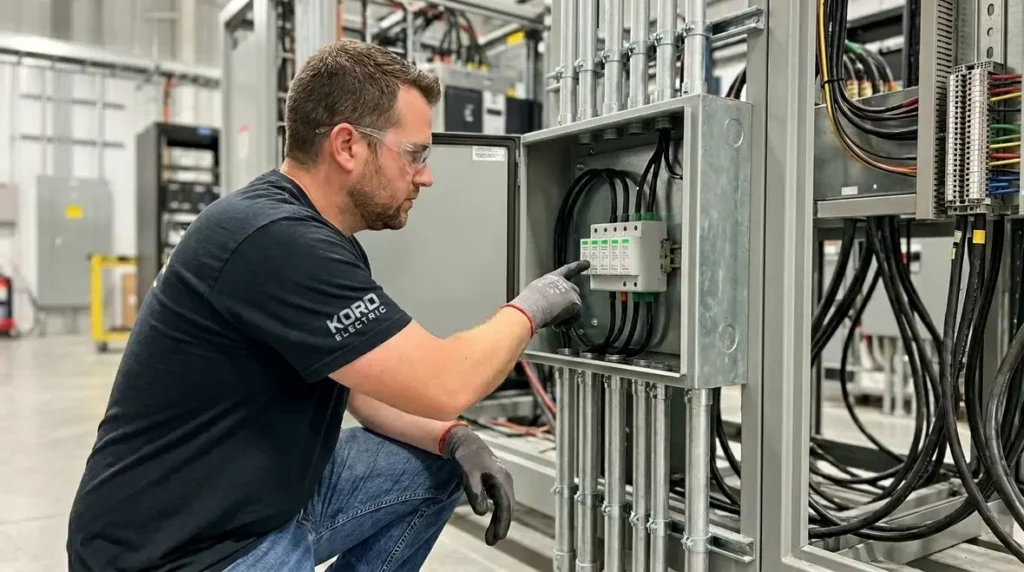
Kord Electric uses a structured approach. First, we assess how power moves through your building and where it can fail. Next, we identify the equipment that is most likely to cause a full outage or a disruptive partial loss. After that, we schedule work that matches your operating needs, so repairs happen without turning your facility into a construction site. Meanwhile, our technicians explain the findings in plain language, so decision makers can act with confidence and not just hope.
How we map risk across your facility and uptime priorities
To prevent power outage disruptions, we start by understanding uptime priorities. Some loads must stay alive at all costs, like safety systems, refrigeration, critical manufacturing lines, elevators, and data communications. Others can tolerate short interruptions, but not long downtime. Therefore, we help clients categorize loads based on criticality and operating impact.
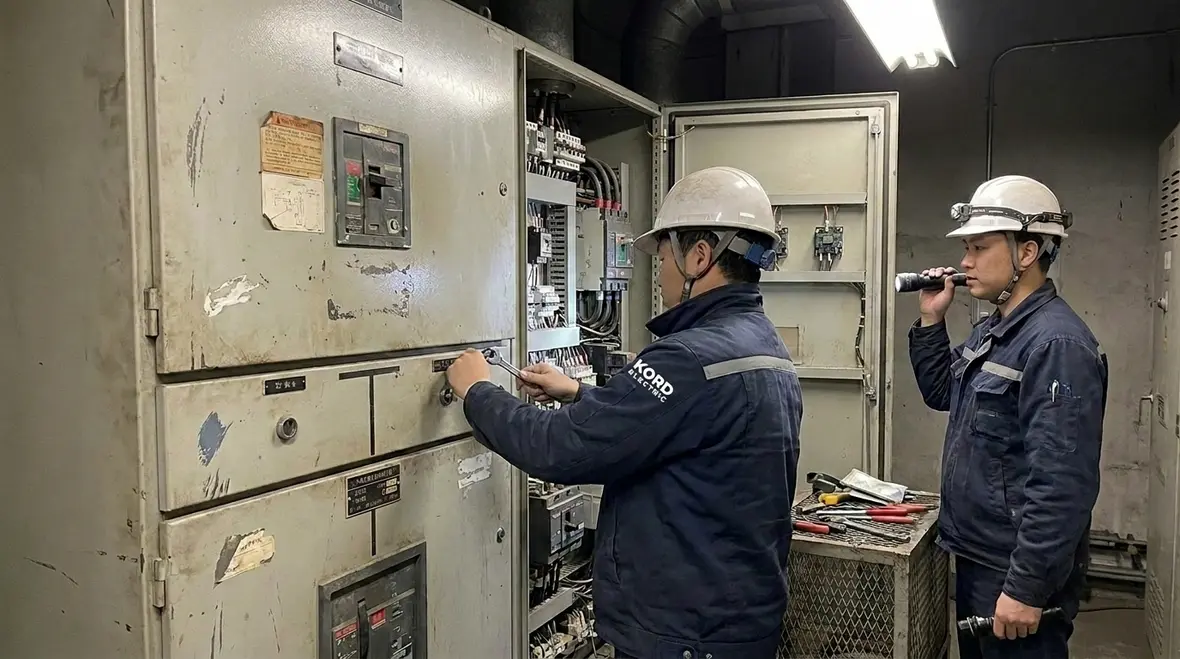
Then, we map risk by reviewing the electrical one line, past service history, and the way each panel, feeder, and switchgear section performs under real conditions. Transitioning from theory to practice, our technicians often walk through the areas that matter most and check the equipment that feeds key loads. They look for aging components, frequent trips, signs of thermal stress, and gaps in protective coordination.
And yes, we also ask the questions people avoid. Which circuits trip most often? Where do voltage complaints show up? When was the last time the facility saw a surge event? When we get those answers, we can plan business power outage prevention that actually fits your operations instead of copying a generic plan from the internet. (The internet is great, but it does not know your building’s habits.)
Why electrical inspections should run on a schedule, not a guess
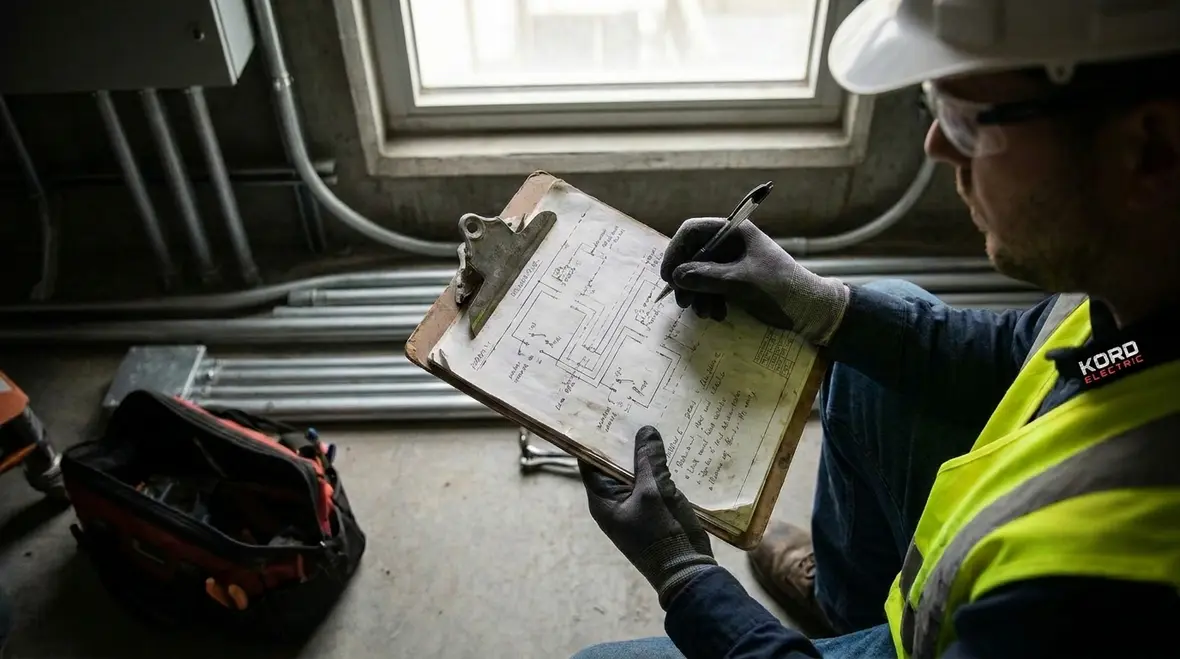
Inspections work best when they follow a timeline. If a facility waits until something fails, it usually pays twice: once in lost production or service, and again in emergency repair costs. Kord Electric recommends routine inspections for commercial and industrial environments because wear builds up quietly.
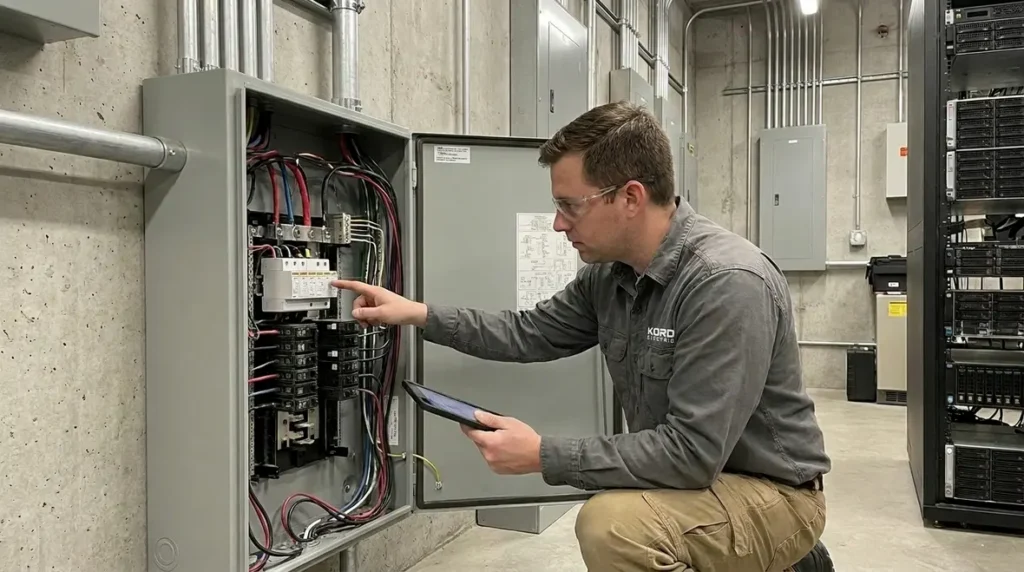
Our expert service staff performs targeted checks that go beyond a quick visual look. We review breaker condition, inspect terminations and connections, and evaluate protective devices. Just as important, we confirm that labeling, documentation, and system paths match what electricians and maintenance teams actually use. When records stay current, troubleshooting becomes faster and safer.
Also, we pay attention to patterns. For example, a small increase in nuisance trips can point to an underlying insulation issue. A recurring voltage drop during peak activity can signal inadequate capacity or a loose connection. These are the early warning signals that enable business outage prevention before disruption spreads.
Turning inspections into a business power outage prevention program
When inspections roll into a structured program, they do more than point out problems. They create a roadmap for upgrades, replacements, and targeted maintenance. Over time, this roadmap helps facilities avoid rushed decisions, expensive emergency work, and guesswork in the middle of a shutdown.
Kord Electric often helps commercial and industrial clients pair their inspection schedule with broader strategies like commercial and industrial electrical maintenance plans so every inspection connects to action, documentation, and long-term system reliability.
Maintenance that protects switchgear, feeders, and the big stuff
Commercial and industrial buildings often carry heavier electrical loads than small sites, which means the “big stuff” matters. Switchgear, transformers, switchboards, large motor control centers, and bus systems need maintenance that respects their role in steady power delivery.
At Kord Electric, we focus on practical actions that reduce failure risk. We help clients keep protective devices calibrated, ensure insulation stays in good condition, and check mechanical integrity. When equipment is designed to operate reliably for years, we treat it like an asset that needs care, not a black box that we only open after the lights go out.
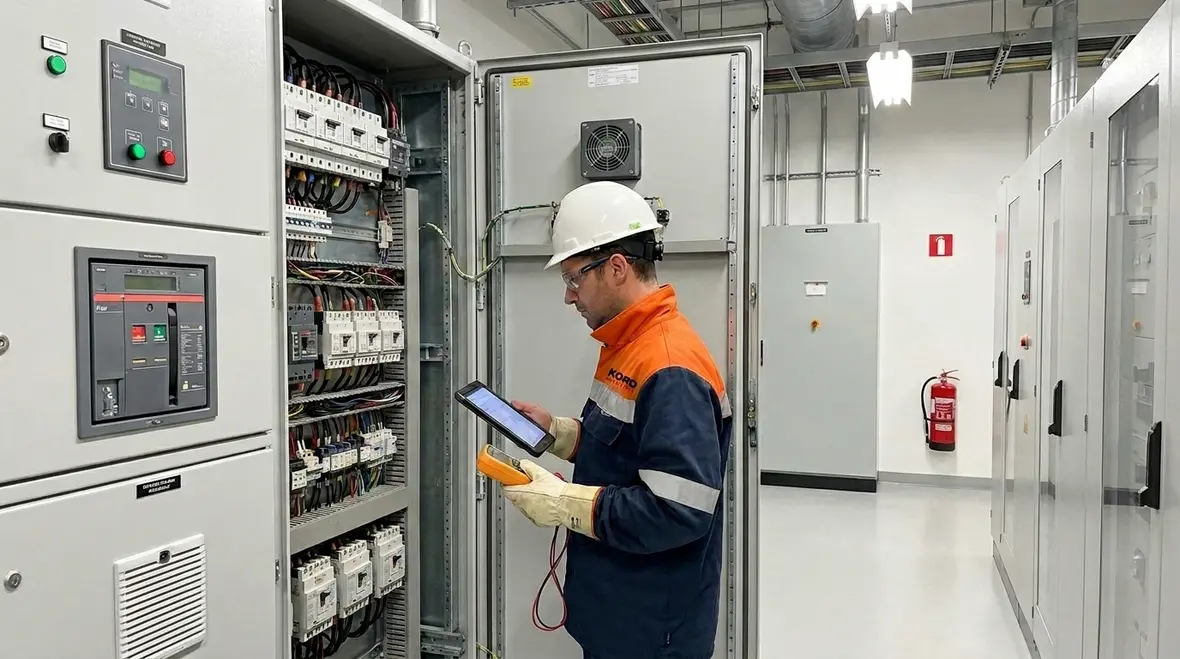
Depending on the facility, our technicians may also support load testing and power quality checks. This helps confirm whether the electrical system meets real operating demands and whether issues like harmonics or recurring transients are stressing components. Consequently, maintenance becomes proactive instead of purely reactive.
Pop culture analogy time: if your electrical system is a superhero, we help make sure the costume armor does not crack the first time someone pulls a villain out of the shadows. The villain, in this case, is heat, wear, and bad timing.
From hidden risks to scheduled care
The heavy equipment that carries your power often hides its stress until something fails. By pairing maintenance of switchgear and feeders with insights from resources like hidden electrical risks in commercial buildings, facilities can spot trouble early and fold corrections into scheduled downtime instead of surprise outages.
Backup power needs planning, commissioning, and clean operation
Many organizations install backup generators or UPS systems, then assume the job is done. However, equipment can sit idle for long stretches and still drift out of readiness. That is why we guide facilities through commissioning, testing, and maintenance so backup power performs when it matters most.
We help clients confirm sizing, load compatibility, and transfer behavior. For critical loads, the goal is not just “backup exists,” but “backup works correctly and efficiently.” Transitioning from purchase to performance, our technicians review control logic, check transfer pathways, and verify that protection settings coordinate properly with the rest of the system.
We also support planned testing that fits facility schedules. When a major property building runs essential services, you cannot always take systems offline. Therefore, we plan tests with operational awareness and clear communication. If your staff needs to know what to expect, our expert service staff explains steps, timing, and outcomes in a calm, structured way.
And if you are thinking, “We tested once and it was fine,” we hear you. But equipment aging is like a slow leak in a tire. You can drive for a while, and then one day you can not. Testing and commissioning close that gap.
Connecting backup systems to business power outage prevention
Backup systems do more than keep the lights on. When they are designed and maintained correctly, they protect life safety systems, critical production, and communications. In other words, they turn a potential full building shutdown into a manageable event. That is a core part of business power outage prevention, not an optional accessory bolted on at the end of a project.
Power quality, surges, and coordination that reduce disruption
Outages are only one type of disruption. Harmful power events can also cause equipment shutdowns, process interruptions, data errors, and motor failures. That is why coordination and power quality controls are part of business power outage prevention, even when the building does not go fully dark.
Kord Electric helps facilities address issues such as surge exposure, transient disturbances, and overvoltage conditions. We look at how protective devices operate together so one problem does not cascade into widespread shutdown. Proper coordination reduces the chance that a single fault triggers broader interruption than necessary.
In addition, we recommend targeted improvements for grounding, bonding, and protective device selection. Good grounding supports stable system behavior, while correct bonding helps maintain reliable fault clearing. When these are aligned, protective devices respond more predictably.
So, yes, you can prevent the dramatic outage moment. But you can also prevent the quieter events that make teams curse their computers like it is a Monday in April.
From voltage swings to smarter protection
Some facilities first notice power quality trouble as flickering lights, inconsistent motor performance, or unexplained control system resets. When that happens, Kord Electric can connect your business power outage prevention strategy with targeted services like diagnosing voltage fluctuations in commercial and industrial facilities, so protective devices, grounding, and load behavior work together instead of fighting each other.
Featured FAQ for commercial power outage prevention
Next steps with Kord Electric for reliable power
If your facility runs on uptime, you deserve more than emergency calls. Kord Electric helps commercial and industrial clients build a practical, scheduled plan for business power outage prevention through risk mapping, inspection routines, maintenance that protects major equipment, and backup systems that actually perform. Contact us for a site assessment and a clear recommendation set your team can act on. We will explain what we find, why it matters, and what we will do next. Let’s keep your lights steady and your staff out of panic mode.
For facilities that want regional support aligned with real-world operating demands, you can also connect your outage prevention strategy with dedicated Los Angeles County electrical services that understand industrial schedules, shift work, and local code requirements across the county.
And because even the best preparation cannot stop every unexpected failure, many organizations pair their long-term prevention strategy with responsive support like emergency electrical services so that when something does go wrong, the same team that knows your system can respond quickly, stabilize conditions, and guide the next round of improvements.
When you bring these elements together—structured inspections, disciplined maintenance, tuned backup systems, and clear documentation—business power outage prevention stops being a buzzword and becomes part of your facility’s everyday operating culture.
Ready to turn “We hope the lights stay on” into “We know what happens if they don’t”?