California Commercial Electrical Wiring Standards
Commercial Electrical Wiring Standards California Businesses Need to Know can feel like a maze, especially when your project schedule is tighter than a drum fill before the big drop. In California, commercial electrical wiring must follow strict rules so systems stay safe, reliable, and compliant. At Kord Electric, we guide major property owners, commercial, and industrial facilities through those expectations with practical planning and clear explanations from our technicians and expert service staff. In this article, we walk through what matters most, what people miss, and how wiring decisions connect to safety, inspections, and long term performance.
Why California Commercial Wiring Rules Matter for Buildings That Earn Money
Commercial and industrial facilities live on uptime. Therefore, electrical wiring standards are not just paperwork. They directly influence fire risk, equipment performance, power quality, and the ability to pass inspections without delays.
In our experience, the biggest problem is when teams treat wiring like “set it and forget it.” However, wiring quality affects everything downstream, from lighting reliability to motor control stability. And if the system is wrong, you do not just get a nuisance problem. You get downtime, rework, and sometimes a safety issue that no one can joke their way out of.
That is why California requires compliance with modern electrical codes for commercial buildings. Our technicians review jobsite conditions and then align the install with the code intent, not just the letter. Consequently, facilities stay safer and operations run smoother, even when the building is under heavy load.
How the Electrical Code Fits Together on Commercial Projects

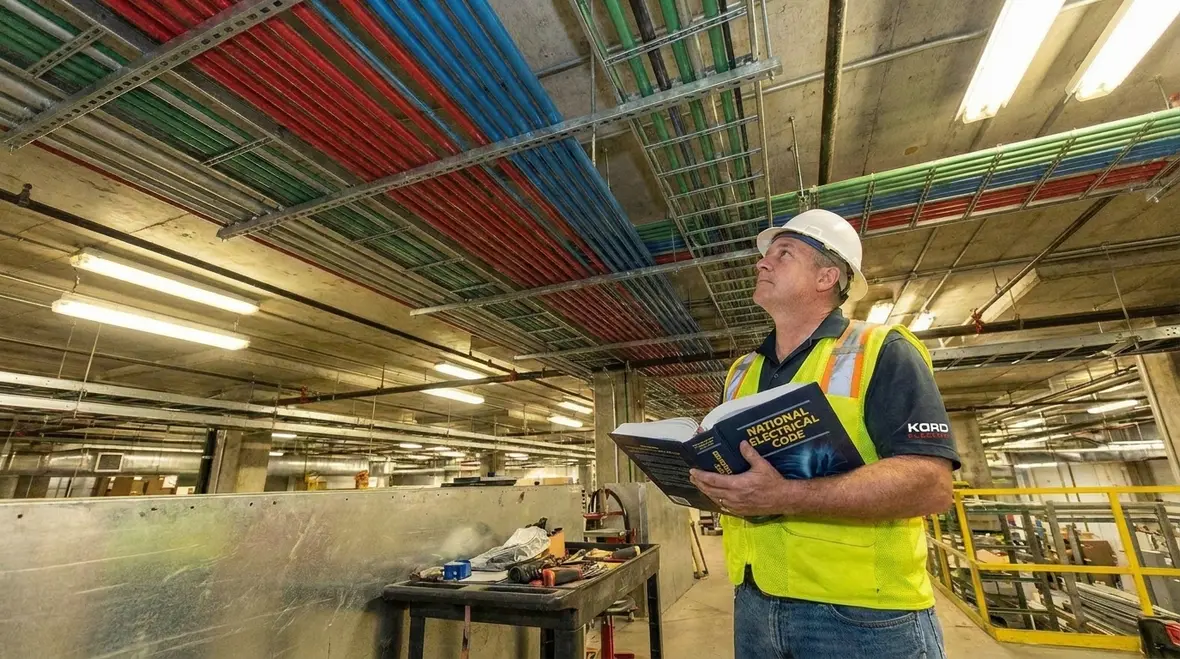
When people ask about commercial electrical wiring standards California Businesses Need to Know, they often picture one rule. In reality, multiple layers work together. Local adoption, permitting requirements, and the National Electrical Code create the base structure, while specific building needs drive the details.
We reference the guidance covered in our blog on electrical codes commercial buildings, because that overview helps property teams connect requirements to real installs. For example, cable and raceway choices, grounding and bonding, overcurrent protection, and panel labeling must align with the design and the inspection checklist. Additionally, commercial spaces demand consistent wiring methods that support safe operation across different tenant and usage patterns.
Our expert service staff also explains the “why” behind these rules. So instead of hearing, “Because code says so,” project leaders hear, “Because this protects people and keeps systems dependable.” And honestly, that is a lot easier to manage than guessing while inspectors stand there like the final scene of a suspense movie.
Conduit, Cable, and Raceway Choices That Hold Up in Real Conditions
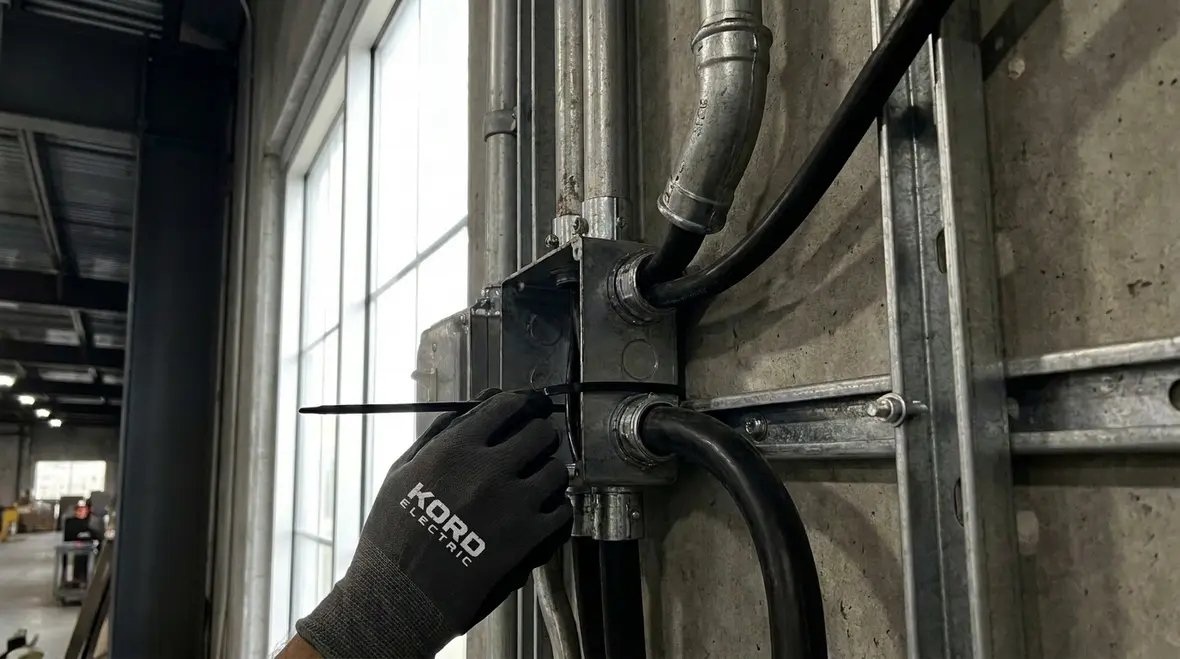
Wiring does not live a quiet life. In commercial and industrial settings, it faces heat, vibration, moisture risk, chemical exposure, and ongoing building activity. Therefore, conduit, cable type, and raceway routing must match the environment and the load plan.
We see teams cut corners by using generic materials, or by routing conductors in ways that ignore protection and access needs. Yet, when wiring runs through places where it can be struck, exposed, or trapped in heat, it degrades faster. Then, problems show up later as nuisance faults, performance issues, or failure during maintenance.
Instead, Kord Electric focuses on solid installation practices. Our technicians verify fittings, support spacing, bend radius requirements, and proper entry methods for enclosures. Furthermore, we ensure cable and conduit selections match the rated environment and the system design. This matters even more in larger buildings with multiple floors, long feeder runs, and complex distribution.
Grounding, Bonding, and Overcurrent Protection That Pass Inspections
Grounding and bonding help control voltage and support protective device operation. Overcurrent protection helps limit damage when faults occur. Together, these systems prevent small electrical problems from becoming major safety events.
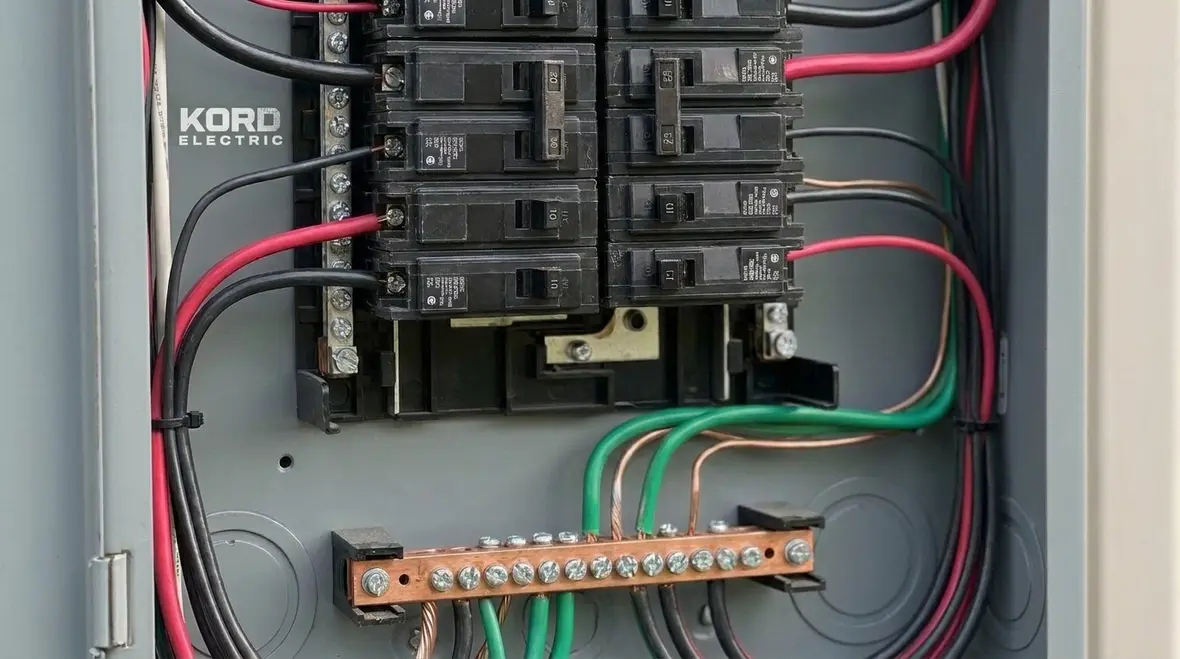
At Kord Electric, we treat grounding and bonding as a core part of the wiring standard, not a finishing step. We check continuity paths, confirm that bonding connections meet requirements, and verify that equipment grounding conductors are correctly sized and routed. Then, we coordinate that with protective device selection so the system behaves predictably.
For overcurrent protection, our expert service staff pays attention to coordination and labeling. Clear panel schedules and correct breaker sizing reduce confusion during troubleshooting and future expansion. Consequently, your facility can maintain operations without turning electrical maintenance into a scavenger hunt.
Also, we know how frustrating it is when inspectors ask for “one more correction.” So we document what we install and verify the details before the inspection window, which helps reduce surprises.
Panelboards, Load Calculations, and Labeling That Make Maintenance Easier
A well wired building still fails if distribution is unclear. Panelboards and feeders need a coherent plan, load calculations need to match reality, and labeling must be readable and accurate. When these elements align, maintenance teams can find circuits quickly and respond faster.
We follow the logic chain. First, we review the electrical scope and the expected loads for the building use. Next, we confirm that the service and distribution plan supports that load without pushing components beyond intended operation. Then, we ensure panel configuration and identification help technicians work safely.
At Kord Electric, our technicians also consider future growth. Many major property buildings need tenant improvements, equipment additions, or future system upgrades. Therefore, we design wiring pathways and panel capacity with a long view, so future changes do not require expensive tear out.
And yes, clear labeling saves time. It also saves sanity, which is priceless when the maintenance manager is trying to fix a tripped breaker and everyone is watching the clock like it is a countdown to overtime.
Special Requirements for Warehouses, Manufacturing, and Major Property Buildings
Commercial electrical wiring standards California Businesses Need to Know are not the same for every building type. Warehouses, manufacturing facilities, and major property buildings bring special realities: motor loads, frequent equipment changes, power distribution complexity, and sometimes harsh environments.
For these settings, wiring must support higher starting currents, stable performance for motor driven equipment, and safe disconnecting methods. Additionally, raceway routing and conductor protection need to account for equipment movement and physical hazards. We also plan for how people interact with the space, because the electrical system must remain safe during normal operations.
Our expert service staff helps property managers and facility leads connect those requirements to the site layout. We walk through the facility flow, identify areas with higher damage risk, and confirm installation routes that stay protected and accessible for maintenance.
In short, we treat wiring as a system that works with the building, not a set of wires laid on a schedule. That approach supports safety and reduces repeated repairs.
Testing, Documentation, and the Quiet Work That Prevents Loud Failures
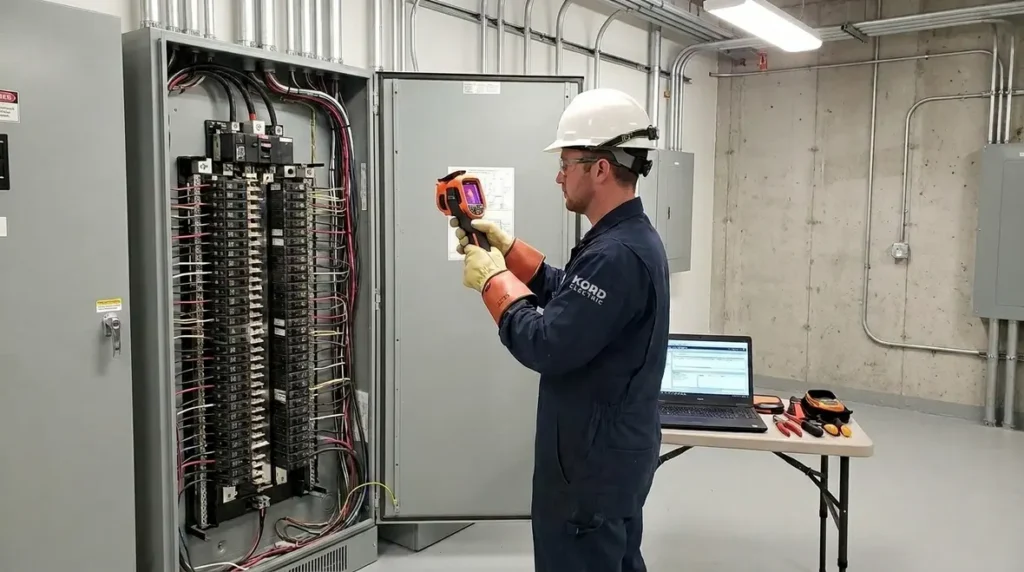
After installation, verification keeps the job from living in theory. Testing and documentation reduce the chance that wiring looks correct but behaves badly under load or during fault conditions.
Our technicians perform thorough checks that support safe operation. We verify connections, confirm correct termination practices, and follow the testing steps that match the installed system. Then, we document the results in a way that facility teams can actually use. For teams who want to go deeper into documentation strategy, our article on electrical system documentation best practices shows how records and real world maintenance connect over the life of a building.
In major commercial and industrial settings, documentation matters because multiple crews and vendors often touch the system over time. Therefore, our records support troubleshooting, future expansion, and compliance needs. And when something does go wrong, you want the answer in minutes, not days.
It is the difference between fixing a problem and chasing a ghost. Nobody likes ghost stories, unless they are in a movie, and even then the characters should stop touching wiring they do not understand.
If your building is already wrestling with overloads, nuisance trips, or unexplained power issues, our commercial electrical troubleshooting process article walks through how we diagnose and resolve those problems without turning your facility into an experiment.
FAQ for Commercial Electrical Wiring in California
Frequently Asked Questions (Short Answers)
What is the most common wiring mistake in commercial buildings? Incorrect installation details, incomplete grounding or bonding, or unclear panel labeling that slows maintenance and inspection readiness.
How often should commercial electrical systems be tested? Testing depends on the system, usage, and code requirements, but verification during projects and planned maintenance helps reduce risk.
Can we expand an electrical system later? Often, yes. Yet, design decisions during the original install must support future feeders, panel capacity, and safe routing.
Do we need documentation for future tenant changes? Yes. Clear records help future work stay consistent, safer, and easier to troubleshoot across major property buildings.
Plan for Long Term Compliance, Not Just the Next Inspection
Commercial electrical wiring standards California enforces are not a one time hurdle. Codes evolve, tenants change, and equipment gets upgraded. Facilities that treat wiring as an ongoing strategy instead of a one off task stay ahead of both safety risks and operational surprises. That includes scheduling routine preventive work, addressing hidden issues before they escalate, and budgeting for upgrades that keep older infrastructure aligned with current expectations.
If your building is aging, or if you are planning a renovation or expansion, it may be time to pair your wiring review with broader code upgrade planning. Our guide on electrical code upgrade consulting for renovations explains how to map existing conditions against new requirements so you avoid surprises in the field and keep projects moving on schedule.
For property teams across the region, our dedicated Los Angeles County electrical services help connect design, installation, and maintenance into a single, dependable plan. From warehouses to data rooms, alignment with commercial electrical wiring standards California inspectors expect becomes far simpler when one team owns the details from start to finish.
CTA: Let Kord Electric Handle the Standards So Your Building Stays Ready
If you manage a commercial, industrial, or major property building, do not gamble with wiring details. At Kord Electric, we align installations with commercial electrical wiring standards California Businesses Need to Know, and we back it with clear explanations from our technicians and expert service staff. Contact us to review your project scope, plan your electrical distribution, and verify the details before they turn into costly delays. We build wiring systems that hold up under real operations.
When you are ready to turn plans into reliable power, our team can coordinate everything from conduit layout and panelboard configuration to emergency power and documentation. For facilities that need a service partner beyond the initial build, our regional commercial and industrial support services help keep wiring, panels, and protective devices aligned with the latest commercial electrical wiring standards California adopts over time.