
Commercial Electrical Load Calculations Guide
Commercial Electrical Load Calculations: A practical expansion playbook
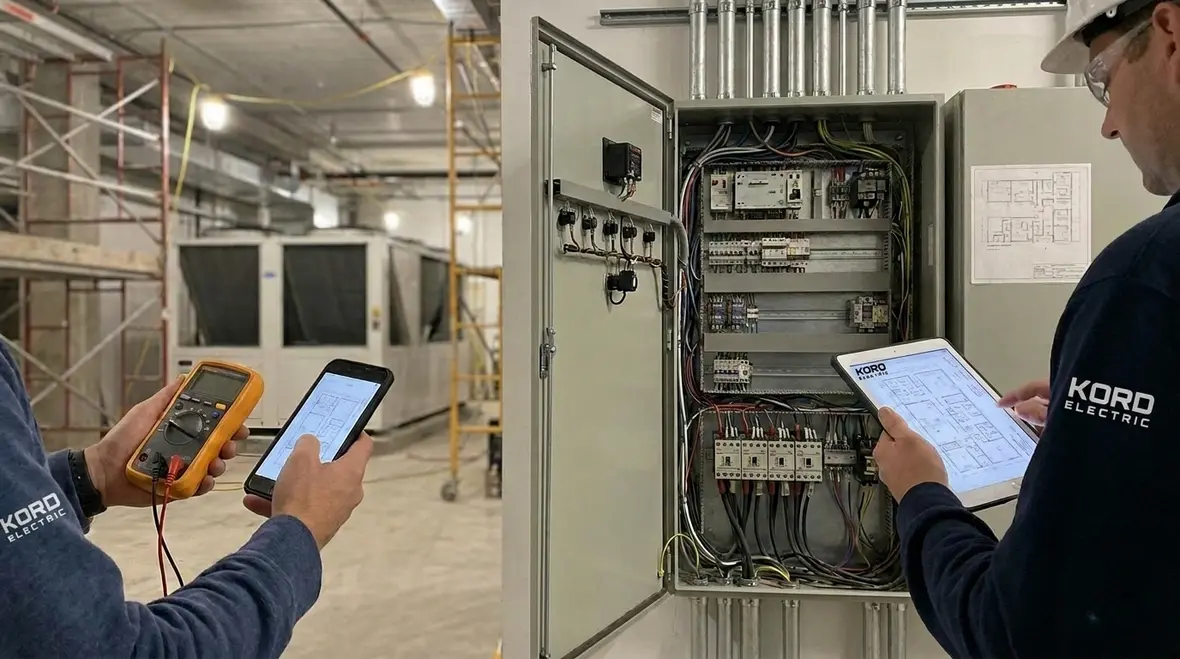
When a company expands, power needs almost always expand too, and that is where a commercial load calculation guide becomes the difference between a smooth move and a “why is everything tripping” incident. Kord Electric helps teams plan for new tenants, renovated wings, added production lines, and bigger HVAC systems by using a clear commercial electrical load calculation approach from day one. Our process starts with gathering equipment details, then sizing feeders, breakers, and transformers with realistic demand factors. In other words, we do not guess, and we do not hope. We calculate, we verify, and we document.
Now, we will walk through how others should perform commercial electrical load calculations for expansion in commercial and industrial facilities and major property buildings, using the same kind of maintenance planning thinking we share in our commercial and industrial electrical maintenance plans resources. And yes, our technicians explain it in plain language, because nobody wants a power meeting that sounds like a math lecture from a late night sitcom.
Step one: Map the facility changes and define the expansion scope

Before any numbers come out, our experts ask one calming, direct question: What changes, exactly, and where? We start by listing every added or modified load tied to the expansion, such as new lighting zones, rooftop units, process equipment, pumps, elevators, kitchen exhaust, servers, and welding or air compression systems. Then we assign the change to a location, panel, and electrical system.
At this stage, our technicians do something many teams skip: they confirm the existing electrical one line diagram and panel schedule are accurate. If the documentation is outdated, the load calculation becomes a very confident guessing game. Therefore, we field-check nameplates, circuit usage, and actual operating patterns when needed.
- We identify which areas get new service equipment and which areas reuse existing gear.
- We confirm operating hours and duty cycles, since “runs all day” is not the same as “runs during shifts.”
- We note start behavior, like motors that draw high inrush current.
Then we set the baseline and the expansion load. This is where the project stays controlled. Because if the scope shifts after the calculations are done, the design can drift like a shopping cart with one stuck wheel.
Step two: Build the load table from equipment data, not estimates
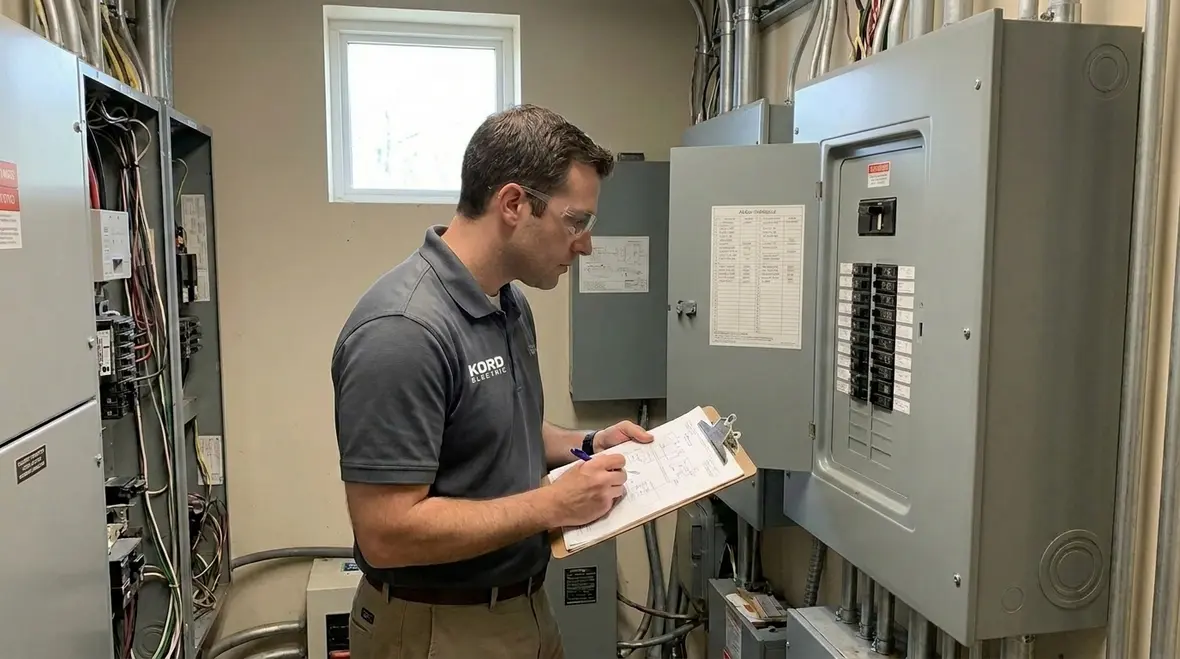
Next, we create a load table. This is the heart of a strong commercial electrical load calculation process. We pull data from manufacturer nameplates, submittals, and spec sheets whenever possible. After that, we fill in the values needed for sizing, such as voltage, phase, horsepower, full load amps, kW ratings, and motor types.
Importantly, we also separate loads into categories that behave differently. Motors act differently than computers. Lighting acts differently than HVAC. And lighting loads have their own rhythms.
Our team often uses a method like this, and we explain it as we go so no one feels left behind:
- Lighting loads: We use design wattage, zoning, and lighting control assumptions.
- Receptacle loads: We apply appropriate coverage rules based on the intended use.
- HVAC and refrigeration: We account for compressor and fan motor behavior, plus any demand changes.
- Motors and process loads: We include starting impacts and typical operating cycles.
- Special equipment: We treat major loads like elevators, medical equipment, or large kitchen ventilation with care.
At Kord Electric, our technicians also flag missing data early. If a piece of equipment lacks clear nameplate values, we ask for clarification before the design locks in. This saves time later, and it keeps everyone from playing “spot the electrical surprise.”

Step three: Apply demand factors and diversity so sizing matches real use
Once the load table exists, the next step is demand. This is where teams either make it realistic or make it expensive. We apply demand factors, diversity, and occupancy patterns that fit the facility type. In commercial and industrial settings, the “sum of everything at full load” rarely matches how power actually behaves.
We also handle the hard truth: equipment does not start kindly. Motors can pull high inrush current. Therefore, we use methods that consider starting and running conditions, so the design supports the real world and not just a spreadsheet fantasy.
Our approach includes:
- Reviewing how many units run at the same time during peak periods.
- Checking whether loads are simultaneous or staggered, such as compressors that cycle.
- Considering control strategies like staging fans or optimizing chillers.
Then we validate the calculated maximum demand against existing capacity. If the expansion pushes the service closer to limits, we recommend upgrades early, rather than waiting for the first transformer “mood swing.”

Step four: Size conductors, breakers, and transformers with selectivity in mind
Now we turn numbers into design. After demand and load aggregation, we size feeders, branch circuits, overcurrent protection, and transformers. Here, we do not just ask, “Will it work once.” We ask, “Will it work safely, reliably, and in a way that protects the rest of the building when something goes wrong.”
That is selectivity. It means the right device trips first, not everything at once like an overzealous bouncer at a club. We coordinate breaker ratings, check conductor ampacity, and consider temperature and installation conditions.
Key actions our expert service staff helps explain include:
- Ensuring conductors support the calculated current under installation conditions.
- Verifying breaker sizing and trip behavior match the load type, including motor branch circuits.
- Confirming transformer kVA selection supports continuous load and growth, with appropriate margin.
- Evaluating voltage drop, since long runs can reduce performance and shorten equipment life.
In major property buildings, we also check for future tenant changes so expansion does not mean rework every year. We support planning that matches how facilities actually grow, including phased construction.
Step five: Plan for power quality and future maintenance needs during expansion
Even when load calculations look right, power quality can still create problems. That is why our maintenance plan thinking matters. When expansions add new drives, variable frequency drives, UPS systems, or high-efficiency equipment, harmonics and transient events may change. In response, we evaluate grounding, bonding, and potential surge impacts.
Furthermore, we align the electrical design with maintenance routines so the facility can stay stable after the new loads go live. In our commercial and industrial electrical maintenance planning discussions, we emphasize how good upkeep reduces downtime and surprises. Therefore, the electrical design should support inspection access, labeling, and clear documentation for technicians.
Our team encourages clients to consider:
- Inspection points for panels, terminations, and bus bars after install and at regular intervals.
- Testing schedules for protection devices and any monitoring equipment.
- Thermal and torque checks on critical connections once the system runs under real load.
- Clear as built drawings so future expansions do not start from confusion.
And yes, our technicians explain these steps without the fog machine. They walk through what they will check, why they check it, and how it protects both safety and operations.
For facilities already troubleshooting recurring issues, pairing this commercial load calculation guide with broader reliability steps from our other resources, such as electrical system troubleshooting for factories and hidden electrical risks in commercial buildings, helps connect expansion projects to day-to-day stability.
Dual column checklist for expansion load readiness
To keep planning sharp, we use a quick readiness checklist during expansion projects. One side focuses on the engineering inputs, and the other side focuses on what the facility team must provide for accurate sizing.
Engineering inputs we need
- One line diagram and panel schedules
- Voltage, phase, and available service capacity
- Equipment nameplate data and motor details
- Operating hours and duty cycles
- Feeder lengths and installation conditions
- Planned staging of systems and start sequences
Facility details others should confirm
- Exact expansion scope and timeline
- Expected peak operational periods
- Any tenant or process changes
- Existing equipment that may be retired
- Utility billing and demand response constraints
- Any known trouble spots in the past
When both sides line up, load calculations become a tool for certainty. And nobody wants uncertainty when the project schedule is already doing parkour.
FAQ: Commercial electrical load calculations for expansion
Conclusion: Get expansion-ready power planning with Kord Electric
Expansion should feel like momentum, not a guessing game with breakers. Kord Electric supports commercial and industrial facilities and major property buildings with disciplined commercial electrical load calculation work, thoughtful demand planning, and design choices that consider real operation and safe protection. Our technicians explain the assumptions as we go, so your team can make decisions with confidence. If your project includes new HVAC, equipment, tenant improvements, or facility upgrades, contact Kord Electric now and let us calculate the power before the power calculates you.
If your facility team is planning broader upgrades or wants support that extends beyond a single expansion, you can also connect this commercial load calculation guide approach with Kord Electric’s regional services, including their dedicated Los Angeles County electrical services for complex properties across the region.
From expansion planning to ongoing reliability, Kord Electric helps commercial and industrial sites treat load calculations, maintenance, and troubleshooting as one connected strategy instead of separate projects. That way, every new tenant, production line, and system upgrade fits calmly into the same reliable electrical backbone.


