Commercial Electrical Load Testing for Safety
Commercial electrical load testing that prevents unsafe surprises
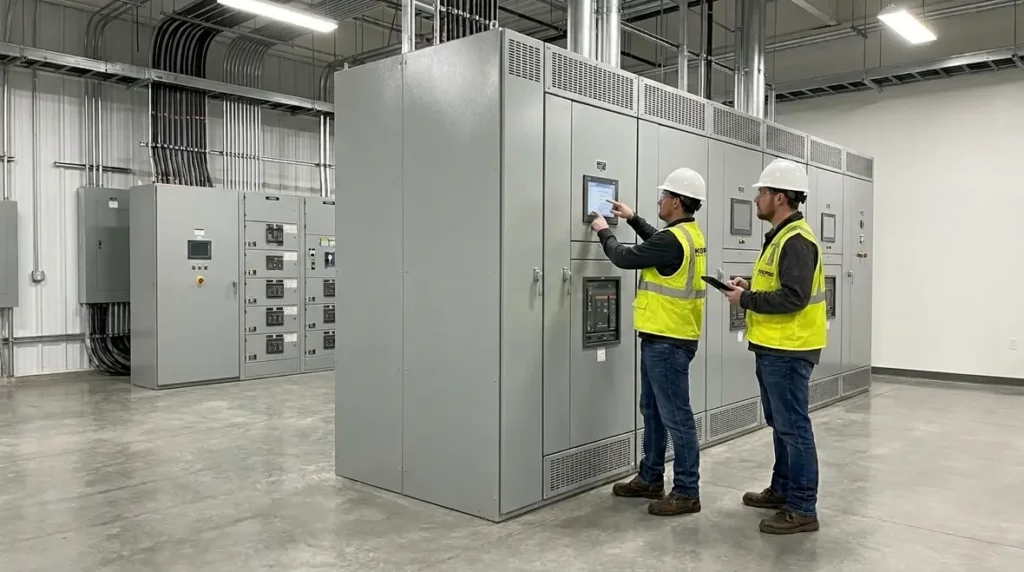
At Kord Electric, we treat commercial electrical load testing like a smoke alarm with manners. It does not yell at you, but it tells us what is really happening inside your electrical system long before a problem turns into an emergency. For commercial and industrial facilities, and for major property buildings, conditions change over time. Equipment ages, circuits get reworked, and demand shifts with every new tenant, process, or renovation. That is why our technicians and expert service staff run load testing with a clear goal: confirm safe performance under real operating conditions.
In this article, we explain why load testing matters, how voltage and demand interact, what we look for during field measurements, and how our approach stays practical for business owners who still have meetings to attend.
Why load matters more than nameplate numbers

Many electrical issues hide behind decent paperwork. A panel can look properly labeled, a one line diagram can look neat, and yet the system still struggles when your motors start, your HVAC cycles, or your production line loads up. Therefore, we do commercial electrical load testing to see how your electrical system behaves when it is actually working.
When load is applied, we can measure voltage stability, current draw, and power quality impacts. Then we compare what we see to what the system should deliver. As a result, we separate normal variation from unsafe or degrading conditions.
Think of it like tasting soup at the stove, not just reading the recipe. Yes, the recipe might be correct, but your customers still taste what matters. And electricity does not care about your spreadsheets.
Safety risks that show up during real demand
Commercial and industrial environments face higher electrical stress than smaller buildings. Furthermore, long runs, mixed loads, and frequent operating cycles can stress conductors, connections, switchgear, and transformers. Load testing helps us identify where heat, voltage drop, and imbalance begin to form before they cause failure.
- Overheating connections: Loose or corroded terminations can resist current and generate heat. Load testing helps confirm whether the system stays within safe temperature and voltage limits.
- Voltage sag under load: When demand increases, weak components or undersized conductors can cause voltage to dip. That dip can stress motors, drives, and control systems.
- Harmonics and power quality issues: Nonlinear equipment can create distortions that increase heating and reduce equipment life.
- Unexpected imbalance: Three phase loads can drift as equipment changes. Imbalance can overwork neutral conductors and create uneven wear.
And just like sitcoms, the dangerous part is often not the dramatic moment. It is the slow buildup that looks fine until it is not. Our technicians watch for those slow buildups.
Voltage stability and how it connects to load performance
Voltage and load do not live separate lives. They interact constantly. That is why we also reference how voltage fluctuation patterns can affect commercial and industrial operations. For example, our guidance on voltage fluctuations in commercial and industrial settings highlights how real world operating changes can lead to dips, surges, and instability.
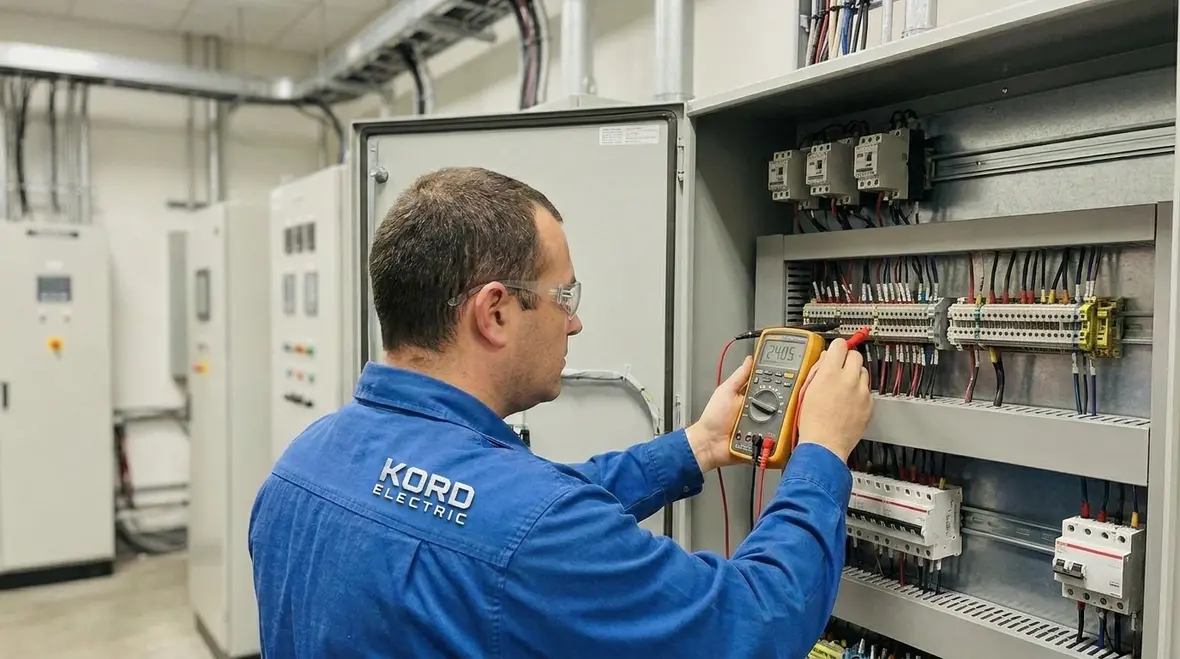
Here is what we check in a practical way. First, we observe voltage at the service entrance and at key distribution points while loads ramp up and stabilize. Next, we look at the relationship between demand levels and voltage behavior. Then, we use the data to determine whether issues originate upstream from the utility feed, inside your service equipment, or in downstream circuits.
In other words, we do not just measure voltage for the sake of a number. We measure it to explain the story behind your equipment complaints. If a facility manager hears that production slows, drives trip, or HVAC controls act strangely, voltage instability is often part of the answer.
How our technicians run load tests in commercial buildings
We keep the process methodical so we can deliver clear outcomes that operations teams can act on. Our expert service staff follow a field tested plan for safety and accuracy, especially in commercial and industrial facilities where downtime is not optional.
We typically begin by reviewing your one line diagram, recent electrical changes, and any equipment that has shown trouble. Then we coordinate test windows with your team. After that, we collect measurements under controlled load conditions, and we repeat key readings to confirm consistency.
- Pre test inspection: We examine terminations, switchgear conditions, grounding and bonding indicators, and existing labeling for practical traceability.
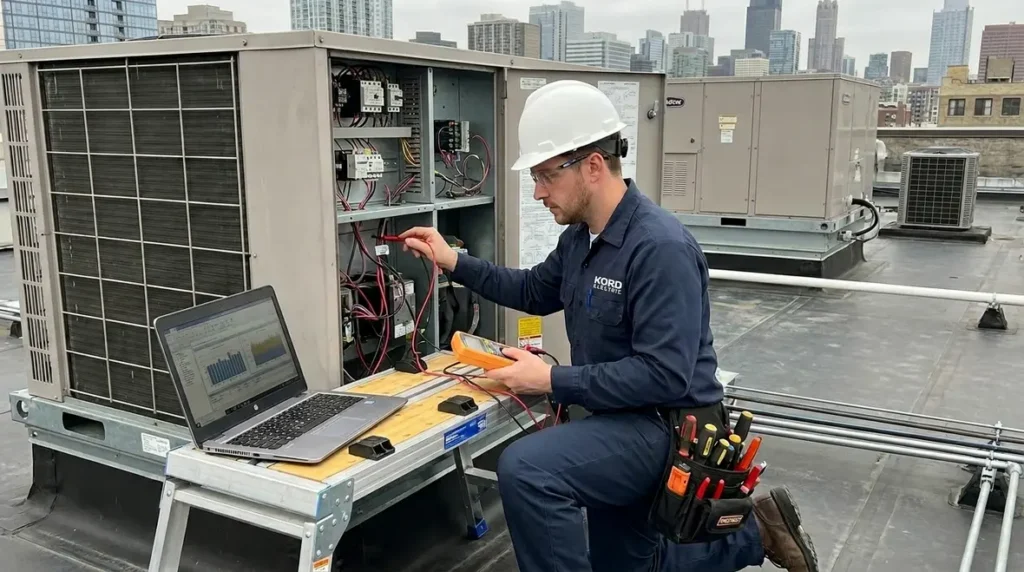
- Instrument setup: We use calibrated tools to capture voltage, current, and power quality data during load changes.
- Load profiling: We monitor how demand behaves during start ups, steady operation, and load transfers where applicable.
- Data review: We compare results to expected system performance, then identify where stress is most likely occurring.
- Action recommendations: We provide repair priorities, maintenance guidance, and next steps tailored to your facility.
At Kord Electric, we also explain findings in plain language. So even if someone in the office hears “THD” and thinks it is a new coffee order, our team clarifies what it means for equipment life, reliability, and safety.
What good results look like, and what we flag early
After commercial electrical load testing, we summarize what we found in a way that helps decision makers move quickly. We focus on trends and risk areas, not just single point readings. Therefore, we look for conditions that could lead to future failure or unsafe operation.
- Stable voltage under load: A healthy system holds voltage within acceptable limits as demand increases.
- Balanced phase currents: Uneven load distribution can indicate wiring changes, uneven equipment operation, or aging components.
- Low connection resistance indicators: We flag symptoms that point to loose or degraded connections.
- Power quality compatibility: We identify whether harmonic content or transient behavior could damage sensitive controls.
- Clear root cause direction: We help your team understand whether the issue is service equipment related, distribution related, or load related.
And yes, we know everyone loves the phrase “it’s probably fine.” Yet electricity rarely rewards wishful thinking. Our approach gives you evidence, not vibes.
Maintenance planning that fits real operations
Commercial and industrial facilities run on schedules, budgets, and production goals. So we recommend load testing and electrical evaluation as part of a broader maintenance plan rather than a one time event. Over time, equipment upgrades, added circuits, and process changes can shift electrical behavior.
For many major property buildings, we also coordinate testing around tenant turnover and seasonal load patterns. In colder months, HVAC demand ramps. In warmer months, cooling and dehumidification cycles change load shapes. Then there are special cases such as motor replacements, new manufacturing lines, or upgrades to lighting and controls.
When you plan tests intelligently, you reduce surprise downtime. You also prevent the “why did this trip at 2 a.m.” mystery, which is funny only in the way a nightmare is funny after you wake up.
To keep those surprises in check, many facilities tie commercial electrical load testing directly into structured programs like dedicated electrical preventive maintenance, or into broader strategies built around commercial and industrial electrical maintenance plans that track system health over years instead of weeks.
Frequently asked questions about load testing
What does commercial electrical load testing measure?
We measure how your system performs under real demand, including voltage behavior, current draw, and power quality indicators during load changes.
How often should a commercial building get load testing?
We recommend scheduling based on equipment age, operational changes, and manufacturer guidance. Many facilities benefit from periodic testing plus testing after major electrical modifications.
Can load testing be done without shutting down operations?
Often we can plan test windows with minimal disruption. We coordinate with your team to apply load conditions safely and efficiently.
What happens after the test?
Our expert service staff review the data, identify risk areas, and provide clear recommendations for repair, maintenance, and next steps.
Does load testing replace equipment inspections?
No. Load testing complements inspections. We verify performance under demand and use that information alongside visual and component evaluations.
Will load testing help with voltage fluctuation issues?
Yes. We can link voltage stability problems to specific parts of the system and operating conditions, helping you target the real cause.
Is this service only for large factories?
We serve commercial and industrial facilities and major property buildings. The goal stays the same: safer operation and reliable power for critical loads.
Related services that support safer, more reliable power
Commercial electrical load testing works best when it is part of a bigger picture. Facilities that schedule structured testing often also invest in services like electrical preventive maintenance to keep critical gear clean, tightened, and documented, or targeted solutions for lighting installation and upgrades that reduce waste on the load side of the system.
If your operations rely on sensitive electronics, process controls, or high density equipment, pairing load testing with deeper diagnostics for voltage fluctuations in commercial and industrial facilities gives you a clear view from the service entrance all the way out to individual panels and feeders.
Conclusion: let us test what you cannot see
We cannot always feel electrical stress until it shows up as trips, overheating, or damaged equipment. That is why Kord Electric brings commercial electrical load testing into the real world of your facility, with clear measurements and plain language findings. If you manage a commercial or industrial site or a major property building, contact us to schedule a test plan that fits your operations. Then we will help you reduce risk, protect equipment, and keep your business running with confidence, not luck.
And if you ever find yourself wondering whether a breaker trip, a flicker, or a warm panel is just “one of those things,” that is usually your cue to get data instead of guesses. A structured commercial electrical load testing plan gives you that data—and a path to fix the issues it reveals.
When you are ready to turn those invisible risks into clear action steps, Kord Electric’s team is a call or click away. From preventive maintenance to focused diagnostics, they build programs that match your building’s reality, not just its drawings.
To connect load testing with the rest of your facility strategy, consider pairing it with a dedicated electrical preventive maintenance program or broader commercial and industrial electrical maintenance plan so your system gets the same level of attention your production schedule does.
If your building is already showing signs of trouble—frequent trips, unexplained shutdowns, or flickering lighting—pairing commercial electrical load testing with rapid support from Kord Electric’s emergency electrical services helps you stabilize systems now and prevent repeat problems later.