Commercial Electrical Maintenance Requirements CA
Commercial electrical maintenance requirements California facilities must follow a careful, documented approach, because electrical systems do not “improve with age.” They just get more interesting, like a sitcom that stopped being funny in season two. In this guide, Kord Electric explains what we and our expert service staff expect from commercial and industrial facilities and major property buildings in California. We also explain how preventive electrical maintenance reduces downtime, protects people, and keeps your utility and insurance conversations from turning into a fight scene. And yes, we will cover the boring parts, but only the kind of boring that keeps your lights on.
What California expects from commercial sites
Third party expectations in California come from a mix of codes, utility rules, and good business practice. While the exact paperwork and cadence vary by facility type, the core idea stays the same: you need a plan, you need records, and you need inspections that match the risk level of the equipment. In other words, you cannot treat electrical maintenance like a “when something breaks” hobby.
Kord Electric supports commercial and industrial facilities and major property buildings with structured preventive maintenance, so the facility team knows what to do, when to do it, and why it matters. And because we use experienced technicians, our field notes do not read like guesswork. They read like decisions were made on purpose.
Preventive maintenance that keeps risks under control
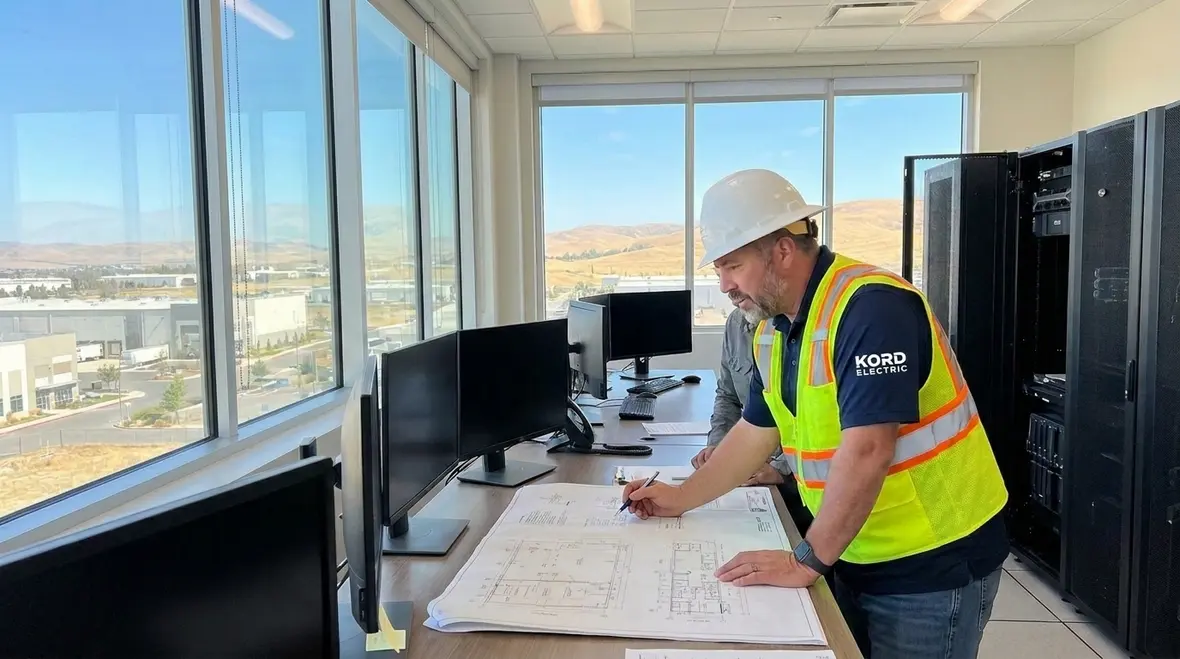
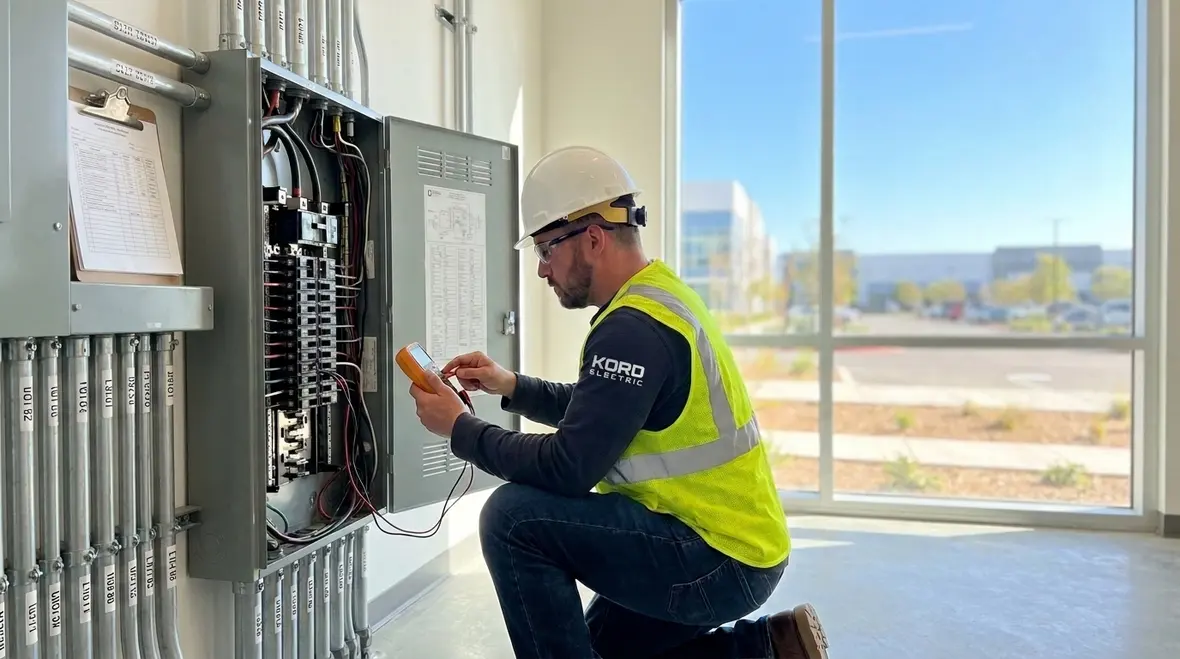
Preventive maintenance works best when it follows a real sequence, not random checkups. First, we verify what the facility has. Then we map the critical loads, the life safety circuits, and the equipment that most often causes outages. After that, we test, measure, clean, and document, so you can show what you did and why.
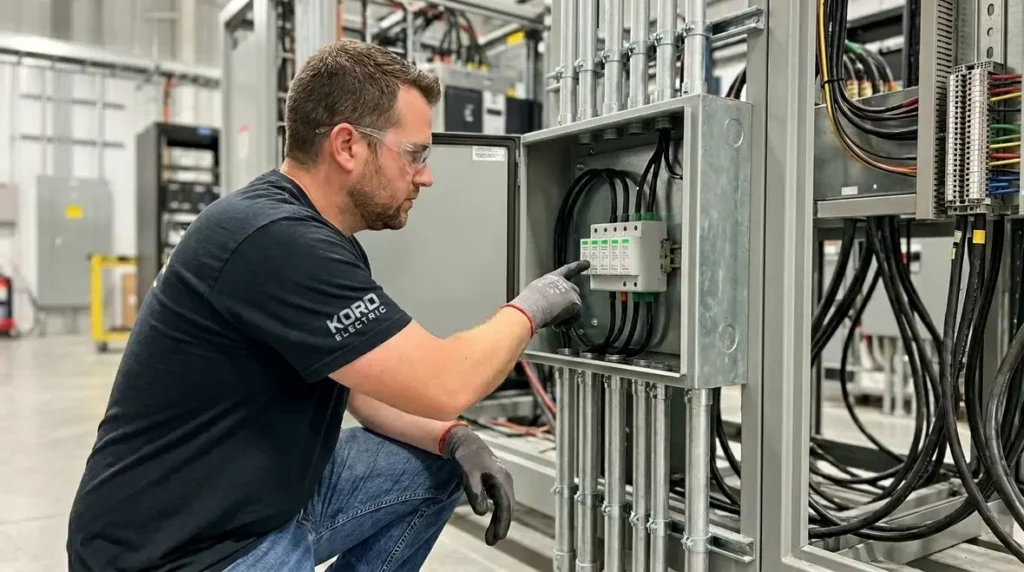
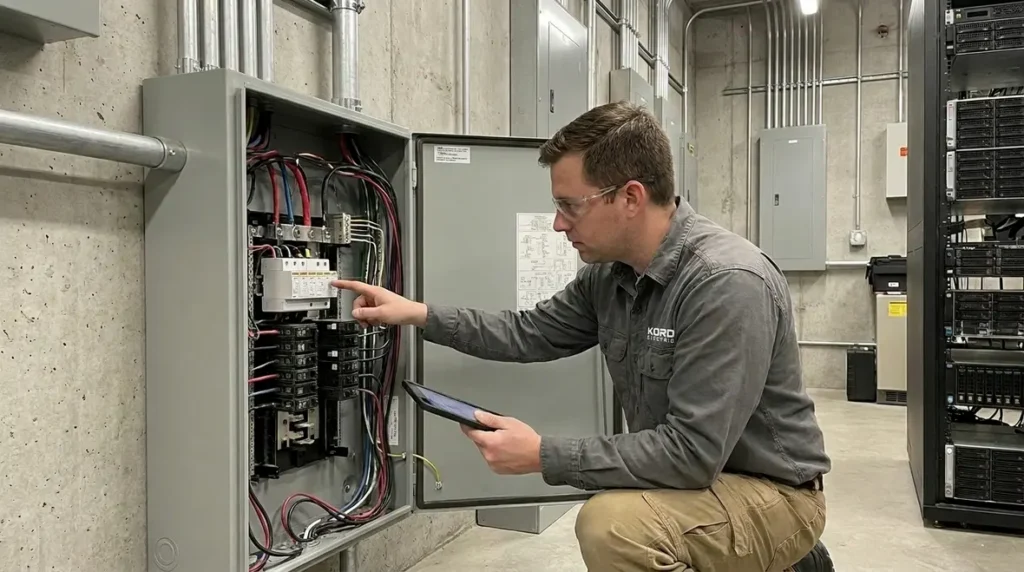
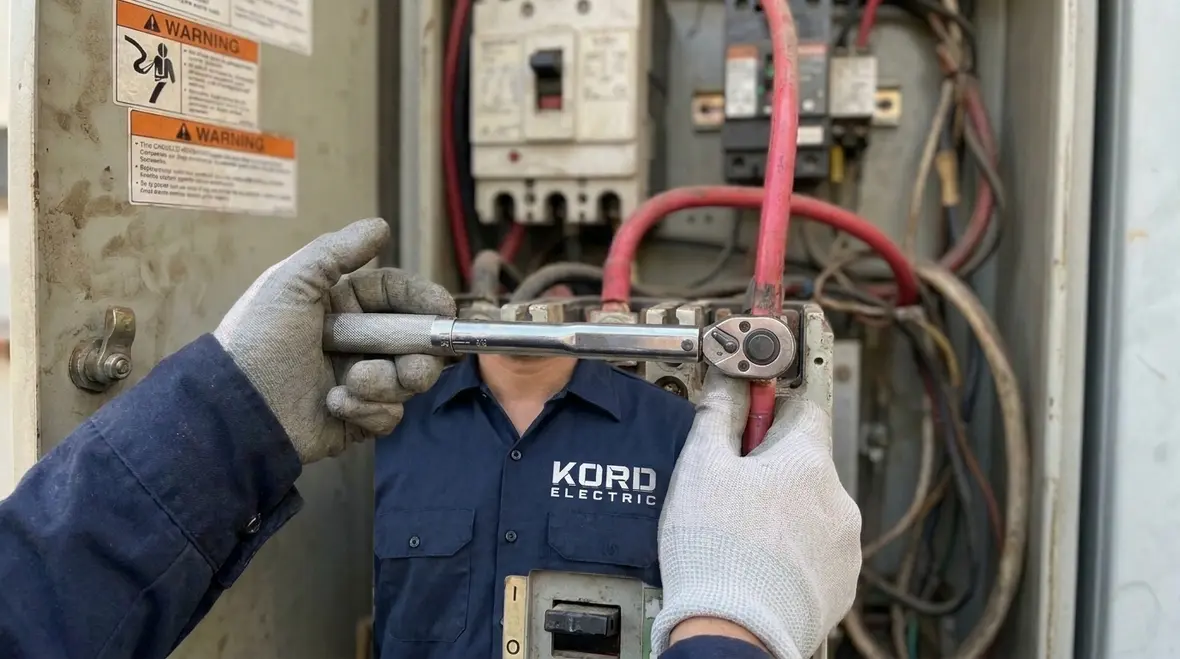
Our process aligns with the preventive approach described on our electrical preventive maintenance services page, including electrical inspection, testing, torque and connection checks, and targeted correction of issues that can grow quietly. In addition, our technicians explain findings in plain language during site visits, so facility managers and maintenance teams do not need an engineering degree just to understand risk.
- Inspections and condition reviews of switchgear, panels, and distribution equipment
- Thermal and visual assessments to catch problems before they become outages
- Verification and tightening of connections where proper torque matters
- Identification of wear, corrosion, overheating, and moisture intrusion paths
- Documentation that tracks what we found, what we tested, and what we corrected
How electrical systems fail, and why routine checks matter
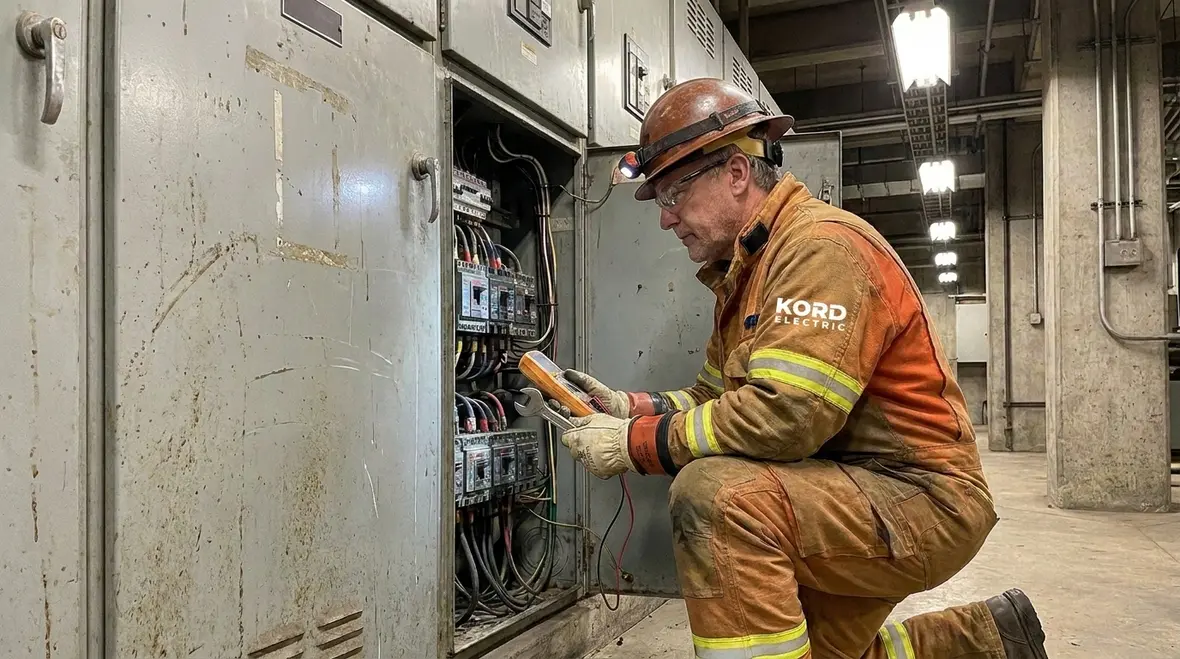
Electrical failures rarely announce themselves with fireworks. Instead, they appear as heat, looseness, insulation breakdown, and contamination that build slowly. Over time, a minor loose connection can lead to high resistance, which then creates extra heat, which then damages the connection further. It is a self fueled cycle, like a bad reality show producer who never learns.
To interrupt that cycle, we focus on the points where aging and vibration show up first. For example, we pay close attention to bus connections, breaker compartments, terminations, and environmental conditions such as humidity and dust. Furthermore, we do not treat every facility the same. We tailor the schedule to equipment type, operating hours, and past performance.
In addition, our expert service staff helps teams understand what to watch between service visits. That means fewer surprises for operations staff and fewer emergency callouts that always seem to happen on the busiest day. Transitioning from reactive repairs to planned maintenance also improves budgeting, because you can plan for parts and labor instead of hoping for the best.
Recommended schedule for commercial electrical maintenance requirements California
Every major property building and commercial facility has its own rhythm, but maintenance schedules should still include planned inspections, performance checks, and periodic testing. When teams follow commercial electrical maintenance requirements California guidance in practice, they usually build a plan around criticality. That means more frequent attention for switchgear and panels that feed life safety systems, production loads, or tenant critical services.
Kord Electric helps facilities set a practical cadence based on the facility’s equipment and risk profile. Typically, the plan includes a year round mindset, so you do not wait for annual work to discover problems that started months earlier. Moreover, we coordinate our work with facility operations, because shutting down power is not a casual activity.
- Routine visual and functional inspections for distribution equipment and control devices
- Testing and verification for key components, aligned with usage and operating conditions
- Thermal or similar diagnostic checks to spot abnormal heating trends
- Torque and connection checks on targeted equipment to reduce risk from looseness
- Corrective actions with documentation, so the facility learns and improves over time
And yes, schedules matter, but so does execution. We send technicians who know how to document properly and communicate clearly. As a result, facility teams get the information they need without drama.
Documentation, compliance support, and what facility managers actually need
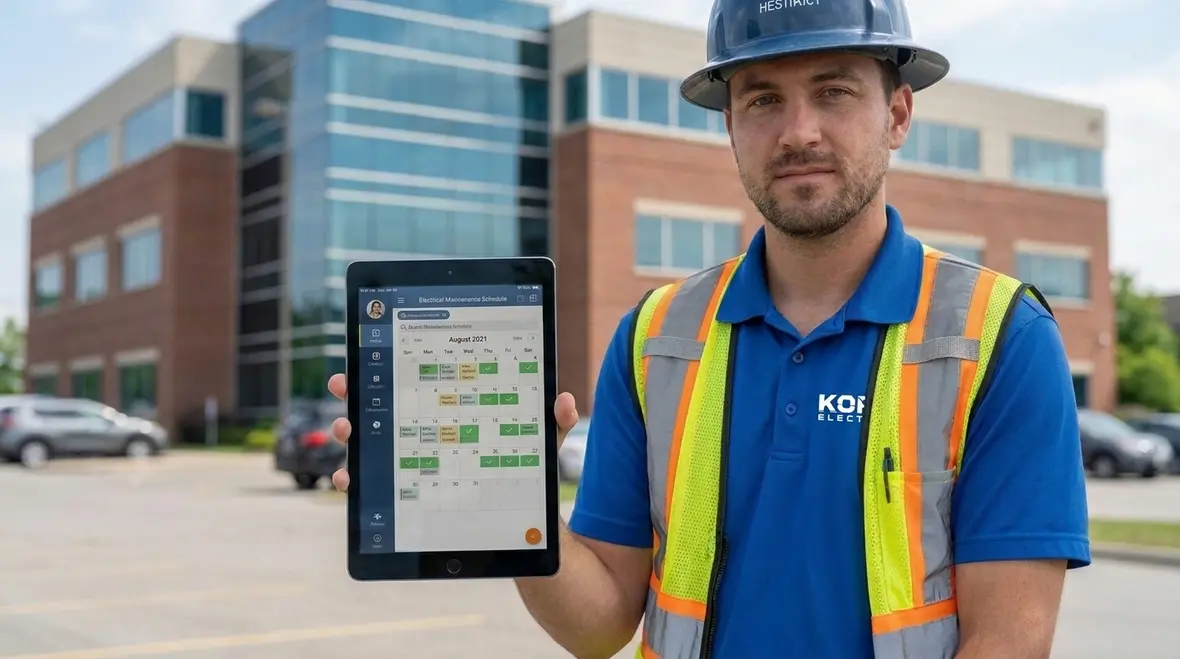
Commercial and industrial facilities often face audits, insurance reviews, and internal reporting. Therefore, documentation becomes part of the maintenance work, not an afterthought. When Kord Electric performs preventive maintenance, we record observations and test results, then we outline corrective actions. This helps teams demonstrate that they managed risk, not just performed tasks.
Facility managers usually need three things: proof of inspection, clarity on findings, and a roadmap for next steps. Our technicians explain what the data means and what it could impact. Then they help the facility prioritize repairs based on safety and operational risk. In addition, we help coordinate planning so the facility can keep operations moving while still protecting people and assets.
Sometimes, teams discover conditions that look minor but signal future failures. For example, repeated signs of overheating around a specific termination may point to a recurring connection issue. Instead of treating it like a one off problem, our approach helps isolate the root cause and reduce repeat failures.
That is where preventive maintenance becomes a business tool, not just a technical checklist.
To see how this plays out across larger portfolios, many facility teams combine our maintenance work with structured programs like the ones described in our commercial and industrial electrical maintenance plans guide and related resources on the Kord Electric blog. These resources give California organizations practical ways to align documentation, safety, and reliability under one strategy.
FAQ for commercial electrical maintenance
Making it practical, with expert technicians on site
When Kord Electric takes care of preventive maintenance, we show up with a plan, not a vibe. Our technicians build a clear path from inspection to testing to correction, and we keep the conversation grounded in real facility needs. That matters because electrical systems connect directly to operations, safety, and uptime.
In practical terms, we help facilities manage the “in between” work too. That includes identifying problem patterns, recommending priorities, and aligning maintenance actions with what the building can safely handle during scheduled windows. As a result, your team spends less time troubleshooting and more time operating.
And if someone says “it still runs,” we politely remind them that running is not the same as safe. Even cars run right up until they do not, and electrical issues follow a similar script. Nobody wants the season finale to be a blackout.
For organizations managing multiple facilities across Southern California, pairing commercial electrical maintenance requirements California compliance with a regional partner also matters. Kord Electric’s Los Angeles County electrical services support campuses, office portfolios, and industrial sites with the same structured communication, reporting, and follow through you see on a single building project.
Conclusion: protect uptime, then let us do the heavy lifting
Commercial and industrial facilities in California need preventive electrical maintenance that is planned, documented, and carried out by experienced technicians. Kord Electric supports major property buildings with structured inspections, targeted testing, and clear reporting that helps facility teams prioritize repairs. If you want a maintenance program built for uptime and safety, contact us today. We will review your equipment, discuss your operational constraints, and map a practical plan for the next maintenance cycle. You handle the business, and we handle the electrical.
Call Kord Electric to schedule your preventive maintenance consultation.
If you are ready to connect your commercial electrical maintenance strategy with broader reliability planning, you can also explore how our dedicated service programs support long term safety and uptime across your portfolio. From electrical preventive maintenance and troubleshooting to regional support for complex facilities, our team is built to keep your systems steady while your operations grow.