Commercial Electrical Panel Capacity Upgrade Guide
Commercial electrical panel capacity: how a safe upgrade keeps businesses running
At Kord Electric, we work with commercial and industrial facilities and major property buildings where one mistake can turn into expensive downtime. So when teams ask about commercial electrical panel capacity, we do not treat it like a vague concept. We treat it like a real-world number that decides whether lights flicker, motors struggle, and critical systems stay online.
In our experience, many panels still “work” until they do not. Then everyone suddenly remembers that electricity has feelings and does not like being ignored. As our expert service staff explains during maintenance visits, upgrades are not about replacing parts just to spend money. They are about protecting load, managing heat, and keeping safety systems doing their job.
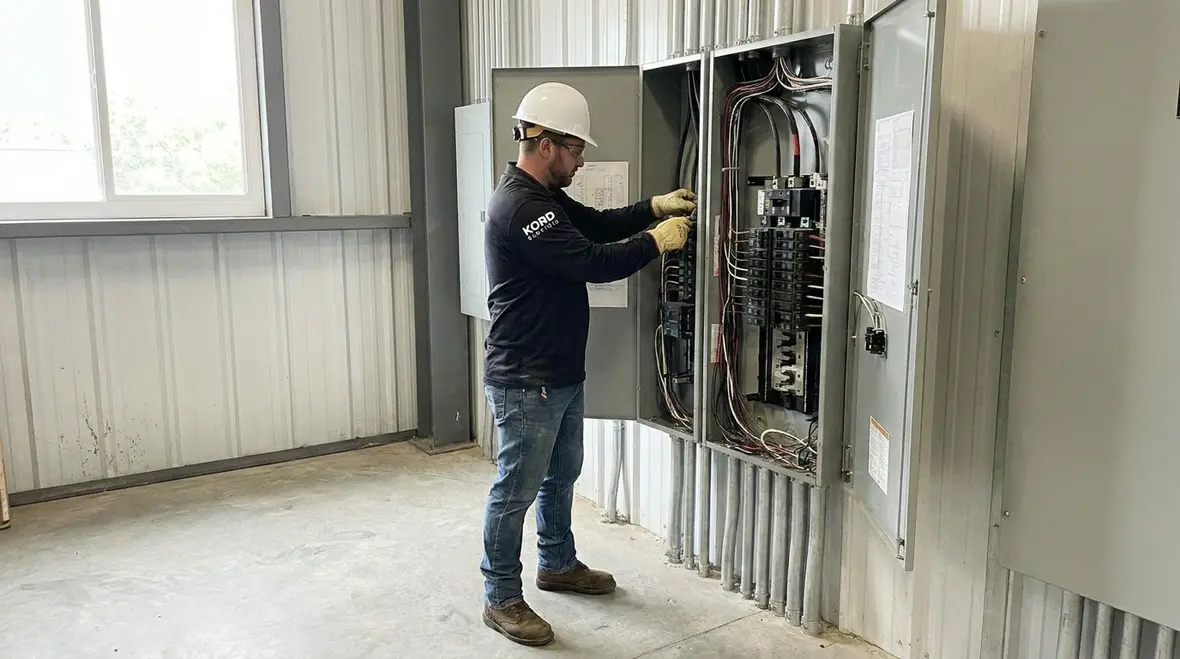
Because these upgrades connect directly to long term reliability, they also fit naturally into how we think about structured care across a facility. For teams building a bigger strategy around inspections, documentation, and targeted fixes, our commercial and industrial electrical maintenance plans help keep panel decisions aligned with the rest of the electrical system.
Signs of overload and heat build up inside the panel
First, we look for visible and measurable signs that the panel has outgrown its job. Even without opening a door, you can often spot the warning story: persistent breaker trips, a burning smell, discoloration around breakers, or a panel that feels hotter than normal during peak hours. Additionally, staff may notice that certain circuits fail more often, especially when production ramps up or tenant activity spikes.
When our technicians investigate, they usually find a pattern. Overloaded circuits, loose connections, and worn terminations raise resistance. Then heat climbs. Finally, that heat damages insulation and shortens the life of components. It is like leaving a laptop on a blanket. At first it “seems fine,” and then you start searching for a new laptop at the exact worst time.
For commercial and industrial buildings, this matters because a panel that runs too hot can trigger nuisance trips or worse, equipment shutdown. We also pay attention to harmonics from drives, HVAC systems, and power supplies. Those effects can overload neutral conductors and trip breakers in ways that look random but are actually repeatable.
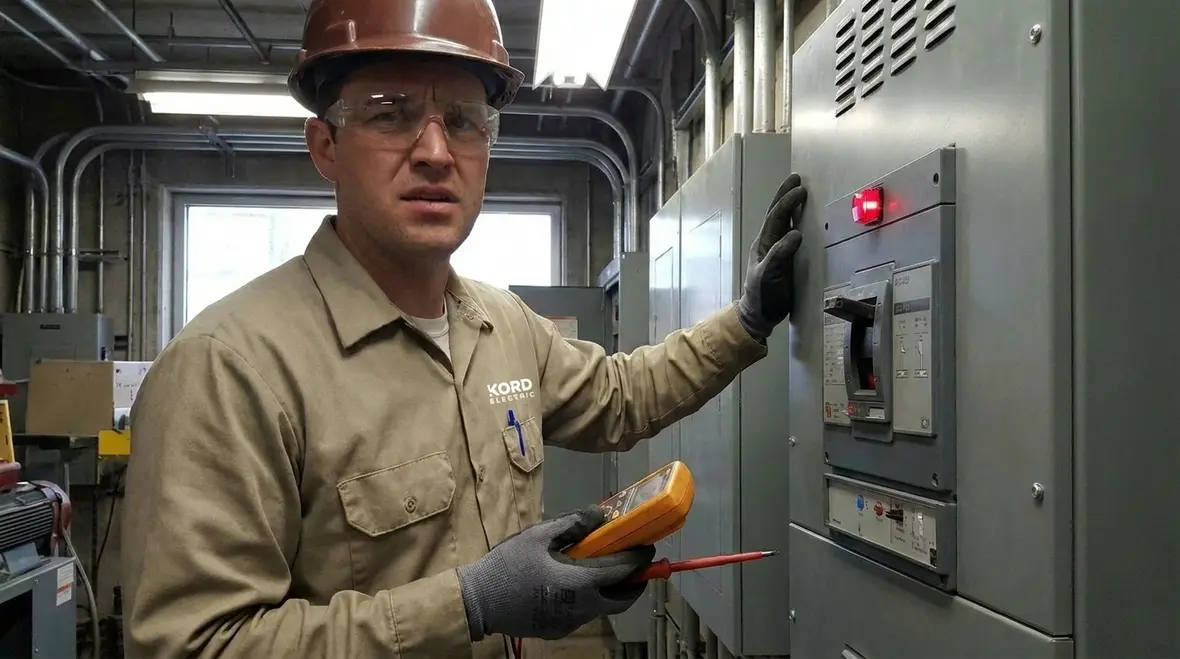
In many facilities, these warning signs appear at the same time other upgrades are happening: new production equipment, additional tenant spaces, or expanded EV charging. That is exactly when commercial electrical panel capacity should be checked against real world load instead of relying on old drawings or “it used to be fine” memories from years ago.
Breaker chatter, nuisance trips, and how it signals risk
Next, the team should treat frequent breaker trips as a serious alert, not an annoyance to ignore. Nuisance trips happen when breakers sense abnormal conditions, even if the building team cannot see the cause right away. Therefore, if your breakers trip after simple events like starting motors, switching on large loads, or running charging equipment, the panel likely needs attention.
In many cases, our expert service staff will confirm that the breaker sizing and settings no longer match the real load profile. Over time, facilities add equipment. Then the panel becomes a historical museum of old capacity, while the building keeps growing. In addition, loose lugs and aging bus bars create uneven current paths. As a result, breakers may “work,” but they may also fail under true fault conditions.
We explain this clearly to property managers and plant supervisors. If a breaker trips too easily, the business loses continuity. If it trips too late or does not trip at all, the facility loses safety. Either way, upgrade work becomes a smart decision before a problem escalates.
These conversations often connect naturally to other risk based topics our team covers in depth, such as hidden failures behind walls and above ceilings. When panel issues pair with concerns like aging feeders, undersized neutrals, or inconsistent grounding, resources like our article on hidden electrical risks in commercial buildings help stakeholders understand why nuisance trips are usually a symptom, not the whole story.
When electrical maintenance plans show panels are falling behind
Most commercial and industrial sites benefit from a maintenance plan, because we can catch issues before they become outages. Kord Electric supports these efforts through structured service, and we reference the thinking behind our commercial and industrial electrical maintenance plans: consistent checks, clear documentation, and targeted fixes based on real conditions.
So, what does it look like when a panel falls behind a good plan? You might see gaps in inspection history, inconsistent thermal checks, or no load analysis after major upgrades. Additionally, the building team may keep resetting breakers without addressing the root cause. That approach feels fast, but it delays the moment when safety controls must work correctly.
As our technicians explain, a strong plan includes more than “look and listen.” It includes checking torque on terminations, measuring insulation resistance where appropriate, and reviewing load changes tied to facility use. Then, if the panel shows stress, we recommend a commercial electrical panel capacity adjustment through an upgrade, expansion, or replacement.
This is also where panel focused decisions tie in with the bigger picture of compliance and standards. When capacity and protective devices are reviewed regularly, staying ahead of changes in requirements—such as those covered in discussions about NFPA 70A vs NEC for commercial electrical compliance—becomes less stressful and far more predictable for building teams.
Signs of aging bus bars, corrosion, and failing connections
Aging panels often show subtle signs first. You may notice corrosion, a dusty interior that looks unusually dirty near entry points, or visible rust on metal parts. Also, if the building has humidity, water intrusion, or condensation cycles, the inside of the panel can deteriorate even when the exterior looks fine.
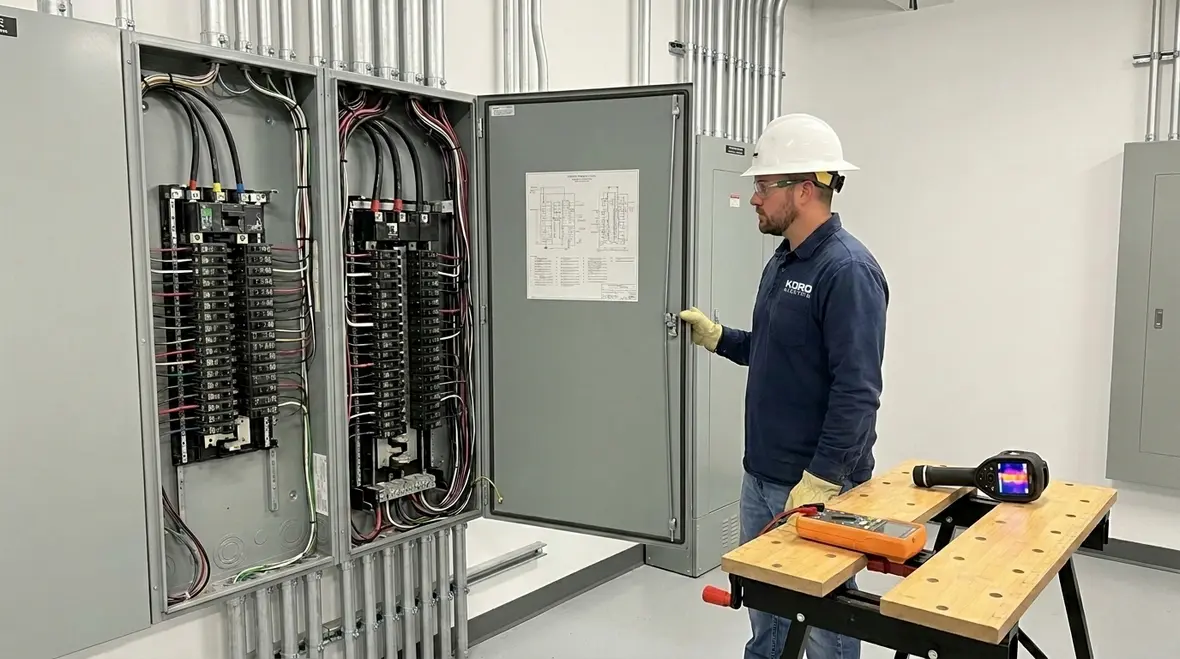
When technicians open the enclosure, we look at more than just the breakers. We check bus bars, the condition of terminations, and signs of heat from past events. Furthermore, we review grounding and bonding integrity, because a bad ground can turn a simple fault into a safety incident.
Loose connections cause most “mystery failures.” They also create intermittent problems that frustrate operations staff. One shift sees stable performance. Another shift sees sudden alarms. However, the physical cause usually stays the same. The connection warms, expands, relaxes, and then repeats the cycle. Eventually, the damage becomes permanent.
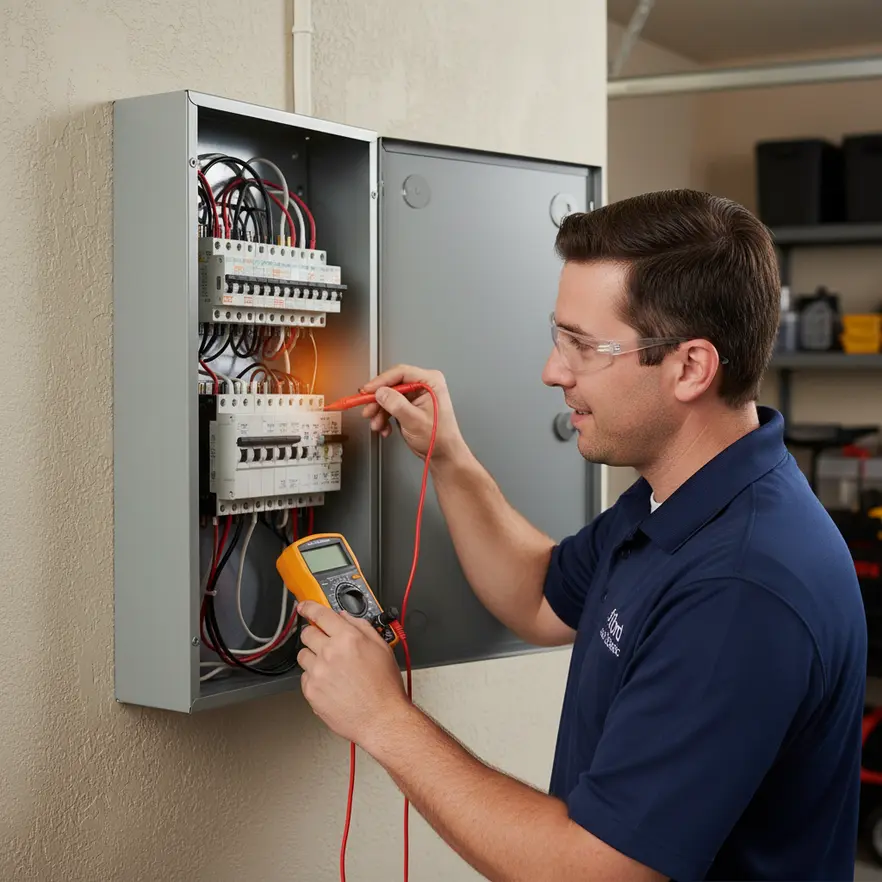
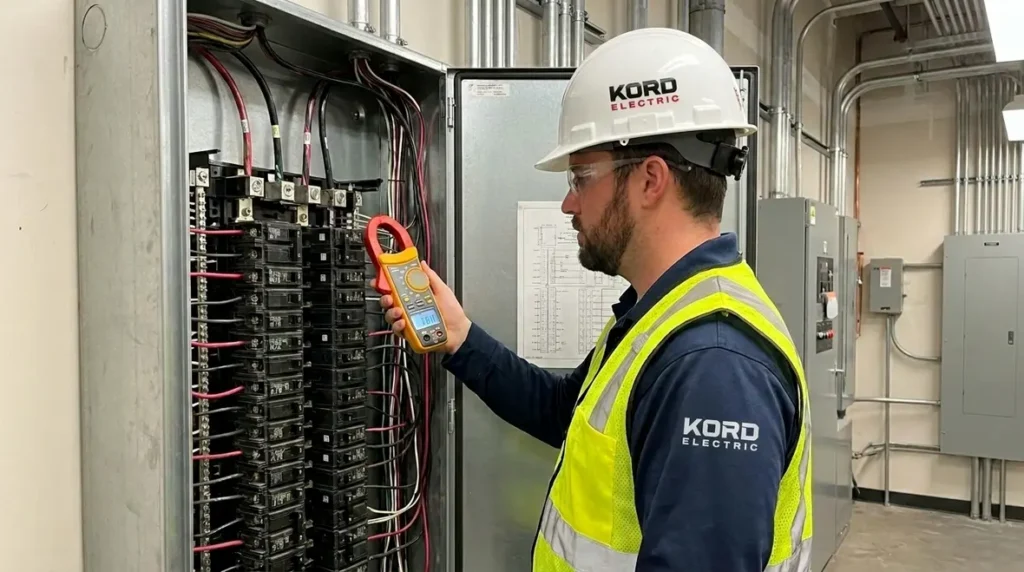
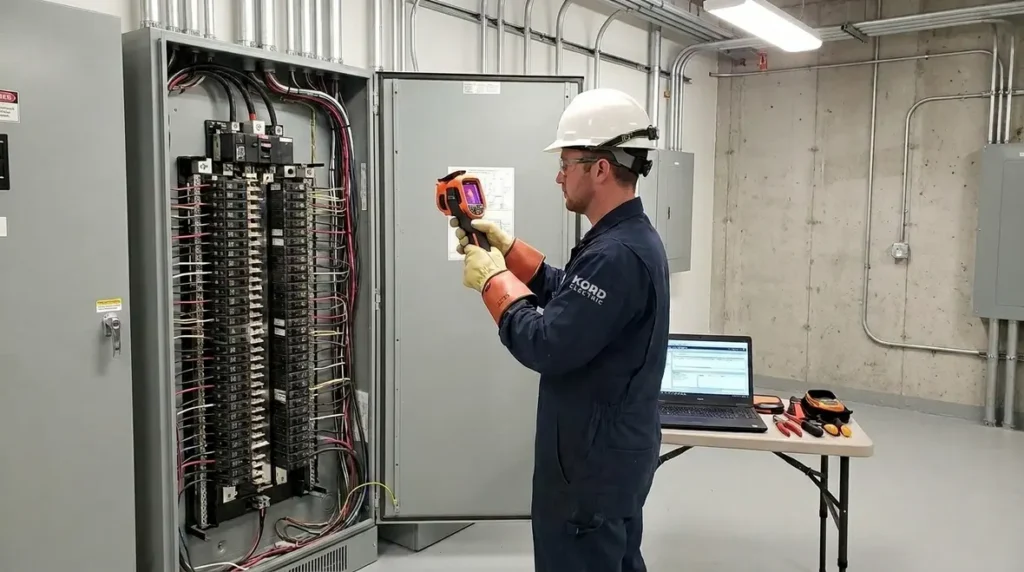
Because these issues live inside the enclosure, they are easy to underestimate. That is why our technicians pair visual checks with torque verification, thermal imaging, and load measurements where appropriate. The goal is not only to fix what is failing today, but to make sure the commercial electrical panel capacity and connection quality can support tomorrow’s loads without living in a permanent state of “almost too hot.”
Capacity planning for major property buildings and multi load tenants
In large property buildings, the panel does not only serve one load. It supports HVAC, elevators, kitchens, IT closets, lighting, and sometimes tenant equipment that changes every year. Therefore, capacity planning must match business reality, not yesterday’s drawings.
We often find panels that were built for a baseline load, then modified informally over time. New circuits get added. Spare spaces get used. Then the wiring and protective devices start to feel like they were packed for travel at the last minute. It may still work, but it becomes less safe as the stress grows.
Our technicians help teams map the load growth and decide whether upgrades should include adding breakers, expanding sections, replacing outdated gear, or balancing phases. We also confirm how power quality impacts the system, especially where motors and variable frequency drives run often.
And yes, sometimes the best fix is simply making sure the building gets the right commercial electrical panel capacity for its current equipment, with room for future changes. Because a panel upgrade should not be a one-time emergency. It should be a steady, planned improvement.

For buildings adding infrastructure such as EV charging or more intensive production lines, thoughtful panel planning also complements broader projects. Resources like Kord Electric’s commercial EV charging installation cost guide show how upstream capacity decisions shape what is possible safely and economically at the edge of the system.
Why upgrading now costs less than fixing after downtime
Businesses feel panel failure in the real world: production stops, tenants complain, and critical equipment waits for power. Meanwhile, emergency electrical work costs more because time matters and options shrink. Plus, a damaged component can spread problems beyond the panel, including damage to connected equipment.
When our expert service staff guides upgrade decisions, we focus on risk and continuity. For example, a panel that overheats can damage nearby components. A bad connection can worsen and increase the chance of a fault. Also, once a system experiences a major event, it often triggers deeper investigation and more replacement parts.
So, we help teams choose an upgrade path that keeps the facility safe and operational. We plan the work to reduce disruption. Then we test and verify performance so the building does not have to “hope” for the best like it is rerunning a sitcom episode it already watched.
From a budgeting perspective, this is the same mindset we apply across our commercial work: clarity first, surprises last. Whether a facility is planning targeted panel improvements or building a roadmap that includes lighting, EV charging, and reliability upgrades, the principle stays the same—thoughtful investment now usually costs less than crash landing into the next outage.
FAQ
Final thoughts from Kord Electric
If your commercial and industrial facility shows signs of overload, nuisance trips, heat, corrosion, or repeated fixes, you should not wait for the next outage. Kord Electric sends technicians who explain what they find, why it matters, and how an upgrade protects safety and continuity. Then we help you plan next steps with clear recommendations tied to real load and real conditions. Call Kord Electric now and let us review your panel before the building has to “fail its test” in front of customers, staff, and vendors.
If your site is also planning broader work, such as expanded production, new EV charging, or modernized lighting, our dedicated commercial services can be coordinated around the same outage windows as panel upgrades. Explore how our commercial electrical systems for modern buildings article connects panel decisions with controls, monitoring, and efficiency upgrades that keep the whole building moving in the same direction.
When you are ready to move from “we should look at that panel” to a real, documented plan, Kord Electric’s commercial electrical services team is set up for exactly this type of work—panels, distribution, and upgrades that keep complex properties online.
To take the next step toward a safer, more reliable facility, connect directly with our service team through our dedicated commercial electrical service offering and schedule an assessment that fits your operations.
For facility managers building a long term roadmap, pairing a panel upgrade with a structured program like our commercial and industrial electrical maintenance plans helps ensure today’s investment keeps paying off year after year.