Commercial Electrical Panel Code Requirements Guide
Commercial and industrial buildings do not get to “wing it” when it comes to wiring and safety. In this guide, we cover the electrical panel code requirements that commercial owners and facilities managers must follow, from clearances and labeling to conductor rules and grounding practices. We do it in plain language, because a building should not feel like a mystery novel. Our team at Kord Electric treats panel work like it matters, because in the real world, it does. And yes, we have seen panels that were about as organized as a junk drawer at 2 a.m. Still, we keep things professional: we explain each step clearly, and our technicians walk clients through what the code expects before any panel gets touched.
What commercial electrical panels must meet before anyone turns a wrench
When others plan electrical work for commercial and industrial facilities, they often start with equipment size. However, the first question should be compliance: electrical panel code requirements help ensure safe installation, maintenance access, and reliable operation. We focus on the requirements that show up in day to day inspections and audits. Then, we connect those rules to what the building team can actually verify.
For example, code rules typically demand safe access around the panel, proper working space, and correct mounting methods. They also require that protective devices match the intended load and that conductors get installed in ways that reduce overheating and stress. Meanwhile, labeling rules help responders and maintenance staff identify circuits fast, which matters more than people think until an emergency happens.
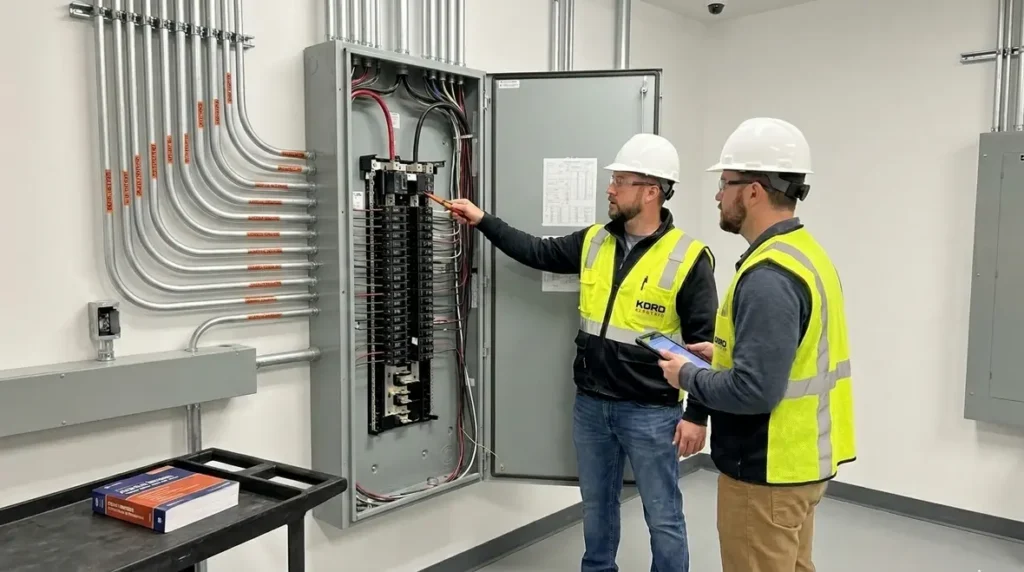
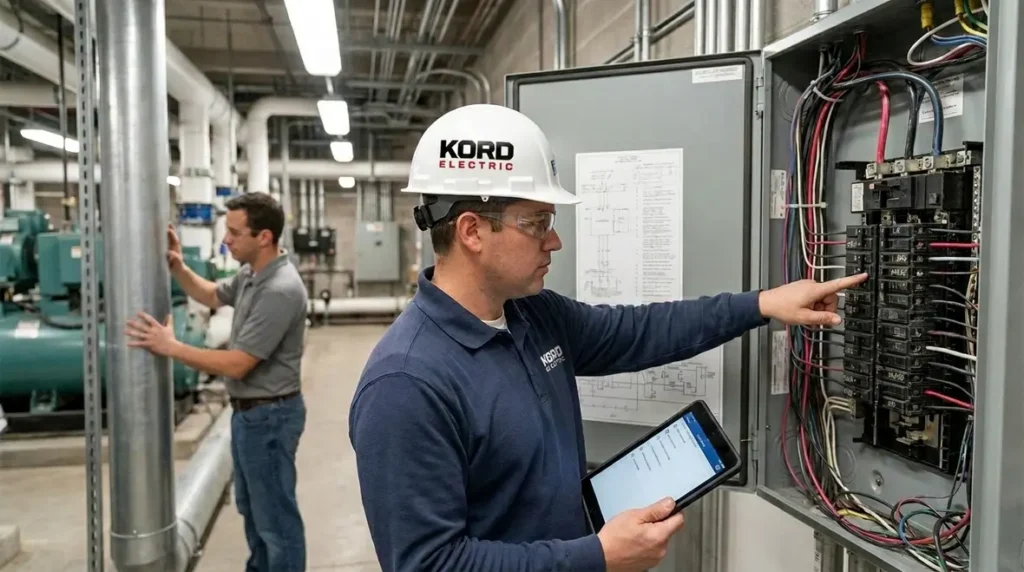
Our expert service staff at Kord Electric explains these rules during site walks. We do not just say “it meets code” and disappear. Instead, our technicians point out how a requirement shows up in the field and how it affects real work, such as tracing circuits without turning a whole building into a scavenger hunt.

In many commercial facilities, these electrical panel code requirements show up alongside broader compliance efforts. For example, when Kord Electric supports a full commercial rewiring project, our technicians evaluate panel condition, feeder capacity, and code alignment at the same time they evaluate building loads and distribution paths. That integrated approach keeps panel work from becoming an afterthought during major upgrades and helps owners avoid surprises during inspections.
We also connect panel requirements with broader standards like NFPA 70, the national electrical code, which defines how commercial, industrial, and institutional facilities across the country must design, install, and maintain electrical systems. When electrical panel work lines up with those expectations from the start, inspections become faster, downtime becomes shorter, and facilities avoid finding out about problems the hard way during a failure or emergency.
Clear working space, access paths, and why inspectors care
Most commercial electrical panel failures are not dramatic explosions. Usually, they show up as problems that start small: limited access, blocked doors, or panels squeezed into tight corners. Consequently, the code takes working space seriously. It sets expectations for width and depth, and it expects safe clearance around the panel so an electrician can work without hazards.
So what does that look like? It usually means keeping the area in front of the panel open and free of storage. It means doors and covers can operate, and it means no “temporary” obstruction becomes permanent. We often see this in utility rooms where someone tries to “optimize” space by adding shelving right next to the panel. That move sounds harmless, right up until someone tries to service equipment and cannot safely reach it.
Our technicians handle this with a calm, methodical approach. First, we assess the physical layout. Then we verify that access paths align with safe working standards. Finally, we document any adjustments that the property team needs to make so panel service stays safe for years, not just for the first inspection.

Clean working space also supports broader preventive practices. During structured electrical preventive maintenance, technicians need room to open covers, tighten terminations, and test equipment safely. When panels are buried behind stored materials or improvised office furniture, even basic inspection tasks become risky. Thoughtful layouts keep maintenance efficient and help identify hidden issues like overheating, loose connections, or damaged insulation long before they lead to outages.
From an operational standpoint, clear access is also the difference between a quick, targeted shutdown and a facility-wide scramble. Emergency responders and in-house maintenance teams need to reach panels immediately when something goes wrong. If they have to navigate around boxes, pallets, or file cabinets, precious time gets lost. A little discipline around working space today can prevent a messy, high-stress response later.
Panel labeling, identification, and service readiness
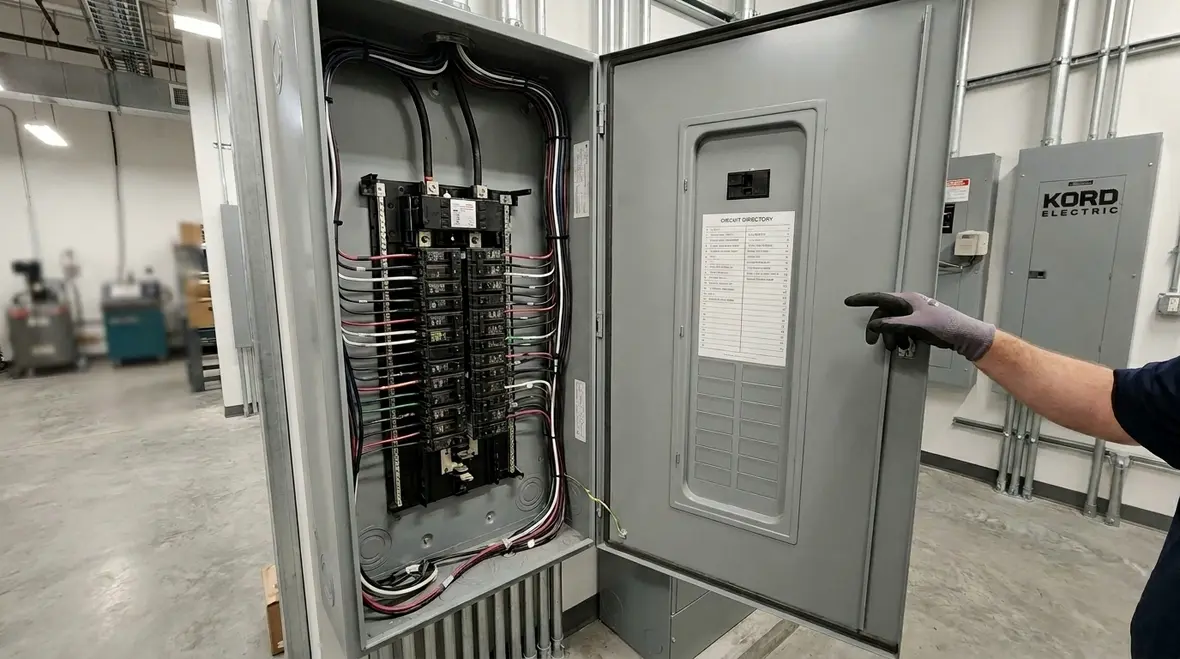
Good labeling is not just a bureaucratic hobby. It is how a maintenance tech avoids wasting time and how an emergency responder finds the right circuits fast. Code expectations often require clear identification of breakers or circuits and consistent labeling practices.
In commercial and industrial facilities, panels frequently serve many tenants, departments, or process loads. Therefore, labels must be more than “Room 2.” They should reflect circuit purpose and destination so others can troubleshoot without guesswork. When labels are vague, teams spend extra hours opening covers, testing, and cross checking. That adds cost, delays, and frustration. And for the record, frustration is not a permitted installation material.
Kord Electric installs and updates panel schedules with our field realities in mind. We work with facility managers, electricians, and owners to align labels with how the building actually operates. Then we confirm the labeling before we close up covers, so it stays correct after our work ends.
Labeling also becomes crucial when buildings evolve. During projects like commercial rewiring and panel upgrades, circuits are often reconfigured, new loads come online, and legacy equipment gets retired. If labels do not keep up with those changes, the next technician inherits a puzzle instead of a clear roadmap. Accurate, up to date schedules keep future work faster, safer, and less expensive.
For facilities with strict uptime requirements, such as data centers or critical production lines, labeling supports planned shutdowns and staged maintenance. When staff can isolate specific sections of the system confidently, they can perform work without taking down entire buildings. That kind of precision is only possible when panels and distribution equipment tell the truth about what they control.
Conductor sizing, termination quality, and heat control
Electrical panels handle current every moment they are energized. As a result, the way conductors get sized and terminated matters for performance and safety. Code and standards address allowable ampacity, temperature ratings, and installation methods that reduce overheating.
In the field, we see common issues that reduce safety margins. Terminations get made with improper torque. Conductors get routed in a way that stresses insulation. Breakers get installed without properly matching load requirements. These problems do not always show up immediately, but they can lead to nuisance trips or, worse, dangerous heat buildup.
Our technicians follow strict installation practices. They confirm that the conductor type and insulation rating match the panel components. Then they ensure the termination method supports secure contact and proper insulation condition. After that, we verify connections and routing so the panel performs reliably under normal and peak conditions.

And yes, we also check the “little stuff.” A wire that looks fine can still be installed in a way that makes future troubleshooting harder. We treat those details as serious, because in commercial facilities, downtime is the opposite of fun. It is the CFO’s personal nemesis.
Thermal inspections and structured maintenance programs also help catch conductor and termination problems early. During hidden electrical risk assessments in commercial buildings, Kord Electric’s teams often find hotspots at lugs, breakers, or neutral bars where torque, corrosion, or aging components have quietly increased resistance. Identifying and correcting those issues reduces fire risk, keeps panels within their design temperatures, and extends the life of expensive equipment.
Proper conductor sizing also supports long term growth. When facilities plan renovations or expanded production, they need panels and feeders that can handle future loads without running at the edge of their ratings. Matching conductors, breakers, and bus capacities to realistic demand keeps systems stable even as buildings evolve.
Grounding and bonding details that protect people and equipment
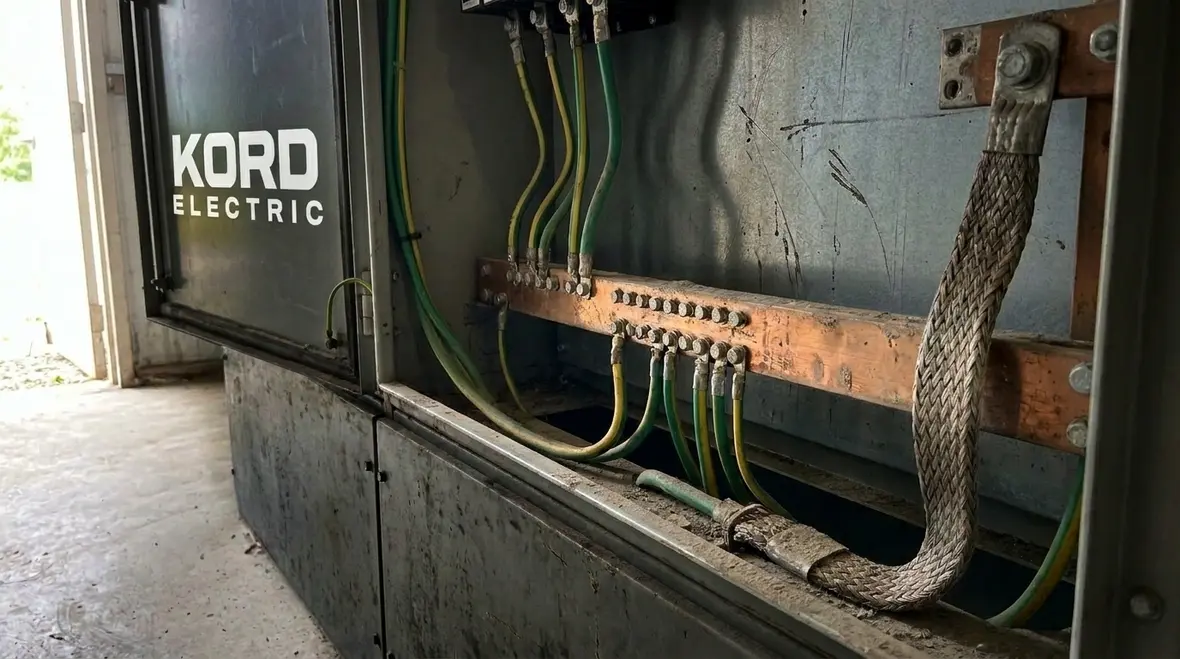
Grounding and bonding rules aim to keep fault currents under control and maintain safe reference potential for equipment. In commercial and industrial buildings, that protection supports both people and valuable equipment, including control systems, communications gear, and process equipment.
Many property owners focus on breakers and fuses first. However, when grounding paths fail or get altered over time, equipment performance suffers and safety risks rise. Consequently, code requirements expect correct bonding between metallic parts and correct grounding of raceways and enclosures as the system design dictates.
At Kord Electric, our expert service staff explains these details to stakeholders who may not work in electrical distribution all day. We show how the grounding system connects to the panel and how bonding supports safe fault clearing. Then we recommend upgrades where building changes have made older systems mismatched to current equipment demands.
We also pay attention to continuity, connection integrity, and corrosion resistance in real-world conditions. Industrial spaces can be dusty, wet, or chemically aggressive, so our approach stays practical. We do not just “tick the box.” We make sure the grounding and bonding work holds up in the environment the building actually has.
Those same grounding and bonding practices also support broader compliance efforts outlined in NFPA 70 and related standards. When panels, raceways, and structural elements are all tied into a coherent grounding scheme, facilities are better positioned to withstand faults, lightning, and everyday operational stresses without putting people or equipment at unnecessary risk.
Panel modifications, upgrades, and maintaining compliance during renovations
Commercial properties rarely stay still. Tenants change, equipment gets added, and load needs evolve. During renovations, some teams replace breakers or add circuits without fully reviewing how the panel setup matches current electrical panel code requirements. We recommend a different method.
We start with an assessment: what the panel currently supports, what the renovation introduces, and what must stay compatible for safe operation. Then, we review the panel’s configuration, protective device coordination, and labeling changes that renovation work demands. If the work involves new feeders or additional circuits, we also verify routing and termination quality so the modifications do not quietly undermine the whole system.
Many facilities managers worry that upgrades will shut the building down for too long. We plan work schedules around operations. Our technicians coordinate with the site team so power interruptions stay as short as possible and so the building returns to normal safely. That planning matters in major property buildings where operations cannot pause like a video game cutscene.
In short, we help keep the panel code compliant while the building adapts. And because our approach stays consistent, facilities can avoid the “upgrade spiral” where each new change creates new fixes.
For spaces like commercial kitchens, production floors, and data halls, this kind of careful planning turns potential chaos into a controlled process. When Kord Electric executes commercial kitchen electrical upgrades or other high demand remodel work, panel capacity, protective device settings, and new circuit routing are evaluated together. That way the finished space looks modern, runs reliably, and passes inspection without drama.
Testing, documentation, and how Kord Electric keeps projects inspection-ready
Even when installation looks correct, commercial work demands proof. Therefore, we focus on testing and documentation that help others confirm the system operates safely. We document circuit identification, equipment changes, and any recommendations we make based on what we find.
Our technicians use a structured workflow. First, we review the site and existing panel condition. Then we confirm the new components align with the intended design. After installation, we verify connections and check system performance as appropriate for the project scope.
Then we hand over documentation in a way that facility teams can use. That includes updated panel schedules and notes that help others troubleshoot later. The goal is simple: when an inspector asks for evidence, your team can provide clear, accurate information without scrambling.
We also communicate clearly while the job is happening. Our expert service staff explains what we find, what we recommend, and what changes are required to stay aligned with code expectations. This builds trust and reduces confusion, which is a bigger deal than most people admit.
For organizations that want an even more structured approach, dedicated programs like Kord Electric’s commercial and industrial electrical maintenance plans tie panel testing, infrared inspections, documentation, and code reviews into a repeating schedule. Instead of treating panel work as a one-time event, facilities get ongoing visibility into how their systems age and where to invest before small issues become major outages.
FAQ
Ready to bring your commercial panel up to inspection-ready standards?
Kord Electric helps commercial and industrial facilities meet code expectations with careful planning, clear labeling, and solid workmanship. Our technicians explain each step so your team understands what we do and why we do it. If you are renovating, upgrading, or simply tired of panel problems that keep returning like a bad sitcom, call us. We will assess your panel setup, outline practical improvements, and schedule work around your operations. Reach out today, and let us get your electrical system feeling calm again.
If your facility is already planning lighting upgrades, kitchen remodels, or EV charging infrastructure, pairing those projects with a panel and distribution review is one of the most efficient ways to stay aligned with electrical panel code requirements. Coordinated work gives you a single, organized strategy for power distribution, code compliance, and future expansion instead of scattered fixes across different projects.
For ongoing reliability, many organizations combine panel work with structured electrical preventive maintenance services. This approach keeps inspections, testing, documentation, and corrective repairs on a predictable schedule. Panels stay clean, labeled, and up to code, and leadership gets clear reporting instead of surprises when the next inspection arrives.
Whether you are dealing with aging switchgear, planning a major expansion, or cleaning up years of small modifications, Kord Electric can help you bring panels, feeders, grounding, and distribution equipment back into alignment. When you are ready to move from “it works most of the time” to “this system is ready for inspection,” professional commercial and industrial electrical maintenance and upgrade services can make all the difference.
To align your panels with current code expectations as part of a broader reliability plan, explore Kord Electric’s dedicated Electrical Preventive Maintenance programs for commercial and industrial facilities. These services help organizations keep critical equipment—including electrical panels—tested, documented, and ready for both everyday operations and formal inspections.