Commercial Electrical Safety Protocols for Manufacturing
Commercial electrical safety protocols for manufacturing facilities: where the work starts
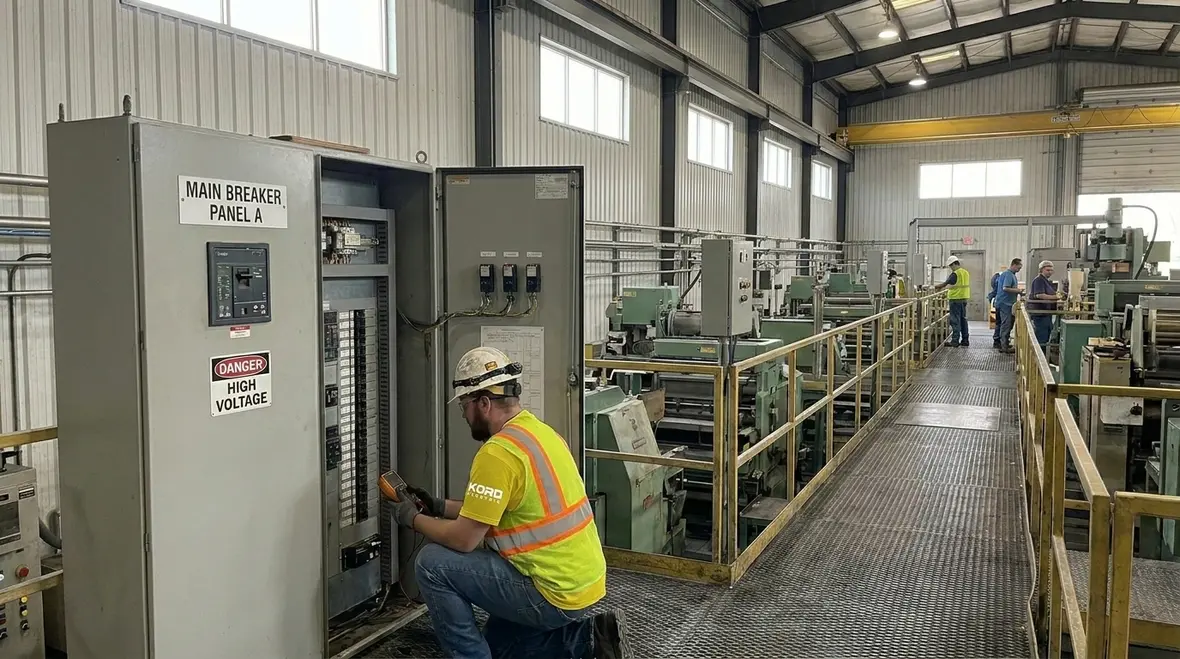
At Kord Electric, we build our approach around commercial electrical safety protocols for manufacturing facilities because reality does not care about good intentions. In the first moments of a shift, facilities managers face a simple truth: electricity is reliable right up until it is not. That is why we help our clients set clear safety rules for energized work, lockout and tagout steps, panel labeling, wiring inspections, and safe shutdown practices. We also align these rules with the maintenance plan so safety does not become a poster people walk past. And yes, we know safety training can feel like a boring movie. We promise ours has fewer slow zooms and more results.
Others rely on luck. We rely on procedure, logs, and skilled technicians. In the sections ahead, you will see how a facility manager can run electrical risk down to something manageable, with support from our expert service staff who explain things in plain language.
Why facility managers own electrical risk, even when electricians do the work
In a manufacturing facility, electrical risk shows up in small ways first. A loose breaker, a dusty disconnect, a cable routed too close to heat, or a panel door that never gets latched. Then, one day, it turns into downtime. Meanwhile, the facility manager still owns the outcome: schedules, compliance readiness, worker safety, and equipment protection.
Our technicians routinely see the same pattern. Teams wait until a failure before they tighten controls. However, good commercial electrical safety protocols for manufacturing facilities focus on prevention before something breaks. So the manager sets the standard, and others execute it through inspections, safe work practices, and documented maintenance.
To keep this calm and workable, we suggest you treat electrical safety like a process you can measure. You check, you record, you correct. In short, you build a system. And if anyone says, “We will handle it later,” you can respond the way a good facility manager should: “Sure, later is when we budget for the repair instead of preventing it.”
Lockout and tagout that workers actually follow

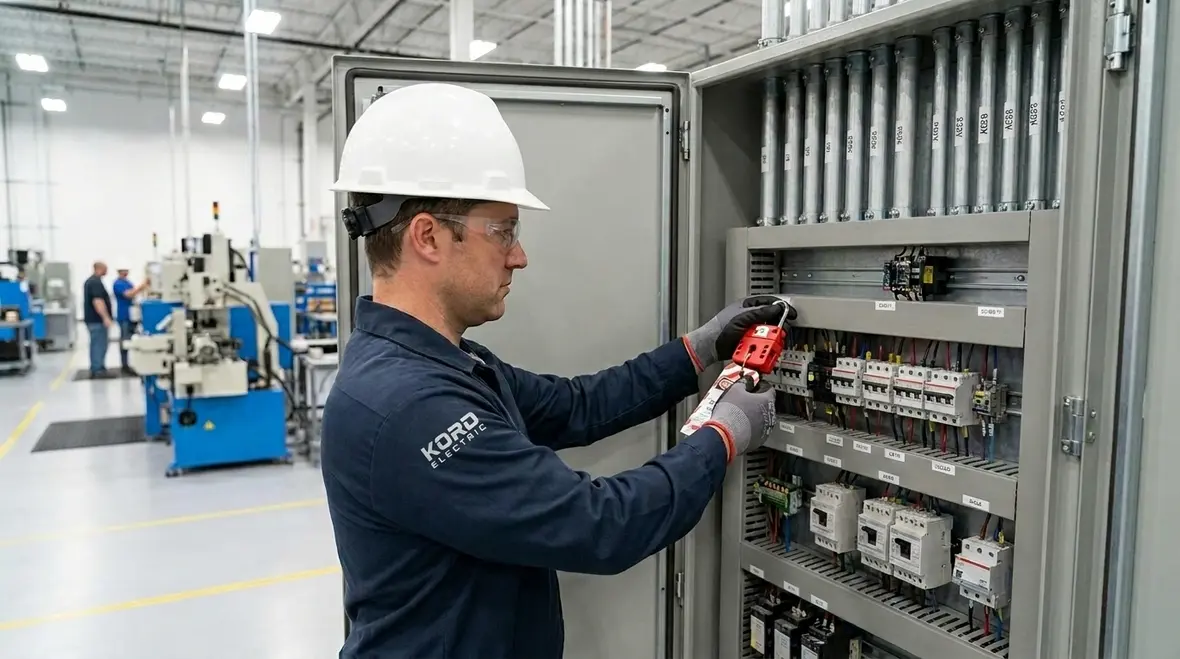
Lockout and tagout is not a checkbox. It is the difference between controlled work and a surprise re-energization event. Our expert service staff explain this clearly during onboarding and refreshers because people remember stories better than standards.
We recommend that facility managers implement a lockout and tagout process with three layers. First, you require identification of all energy sources, including stored energy in capacitors, residual voltage, and any backfeed possibilities. Second, you standardize equipment specific steps so the worker knows what to do for that exact line or machine. Third, you confirm zero energy before work begins and after the work is complete.
In addition, you should require clear documentation that shows who applied locks, when they did it, and what was verified. This supports audits and reduces confusion during shift changes. When a crew swaps, the next team should not guess. They should verify.
And yes, we have heard the jokes. “The power is off, so we are good.” That is the kind of sentence that sounds confident right before it becomes a safety lesson for someone else.
Design your inspections around failure points, not calendar dates
Many facilities run electrical maintenance by the calendar. That feels neat. Yet in real life, equipment ages based on load, heat, dust, vibration, and how often systems cycle. So facility managers get better results by designing inspections around failure points and operating conditions.
In the Kord Electric maintenance approach, we help clients build commercial and industrial electrical maintenance plans that connect inspection tasks to real-world risks. For example, we focus on panels, terminations, motor controls, switchgear components, and grounding continuity where problems typically begin. We also account for environments like production areas with airborne dust, packaging zones with frequent tool movement, and mechanical rooms where heat builds.
Transitioning from generic checks to targeted inspections reduces both downtime and repeated repairs. It also helps you spot issues early, such as overheating at connections, moisture intrusion, or insulation wear before it reaches a failure state.
Our technicians then explain findings like they are training a future version of your team. They break down what we saw, what it means for operations, and what the repair options are. That way, your maintenance decisions do not rely on mystery. For a deeper dive into how structured plans support this, review our Commercial and Industrial Electrical Maintenance Plans guide.

Turning inspection data into action
Once you have inspection results, the value comes from what you do with them. Facility managers who get the most out of commercial electrical safety protocols for manufacturing facilities usually set simple, clear rules for response times. For example, critical risks get same-day action, moderate findings get scheduled in the next maintenance window, and low-level observations become part of the next planned shutdown.
This turns inspections into a living feedback loop instead of a stack of reports nobody reads. It also aligns nicely with preventive programs like Electrical Preventive Maintenance, where testing and service cadence already exist.
Panel and wiring readiness: labels, barriers, and clear access
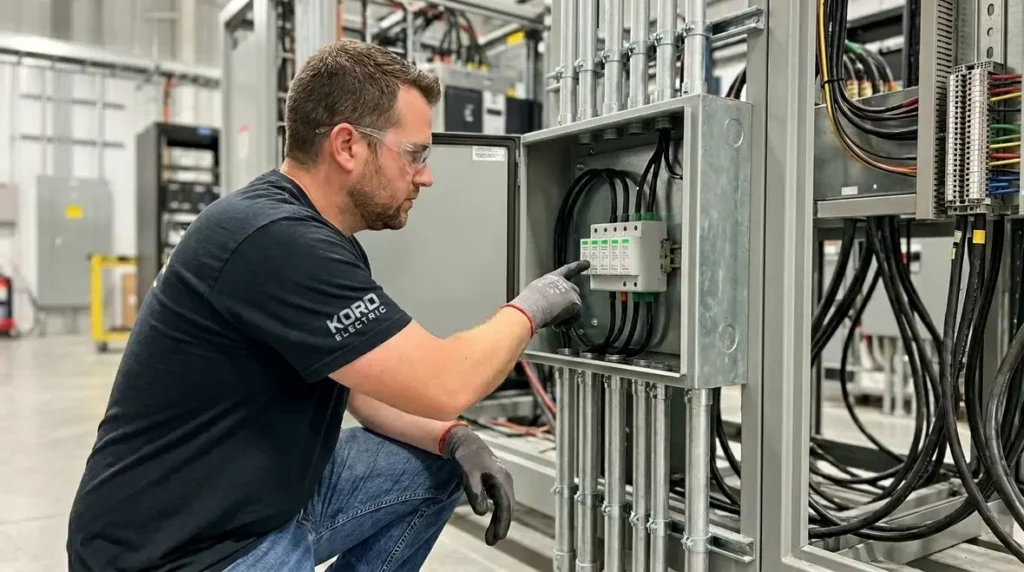
Even great maintenance struggles when the facility cannot support safe access. Panels need working doors, proper labeling, and enough clearance. Cables must avoid strain, and conduit systems should remain secure and routed to reduce abrasion. Grounding should stay intact. These details sound small, but they decide whether a worker can work safely and quickly.
At Kord Electric, we coach facility managers to treat panel readiness as a daily operational task. For instance, the site should maintain correct directory labeling, with circuit names that match equipment use. If a panel says “Spare 2,” it is not a safety plan, it is a guessing game. When workers need to find the right breaker under pressure, clarity prevents risky behavior.
Next, barriers and covers matter. Missing knockouts, damaged enclosures, or exposed conductors do not stay “temporary.” They grow. Over time, heat and contamination speed up wear, and that is when you start seeing nuisance trips, damaged components, and potential arc fault conditions.
Finally, access routes should stay clear. If an electrical cabinet sits behind stacked materials, the worker will improvise. And improvisation is how small problems become big stories that nobody wants to tell.
Simple daily checks that keep panels ready
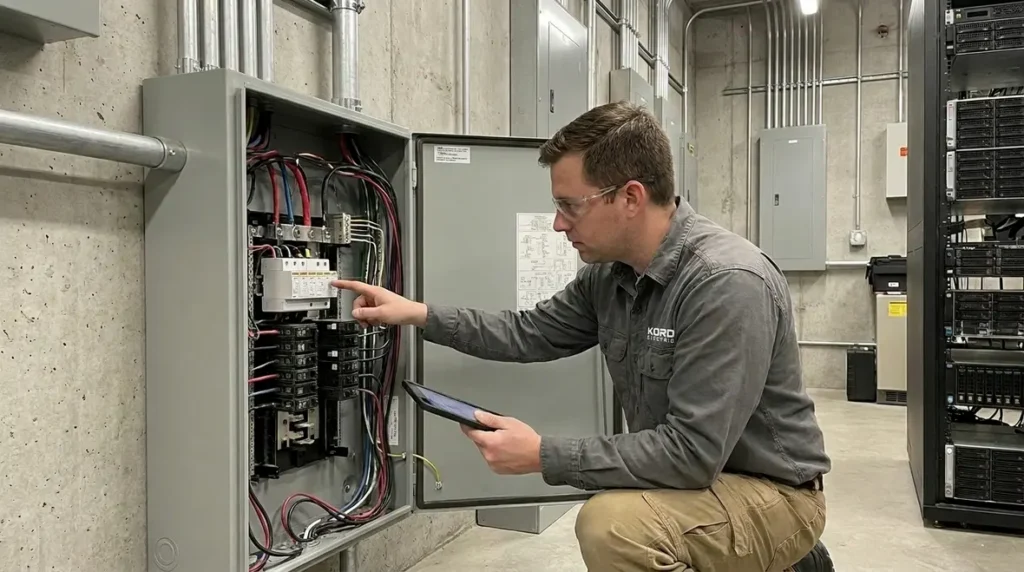
Some of the most effective commercial electrical safety protocols for manufacturing facilities come from quick visual checks. A five-minute walkthrough once per shift to look for blocked panels, mislabeled circuits, improvised junction boxes, or damaged cord sets often catches issues long before they become recordable events.
When you pair these quick checks with scheduled electrical preventive maintenance, the plant gains both daily awareness and deep technical validation. That combination keeps workers safer and helps leadership sleep better at night.

Testing and documentation: build proof, not hope
Facility managers do not just need safety. They need proof that safety exists. That is where testing and documentation come in. We help our clients maintain records that show inspection results, corrective actions, and follow up dates, all tied to the commercial and industrial electrical maintenance plans they use for day-to-day operations.
Testing should address key areas like insulation integrity, grounding and bonding continuity, breaker performance checks, torque verification at terminations, and thermal imaging where conditions support it. The goal stays consistent: find issues that normal visual checks might miss.
Then, document the results in a way that others can use during an audit and during repairs. If maintenance logs read like a mystery novel, the next crew cannot act quickly. However, if your documentation clearly states what was found, where it was found, and what was done, the facility runs smoother.
Our expert service staff often tell managers the same calm truth: documentation saves time. It also reduces repeat work. And in a busy plant, time is not a luxury. It is a survival tool.
Aligning tests with commercial electrical safety protocols for manufacturing facilities
When testing and documentation tie directly into your commercial electrical safety protocols for manufacturing facilities, audits stop feeling like surprise exams. Instead, they become a review of work you are already doing. Breaker testing confirms protective device performance. Grounding checks validate fault paths. Thermal scans highlight hot spots before components fail.
Over time, this record of measured, repeatable effort shows regulators, insurers, and leadership that electrical safety is not a slogan. It is an operating habit.
Integrate safety into the maintenance plan for manufacturing continuity
Safety becomes real when it lives inside the plan. Kord Electric supports this by aligning protocols with how maintenance actually runs across shifts and departments. The commercial electrical safety protocols for manufacturing facilities should not sit apart from maintenance schedules, work orders, and contractor coordination.
When the maintenance plan includes safety steps, the facility reduces confusion. It also improves jobsite control. For example, your work orders should specify whether systems require lockout and tagout, what verification method applies, and how to confirm safe conditions before starting work. Additionally, the plan should include coordination rules for multi team tasks, such as when mechanical work affects electrical isolation points.
Transitioning to a well run plan also improves continuity during production surges. So even if the schedule changes, safety still has a stable structure behind it. Your facility is not “winging it.” It is executing a system.
And because we work with major commercial and industrial facilities, we plan for the realities of uptime, scale, and complex equipment. That means the plan supports operations instead of slowing them down.
Bridging the gap between protocols and production
On paper, almost every facility agrees that electrical safety matters. The challenge comes on the production floor when deadlines loom and equipment will not cooperate. This is where commercial electrical safety protocols for manufacturing facilities either shine or disappear. If they are built into your work order templates, shift handoff notes, and maintenance KPIs, they tend to show up when pressure is highest.
If they live in a manual on a shelf, people improvise. Kord Electric’s teams help clients move from “shelf safety” to “embedded safety” by mapping each protocol to a specific trigger in the maintenance workflow: a type of job, certain risk factors, or key pieces of equipment.
FAQ
Ready to reduce risk and protect uptime
Commercial and industrial electrical safety does not improve by hope. It improves through clear procedures, targeted inspections, and maintenance plans built for real production conditions. Kord Electric helps facility managers strengthen electrical controls, document results, and address issues before they trigger downtime. If you want a practical, safety focused plan that supports major propertie buildings and manufacturing operations, contact us today. Our technicians will review your current approach, recommend next steps, and help you move forward with calm confidence.
For plants that need more than protocols on paper, you can connect this work directly to our dedicated Electrical Preventive Maintenance services. That way, testing, inspections, and corrective work all follow the same structure as your commercial electrical safety protocols for manufacturing facilities, instead of operating as separate efforts.
And when production plans include lighting upgrades, new equipment, or expanded floor space, pairing your safety strategy with targeted projects like Lighting Installation Services helps keep visibility, efficiency, and code compliance aligned with the rest of your electrical system.