Commercial EV Charger Load Management Guide
Smart commercial EV charging starts with load management at multi-vehicle sites
At Kord Electric, we plan scalable commercial EV charging by using commercial EV charger load management so multi vehicle sites can charge cars without causing costly power problems. When a parking lot grows from a few bays to dozens, the electrical system has to stay steady, safe, and predictable. That is where intelligent load management comes in. It helps teams share available power, prevents overloads, and keeps operations smooth even during busy hours. And yes, while people love to treat chargers like magic wands, electricity still follows physics. We work with that reality, not against it.
In this article, third person explains how we design systems for commercial and industrial facilities, major property buildings, and data heavy operations. Our expert service staff and field technicians guide the process step by step, so stakeholders understand what is happening and why it matters.
Why multi vehicle demand stresses electrical systems
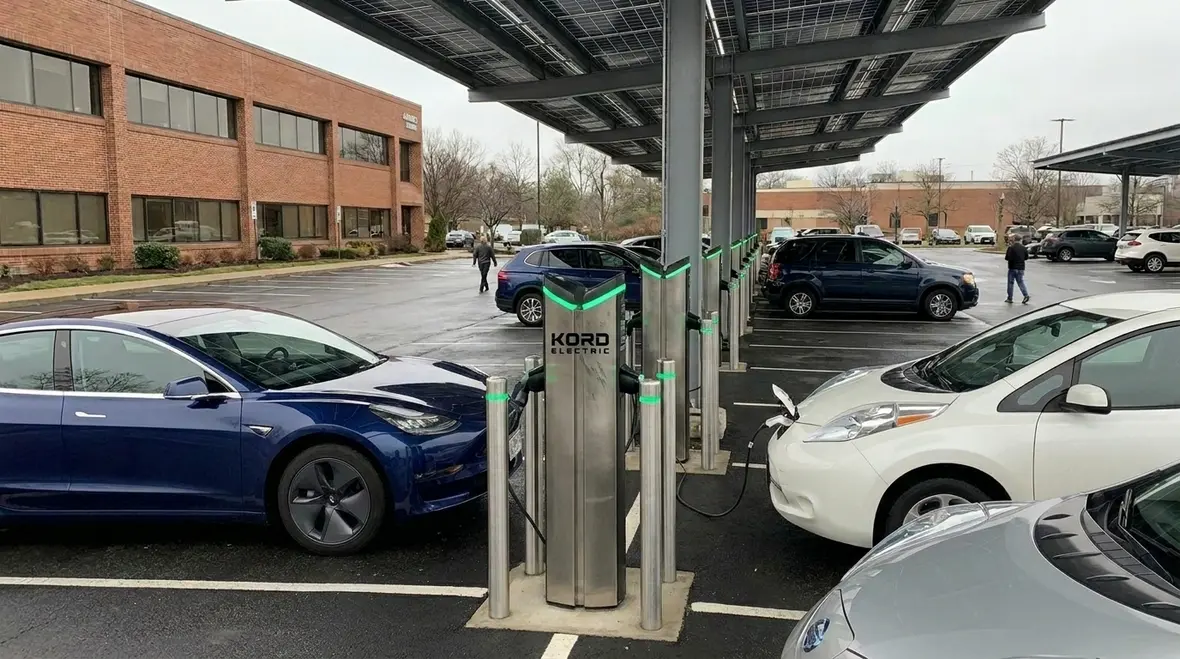
Commercial and industrial properties rarely behave like a single home driveway. Instead, they operate like living systems with many moving parts. During mornings and evenings, employees arrive, vehicles plug in, HVAC runs, and elevators cycle. Then charging loads appear and power demand rises fast.
When the site uses multiple chargers at once, the electrical distribution can face three common pressures. First, the incoming service may not have enough spare capacity for every charger at full power all at once. Second, transformer and feeder limits can be exceeded if the site ignores real load patterns. Third, a poorly planned design can create nuisance trips and equipment stress, which turns a convenient amenity into an operational headache.
Furthermore, reliability matters for major property buildings that serve tenants, fleets, and visitors. Facilities managers need uptime. They need confidence. They need chargers that behave like professional equipment, not like a dramatic actor who shows up late and takes a bow for the power dip.
This is also where broader planning across the property makes a difference. When EV charging is treated as part of the same reliability mindset that guides data center electrical work and factory troubleshooting, the whole site behaves more like a coordinated system and less like a collection of unrelated projects.
Our approach: intelligent load balancing that scales
To keep charging stable as the site grows, we design systems that follow a simple principle. Chargers should share limited capacity based on site needs, not compete like it is a reality show.
Our work focuses on commercial EV charger load management that coordinates multiple charging stations with the electrical distribution. When usage changes, the system adjusts charging power in real time. So if one area pulls more energy, other chargers automatically reduce output or delay charging to stay within safe limits.
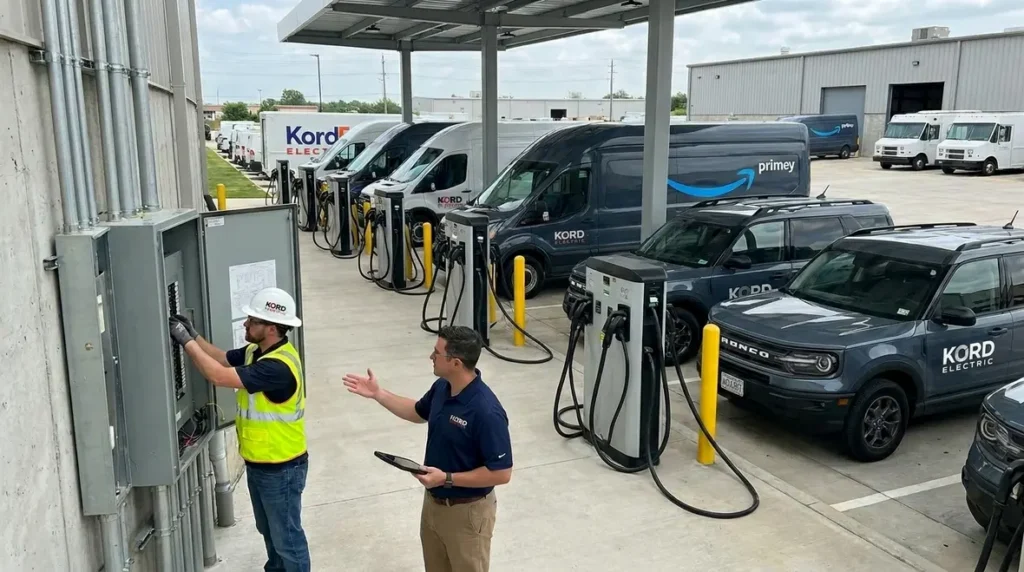
At Kord Electric, our process stays practical and clear. Technicians and our expert service staff explain the logic in plain terms during site meetings. That means stakeholders learn how the system detects demand, how it manages load across circuits, and how it protects the facility. We want the team to feel calm and informed, because no one enjoys guessing during a peak hour. Also, we are the kind of company that would rather explain the solution than claim, “Trust us,” like a streaming service that never shows its numbers.
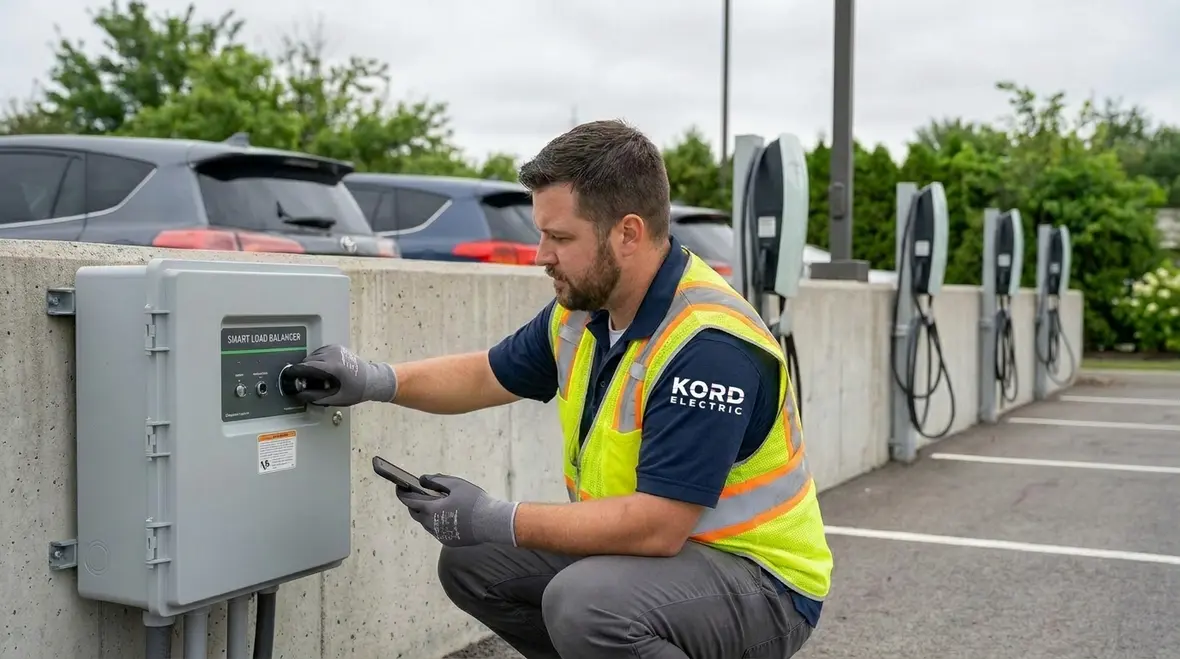
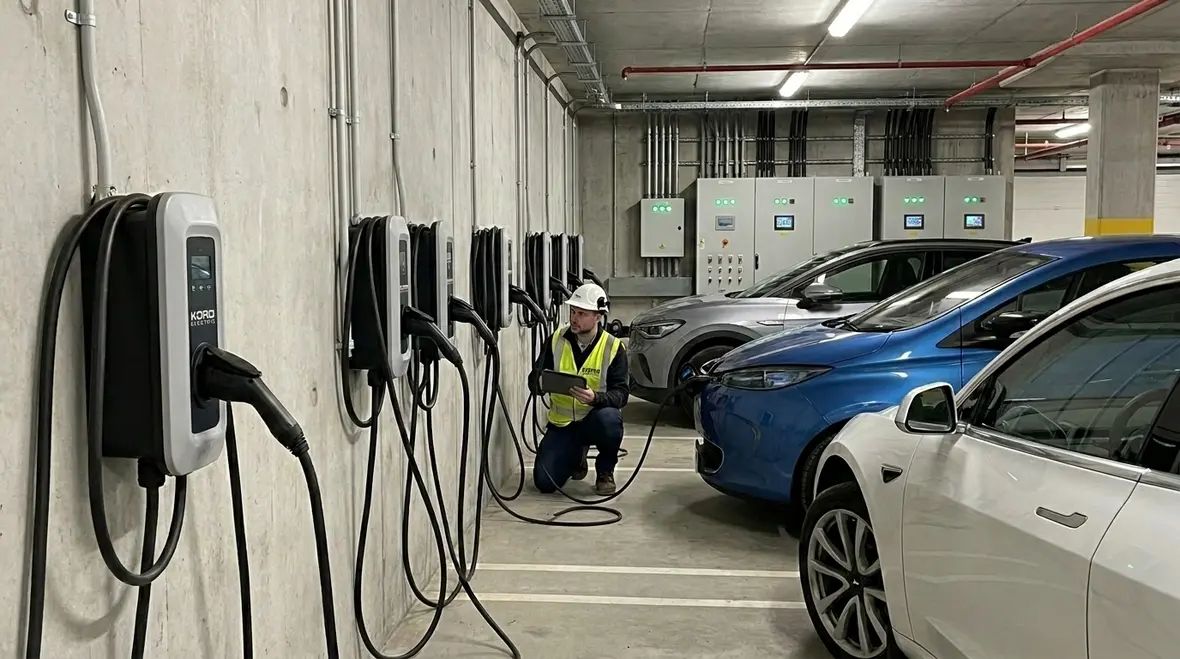
Behind the scenes, this coordination blends hardware, software, and measured data. Metering points track real-time demand, controllers apply clear rules, and chargers respond without drama. When designed well, drivers only notice that chargers are available and working, not that an entire orchestration is running in the background to keep the building inside safe electrical limits.
Distribution design for reliability and predictable service
Intelligent load control works best when the distribution system is designed for reliability from the start. In our blog covering data center electrical distribution design for reliability, we stress that good power planning reduces surprises. That same mindset applies to EV charging for multi vehicle sites.
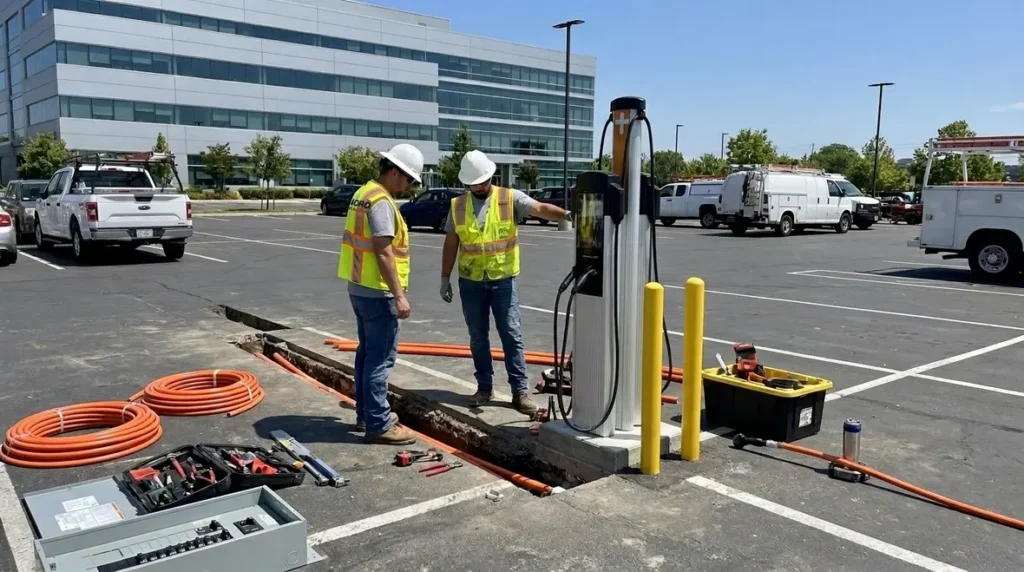
First, we evaluate the existing electrical architecture: service size, voltage levels, transformer capacity, feeder ratings, panel schedules, and available spare capacity. Then we map charger locations to the actual electrical paths that feed them. This supports stable operation and helps avoid last minute rewiring projects that drain budgets like a phone with no charger. We also consider how load diversity changes by shift, by tenant type, and by event schedules.
Second, we plan selective protection. That means protective devices clear faults quickly and locally, rather than causing broader outages. Third, we account for power quality and harmonics concerns. While charging systems are designed for modern grids, poor layout and undersized conductors still create headaches. Our technicians verify conduit routes, terminations, and grounding practices so the system performs during both normal days and peak loads.
As a result, commercial EV charger load management does not just “limit charging.” It supports a full reliability plan for the site electrical distribution. For facilities that are also modernizing production lines or data rooms, this consistency is what keeps projects aligned instead of fighting for capacity in different corners of the same building.
If you are comparing upgrades across multiple properties, taking the time to align EV charging with your wider electrical reliability goals can uncover better phasing options, smarter panel upgrades, and opportunities to coordinate work so you are not opening the same gear twice for unrelated projects.
How our technicians verify capacity before the first cable is tied
Even the best controls cannot fix a bad foundation. So we verify the electrical capacity before installation and we keep that verification tied to real site behavior.
Our technicians typically review site load data and equipment nameplates. Next, they validate panel and feeder limits and confirm that thermal and electrical constraints align with the proposed charger count and configuration. Then they check that metering and monitoring points support the load management strategy.
Finally, we test. We simulate typical usage patterns and verify that the charging system responds appropriately. Our expert service staff then walks facility owners and operations teams through what they should expect. They also explain how to interpret reports and alarms, so the site team does not rely on guesswork. If you have ever watched a coworker stare at a panel like it is a fortune teller, you already know why this matters.
For commercial and industrial settings and major property buildings, this step protects budgets and schedules. It also reduces the chance that future fleet changes or tenant expansions force costly rework. When paired with structured troubleshooting and maintenance checklists, that upfront verification makes the system easier to support for years instead of months.
We also document assumptions clearly: expected charging schedules, target departure times, and priority loads. That way, when someone reviews the system a few years later, they can see exactly what the design was meant to support instead of guessing based on faded labels and half remembered emails.
Smart rules for phased installs and future expansion
Most multi vehicle sites do not add chargers all at once. They phase in installations because budgets, permits, and fleet planning move at different speeds. Therefore, our design supports growth without requiring a full electrical rebuild.
We build a plan that allows extra charging capacity to come online as demand increases. In practice, this means we use a scalable architecture for controls and power distribution, and we reserve capacity intelligently. We also define how load management will prioritize charging based on site policies. For example, some sites may prioritize resident vehicles, fleet vehicles, or early morning departure windows.
Additionally, we account for seasonal shifts. In many regions, HVAC demand and lighting cycles change throughout the year, which affects spare capacity. So our commercial EV charger load management strategy coordinates charging with the overall site load profile rather than treating the chargers as isolated devices.
When the site expands, we help teams upgrade safely. In other words, we plan so the second phase does not feel like the electrical equivalent of adding a second kitchen to the same single bathroom. It might be possible, but it will not be elegant. We aim for elegance.
Because we work across multiple commercial EV projects, our team also brings context from other sites: what worked, what caused delays, and where small design decisions saved a lot of headaches later. That shared experience helps keep each phased expansion grounded in reality instead of theory.
Common mistakes we prevent at commercial facilities
Because we work with commercial and industrial sites and major property buildings, we see the same problems repeat. And when a problem repeats, it stops being a coincidence and starts being a pattern.
One mistake is sizing chargers at maximum output with no coordination across circuits. That can overload transformers or push feeders beyond safe limits. Another mistake is skipping metering details that load management needs to make accurate decisions. Without correct measurements, the system cannot control charging in a reliable way.
A third mistake involves poor physical layout. Long conductor runs, tight bends, and rushed terminations can create resistance and heat issues. That may not fail immediately, but it can shorten equipment life. We help prevent this by guiding installation with clear cable routing practices and proper termination standards.
Lastly, some teams ignore operations behavior. If a facility expects charging during business hours but most vehicles plug in during evenings, the load profile differs from the original assumptions. We reduce that risk by using practical scheduling conversations during design. Our expert service staff helps translate fleet habits and tenant patterns into a load management approach that matches reality.
These are the same kinds of pitfalls that show up in other high demand electrical projects, from data rooms to production floors. By treating EV charging as a core part of your electrical strategy, rather than a bolt-on amenity, we help your site avoid repeating the hardest lessons from those environments.
FAQ
Next steps: install charging that stays reliable as demand grows
Kord Electric helps commercial and industrial facilities and major property buildings install scalable EV charging with commercial EV charger load management that supports reliability, safety, and future growth. Our expert service staff and technicians plan distribution carefully, verify capacity before power is connected, and explain the system so your team can operate with confidence. If you want charging that behaves like dependable infrastructure instead of a recurring emergency, contact Kord Electric for a site assessment and a practical design plan.
Contact Kord Electric to move from “we hope it works” to “we know it will.” For facilities coordinating multiple projects across the region, it can also help to align EV charging upgrades with broader Los Angeles County electrical services so your reliability plan covers everything from chargers to critical process loads under one strategy instead of scattered fixes.
When you are ready to formalize that strategy, our team can connect this load management work with other reliability focused efforts across your portfolio, so upgrades to distribution gear, maintenance programs, and new EV infrastructure all reinforce one another instead of competing for the same limited capacity.