Commercial EV Charging Infrastructure Guide
Kord Electric helps commercial teams plan a charging rollout that actually works. With the right approach to commercial charging infrastructure, we support employee commuting, fleet operations, and the real day to day electrical demands that come with it. And because nobody wants surprises, our technicians and expert service staff guide the process from site planning through install, testing, and next steps. In this guide, we explain how facilities teams can design a safe, expandable system, set budgets that hold up, and avoid common mistakes that cost money. Think of it like building a good setlist for a band, except the applause comes from uptime and the crowd is your finance department.
How Kord Electric plans commercial charging infrastructure for real workplaces
In the commercial and industrial world, charging is not a lifestyle accessory. It is an operations tool. Therefore, we start by mapping how vehicles enter, park, and depart, then we match charging power to that pattern. Next, our team reviews the building electrical system, including service size, panel capacity, and available space for new breakers and feeders. We also consider load timing so charging does not compete with HVAC, production equipment, or evening lighting cycles.
After that, our technicians walk stakeholders through a simple truth: a charging plan is only as good as its power strategy. So, we design around actual usage, then we build in room to grow. In many facilities, the “phase two” dream shows up quickly, and without planning, phase two becomes expensive chaos. Nobody wants that. Even Darth Vader didn’t plan his timing, and look how that turned out.
Finally, we document the decisions. That matters because permits, utility coordination, and contractor bids all rely on clear load calculations and site layouts. In other words, our process keeps the project calm, even when timelines get noisy.

For facility teams that are already thinking about broader energy upgrades, this structured approach to commercial charging pairs naturally with the kind of disciplined planning used in Kord Electric’s California Title 24 Lighting Retrofit ROI Guide. Both efforts start with the same principles: understand real-world usage, model electrical impact, and give finance a roadmap built on data instead of guesswork.
Charging needs for employee lots and fleet yards: what changes
Employee charging and fleet charging share a goal, but they rarely share the same behavior. Therefore, we treat them as separate use cases that can live on the same network.
For employee vehicles, the key driver is dwell time. Employees may plug in for four to eight hours, depending on shift schedules and parking rules. As a result, we often recommend power levels and scheduling that fit typical occupancy patterns. Additionally, we design the system to support fair access, clear signage, and minimal staff disruption.
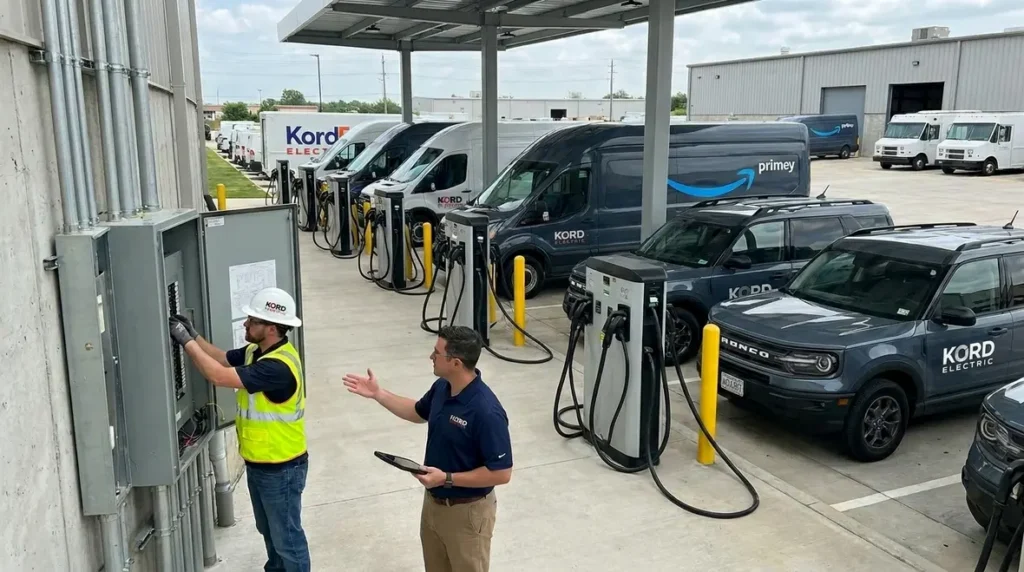
For fleets, the key driver is mission readiness. Fleet managers care about turnaround windows and predictable performance. In many cases, vehicles return, charge, and roll out again the same day. Consequently, we plan for higher duty cycles, better monitoring, and charging availability that supports dispatch needs. Moreover, fleet operations usually demand tighter electrical coordination because power draw can happen in waves.
Then we connect the dots: when you plan the two groups together, you can reduce overall demand charges, improve utilization, and avoid adding separate electrical upgrades for each group. That is the difference between guessing and engineering.

Site assessment steps we use before we touch a panel
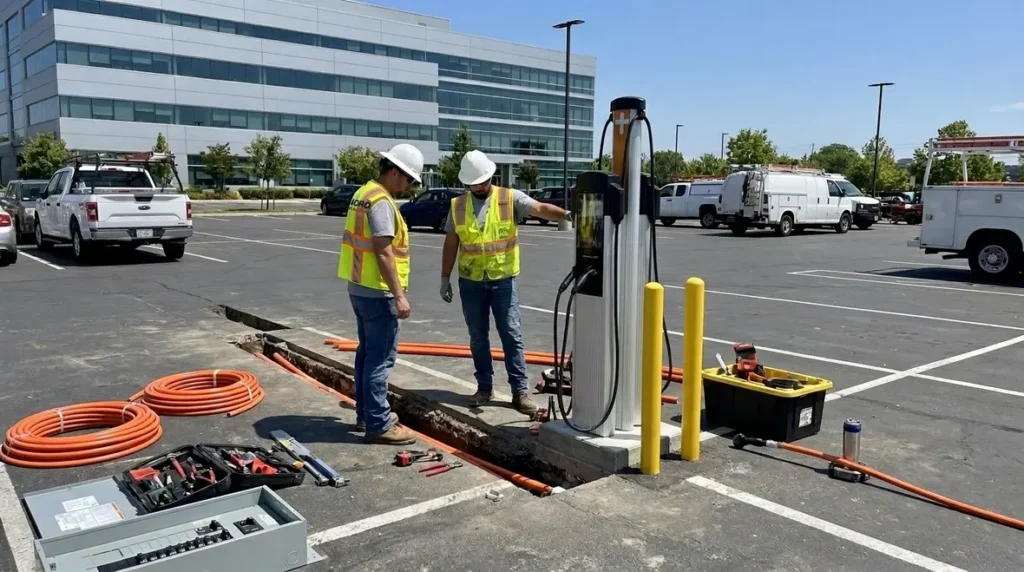
Our expeert service staff emphasizes a simple workflow: verify, measure, model, then design. First, we inspect site conditions. We look at parking layout, trenching routes, conduit paths, and whether chargers will sit on pavement, near curbs, or behind existing structures. We also check for obstacles like low clearance areas, landscaping boundaries, and future construction plans.
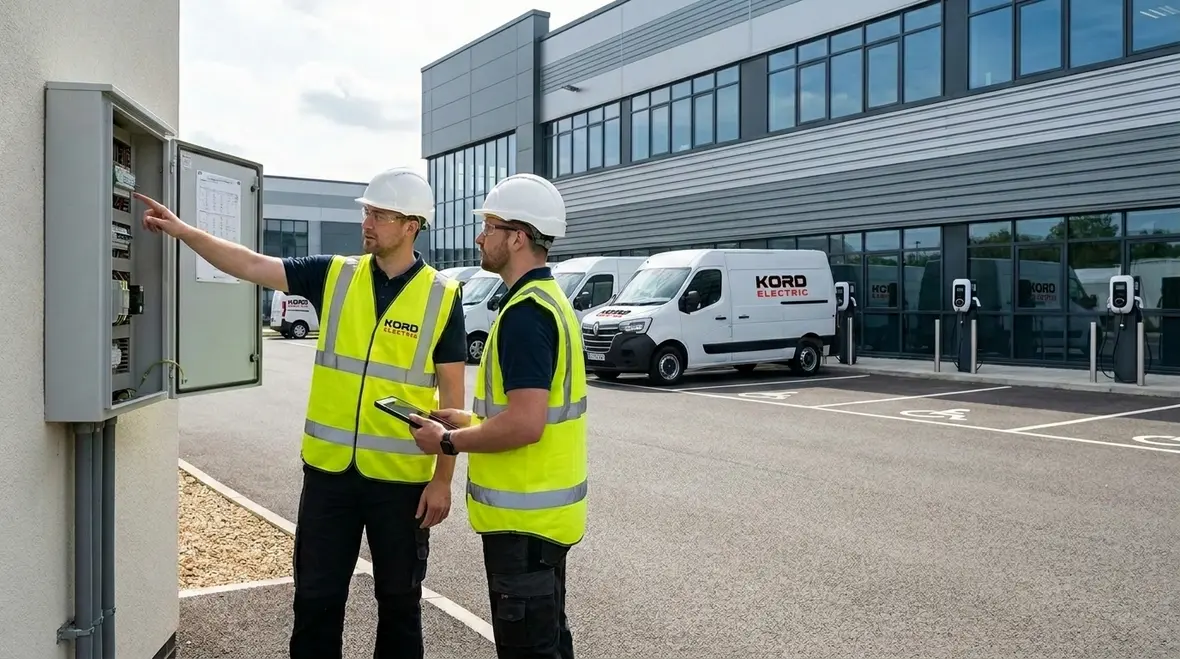
Second, we review electrical infrastructure. This includes transformer capacity, service entrance details, feeder paths, and existing panel schedules. If a facility has old wiring or unclear labeling, we resolve those details early because later changes cost time and money. Our technicians handle these checks with the calm confidence of someone who has read the fine print before signing.
Third, we run load modeling. We analyze simultaneous charging, typical usage peaks, and how smart charging can reduce demand spikes. This is where we can protect budgets. And if the facility follows California Title 24 requirements or similar efficiency goals, we align the electrical plan with the practical outcomes that those programs expect. If the building already has lighting or energy retrofits under way, we coordinate charging planning alongside those efforts so the facility gets a coherent energy strategy, not a patchwork.
Finally, we confirm the permitting path. Commercial and industrial facilities often require careful documentation and coordination with utilities. So we prepare the materials that help the project move, rather than waiting on preventable back and forth.
When a site assessment uncovers broader reliability questions, it often overlaps with topics covered in Kord Electric’s insights on commercial and industrial electrical maintenance plans. Combining structured maintenance with thoughtful EV planning helps facilities treat charging as part of a long-term reliability strategy, not a one-off project.
Demand charges, utility coordination, and how we reduce surprises
Commercial energy costs can swing on demand. Therefore, planning commercial charging infrastructure means thinking beyond the charger hardware and into how the utility reads your site load profile. When multiple vehicles charge at once, a facility can see spikes that trigger higher charges.
To reduce that risk, we consider three practical levers.
- Staggered charging: We schedule charging so the system does not hit maximum draw at the same moment.
- Managed power: We use the charging control strategy to distribute available power across ports.
- Load sharing: We connect chargers through controls so they respond to real time conditions.
Next, we coordinate with the utility when needed. Some sites require upgrades to support the new load, and others may need revised service planning. If the facility has a history of utility delays, our approach helps avoid last minute surprises. Our service team also prepares for the typical project friction points, like transformer lead times and inspection scheduling.
Here is the part many people skip: we plan for growth while controlling the present. In other words, we design an upgrade path that does not force a full rebuild later. Think of it like buying a phone plan with room to add lines, except you are buying conduit, feeders, and a calmer next quarter.
Budgeting and ROI: what facilities should measure
When stakeholders ask about ROI, they often focus only on equipment cost. We take a broader view because real ROI includes operating impact, energy costs, and future readiness. And yes, we also account for the human factor: fewer downtime issues and less time spent managing charging problems.
Where ROI planning starts is measurement. We look at current energy rates, estimated charging sessions, expected vehicle dwell time, and how many ports will actively be used. Then we build a forecast that includes both direct costs and indirect costs, such as load management equipment and ongoing system performance monitoring.
If the facility is already working on energy upgrades, we align the charging plan with the same mindset used in other retrofits. In fact, our team references the type of structured ROI thinking shown in our California Title 24 lighting retrofit ROI guide, because the core idea stays the same. We gather baseline data, we estimate energy impact, and we plan payback with realistic assumptions. That approach helps the project team talk to finance without turning every conversation into a guess-and-pray exercise.
Finally, we confirm the maintenance model. Commercial systems need predictable service intervals. So we design access for technicians, clear labeling for future troubleshooting, and monitoring for early fault detection. When the system runs smoothly, the ROI story gets stronger, and nobody has to pretend charging failures are “just part of the process.”
Installation and commissioning: how we protect safety and uptime
Once the design is approved, installation becomes the main event. However, in our experience, the main event still needs rehearsals. So, we coordinate before work begins. That includes confirming conduit routes, confirming equipment staging, protecting sidewalks and landscaping, and scheduling around operations so the facility keeps running.
During installation, our technicians follow best practices for commercial work. We ensure proper conductor sizing, correct termination methods, weatherproofing where needed, and secure mounting that can handle daily use. We also verify labeling and documentation so future service stays efficient.
Then comes commissioning. This step matters because commissioning is where we confirm the system does what the design promised. We test charger behavior under controlled conditions, confirm power delivery and communication, and verify that load management rules perform as expected. After that, we provide the facility with clear operation guidance and service contacts.
Finally, we train the right people. Our expert service staff explains charging behavior, usage expectations, and what the monitoring signals mean. In practical terms, we reduce the “mystery lights and random errors” problem. And yes, if a facility asks, we also explain why certain settings matter. Sometimes, it is like teaching someone to drive a forklift. They may be confident, but we still prefer safety.
Scaling responsibly as fleets grow and plans evolve
EV programs grow in phases. Therefore, we plan for incremental expansion without turning the electrical system into a spaghetti bowl of upgrades. Early design decisions can either keep future additions straightforward or force costly modifications.
To scale responsibly, we prioritize three strategies.
- Capacity planning: We reserve electrical headroom or design load sharing so future ports do not trigger new utility upgrades.
- Modular layouts: We build conduit and space where chargers can expand without tearing up finished work.
- Smart controls: We keep the control architecture flexible so management rules can adapt to changing schedules.
We also align charging expansion with facility operations. If fleet routes change, or if shifts expand, the charging plan should match that reality. That is why we include practical monitoring guidance and service readiness. Our team supports commercial and industrial facilities and major property buildings because those projects require a long view.
In short, we do not sell a charger and walk away. We help clients build a system that can grow without drama.
FAQ
Ready to plan a smarter EV rollout for your site?
If you run a commercial or industrial facility and you want charging that stays safe, reliable, and ready for growth, Kord Electric can help. Our technicians and expert service staff guide you through site assessment, electrical planning, utility coordination support, and commissioning with clear documentation at every step. Next, we build a plan that reduces demand surprises and supports both employee and fleet needs. Contact us to schedule a consultation and get a charging infrastructure roadmap built for how your site actually operates.
For property teams that are ready to move from planning into action, Kord Electric’s dedicated EV charger installation services translate this commercial charging infrastructure strategy into real-world construction, commissioning, and long-term support.