Commercial EV Charging Scalability for Growth
Kord Electric helps businesses scale charging with commercial EV charging scalability, so growth does not turn into a tangled web of upgrades, billing headaches, and last minute power problems. We work with commercial and industrial facilities, plus major property buildings, where every decision impacts uptime, safety, and the bottom line. In this article, we explain how others plan their fleet charging the wrong way and how we help prevent it. And yes, we do it calmly, because nobody wants their charging plan to feel like a sitcom with the plot twist being “the electrical room is on fire.”
Why scaling EV charging for business growth is more than adding ports

When a company grows, its charging needs rarely stay still. Drivers add routes, shifts change, and vehicles show up like uninvited guests at a meeting. Therefore, scaling does not simply mean installing more chargers. It means building a system that can expand without creating repeat downtime, costly rework, or unpredictable power demand.
At Kord Electric, our expert service staff starts by treating charging like a core utility, not a one time purchase. We map the real usage patterns, estimate future load, and plan electrical distribution with room to grow. Then we design for reliability: clean power, proper protection, smart load control, and safe installation practices.
To keep things practical, we also talk through operational impacts. For example, if your fleet returns in a tight window, demand spikes quickly. However, if we use scheduling logic and load management, we can flatten that spike, so the facility does not hit its limits. This is the difference between chargers that look good on paper and chargers that work on Monday morning.
Plan for demand now, and for the next few years
We approach scaling like a forward looking roadmap. First, we review your current electrical capacity and demand profile. Next, we identify where future growth will land. Then we size the service, feeders, and panel capacity so upgrades happen on a schedule that fits your business, not the other way around.
Most teams focus on the chargers they want today. Meanwhile, the real constraint often hides elsewhere: transformers, switchgear, main panels, and the building service entrance. In other words, the limiting factor is frequently not the charger. It is the infrastructure that feeds it.
So we help you avoid the classic mistake: adding chargers, then discovering the building cannot support them without major electrical changes. And nobody wants that moment where the charging project becomes a “Phase Two” forever project. Our technicians work through this early, with clear options and realistic timelines.
Hidden electrical risks in commercial buildings must be handled early
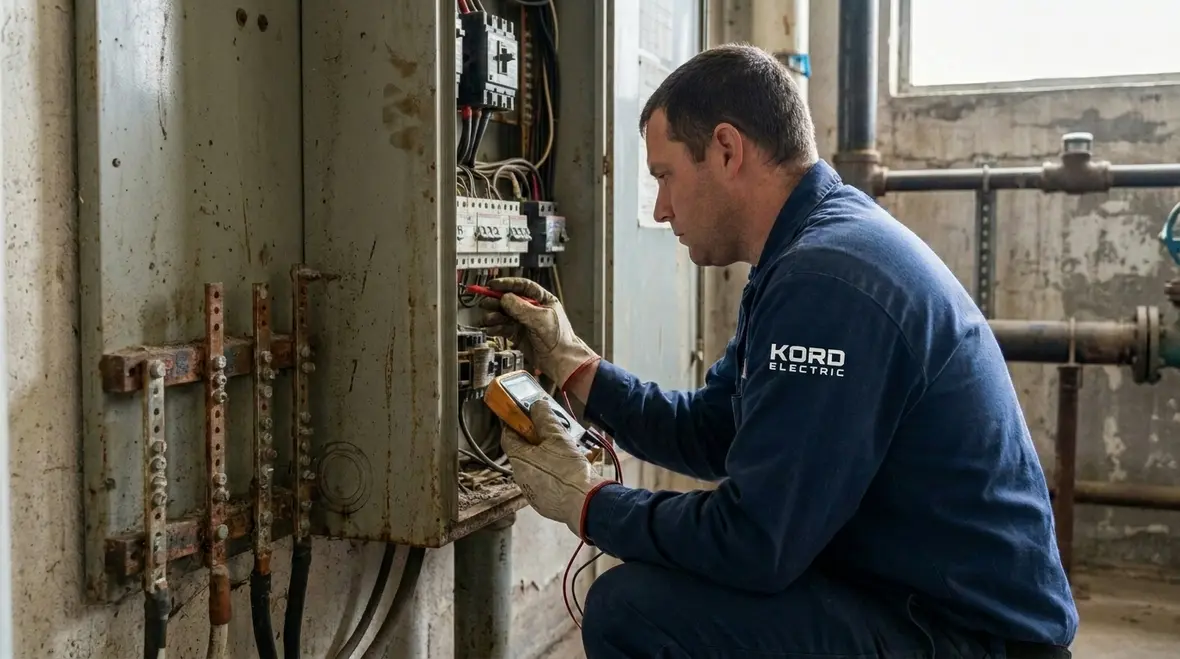
Even when a facility has power, it may not be ready for charging loads. Over time, wiring, connections, grounding, and protective devices can drift out of spec. Plus, older buildings might have loads that were added in phases without a full system view.
Kord Electric’s technicians pay close attention to the risks that can quietly increase heat, create instability, or trigger faults under higher demand. For deeper detail, we encourage you to review our blog Hidden Electrical Risks in Commercial Buildings, because these issues rarely announce themselves until the moment you push new load into the system.
Here are the types of hidden problems we look for during planning and commissioning, especially before a scaling plan begins:
- Loose or aging connections that generate heat under sustained load
- Overloaded panels and mis-sized breakers that do not trip the way you expect
- Grounding and bonding gaps that can affect fault protection and safety
- Inadequate labeling and documentation that slows future troubleshooting
- Transformer limitations that show up when multiple chargers draw power at once
Next, we recommend mitigation steps based on your facility. In some cases, we upgrade protection and connections. In others, we add capacity or adjust distribution. Either way, we aim to reduce risk before it becomes a safety issue, and before it becomes a business issue.
How we design wiring, panels, and load management for expansion
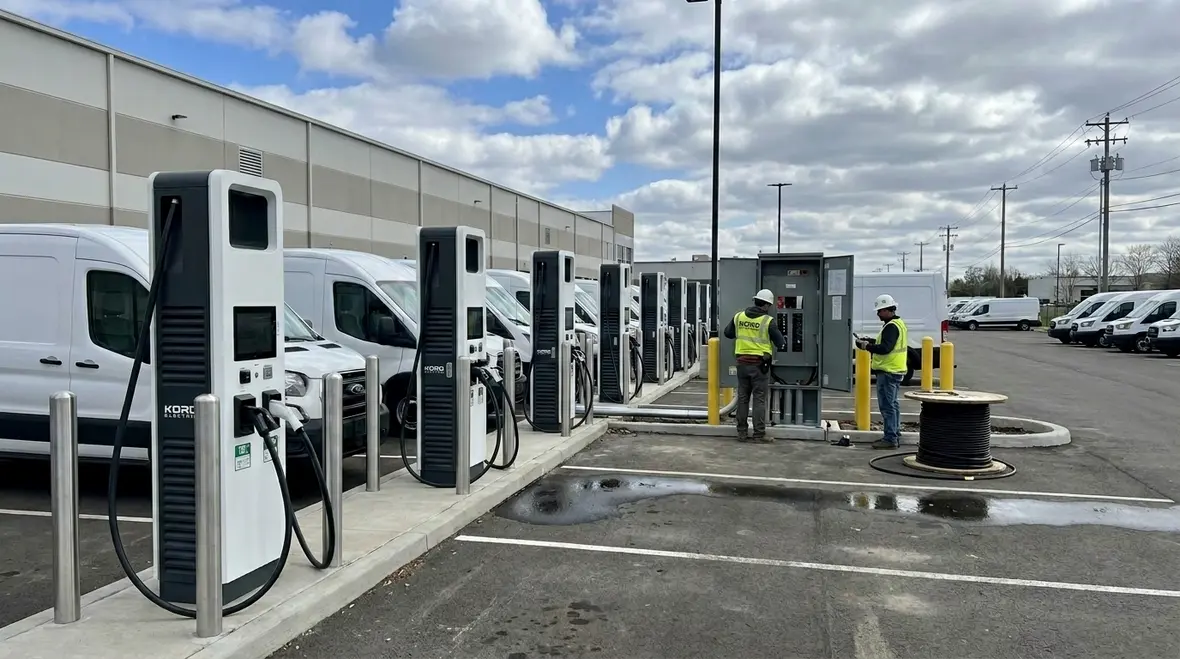
Scaling succeeds when the electrical design supports growth without forcing constant rework. Therefore, our approach focuses on capacity planning and distribution strategy. We start at the service entrance and move outward with a clear view of how current and future loads behave.
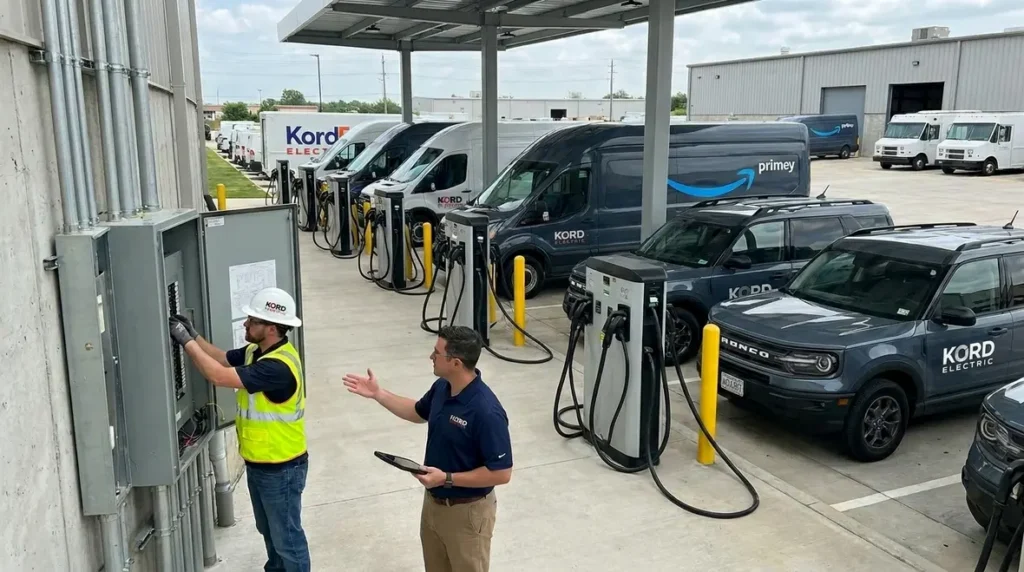
Load management plays a major role here. Instead of letting every charger pull maximum power at the same time, we help coordinate charging so demand stays within safe limits. As a result, facilities often avoid expensive utility upgrades. Additionally, load control can align charging with operations, like cleaning cycles, overnight parking, or fleet route timing.
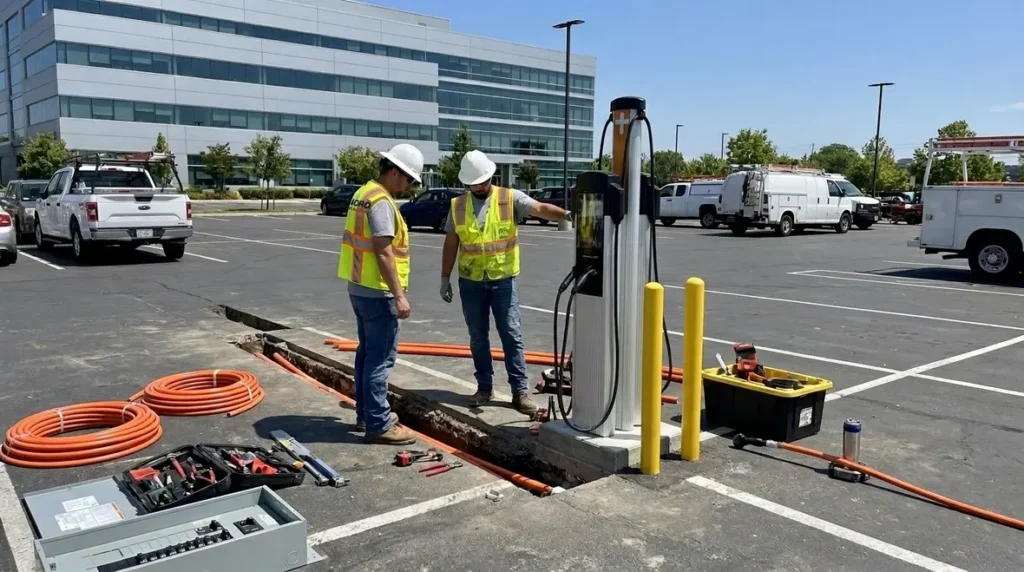
Our technicians also plan for physical expansion. That includes conduit routing, panel space, and spare capacity where future chargers will connect. Then we document the system so later additions feel like upgrades, not mysteries. After all, when your team returns for Phase Two, they should not have to decode our work like it is an escape room.
To keep everything business ready, we also consider uptime and service access. We coordinate work so operations keep moving, and we reduce downtime windows. In this space, careful scheduling is not just neat. It protects revenue, staff time, and fleet availability.
Commercial and industrial facilities need safer uptime, not fragile systems
Fleet charging sits at the center of daily operations. So we design with durability in mind. That means strong protection, correct component selection, and installations that follow industry standards. It also means we do commissioning properly so the system performs the way it should from day one.
When we talk about uptime, we include more than “will it power up.” We include fault response, safe shutdown behavior, and the ability to recover from issues quickly. Consequently, a charger does not need to be perfect every minute to keep the business running, but the electrical system must respond correctly when something changes.
To help teams plan decisions quickly, we often break the approach into two lanes: design readiness and operational readiness. In dual focus, we keep the project aligned with both electrical performance and real-world charging behavior.
|
Design readiness
|
Operational readiness
|
And yes, we make the process clear. Others may hide behind vague promises. Our technicians explain what we see, what it means, and what we recommend next, in plain language your operations team can trust.
Steps to scale a fleet charging rollout without surprises
Even strong projects can stumble if planning skips key steps. Therefore, we keep a simple, repeatable workflow for commercial and industrial facilities. It helps teams move fast while avoiding avoidable surprises.
- Assess current electrical infrastructure with real demand context, not guesswork
- Forecast future fleet growth based on vehicle mix, charging windows, and usage
- Identify electrical risks early like aging connections, limited capacity, and protection gaps
- Design for expandability using spare capacity, conduit planning, and load management
- Install with safety and clarity so the system is maintainable
- Commission and verify performance to confirm stable charging under real conditions
Along the way, our expert service staff stays available to explain the “why” behind decisions. If we recommend an upgrade, we connect it to future growth and risk reduction. If we recommend scheduling changes, we show how it reduces peak demand. That is how scaling becomes predictable instead of reactive.
Look, charging plans can be stressful enough without extra drama. The goal is a rollout that supports business growth, not a long series of unplanned callouts. We build systems that earn trust.
For organizations putting that trust into a broader reliability strategy, EV charging plans also connect naturally with long term electrical health. Articles like Commercial and Industrial Electrical Maintenance Plans show how structured inspections, testing, and documentation keep the rest of your infrastructure aligned with your charging growth.
FAQ about scaling commercial EV charging
Conclusion: Let us scale your charging with confidence
When your fleet grows, your charging must keep pace without risking safety or uptime. Kord Electric builds scalable commercial EV charging scalability plans for commercial and industrial facilities, with clear electrical design, load management, and early risk review. Our technicians explain each step in business language, so you know what changes, why it matters, and how it supports future expansion.
If you are planning a rollout or adding capacity, our dedicated EV charger installation services connect your infrastructure design with practical, code compliant deployment. From first site walk to final commissioning, we help your commercial EV charging scalability plan land on time, on budget, and ready for the next phase of growth.
When you are ready to move from “we should add chargers” to “we have a scalable plan,” Kord Electric is ready to help you build it.