Commercial EV Fleet Charging Infrastructure Plan
Commercial EV Fleet Charging Infrastructure is no longer a “someday” plan for growing businesses. It is a real buildout decision, and it shows up the moment a company wants to add vehicles, expand routes, or cut fuel costs. At Kord Electric, we help commercial and industrial facilities, and major property buildings, plan charging that can grow without chaos. And while the future feels bright, we also know the present can feel like a spreadsheet fighting for its life. That is why our approach starts with practical planning, smart electrical design, and clear communication. Then our technicians explain the next steps in plain language, so teams do not feel like they just signed up for a mystery novel.
How businesses plan EV charging expansion without breaking service reliability
When a fleet grows, charging must keep up. However, most problems do not come from the chargers themselves. They come from the electrical plan, the site load, and the schedule for upgrades. To avoid that, we start by mapping how the site works today and how it will work after expansion. Then we match charger location to real vehicle behavior, like dwell time, shift changes, and routes.
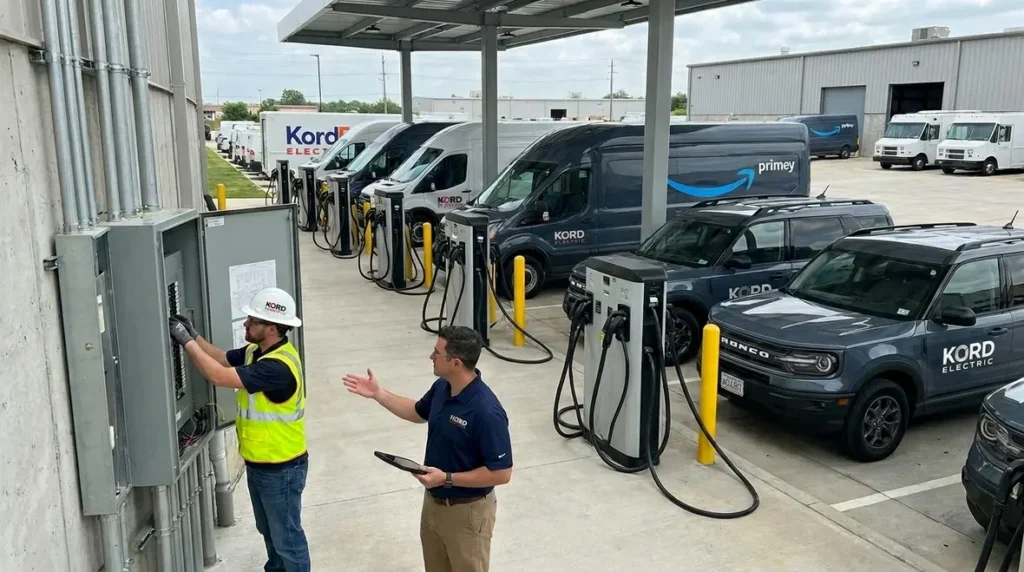
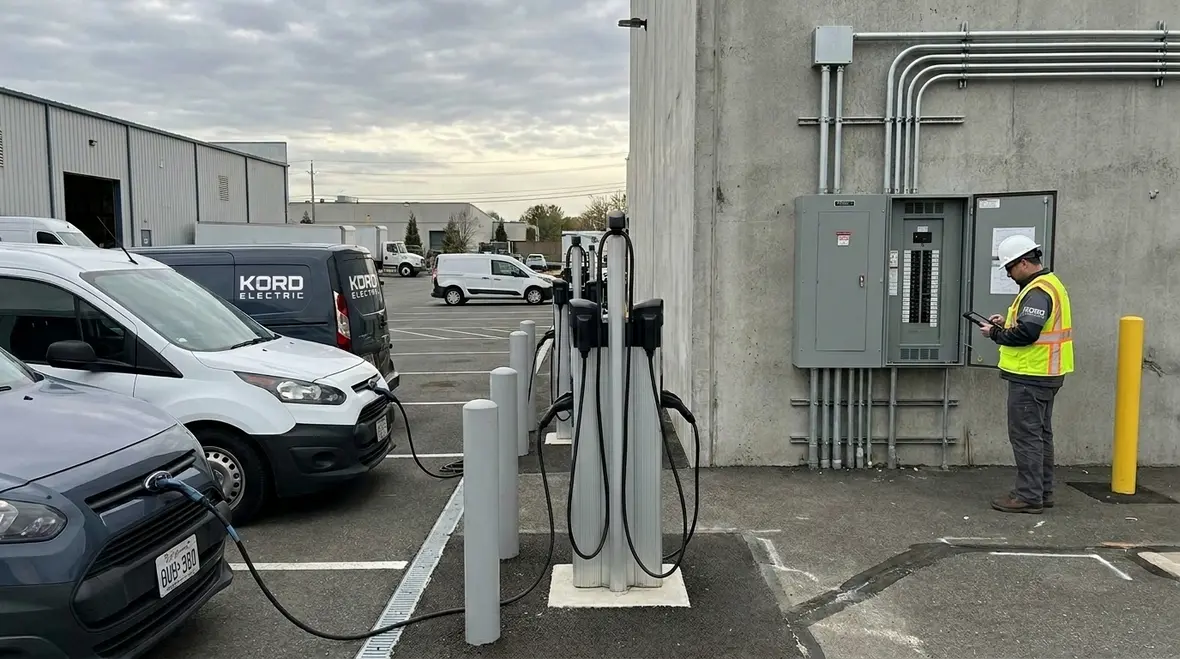
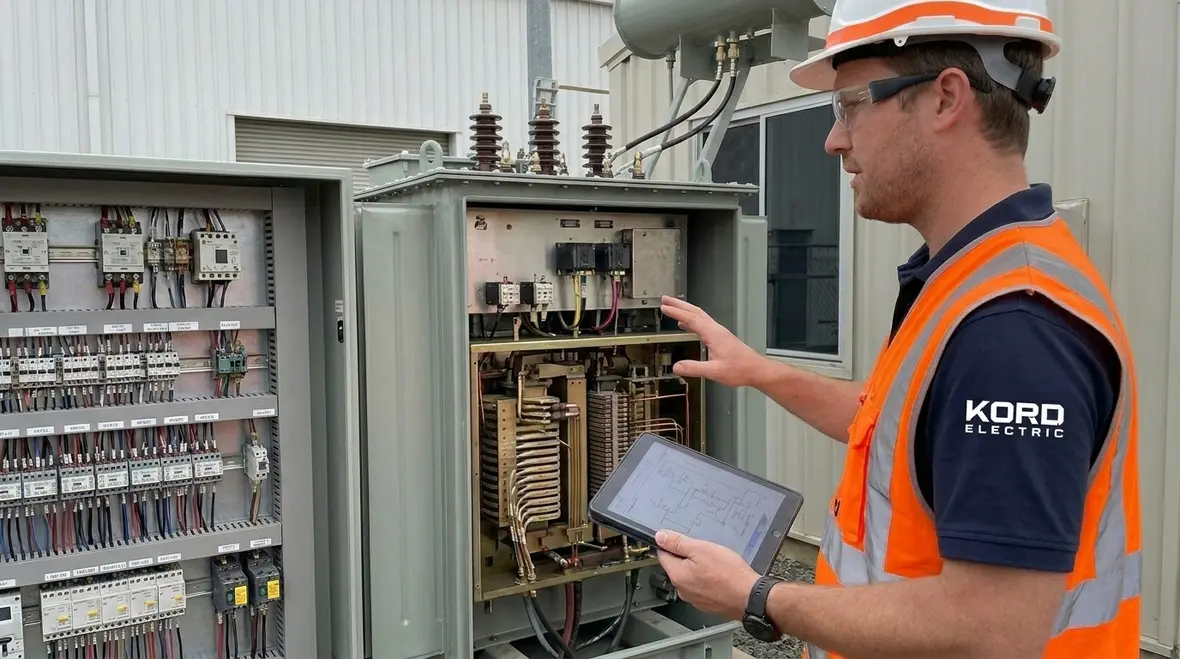
Next, we evaluate the existing electrical service, panel capacity, transformer size, and available space for distribution upgrades. At this stage, our expert service staff often walks facility managers through what they are seeing in the field and why it matters. They explain in a slow, steady way, like turning a complex map into a set of directions you can actually follow.
Then we consider redundancy and downtime planning. For example, if one circuit fails, we design so charging does not fully stop. Also, we coordinate the rollout so the fleet moves forward while construction stays controlled. Because yes, no one wants to be “green,” and also “out of power.”
Electrical capacity planning for multi year growth
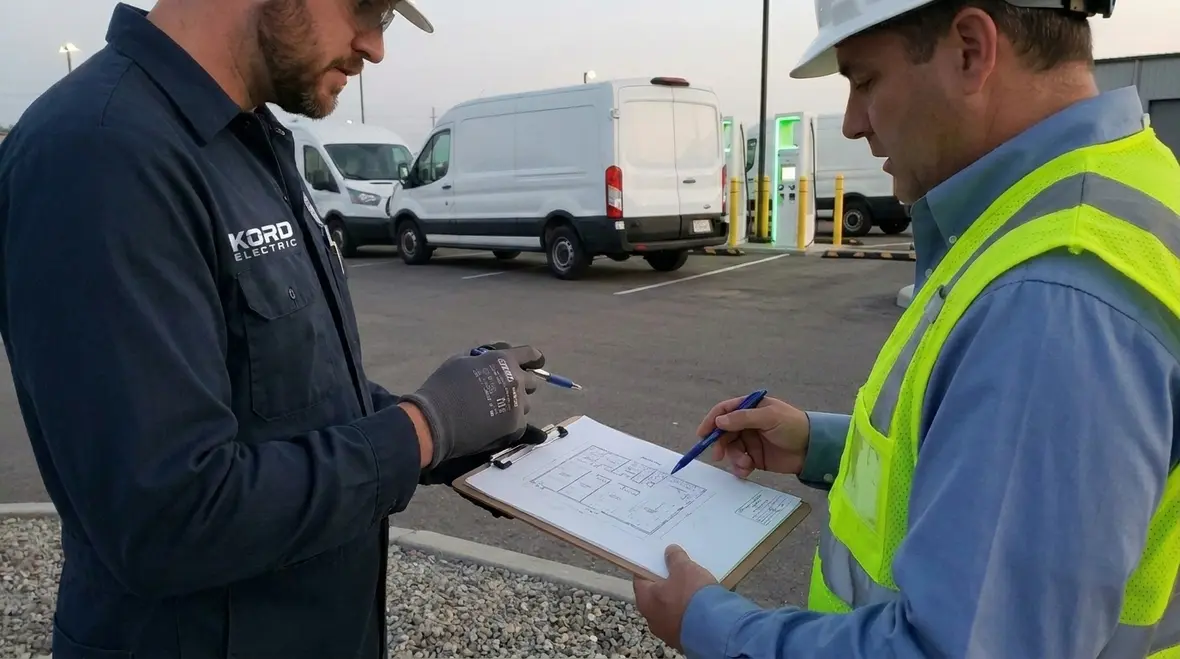
Scaling does not mean “add more tomorrow.” It means planning so each new wave of chargers fits the site without repeated major rewiring. To accomplish that, Kord Electric builds a capacity roadmap. We review current demand, peak loads, and the timing of loads across the day. After that, we estimate how much additional demand the EV charging will add.
Then we choose an installation strategy that reduces future disruption. Instead of forcing every new charger to trigger a full redesign, we may add conduit runs early, upgrade switchgear where needed, and plan for future panel capacity. In other words, we build a foundation that supports growth, not a fragile tower made of duct tape and hope.
Our technicians focus on safe, code aligned work. Yet we also focus on the business side. We translate electrical decisions into operational impact, so stakeholders understand lead times and the value of staged upgrades. That clarity helps teams approve the plan faster and avoid “surprise fees” later, which every business learns to hate quickly.
Site layout choices that maximize uptime and minimize rework
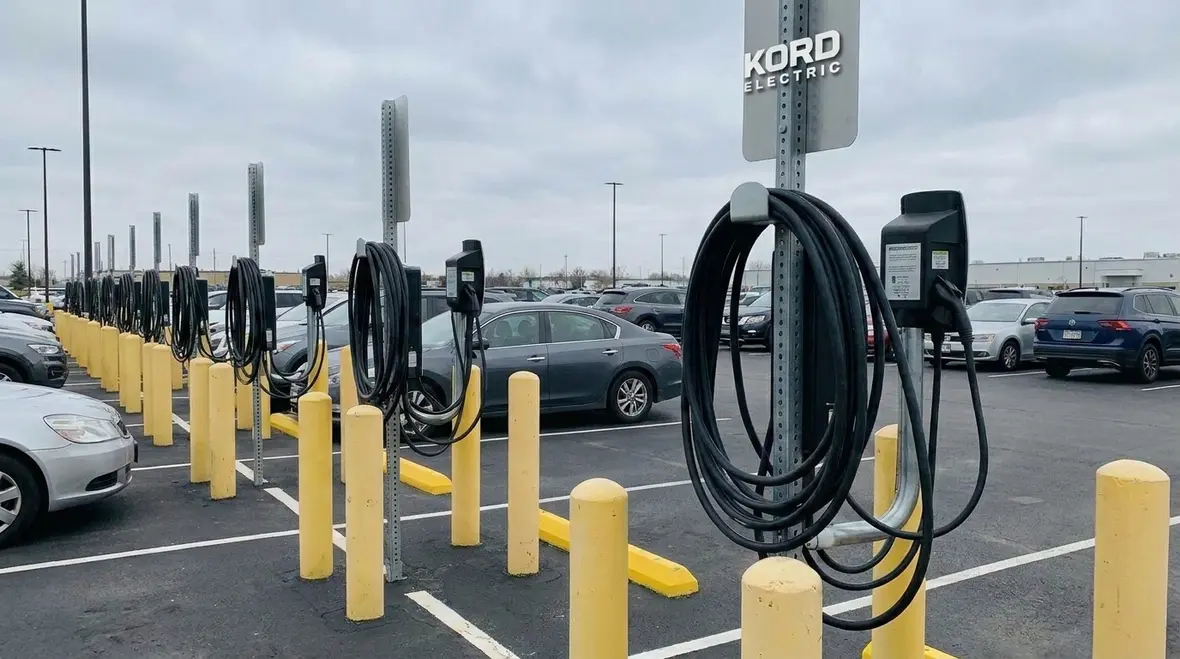
Once electrical capacity gets mapped, the next step is charger placement and site layout. A good layout improves cable management, reduces trip hazards, and supports fast access for drivers. At the same time, a bad layout creates rework. And rework costs time, money, and morale. Nobody wants to tell a facilities team they need to dig up the nice work from last quarter.
We typically evaluate parking flow, vehicle types, and charging bay requirements. Then we align charger mounting height, cable routing, and signage with the way people actually move on site. Additionally, we consider weather protection and security. Charging equipment sits outside, in real conditions, with real foot traffic. So, we install with durability and safety in mind.
We also plan for future bays during initial construction. That means conduit paths, electrical room routing, and spare circuit planning. If a property owner later adds more vehicles, the expansion can happen with less disruption. Transitioning from plan to installation becomes smoother, and teams stay focused on operations instead of construction surprises.
Budgeting and cost drivers for commercial installations
Cost planning matters, because projects often get approved with a budget that feels like it was guessed during a roller coaster ride. For guidance on commercial upgrade costs, our team references the principles in our Commercial Lighting Upgrade Cost Guide, which breaks down how scope, equipment choices, and installation complexity shape total cost. While that article focuses on lighting, the planning logic carries into electrical and infrastructure work for charging too.
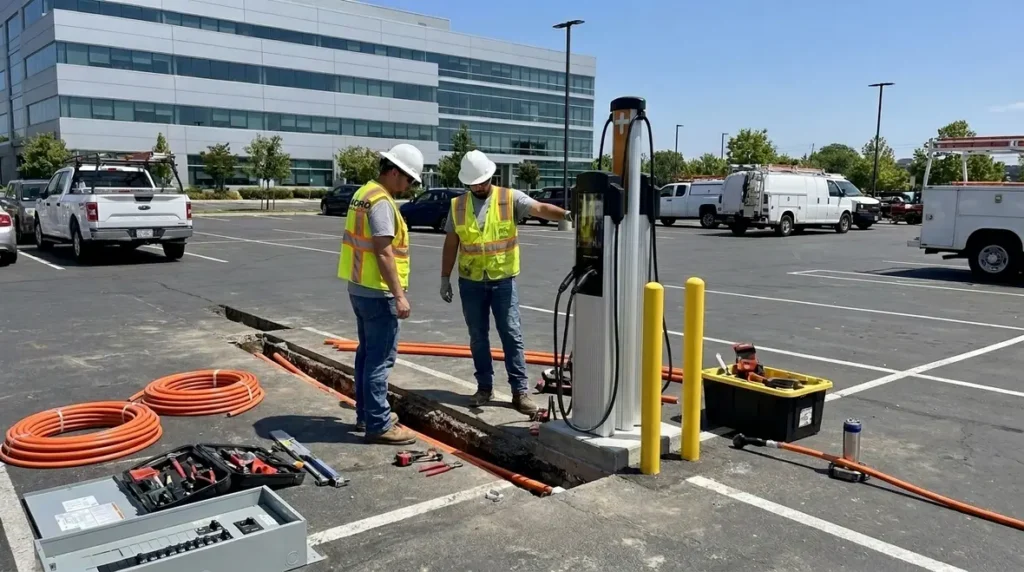
In a commercial EV rollout, major cost drivers usually include service upgrades, electrical distribution upgrades, trenching or conduit runs, trenchless options, labor scheduling, and permitting. Furthermore, the number of chargers matters less than the site’s readiness to support them. A small fleet at a high load capacity site can cost less than a larger fleet at a constrained electrical service.
We also account for the “hidden” work that can show up in the field. For example, outdated panel labeling, unclear existing circuits, or missing documentation can slow work. So, we help teams reduce uncertainty through site assessment and clear scope definition. Then we document the plan, so everyone understands what gets built, when it gets built, and why it costs what it costs.
And if you are thinking, “Can we just wing it?” We hear that line every season. Yet winging it in electrical infrastructure is like baking without measuring. Sometimes you get lucky. Most of the time, you just create a mess that someone else has to clean up.
How we choose smart charging controls and manage energy
Charging is not only a hardware decision. It is also an energy management decision. For fleet operations, smart controls help balance charging speed with site demand. They can also support scheduling based on electricity rates and operational needs. As a result, a business can charge effectively without forcing large electrical spikes that trigger costly upgrades.
At Kord Electric, we help teams decide how charging should behave. We discuss whether the fleet needs maximum charge each session or whether it can charge more gradually. Then we determine how to coordinate charging across multiple bays. We also consider whether the business wants reporting features for internal tracking and vendor reconciliation.
Our expert service staff explains these options clearly, so stakeholders understand tradeoffs. If someone wants faster charge now, they may accept higher electrical demand. If someone wants to reduce peak demand, they may accept slower charge but better cost control. Either way, we recommend configurations that fit the business goals and the realities of the site.
Then, we plan for future expansion of the control system. As the fleet adds vehicles, the controls should scale. Otherwise, the company pays twice: once for initial install, then again to fix what cannot expand. Transition planning keeps systems aligned with growth.
Permitting, utility coordination, and project schedules that stay on track
Commercial and industrial projects live in the real world of permitting, inspections, and utility coordination. Therefore, timeline risk can show up early if these steps get treated like afterthoughts. Kord Electric helps teams address the process before major work begins. We align schedules across vendors, electrical contractors, and property stakeholders. Then we coordinate any utility requirements that may impact service upgrades.
We also plan for inspection readiness. That means clear documentation, organized electrical room labeling, and installation details that meet code expectations. When inspections run smoothly, the business avoids the annoying delay that turns a “quick install” into a long wait. And delays create costs that no one budgets for comfortably.
Additionally, we help with staging. For example, if a facility cannot lose charging capacity, we schedule work in phases. We keep the site functional while the upgrades roll in. This staged approach reduces disruption, so fleet operations keep moving.
Featured snippet FAQ: commercial EV fleet planning
Reliable next steps with Kord Electric
If a business wants commercial EV fleet charging that scales, it needs a plan built for real loads, real sites, and real growth. Kord Electric helps commercial and industrial facilities and major property buildings map electrical capacity, design safe layout, and coordinate the path from permits to installation. Our technicians and expert service staff explain every step with clear guidance, so stakeholders stay confident. Reach out to Kord Electric today to schedule a site assessment and build a charging rollout that expands without drama. We handle the electrical, you handle the mission.
For organizations across the region, our Los Angeles County commercial electrical services team supports everything from panel upgrades to EV charging infrastructure, so facility leaders can align fleet charging, lighting, and broader power reliability goals under one coordinated plan.
If you are exploring incentives and long term strategy for your commercial EV fleet infrastructure, consider pairing your planning with Kord Electric’s guidance on California EV rebates and commercial charging installation design. Aligning infrastructure, incentives, and construction phasing helps protect budgets while keeping vehicles powered and ready for the road.
When you are ready for a commercial EV fleet charging infrastructure plan that is built to scale, our team stands ready to evaluate your site, design the roadmap, and execute with clear communication at every step.