Commercial Lighting Energy Efficiency Upgrades
Kord Electric helps commercial property owners cut operating costs with commercial lighting energy efficiency upgrades that feel simple on paper and powerful in real life. We guide organizations through a smart lighting modernization plan that reduces waste, improves comfort, and protects budgets. In this article, our team will walk through the strategic ways others often miss, from audit methods to controls, from retrofit choices to project phasing. And yes, we will keep it calm and clear, because nobody deserves a lighting project that feels like trying to assemble a shelf using mystery screws.
What are commercial lighting energy efficiency upgrades that actually work?
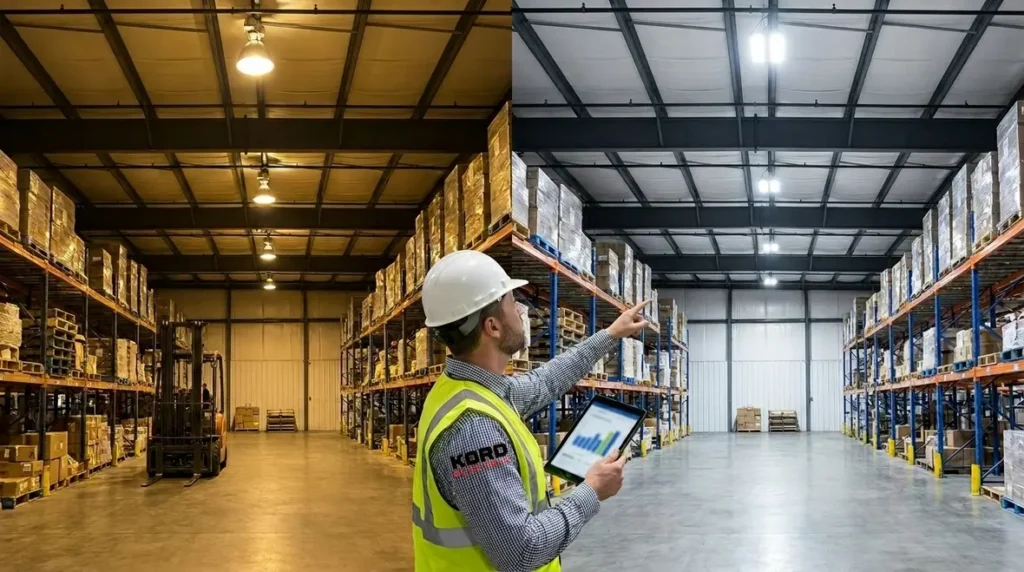
Commercial lighting energy efficiency upgrades are not just about swapping older bulbs for newer ones. We approach lighting as a system: fixtures, lamps, drivers, wiring, reflectance, occupancy patterns, and controls that match how people actually use the space. When others treat this like a one time bulb change, the results can disappoint. When we treat it like a structured improvement plan, energy use drops and performance improves.
Our expert service staff explains the “why” behind each decision. For example, we help clients understand that LED alone does not guarantee full savings. Instead, savings come when the lighting output, layout, and control strategy work together. So, our technicians begin by mapping the areas where lights stay on too long, where brightness levels do not match the task, and where glare or uneven lighting causes rework or complaints.
Then, we build a plan that uses upgrades in a logical order. First we stabilize the basics, next we add controls, and finally we verify performance. This avoids guesswork and keeps the project from turning into a slow motion disaster film.
Start with a lighting energy audit, not a guess
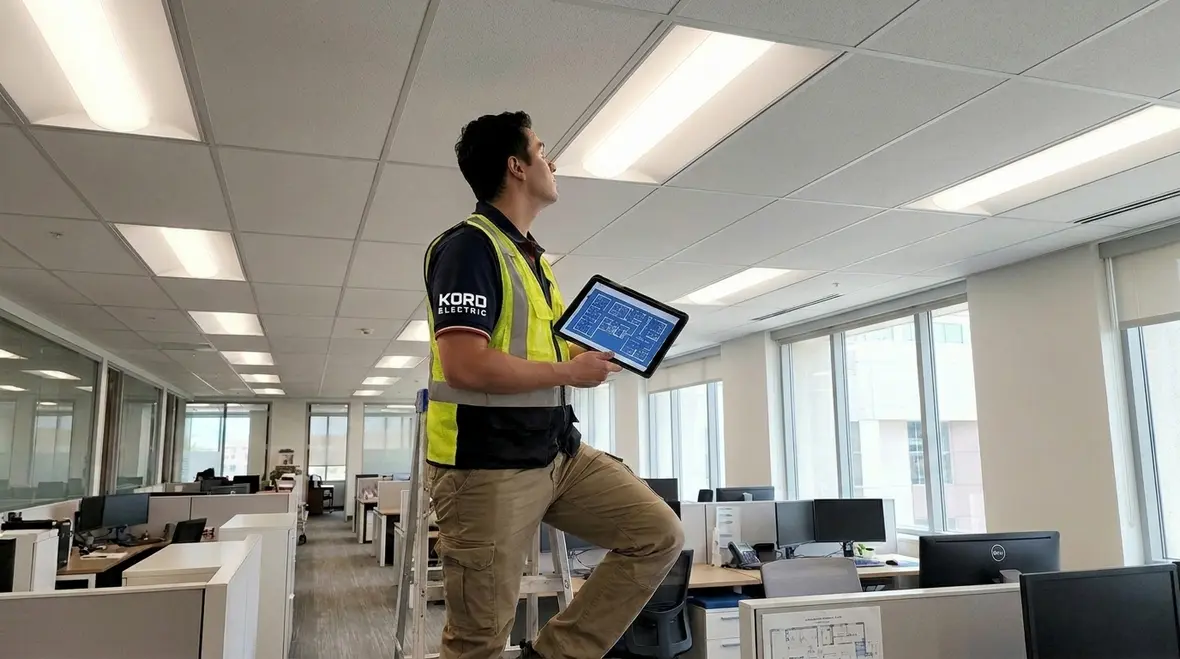
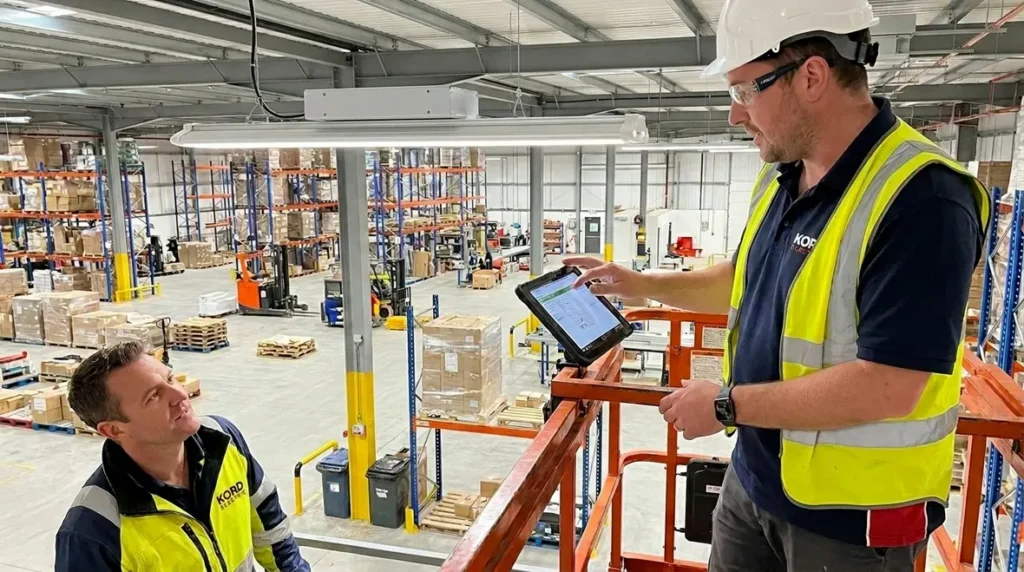
To plan the right upgrades, Kord Electric conducts a practical audit built for commercial and industrial sites and major property buildings. We do not just look at fixture age. We examine operating schedules, lighting levels, dimming compatibility, and how the building actually behaves across shifts and seasons.
Our technicians and expert service staff explain the findings in plain language. For example, they break down which zones drive the biggest load and which hours waste the most energy. They also flag issues that can limit savings, such as fixtures with poor optical design, incompatible ballasts, or areas that receive daylight but never respond to it.
And because transition matters, we often compare multiple upgrade paths before we recommend the best one. We evaluate retrofit options versus full fixture replacement. We also look at how maintenance will change after the upgrade. Then, we create a schedule that supports business operations, not disrupts them like a surprise renovation with no warning.
For property teams who want to explore the cost side in more detail while they plan, this approach pairs well with insights from our Commercial Lighting Upgrade Cost Guide, which breaks down how square footage, fixture type, and control strategies shape total investment.
Retrofit strategy: choose the upgrade path that matches the site

When clients ask, “Should we retrofit or replace?” we answer with a site specific logic model. In one warehouse or office wing, retrofits can deliver strong results with less downtime. In another building, full fixture replacement may prove more cost effective because it improves optics, integrates better controls, and avoids future maintenance issues.
Kord Electric considers several factors as we guide the decision. These include fixture condition, labor cost for access, expected life span of the equipment, and whether the building plans to expand or reconfigure spaces soon. In addition, we assess whether the current electrical system can support modern drivers and controls without costly surprises.
Importantly, we avoid “one size fits all” thinking. Instead, we create a zoning plan that aligns with how facilities staff manage areas. For example, production bays with changing tasks may need adjustable lighting scenes. Office spaces may need more consistent output with glare control. And corridors often need occupancy based control so lights do not stay on when nobody is walking through.
If your facility is already exploring broader electrical work such as rewiring, it can be helpful to layer lighting strategy into that conversation. Many commercial buildings eventually outgrow their original infrastructure, and our Rewiring Cost Guide for Commercial Electrical Systems explains how lighting, wiring, and panel capacity planning fit together over the long term.
Use controls and daylighting to prevent wasted hours

Lighting waste is rarely only about brightness. It is often about time. Therefore, controls become a core part of our commercial lighting energy efficiency upgrades strategy. We use occupancy sensors, scheduling, dimming systems, and daylight harvesting where it makes sense.
Our expert service staff explains control settings with a calm, step by step approach. They also help clients set expectations. Dimming works well when sensors and optics support stable lighting levels. Scheduling works well when building staff keep operating hours consistent. And daylighting works best when the design considers blinds, skylights, window treatments, and interior finishes.
Once these elements work together, the building stops burning energy “just in case.” That is the difference between a lighting upgrade that looks good in a brochure and one that performs in the real world. It is also how we help reduce complaints from teams who want bright workspaces but do not want lights blasting all night like a nightclub with no exit signs.
For properties in California, these control strategies are not just nice to have; they are often required. Our team regularly ties energy efficiency work to commercial lighting compliance in California, making sure occupancy sensors, time switches, and daylight zones line up with Title 24 expectations instead of fighting them.
Design the layout and optics for real comfort and safer work

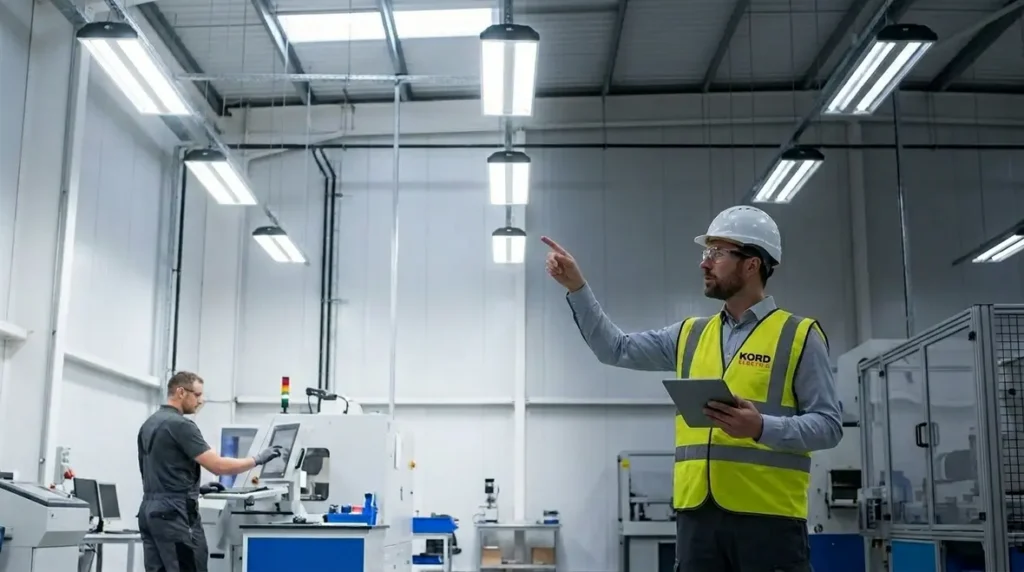
Strong efficiency can still fail if the lighting distribution does not support tasks. So we pay attention to layout, spacing, mounting heights, and fixture optics. This matters in manufacturing environments, distribution centers, and property common areas where visual accuracy supports safety and productivity.
We evaluate the reflectance of surfaces and the risk of glare. Then, we align lighting levels to task requirements without over lighting. In practice, this means some areas receive targeted brightness, while others run at lower levels under certain conditions.
Also, we consider color quality and how it affects visual performance and perception. While some people chase the cheapest option, Kord Electric focuses on outcomes. When employees can see clearly and comfortably, the building runs smoother. In other words, we deliver lighting that supports people, not just wattage reduction.
This design mindset also shapes our dedicated Lighting Installation Services, where we engineer systems for performance and safety across warehouses, campuses, factories, and government buildings, not just for a quick fixture swap.
Plan installation in phases to reduce downtime and risk
Commercial and industrial buildings rarely shut down for a lighting project. So we create phased installation plans that support operations. This keeps production lines moving, limits after hours work, and reduces the chance of disruptions that could anger facility managers.
Our technicians coordinate staging so teams can access areas safely. Then, we verify each phase before moving forward. We check for correct controls behavior, verify electrical compatibility, and ensure lighting output meets the planned targets.
Additionally, we help clients think ahead about how future maintenance will work. For major property buildings, this includes access considerations, spare parts planning, and who will handle routine inspections. When the strategy includes maintenance reality, the upgrade stays effective long after the install crew leaves.
In facilities where production uptime is critical, this phasing often dovetails with emergency planning. Our Emergency Electrical Services team is used to working in high pressure environments, and that same steady, safety first mindset carries into scheduled lighting work so surprises are rare and recoverable.
Coordinate electrical upgrades and other site work
Lighting is one piece of the electrical ecosystem. Therefore, we coordinate with other planned electrical work to avoid duplicated labor and unexpected upgrades. For example, when a property also plans electric vehicle charging, we can align project timing, panel capacity reviews, and routing paths for conduit and wiring.
If a client is considering electric vehicle charging installation, Kord Electric already supports that work through our process at EV charger installation. We use this same mindset of planning, verification, and scheduling. As a result, the electrical system gets upgrades that make sense together, not as separate projects that “meet in the middle” later with a surprise cost.
Transition from one scope to another works best when the teams communicate early. That is exactly what our expert service staff does. They explain the sequence and help clients understand what decisions affect both lighting and charging infrastructure.
FAQ
Ready to lower costs with a lighting plan that performs
Kord Electric helps commercial and industrial facilities modernize lighting with commercial lighting energy efficiency upgrades that balance savings, comfort, and safe installation. Our technicians and expert service staff guide you through audits, upgrade paths, control design, and phased work so the project stays calm, organized, and on target. If you want a lighting system that reduces waste without cutting performance, contact us today for an assessment. Let’s turn your building lights from “always on” into “exactly right.”
If your facility is ready to combine lighting improvements with broader electrical support, our Lighting Installation Services team can help you coordinate new systems, retrofits, and code compliance under one plan instead of juggling separate projects.