Commercial Property Electrical Due Diligence
At Kord Electric, we use a commercial property electrical due diligence checklist to help owners, investors, and lenders understand the real condition of a building’s electrical systems before they sign anything. In the first phase of due diligence, our team reviews safety items, documentation, system capacity, and visible wear so surprises do not jump out later like a horror movie jump scare. To do that well, we rely on our trained technicians and expert service staff who explain findings in plain language, not mystery. Furthermore, we help stakeholders connect the dots between what the building shows today and what it is likely to need tomorrow.
Commercial property electrical due diligence checklist: what it covers on day one
Others call it “a quick look.” We call it the first line of defense. A strong commercial property electrical due diligence checklist usually starts with records, because paperwork often tells the truth before the equipment does. Then we move to site observations, because the best drawing plan in the world cannot stop a failing breaker or a loose lug. Finally, we check for capacity and compliance risk, since a building can pass inspection and still be one tenant build out away from trouble.
During this stage, our technicians typically confirm the basics: one line diagrams, panel schedules, lighting control data, and any recent maintenance reports. Also, we identify gaps in documentation. If a building has no records for major repairs, that does not mean the equipment is fine. It usually means someone will pay later. And nobody wants to pay later, unless they are buying concert tickets. Even then, they should read the seat map.

Inspecting switchgear, panels, and feeders without guesswork
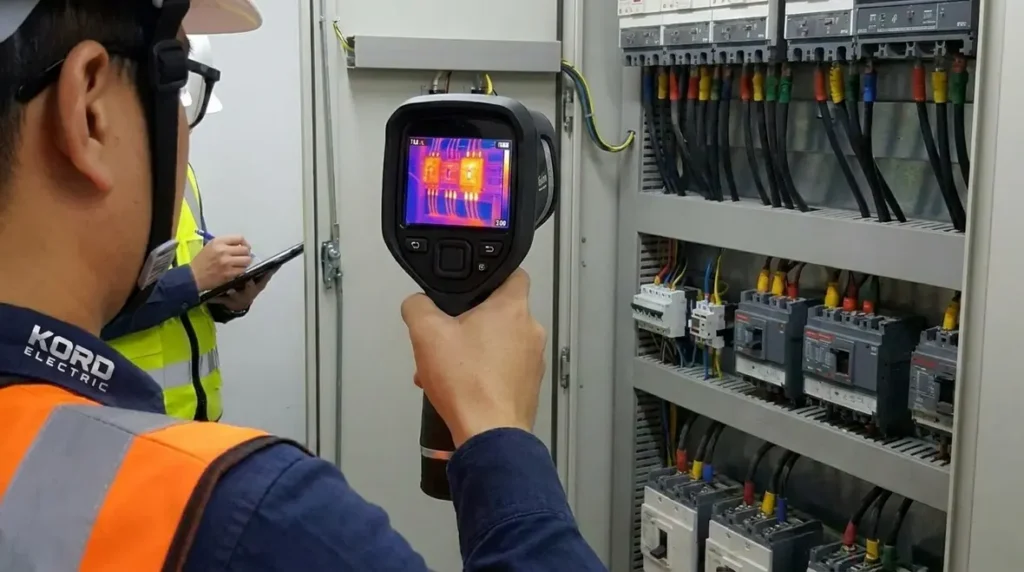
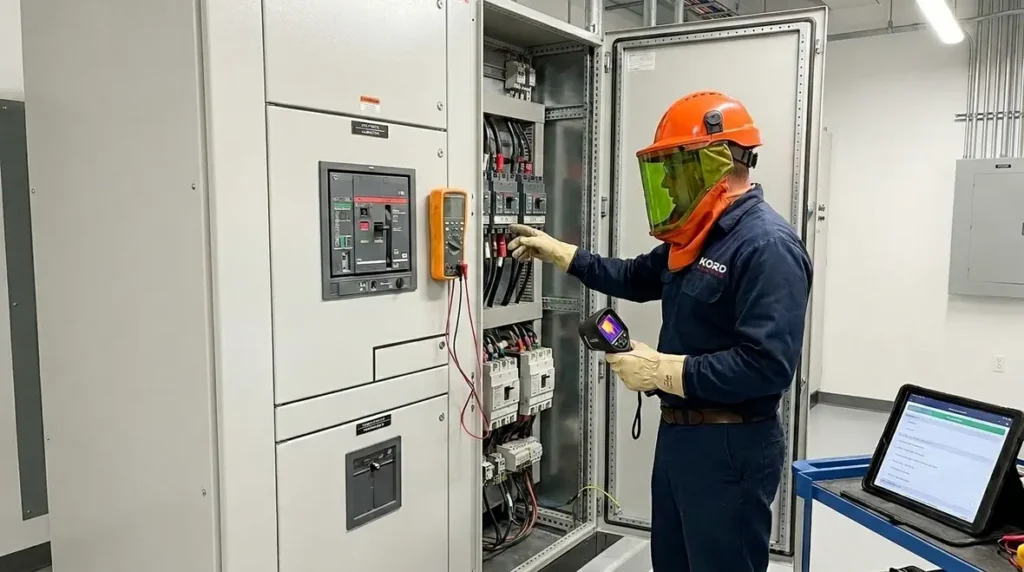
When a commercial or industrial facility changes hands, switchgear is often where risk hides. So we inspect it methodically, with a focus on condition, terminations, and clear signs of overheating. For example, we look for discoloration on bus bars, signs of moisture intrusion, and loose or corroded connections. Meanwhile, we verify labeling and circuit identification. When the labels do not match reality, electrical work becomes slower, costlier, and more error prone.
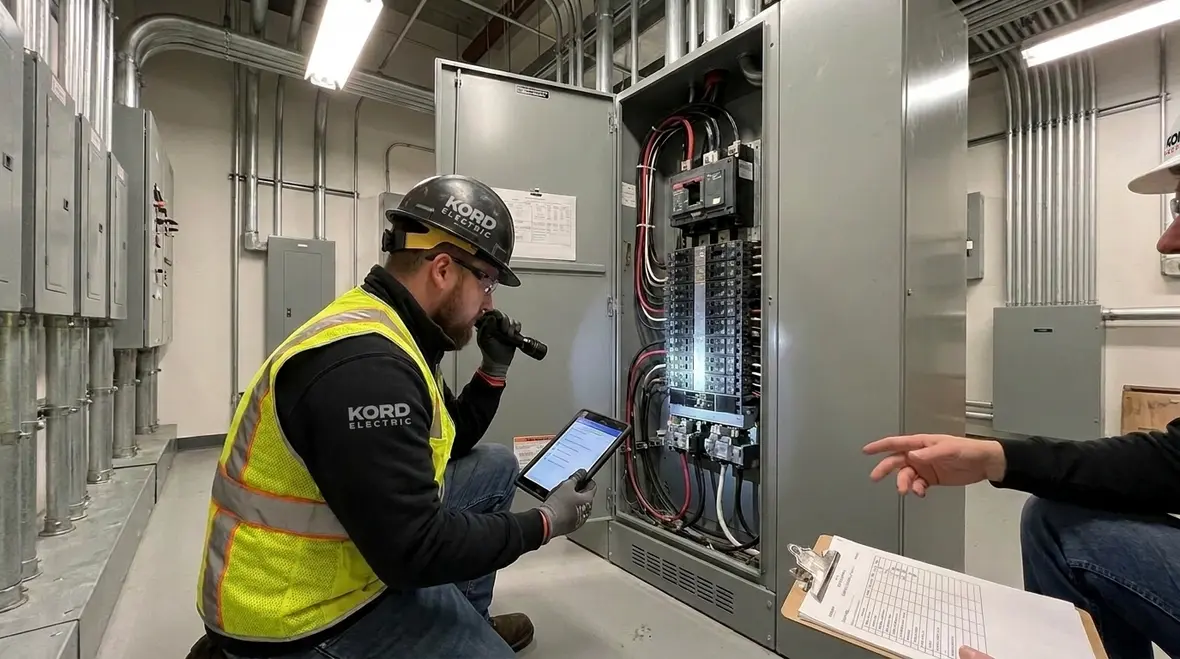
Next, we check panels and feeders for load balance and physical condition. Overloaded circuits do not just shorten equipment life. They also increase the chance of nuisance trips, voltage drop, and downtime during peak hours. Therefore, we examine how the building behaves under typical use patterns, including seasonal loads that show up after HVAC schedules shift.
At Kord Electric, our technicians take time to walk stakeholders through what they see and why it matters. Instead of tossing jargon into the air and hoping it lands, we explain the cause and the consequence, like a calm instructor during a training session.

Building safety: grounding, bonding, and protection devices
Safety items need attention because they protect people and equipment. Consequently, we verify grounding and bonding continuity, check bonding at key metal parts, and review how the system limits fault current. Also, we look at protective devices such as breakers, fuses, and relays to confirm they match the system design and the facility’s needs.
In many due diligence efforts, stakeholders focus on lighting and outlets, then ignore the “boring” protection layer. But boring is good. Boring means the protection devices do their job. If they do not, they might fail to trip at the right time, or they may trip too easily, causing production pauses in warehouses and manufacturing spaces.
Furthermore, we look for signs of tampering or repeated reset patterns. Repeated resets can point to underlying issues that are never fixed, only covered up. And if someone keeps resetting a problem, eventually the problem stops being a problem and starts being a headline.
Using preventive maintenance records to predict future electrical costs
Documents can be a crystal ball, if you read them the right way. Our approach ties due diligence to preventive maintenance practices. For example, our technicians support preventive maintenance planning that reduces risk and helps facilities stay reliable over time. We use the details from our electrical preventive maintenance work, because preventive maintenance is not just a calendar task. It is a way to keep insulation, connections, and controls from quietly degrading.
When we review maintenance history, we focus on patterns. If test results show recurring issues, that suggests the system is not improving. If maintenance is inconsistent, that suggests the building is drifting toward failure, even if everything looks fine today. Then we translate that information into a clear view of what might require attention after acquisition.
Additionally, we evaluate whether preventive maintenance covers critical areas like panels, terminations, emergency systems, and monitoring components. If maintenance only touches the “easy wins,” the facility may carry hidden risk in the harder parts of the electrical system. In short, we help others avoid buying a problem with good lighting and a bad electrical backbone.
For facilities that want to connect their commercial property electrical due diligence checklist to an ongoing program, our team can align findings with a structured electrical preventive maintenance approach. Owners and facility managers can also explore how we structure maintenance in depth in our commercial electrical preventative maintenance checklist article, which pairs field checks with long-term reliability planning.

Electrical capacity, load planning, and tenant changes that trigger risk
Commercial and industrial buildings rarely stay still. Tenants add equipment. Warehouses expand operations. Even offices shift to new workflows that change power needs. Therefore, we review available capacity in main service equipment, transformers, switchgear sections, and major panel boards.
We also look at how load is distributed across phases, because imbalance can create extra heat and lower performance. Then we connect capacity findings to real use. If the building has a history of frequent overload alarms or nuisance trips, that tells us the capacity story already. If there is no clear history, we still estimate load needs based on current occupancy and typical future growth.
Our team then checks whether expansion paths exist. For example, is there room for additional breakers, spare conduits, and realistic upgrade options? And are there constraints that require expensive rewiring during the next renovation? We explain those constraints clearly so others can plan budgets with less drama than a workplace software rollout.
When a commercial property electrical due diligence checklist uncovers tight margins on capacity, buyers and owners can pair those findings with focused planning resources such as the commercial electrical load capacity assessment guide. Together, these tools help clarify what the existing system can really support and what upgrades may be needed as tenants grow.
Compliance, documentation, and the “show me” test
Due diligence fails when stakeholders cannot answer simple questions. Does the building have the right records? Do drawings match installed equipment? Are emergency systems tested? Can someone show the last time key components were evaluated?
Our technicians help others complete the show me test by reviewing what exists and flagging what does not. We verify documentation quality, including one line diagrams, panel schedules, and any updates done after modifications. Also, we check whether emergency and life safety power paths have clear test records. In many cases, the issue is not that the system lacks compliance. It is that compliance proof is missing or incomplete.
Moreover, we help interpret what matters for major property buildings, industrial sites, and commercial facilities. We stay focused on these environments because the risks in light commercial spaces differ from the risks in larger operations with higher loads and continuous activity.
Connecting compliance to real-world operations
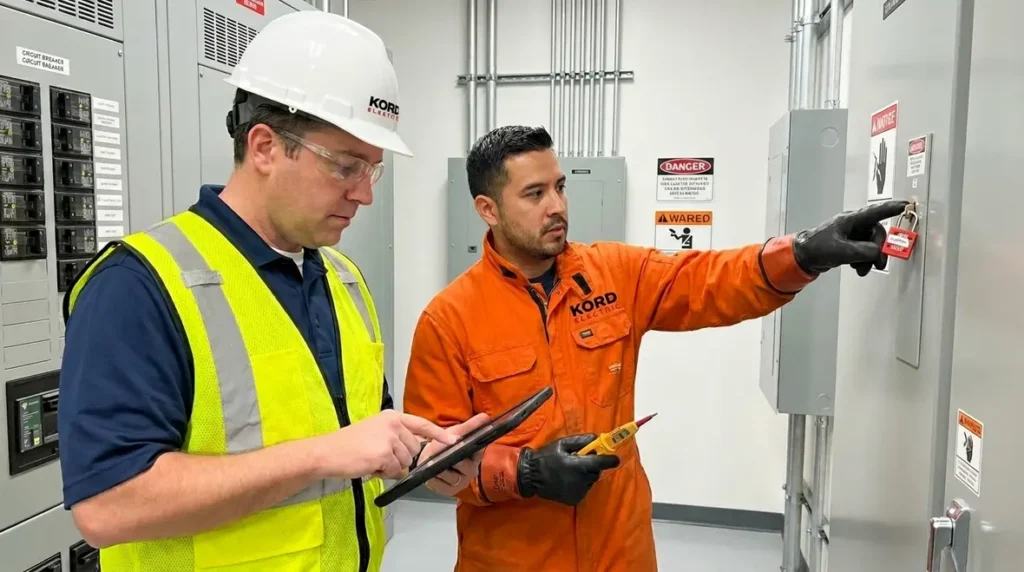
We also help bridge the gap between compliance on paper and how the facility actually runs hour by hour. That includes checking whether documented procedures match field practice, whether lockout and tagout steps are realistic, and whether testing intervals reflect the building’s duty cycle. In many commercial facilities, this work connects naturally with broader initiatives like an electrical safety audit or a focused safety compliance review, so owners can see how their commercial property electrical due diligence checklist fits into a larger risk control strategy.
Risk scoring, repair priorities, and decision support for buyers
Once we gather data, we turn it into decisions. People want a path forward, not a stack of pages that reads like a novel they never asked for. So we organize findings into practical categories: safety risk, operational impact, and financial exposure. Then we rank items by urgency and effort, because not all fixes can wait until the next slow season.
For example, we separate issues that require immediate action from items that can be planned during scheduled upgrades. We also identify root causes when possible, like loose terminations, aging components, or missing preventive maintenance coverage. As a result, stakeholders understand whether the building needs spot repairs or a broader electrical plan.
Finally, our expert service staff helps communicate recommendations to non technical partners. They translate electrical conditions into business language so others can negotiate budgets, timelines, and scope with confidence.
Using your commercial property electrical due diligence checklist as a negotiation tool
When buyers walk into negotiations with a clear, structured commercial property electrical due diligence checklist and a risk score attached to each item, it changes the conversation. Instead of vague concerns, they can point to specific safety issues, capacity constraints, or maintenance gaps, and assign realistic budget ranges to each. That helps both sides decide whether to adjust the purchase price, request targeted repairs, or plan for post-closing projects like service upgrades and structured preventive maintenance.
FAQ
Next steps with Kord Electric
When others hurry through electrical due diligence, the bill often arrives later, with interest and surprise. Kord Electric helps commercial and industrial buyers and owners make confident decisions with a practical commercial property electrical due diligence checklist, clear findings, and repair priorities that match real facility needs. If you are evaluating a building now, ask our team to review documentation and key electrical systems and map out next steps. We bring calm, clear communication and the kind of workmanship that keeps operations running.
If you want your property review to extend beyond a single transaction, our team can connect your checklist to structured services like electrical preventive maintenance, emergency readiness, and capacity planning. That way, what you learn during due diligence becomes a roadmap for keeping panels, feeders, and emergency systems reliable year after year instead of a one-time snapshot.
For owners and managers across Southern California who need more than a checklist, Kord Electric also provides comprehensive Los Angeles County commercial and industrial electrical services. From upgrades and troubleshooting to emergency electrical services, we support large facilities and critical operations that cannot afford guesswork.
When you are ready to move from planning to action, our technicians can turn your commercial property electrical due diligence checklist into a prioritized project list, align it with your capital plan, and coordinate work in ways that respect tenant operations and production schedules. Contact Kord Electric today to put a structured, field-tested process behind your next acquisition or property review.