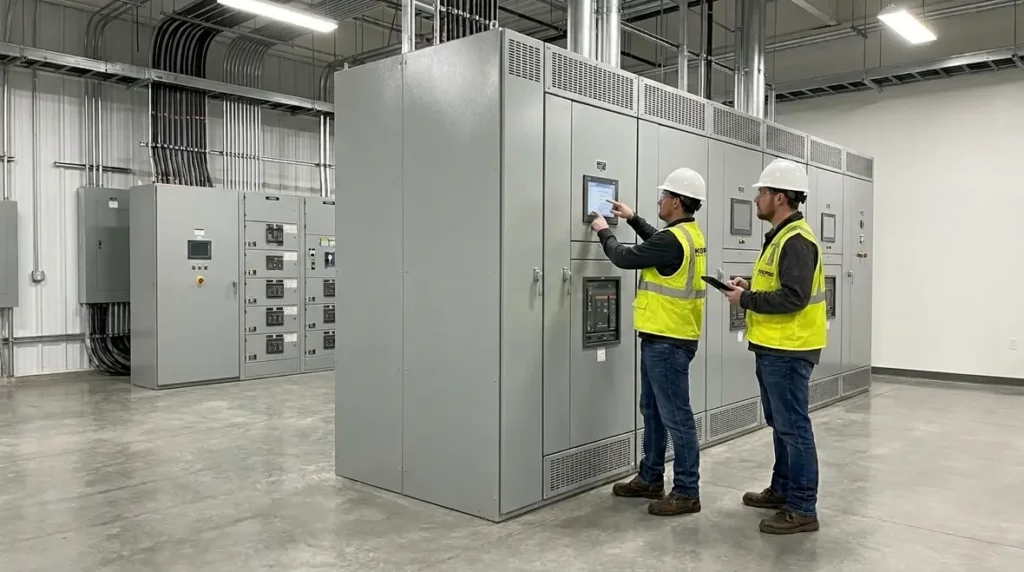
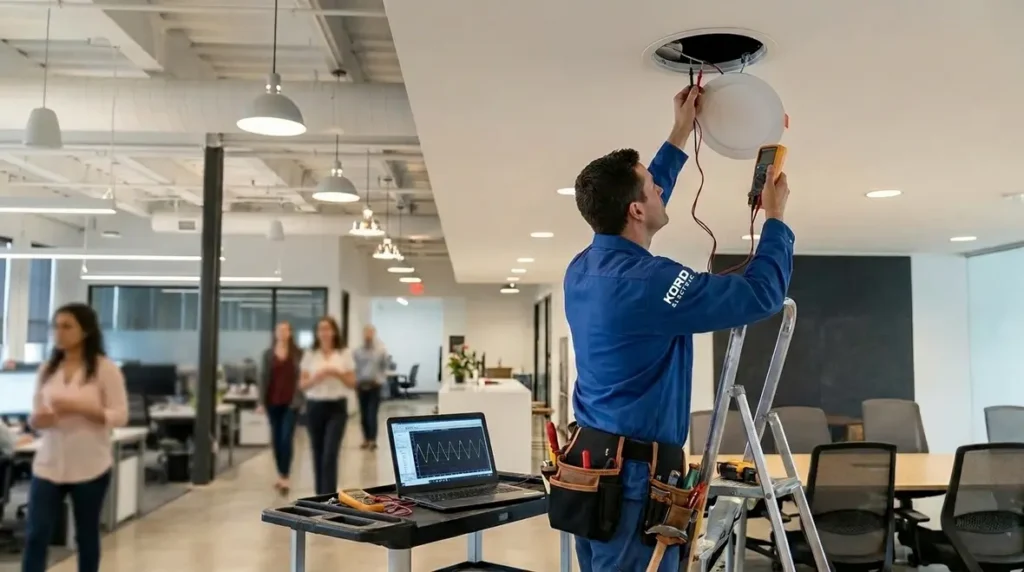
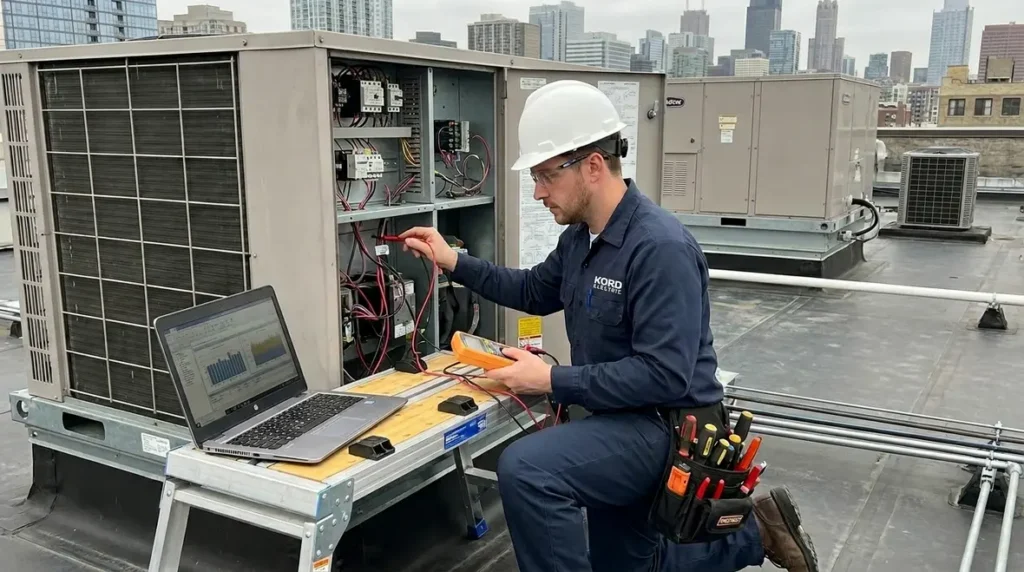
Commercial Subpanel Troubleshooting for Stable Power
Commercial Sites Rely on Stable Power, So Electrical Subpanel Troubleshooting Matters
Commercial and industrial sites live and die by consistent electricity. So when a problem starts at the subpanel, we begin by watching the lights, the loads, and the patterns in the building. In this guide, we explain common issues that signal the need for professional troubleshooting of a commercial subpanel. And we do it the way our expert service staff actually works, calm, methodical, and focused on root cause instead of guesswork.
Because yes, a humming subpanel can feel like background music, but it is not the kind you want to keep. Also, if your facility keeps resetting breakers like they are doing a daily reboot, that is a clue. Next, we walk through the most common warning signs, what they can mean, and how Kord Electric technicians handle the full diagnostic process.
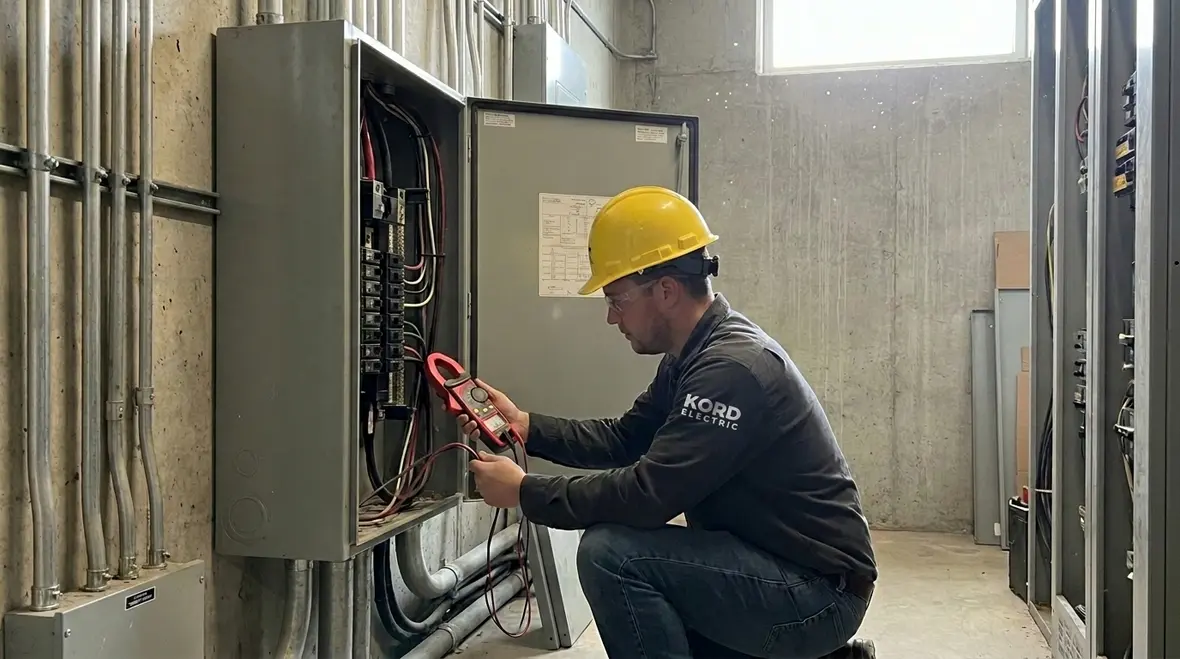
What Warning Signs Mean the Subpanel Is Not Acting Right
Most facilities do not fail all at once. Instead, they show symptoms that grow louder over time. When Kord Electric technicians arrive on site, they look for the small signals first, because early detection prevents costly downtime. Then, they connect those signs to the electrical subpanel troubleshooting needs for facilities that carry real business loads.
Here are the most common signs we see in commercial and industrial settings.
- Frequent breaker trips that happen during normal operations, not just after a major one time event
- Burning smell, warm plastic odors, or visible heat staining near breakers or bus bars
- Buzzing or crackling sounds that increase when certain equipment starts
- Lights dimming or equipment acting sluggish when other loads switch on
- Loose or corroded connections suggested by uneven heat or residue around terminals
- Moisture intrusion that leaves rust, water marks, or condensation inside enclosures
Once these signs appear, the next step matters. We do not treat them like “someone will get to it later” problems. We treat them like signals that the system needs targeted testing and correction.
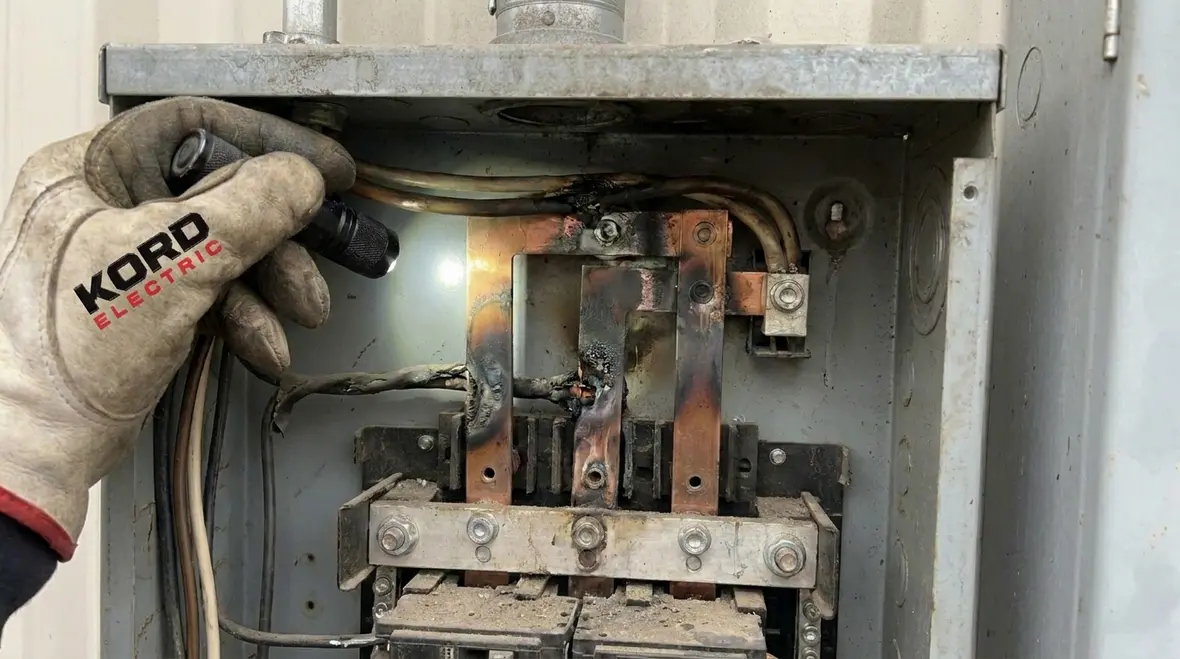
Heat, Smell, and Noise: The Evidence Our Technicians Respect
Heat, odor, and sound are not just annoyances. They are the body language of electrical faults. Therefore, when a subpanel shows abnormal warmth or crackling, our approach stays disciplined.
First, we identify where the heat or sound comes from. Then, we confirm it with proper checks. We also document what we see, because facilities often need clear records for maintenance planning, insurance review, or compliance discussions.
Here is how we interpret the “big three” in a practical way.
- Hot spots can point to loose terminations, damaged bus bars, or overloaded circuits
- Burning odor often suggests insulation breakdown or arcing activity
- Crackling can indicate arcing or poor contact that creates intermittent failure
Now, a quick pop culture moment. If your subpanel sounds like a transformer movie explosion, that is not a fun special effect. It is a warning. And while most people would wait for a “season finale,” we push facilities to address it before the next work shift becomes a rerun of the same outage.
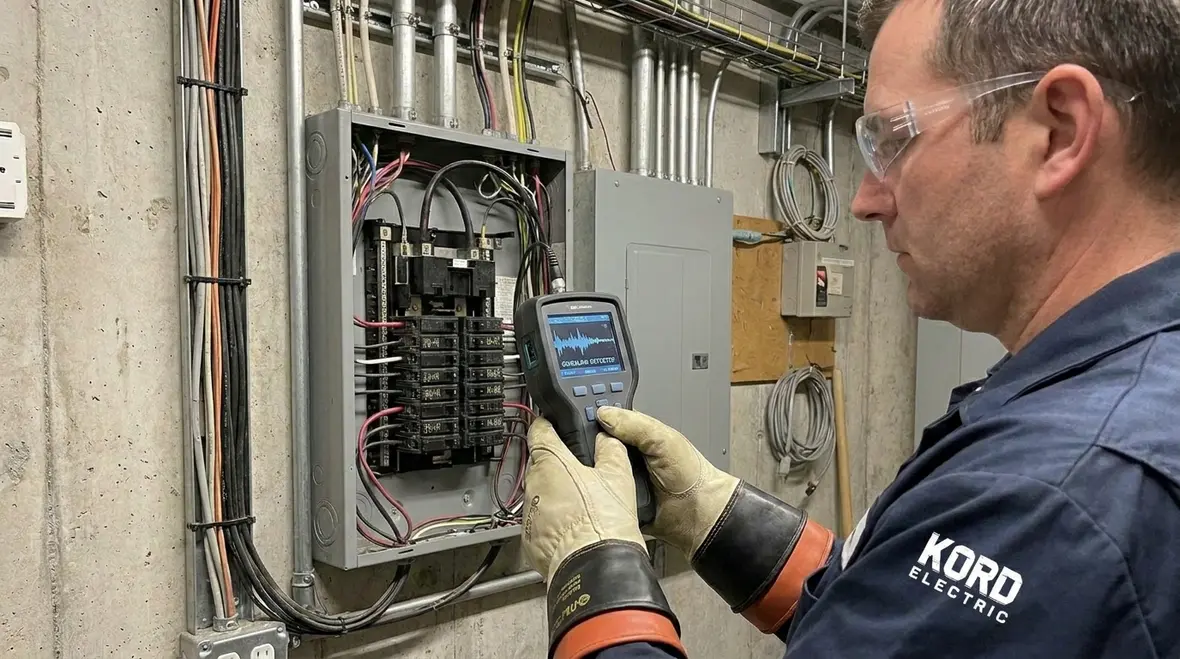
Inconsistent Power Behavior That Signals Hidden Load or Connection Issues
Sometimes the subpanel looks fine, yet the building behaves strangely. This is where many teams lose time, because they chase symptoms across floors and equipment instead of starting at the subpanel.
When commercial and industrial operations notice patterns like these, professional troubleshooting becomes the right move.
- Voltage drops when motors, HVAC units, or welding equipment starts
- Uneven output where one branch circuit runs hotter or fails more often
- Intermittent resets in controls, VFDs, or building management systems
- Tripping that seems random but repeats at certain operating times
At this stage, our expert service staff explains what we find in plain terms. We connect the behavior to likely causes, then we test. Because guesswork wastes downtime, and downtime is expensive in the real world of commercial sites.
Also, if a facility has added equipment over the years, the load profile may have shifted. Even a “working” subpanel can become the bottleneck when demand rises beyond what the system was meant to handle. Therefore, we evaluate load history, breaker sizing, and connection condition, not just the current complaint.
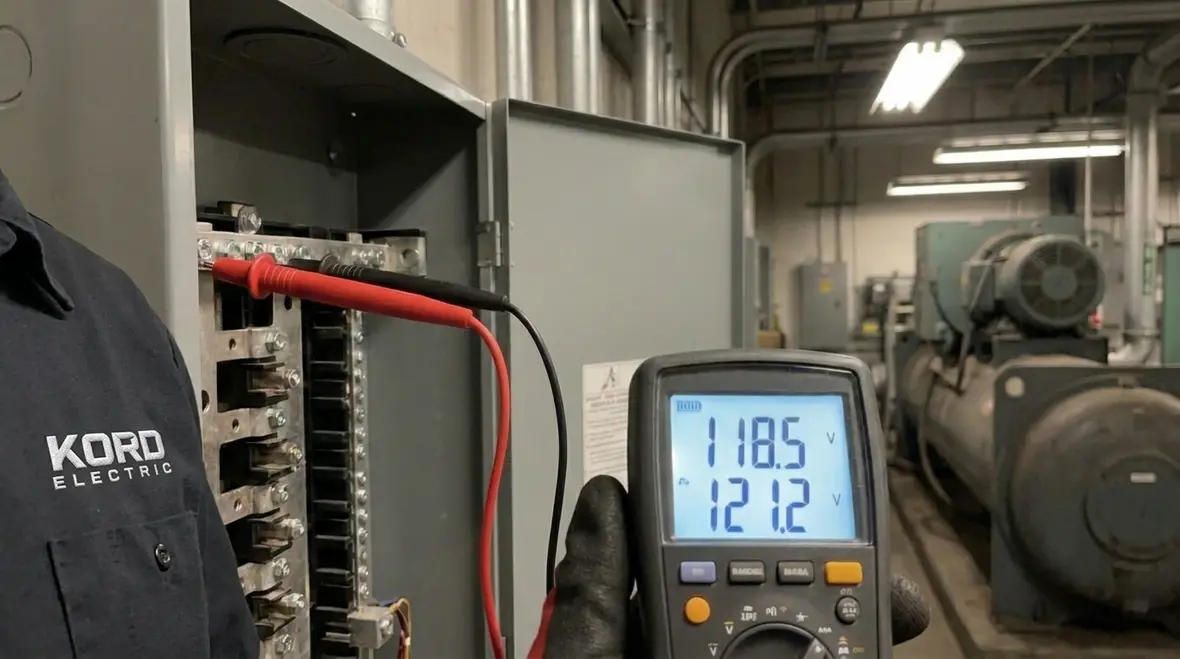
Moisture, Dust, and Corrosion: The Quiet Saboteurs in Facility Subpanels
Commercial and industrial buildings often face harsh conditions. Dust collects. Humidity enters. Condensation forms when temperature swings hit enclosures. Over time, those factors create corrosion paths that lead to failures you cannot see until power acts up.
So when facilities report new issues after weather changes, construction activity, or HVAC upgrades, we treat the subpanel environment as part of the diagnostic picture.
Kord Electric technicians typically look for these conditions.
- Rust or white residue around fasteners, lugs, and panel interiors
- Condensation lines or water staining on inner surfaces
- Loose seals around conduit entry points and openings
- Dust buildup that traps heat and affects cooling
Next, we discuss prevention. That is where planning matters. If a facility has a maintenance program, the team can reduce the chance of repeat failures. And if it does not, we help them build one.
For example, our commercial and industrial electrical maintenance plans focus on proactive checks and clear scheduling, so the next problem does not sneak up like a prank call at 2 AM. It is not about fear. It is about readiness. For facilities that want a deeper dive into how structured maintenance supports reliability, our Commercial and Industrial Electrical Maintenance Plans guide walks through how disciplined care protects major properties over time.
How Maintenance Plans Reduce Breakdowns and Protect Uptime
A subpanel problem rarely stays isolated. It can affect downstream circuits, equipment performance, and even safety. That is why we recommend a maintenance plan designed for commercial and industrial operations, not a generic calendar with vague notes.
Our approach, aligned with our commercial and industrial electrical maintenance plans, supports facilities that need dependable service and predictable upkeep. We plan inspections, document findings, and prioritize corrections based on risk. In other words, we help others avoid the classic “wait until it fails” strategy. Because waiting costs more than doing it right the first time.
When our expert service staff talks with facility managers, they emphasize outcomes that matter:
- Fewer unexpected outages due to early identification of loose connections and overheating
- Clear records that help during audits, insurance reviews, or internal maintenance reviews
- Better load planning when equipment changes happen during renovations or expansions
- Safer operation by reducing the chance of arcing faults and thermal damage
Then we schedule work at times that fit operations. We coordinate so the building keeps running, because our goal is stability, not chaos.
FAQ: Quick Answers for Facility Teams
Take Action Now With Kord Electric for Reliable Troubleshooting
When a commercial subpanel shows warning signs, we do not wait for a bigger failure. Kord Electric technicians bring careful electrical subpanel troubleshooting for facilities with a steady process: inspect, test, explain, and correct the real cause. If your team has buzzing, heat, breaker trips, voltage swings, or moisture concerns, reach out to us. We will help protect uptime, reduce risk, and keep your operations running like they mean it.
For multi-site portfolios and major properties across the region, our commercial service team can also coordinate broader electrical maintenance that supports everything from subpanels and switchgear to lighting and power quality. If you need a partner that understands complex commercial infrastructure across the county, explore our Los Angeles County electrical services to see how we support large facilities with day-to-day reliability and long-term planning.
When it is time to move from “we should look into that subpanel” to “we know exactly what is happening and what comes next,” Kord Electric is ready. Call today and schedule an evaluation so your facility can run on stable power instead of crossed fingers.