Commercial Voltage Drop Troubleshooting Guide
Commercial voltage drop troubleshooting starts as a simple complaint, then slowly turns into a mystery that costs real money. When lights dim, motors run hot, or panels trip at the worst possible time, others assume the utility is at fault. Yet in many commercial and industrial buildings, the problem lives closer than that, inside the wiring, connections, loads, and protective devices we rely on every day. In this guide, we explain how Kord Electric approaches persistent voltage drop issues step by step. Our technicians and expert service staff walk the site, verify the load behavior, and pinpoint the cause with calm, practical diagnostics. Then we fix what we find, not what we guess. And yes, we know it can feel like a ghost story, but electrical troubleshooting does not require a séance.
How we spot persistent voltage drop in major commercial facilities
Others usually notice the symptoms first, like intermittent dimming in lobby lighting or sluggish HVAC starts. However, we start by mapping when the issue happens. Then we connect that timeline to operating schedules. For example, voltage drop often appears when a large motor ramps, when multiple tenants switch on at the same time, or when a specific circuit serves both process loads and life safety loads.
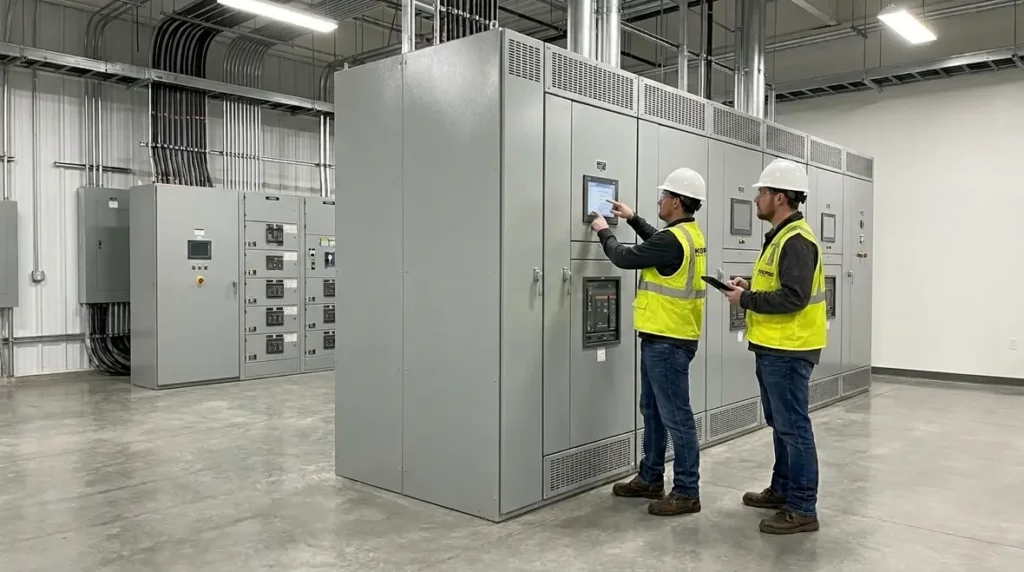
Next, our technicians look beyond the panel. We verify conductor sizing, cable length, raceway changes, and building distribution paths. After that, we examine switchgear and distribution boards for signs of overheating, loose terminations, or corrosion. Finally, we compare the expected voltage at load points against what the building actually delivers under real conditions.
At this stage, we also separate two common scenarios. One is true electrical resistance and connection problems. The other is a system design mismatch where the available voltage margin cannot support the worst case load. Either way, we treat it as a measurable engineering issue, not a vibe.

Where voltage drop hides: feeders, terminations, and load changes
To understand commercial voltage drop troubleshooting, we first define the usual hiding places. In most major property buildings and industrial facilities, the culprit is rarely a single wire. Instead, it is often a chain of small losses that add up during peak demand.
Here are the areas we check first, because they fail most often:
- Feeder connections at switchgear, bus joints, and panel incoming lugs
- Branch circuit terminations where wires land on breakers, disconnects, or contactors
- Splices inside conduit runs, junction boxes, or underground raceways
- Load equipment behavior like VFDs, compressors, and motor soft starters that draw changing current
- Corrosion and heat damage on copper or aluminum surfaces, especially where moisture enters
Then we ask a simple question: does the problem follow current, temperature, or time? If it worsens as the building heats up, we prioritize connection integrity and contact quality. If it shows up only during certain operating modes, we study load profiles and starting sequences. Either way, our expert service staff explains the findings in plain language, so building owners and facility teams can make decisions without decoding a wiring diagram like it is a secret message from Hollywood.
Field testing methods that tell the truth fast
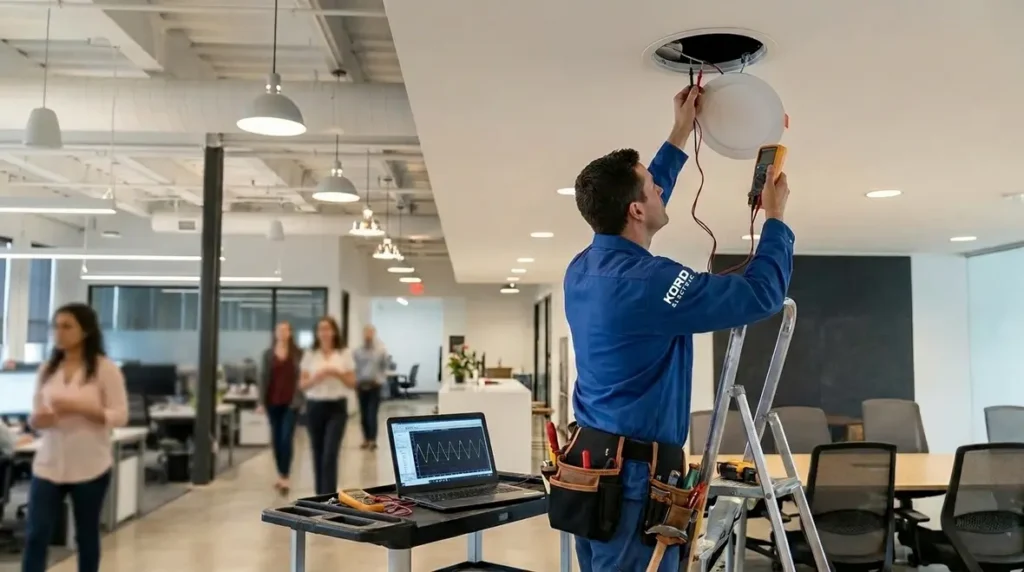
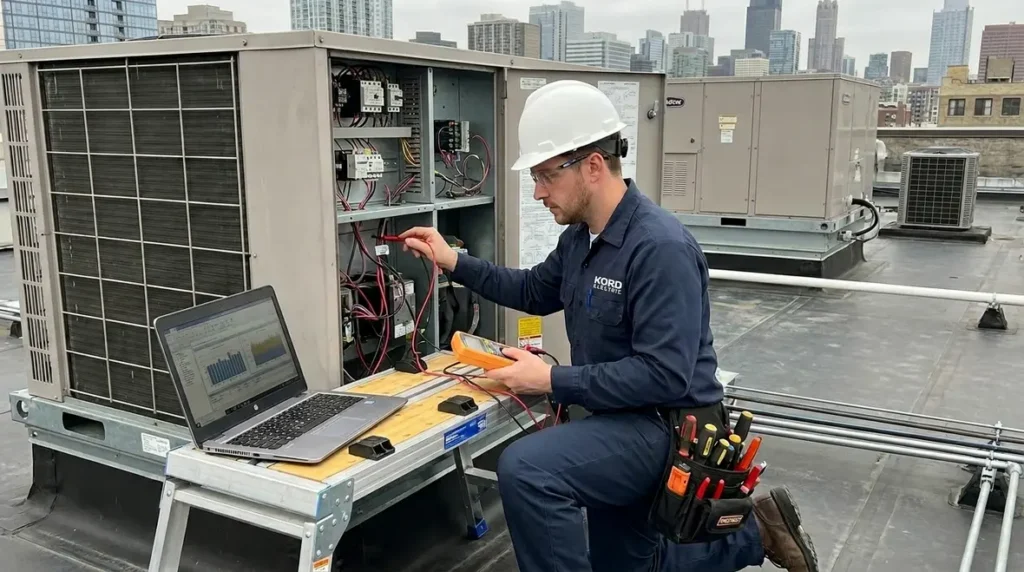
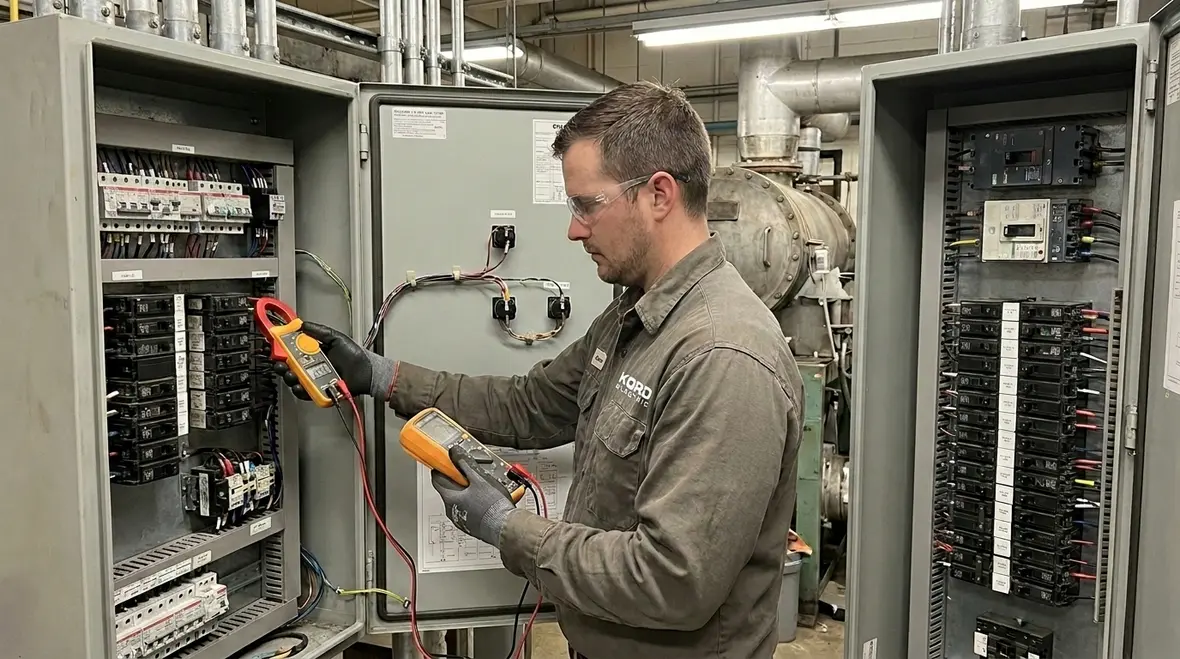
We do not rely only on theory. Instead, we use practical field testing that reflects how the building performs in real life. First, we collect baseline readings under normal operation. Next, we capture measurements during the moment the voltage symptoms appear.
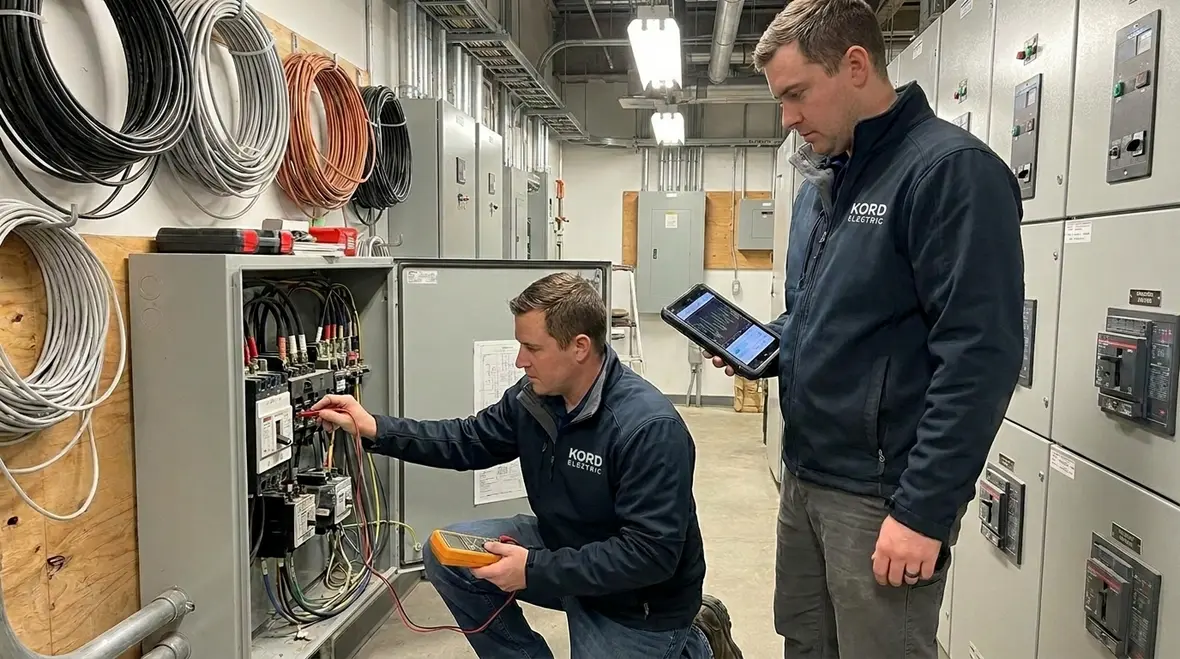
Common tools and tests we use include voltage measurements at multiple locations, load current verification, and careful checks of breaker and contactor operation. Additionally, we evaluate system grounding and bonding, because poor grounding does not always announce itself with sparks. Sometimes it shows up as unstable behavior, nuisance alarms, or uneven performance across phases.
To keep this steady and calm, our technicians follow a process. We confirm meter accuracy, we record time stamps, and we compare results across the distribution path. Then, we interpret what we see using the building’s equipment data and expected conductor performance.
And yes, we have heard the joke that every building problem starts with “the panel must be haunted.” We smile, because our work proves that the “haunting” usually has an ohm meter’s name tag.
Using building electrical infrastructure knowledge to prevent repeat failures
We also connect troubleshooting to the broader electrical infrastructure strategy, especially for data center level thinking applied to commercial and industrial work. In the electrical distribution world, design details control performance later. So, we look at how power moves through the facility, how redundancy is handled, and how maintenance access supports long term reliability.
Our approach aligns with the principles we share in our data center electrical infrastructure essentials resource, where we emphasize the connection between proper distribution design, load planning, and dependable outcomes. Even when the building is not a data center, major propertie buildings still experience similar distribution stress. Therefore, we treat feeders, switchgear condition, and load growth planning as part of the same story.
Then we focus on prevention. If a feeder experiences high voltage drop now, a future load increase will usually make it worse. So we recommend conductor upgrades, connection upgrades, or distribution path improvements where appropriate. We also help teams plan how to stage changes so operations do not grind to a halt. After all, nobody wants a “temporary outage” that turns into a quarterly surprise.
Root cause examples we see in commercial and industrial buildings
Once we run testing and verify design assumptions, the root causes usually fall into familiar categories. However, each building presents it in its own way, and we explain it clearly.
Example one: loose terminations under thermal cycling
In a multi level facility, a tenant reports dimming only during certain shifts. When we inspect the affected distribution board, we find heat discoloration at a breaker termination. During operation, contact resistance rises, and the voltage at downstream loads dips. After we correct the connection and verify torque and installation quality, the voltage stabilizes.
Example two: undersized conductors after load growth
In another case, a property adds new production equipment and additional HVAC load. The panel schedule changes, but feeder sizing never does. As a result, the building meets code on paper for steady loads, yet it fails during motor starts. Our technicians model the load behavior and validate actual measurements, then we guide conductor and distribution improvements to regain voltage margin.
Example three: corrosion in rarely accessed junction points
In some facilities, corrosion forms in junction boxes or splice points that maintenance teams seldom open. Eventually, that resistance increases and causes repeat nuisance trips. We locate the compromised section using targeted measurements, then we repair the wiring path and set up a maintenance check plan.
Across these examples, we keep the explanation business friendly. We tell facility managers what we found, why it happened, and what to do next so the building stops “performing magic tricks” with voltage.
What to do when voltage drop keeps coming back
If the issue returns after a previous repair, we treat it as a signal. Either the underlying cause remains, or the new fix addressed only a symptom. Therefore, we reset the investigation with fresh measurements and careful observation of load behavior.
First, we review what was changed and who changed it. Then we verify installation details such as termination quality, conductor condition, and proper equipment ratings. After that, we check if new equipment additions occurred after the earlier work, because load growth often restarts the problem.
Next, we assess whether the distribution design can handle peak operation. Sometimes the correct solution involves a planned upgrade, not a quick patch. When we recommend upgrades, our expert service staff provides options, outlines timing, and explains how we limit disruption for commercial and industrial operations.
Finally, we document results. Good documentation reduces guesswork for the next team, the next maintenance cycle, and the next emergency call that arrives at a time when everyone is dreaming of peace.
FAQ
Commercial voltage drop troubleshooting with Kord Electric
When voltage dips steal performance from lights, HVAC, and production equipment, we show up with testing discipline and practical solutions. Kord Electric works only with commercial and industrial facilities and major propertie buildings, so our process fits your reality. Our team regularly supports complex electrical maintenance strategies like the ones described in our commercial and industrial electrical maintenance plans, pairing commercial voltage drop troubleshooting with preventive programs that keep problems from circling back.
If your facility is already seeing unstable voltage, dimming, or unexplained equipment behavior, it may be time for a dedicated power quality review. For buildings experiencing broader instability or fluctuating readings, our focused support around voltage fluctuations in commercial and industrial facilities can be combined with targeted voltage drop diagnostics so you see the full picture, not just a snapshot at the panel door.
When long term reliability is the goal, many facility leaders also pair troubleshooting with structured service from our electrical preventive maintenance team. By integrating voltage drop findings into a wider maintenance plan, we can address today’s symptoms, reinforce weak points in the system, and track how future load growth affects your voltage margin before problems return.
When voltage dips steal performance from lights, HVAC, and production equipment, we show up with testing discipline and practical solutions. Kord Electric works only with commercial and industrial facilities and major propertie buildings, so our process fits your reality. Contact us for an on site evaluation, and we will walk you through what we measure, what it means, and how we correct the cause, not just the symptom. Let’s restore stable power with a plan you can trust. Reach out today, and we will get started.
If your team is ready to move from reactive fixes to structured protection, our dedicated electrical preventive maintenance services provide a natural next step. We integrate voltage, load, and equipment data into a repeatable maintenance framework so your electrical system stays ready for peak operation instead of drifting toward the next surprise outage.