Commercial EV Charger Planning for Facility Managers
A Facility Manager’s Guide: Commercial EV Charging Infrastructure, planned from day one
In our work with Kord Electric, we start commercial EV charger planning early, during the real planning phase, not after construction is finished and everyone is suddenly “discovering” new tenant needs. We help facility managers build dependable charging that supports day to day operations in commercial and industrial properties, and in major building portfolios where uptime matters. In this guide, our expert service staff explains the decisions that protect your electrical system, your budget, and your schedule. We speak plainly, like a calm voice over a loud parking lot, and we even keep a light sense of humor where it helps. Because if you treat EV charging like an afterthought, it will treat your site like it is a hobby project. And nobody wins that game.
Assess the load, then confirm the capacity
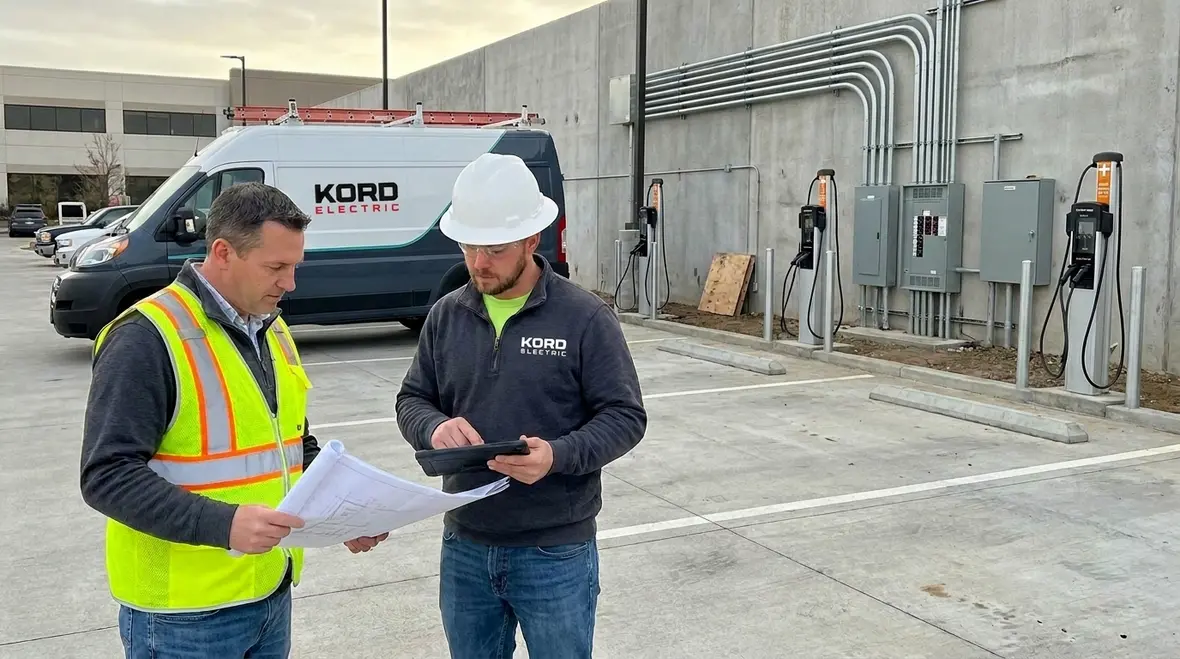
Facility managers often begin with chargers, but we help them begin with power. First, our technicians review the site electrical one line, the utility service limits, and the demand profile across peak hours. Next, we match the expected vehicle mix to charging behavior. Some fleets plug in for short windows, while others stay connected for longer. Therefore, we avoid guessing and instead plan for the real operating pattern.
Then we confirm whether existing transformers, switchgear, and feeder cables can handle added load. If they cannot, we map upgrades with a clear timeline. In many commercial sites, the biggest risk is not the charger itself. The biggest risk is hidden constraints like limited breaker space or aging components that were never designed for fast growth.
As we explain to facility teams, load planning also needs future headroom. If you plan for “today’s” vehicles only, tomorrow will arrive with a new tenant and a new requirement. And in commercial and industrial settings, tomorrow always arrives early.
How we approach site power, from service panels to charging bays
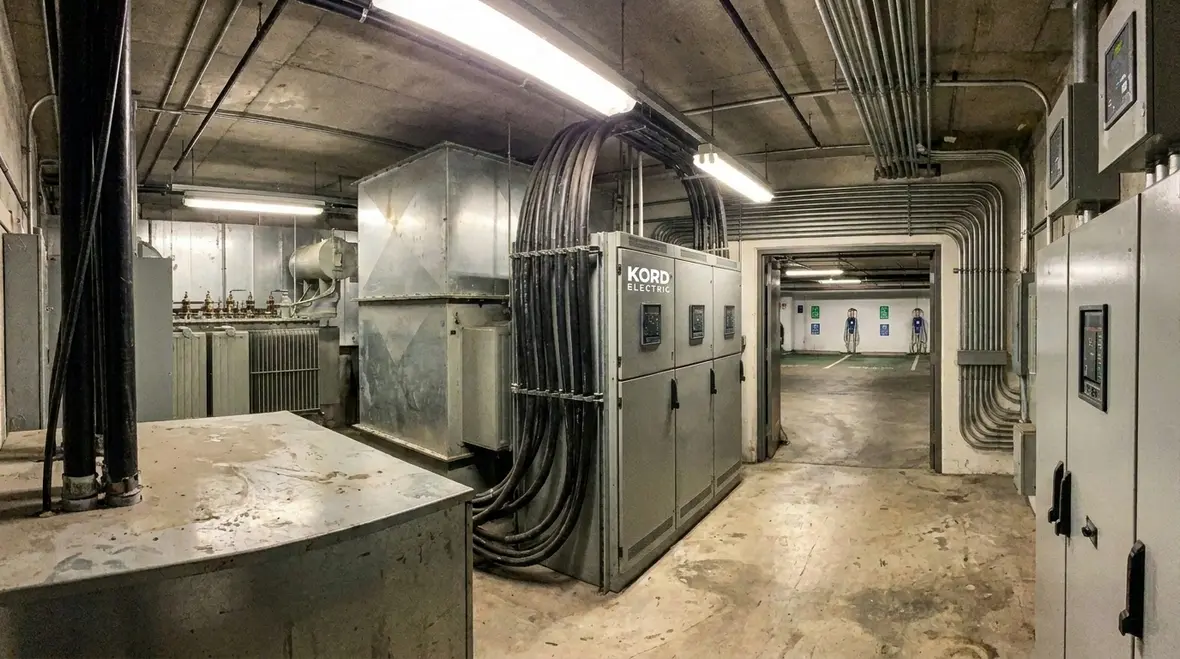
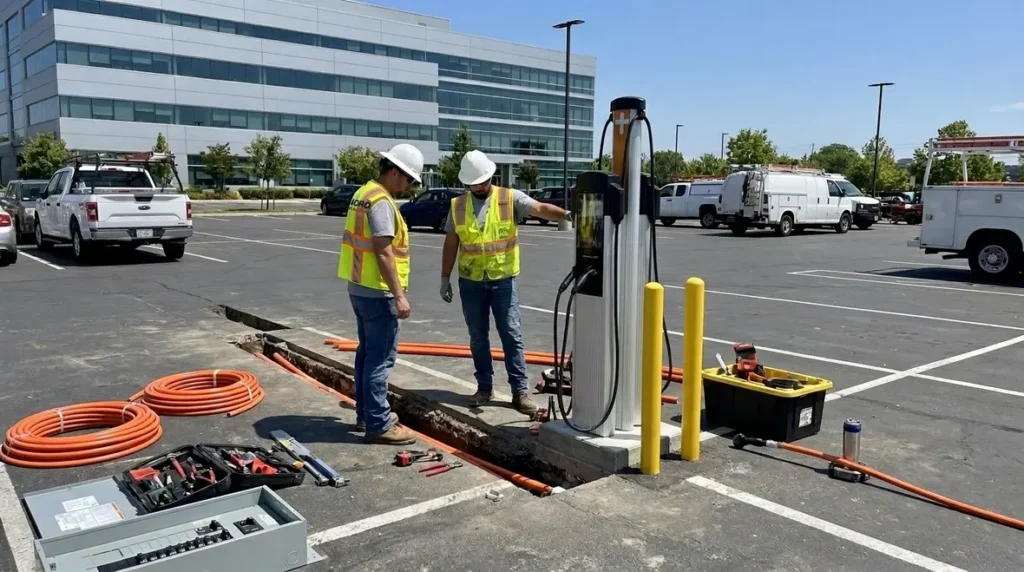
Charging infrastructure must fit the building, not the other way around. So we examine where power enters the property, how it distributes to electrical rooms, and how safely it reaches the parking areas. For example, if charging will sit in multiple zones, we consider zoning and feeder routing early so our installation stays tidy and serviceable.
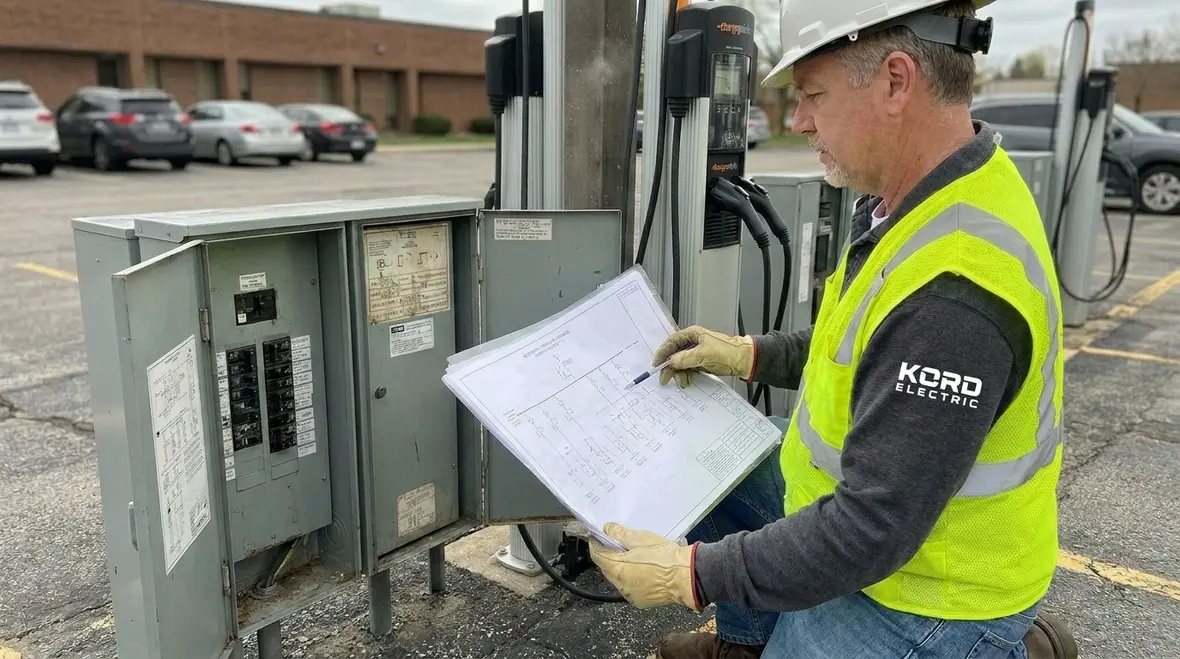
We also place special focus on panels and switchgear, because they are the quiet backbone of every charging network. Our technicians follow maintenance thinking even during new work. They look for conditions that can turn a “simple” add on job into a long delay. We often point facility managers to our guidance on NFPA 70B electrical panels and switchgear maintenance because it supports good habits. That includes good inspection routines, proper tightening practices when needed, and careful attention to torque and labeling.
In practical terms, this means we coordinate with facility staff on access, labeling, and any shutdown needs. Then we document what we add and where it belongs. That is not just “nice to have.” It helps you operate with less confusion when someone else is troubleshooting later. And in major property buildings, you will be grateful for clarity when the service call hits at 7:12 on a Tuesday.
Pick the right charger type for commercial duty cycles
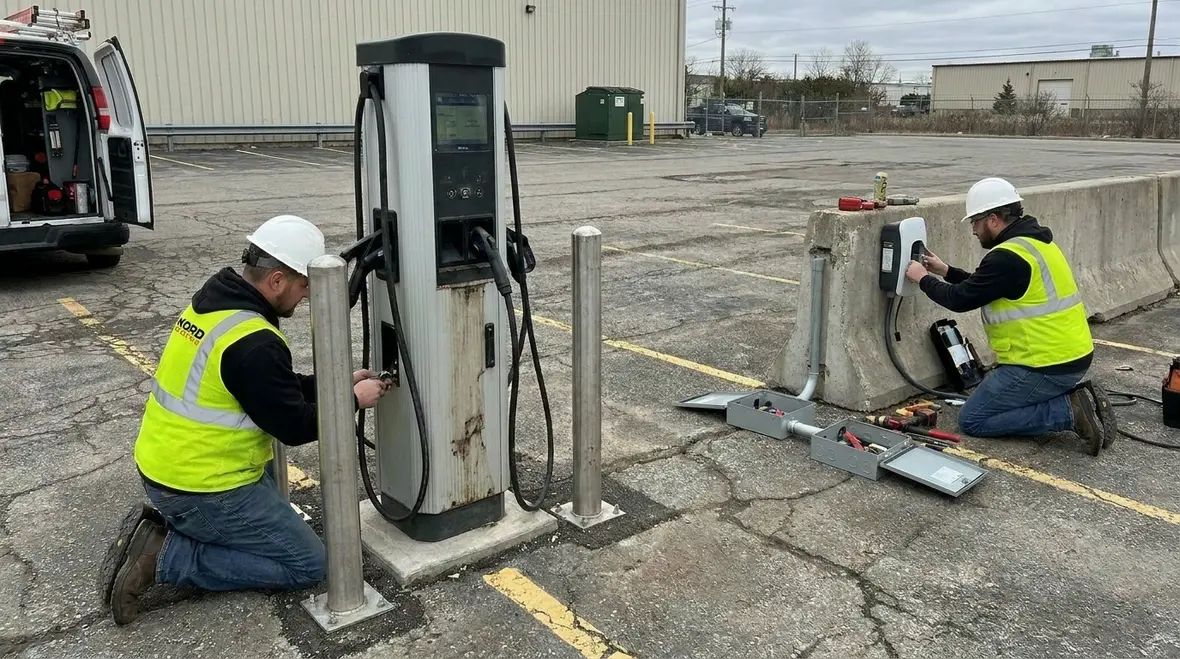
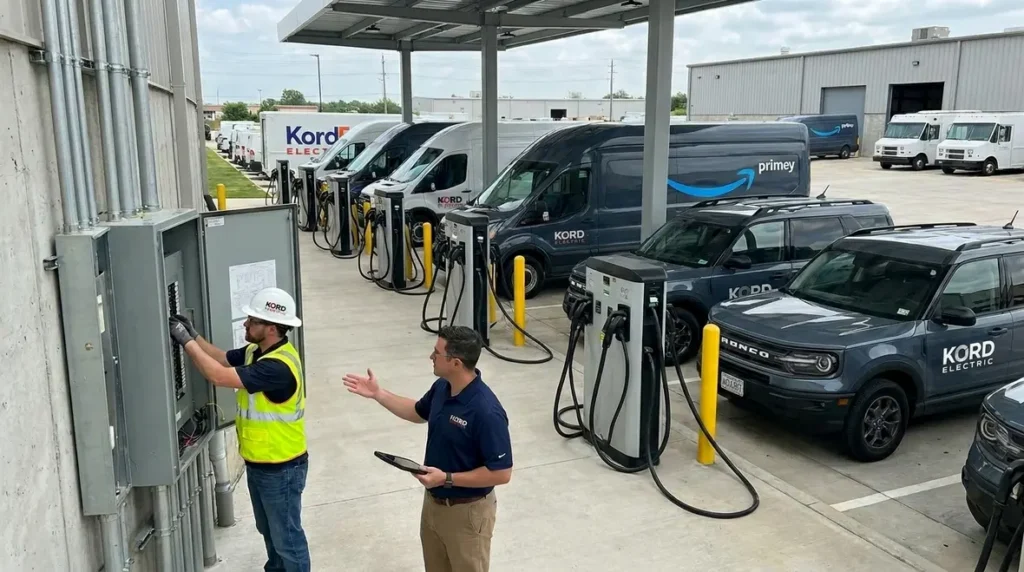
Not every site needs the same charging gear. Therefore, our team helps facility managers choose charger types that match how vehicles arrive, stay, and depart. We consider the difference between light duty employee charging, customer charging during business hours, and fleet charging that supports a route schedule.
Then we review power levels and installation realities. Higher output charging can drive faster growth, but it also raises the bar for electrical capacity and controls. We plan the spacing, conduit runs, and equipment placement with safety standards in mind so the system stays clean and easy to maintain.
We also help teams think about how many chargers they truly need now. If a property owner installs too many units without a growth plan, the electrical upgrades become wasteful. If they install too few, chargers become crowded and service levels drop. Commercial and industrial customers usually prefer predictable performance over “eventually it will catch up.” We design for dependable output, not for guesswork and wishful thinking.
Control strategy and load sharing that keeps operations stable
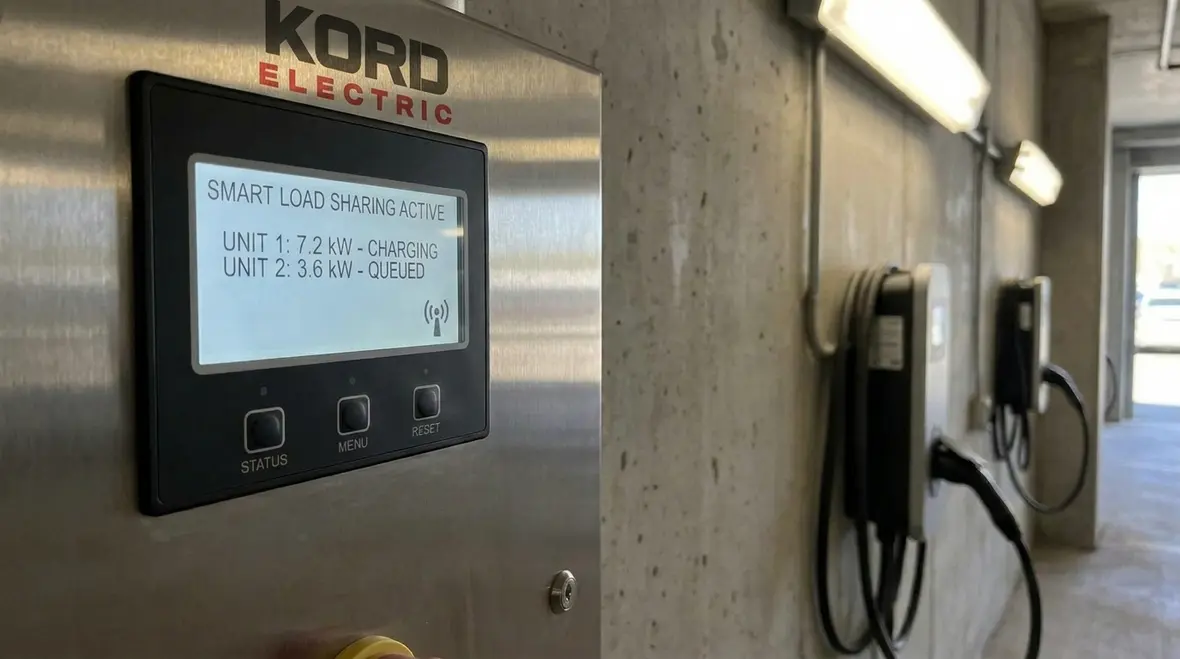
Here is where many projects get shaky, because the charging network must behave like a system, not a set of individual devices. We guide facility managers through control options that manage demand across chargers, especially when loads rise at the same time. For example, load sharing and smart power management can reduce stress on upstream equipment.
As our expert service staff explains, a well designed control approach can help you avoid constant panel stress and can lower the chance of nuisance faults. In addition, controls can support scheduled charging windows for fleets and can support operational goals for customer access.
Then we align the charging strategy with the building’s operating rules. Some facilities want maximum availability. Others want priority for certain vehicle types or specific time blocks. Therefore, we map the controls, user roles, and reporting expectations before we lock in the equipment selection.
And yes, we sometimes see the “turn everything to max and hope” plan. That plan is like putting a sports car engine in a bicycle frame. It will make noise, but it will not do the job safely or reliably.
Safety, code compliance, and maintenance readiness
Commercial charging must follow electrical safety practices, and facility managers need systems that stay safe as time passes. We build with service access in mind, and we plan how technicians will inspect and maintain the equipment without disrupting operations more than necessary.
Our team also stresses component health. We review panel condition, torque related issues, and any early signs of wear before adding new loads. In the same spirit as our maintenance article on NFPA 70B, we encourage structured checks of electrical components so problems do not grow silently. That includes keeping panels clean, ensuring terminations remain in good condition, and maintaining clear labeling.
Then we plan maintenance steps for the charging hardware itself. Cables, connectors, bollards, enclosures, and cooling paths must all be serviceable. We also consider site conditions like moisture, snow, and vandal risk, because charging areas often sit where vehicles, people, and weather all meet. In many major property buildings, the charger must handle daily realities, not just clean test conditions.
Finally, we align documentation and handoff so your internal team can operate the chargers with confidence. When others inherit the system, they need accurate records, not “someone probably wired it right.”
Budget, phasing, and project timelines that protect your business
Facility managers run operations, so charging projects must fit real constraints. We help teams plan budgets in a way that reflects electrical upgrades, trenching or conduit work, civil impacts, and commissioning time. Then we reduce surprises by clarifying what is in scope and what is not.
Many large sites need phasing. Perhaps one garage level needs power first, while another area comes later. Perhaps a tenant occupies one zone now, and a second tenant move in date is later. Therefore, we design the build so you can bring charging online in phases without creating rework or costly downtime.
We also help coordinate permitting, utility coordination when required, and inspection readiness. In our experience, timelines improve when teams treat commercial EV charger planning like a project with milestones, not a purchase with hope and a delivery date.
And if someone tells you they can install without scheduling any downtime, we recommend a calm pause. Even the best installations need safe shutdown planning, safe access, and proper commissioning. We would rather protect your schedule than promise miracles.
FAQ
Next steps: let Kord Electric plan your commercial charging rollout
If your facility manages commercial or industrial property, you deserve charging that performs like infrastructure, not like an experiment. Kord Electric can assess your electrical capacity, align charger types with duty cycles, and guide commercial EV charger planning through safe installation and commissioning. We also help you phase the work to protect business operations and reduce downtime. Reach out to our team today, and we will map a clear plan that fits your site, your timeline, and your future needs. Let’s build a charging system that people trust and vehicles rely on.
To go deeper on project budgeting and long term expansion, facility teams can also explore our related insights on EV charging infrastructure scalability and our commercial EV charging installation cost guide, which connect planning decisions to practical cost and phasing choices over time.
When you are ready to move from planning into implementation, our dedicated EV charger installation services bring certified commercial and industrial installation, thorough commissioning, and support for future upgrades so your infrastructure can grow with demand instead of working against it.
Additional placement insight: dual column guidance for teams
For facility managers
Define vehicle mix, access rules, peak hours, and growth targets. Verify electrical constraints and plan service access for maintenance. Demand stability matters more than “max speed” in every situation.
For our technicians
Review one line, panels, and switchgear condition with maintenance thinking. Design routing, controls, and load sharing. Document everything clearly so future service stays fast and safe.
Conclusion: plan once, scale calmly
Commercial EV charger planning rewards facility teams that think like infrastructure owners, not gadget collectors. When you begin with load, capacity, and duty cycles, you protect the panels and switchgear that keep the rest of the building alive. When you add clear controls, maintenance readiness, and phased budgets, you turn charging from a stress point into a dependable service that tenants and drivers quietly rely on every day.
Kord Electric partners with commercial and industrial properties, major building portfolios, and operations teams that care about uptime. From early design to final commissioning and long term expansion, we help your charging network behave like the rest of your critical infrastructure: stable, documented, and ready for what comes next.
If your site is ready to move beyond one off chargers and into a structured, scalable plan, our team is ready to help you design and install a system that fits your power, your operations, and your growth curve.