Critical Power Needs: How Commercial Facilities Plan for Electrical Reliability
When a commercial building loses power, the problem rarely stays small. In our experience at Kord Electric, the shutdown usually spreads into operations, safety systems, data access, and even billing cycles. That is why many owners and property managers treat Critical Power Needs: How Commercial Facilities Plan for Electrical Reliability as a planning issue, not a repair issue. And yes, the “it’ll probably be fine” strategy often sounds confident right up until the lights flicker. Then it sounds like panic. We help teams plan for reliability with dependable backup and smart infrastructure decisions. Our technicians and expert service staff take time to explain the why behind every recommendation, because good power design should feel clear, not like a mystery novel with the power cut halfway through.
Why reliable power matters in real commercial operations
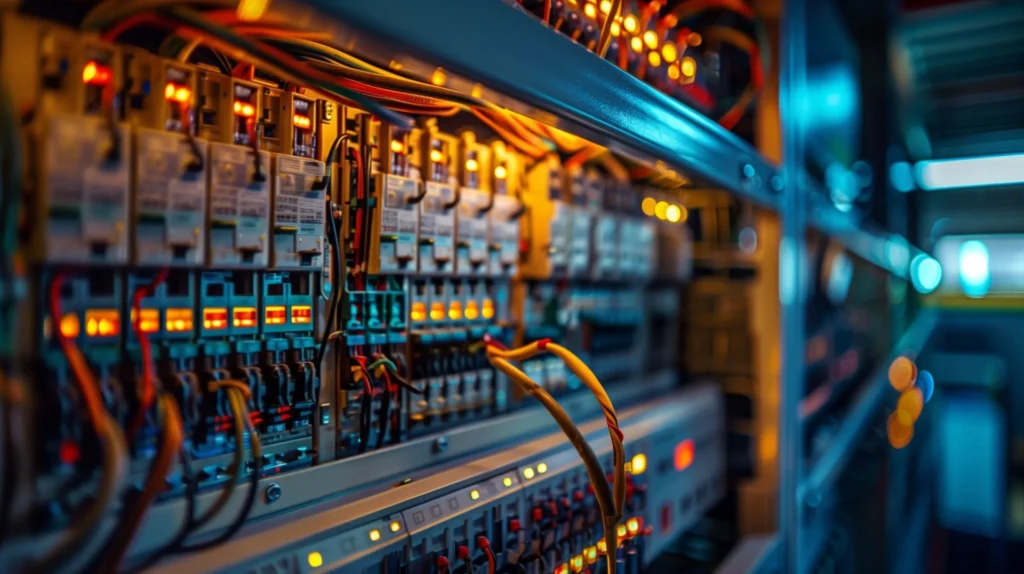
In commercial and industrial facilities, electricity powers more than convenience. Therefore, when we discuss critical power, we look at what actually keeps the site running. Cooling systems protect servers and production equipment. Controls keep doors, pumps, and dampers moving. Fire alarms and life safety systems need power that does not vanish during disturbances. Meanwhile, medical grade facilities and high security spaces demand even tighter discipline, because downtime can create both financial loss and compliance risk.
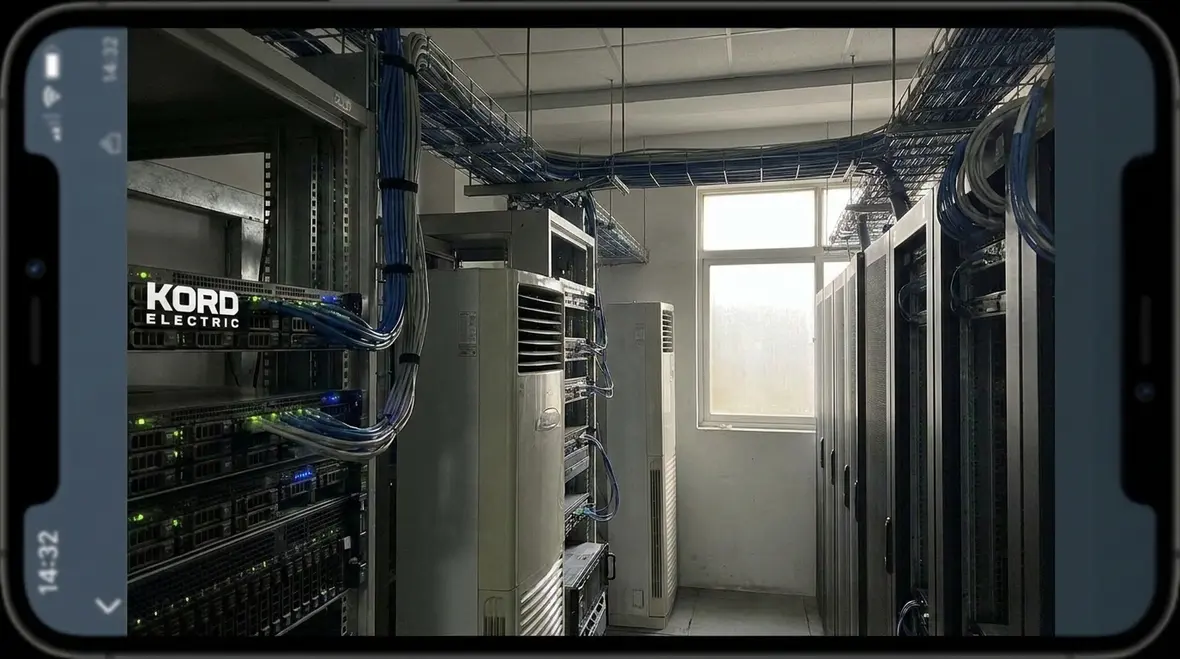
So we start with the reality that utility power can fail in different ways. A complete outage is the obvious scenario, but voltage sags, frequency drift, and short interruptions also damage equipment. In fact, many failures begin as “small events” that build into larger problems. When power quality dips, motors overheat, drives misbehave, and sensitive loads reboot. Then the workforce spends the day troubleshooting instead of producing.
Our expert service staff approach this with a calm, methodical tone. They walk stakeholders through the impact of power disturbances, and they map the effects to each building system. That way, teams understand what they protect first, not just what equipment they own.
What loads require backup and what can wait
To plan properly, we classify loads. First, we identify essential loads that must run through outages or harmful power events. Next, we identify loads that can ride through briefly. Finally, we document what can shut down safely until power returns.
Typically, we see critical loads like the following in commercial and industrial buildings.
- Life safety systems such as fire alarm panels, smoke control equipment, and emergency lighting
- Security systems including access control, cameras, and monitoring stations
- Process and production equipment where stopping creates risk or product loss
- Communications and data systems such as network gear and core servers
- Refrigeration, freezers, and critical environmental controls

Then we treat the “can wait” group with respect. Some equipment may tolerate a short delay, but it should not interfere with the restart plan. Because even after power returns, loads can overload the system if you bring everything online at once. Therefore, we help teams design sequencing that avoids inrush surges and breaker trips.
When you hear our technicians explain load classification, it usually sounds straightforward. They talk in terms of risk, time, and tolerance. And when someone asks, “How long can we survive?” our answer stays practical. We quantify ride through needs and transition times, so the design matches the site, not a generic brochure.
How we design backup systems for uptime
Backup power should feel boring in the best possible way. Meaning it should start when needed, transfer smoothly, and support the load levels that matter. To achieve that, our teams evaluate the full pathway from the incoming utility feed to the protected circuits.
Then we choose the right strategy based on the building’s critical power needs. For many sites, that includes a combination of:
- Automatic transfer switches to move loads to backup without manual intervention
- Uninterruptible power supply systems for short ride through and clean power quality
- Standby generators sized for runtime and starting current conditions
- Engineered power distribution to reduce nuisance shutdowns
- Monitoring and alarms so staff learn about problems early
We also pay close attention to transfer time and voltage stability. A sensitive load cannot always survive delays, and some loads need clean waveform output. So we confirm equipment compatibility and we coordinate protections. That means we avoid the classic “we installed a generator, so we are done” mindset. Because the generator does not help if the distribution architecture cannot deliver power to the right places.
Our technicians and expert service staff often compare the system to a good traffic plan. If you do not manage the flow at the intersections, you get gridlock. The same idea applies to power distribution, load sequencing, and protective device settings. We help facilities build that flow with intentional design and clear documentation.
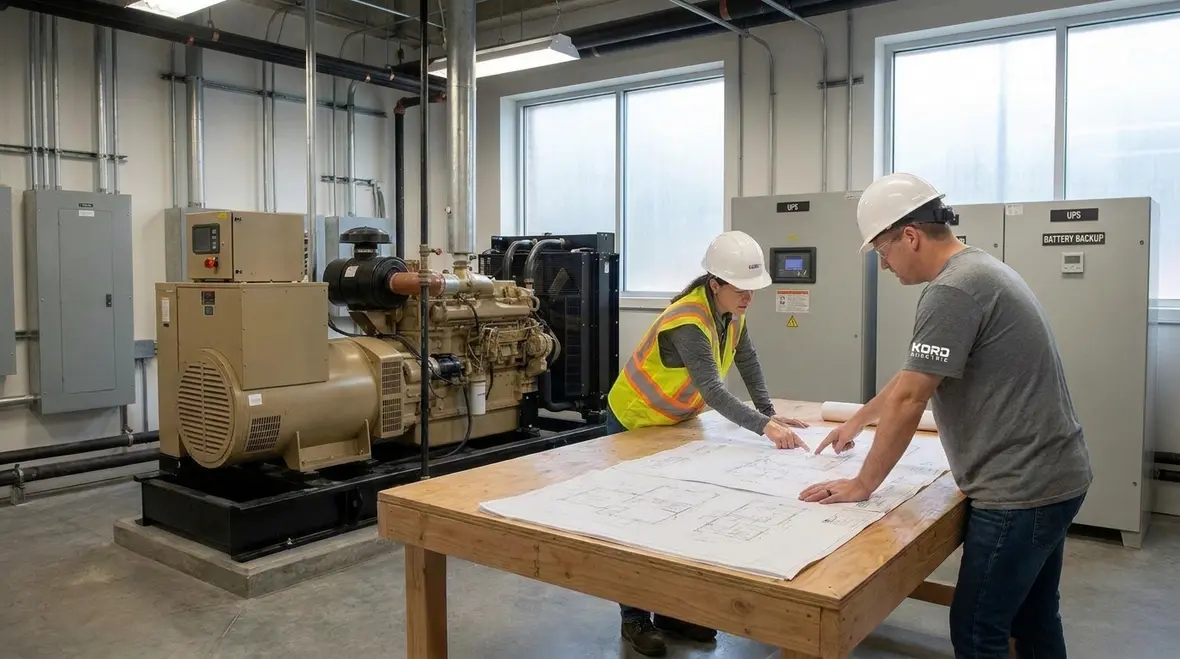
For facilities that want to go deeper on layered protection and architecture choices, many teams also review resources like Kord Electric’s Critical Power Redundancy Architecture Guide alongside their own planning. It turns “backup” from a single device into a coordinated system that protects uptime.
Redundancy, reliability, and the reality of maintenance
Redundancy sounds comforting, and it can be. However, true reliability requires more than spare equipment. It requires testing, inspection, and operating discipline. Therefore, we recommend reliability plans that include routine load checks, transfer switch exercise schedules, battery health reviews for UPS systems, and generator maintenance tied to actual usage conditions.
In the field, we often see two common mistakes. First, teams install backup systems and then postpone preventive work until something breaks. Second, they ignore documentation, so future staff cannot trace design intent. Then troubleshooting becomes guesswork. And guesswork in electrical systems is like using a spoon to fix a leaky pipe. It might move something, but it does not solve the cause.
To prevent that, our expert service staff help facilities set maintenance priorities. We focus on the parts that fail first during stress: transfer mechanisms, battery strings, control boards, and protective settings. We also verify that sensors and alarms feed the right stakeholders. Because when the alarm goes off but nobody understands it, the system becomes a loud notification with no action.
We also support major property buildings and industrial sites where uptime affects contracts. In those settings, planned maintenance windows matter. So we coordinate recommendations to minimize disruption while still meeting safe operational practices.
Electrical reliability starts with smart monitoring and planning
Modern facilities do not just need backup power. They need insight. When we plan infrastructure, we recommend monitoring that reveals how electrical systems behave under load and during transitions. That includes tracking generator performance, UPS runtime, battery health trends, and transfer switch events.
Meanwhile, we also help teams plan for growth. A facility today rarely matches the facility tomorrow. Tenants expand, production lines add equipment, and HVAC upgrades change demand profiles. So we evaluate capacity and distribution headroom before new loads arrive. Then, if upgrades happen, the backup system does not become outdated overnight.
For many commercial and industrial properties, the simplest improvement we offer is clarity. Our technicians explain how the system will respond during disturbances, how long it can support essential loads, and what maintenance action helps the most. We translate complex design decisions into plain language, because ownership wants answers that lead to action.
And yes, monitoring dashboards can feel like superhero screens, but the goal is not drama. The goal is reliable, repeatable performance, with alerts that help people act fast instead of scrolling through logs like it is a video game walkthrough.
If you are evaluating your own monitoring and planning, it can also help to compare your roadmap with related topics such as power reliability audits for commercial facilities and critical power system protection best practices, so your upgrades, testing, and alerts all reinforce each other.
What to expect from Kord Electric service
Our work centers on commercial and industrial facilities and major property buildings. We focus on helping your team build a backup plan that fits how you operate. Therefore, we begin by reviewing your site needs, the critical loads you protect, and the risks you cannot tolerate.
Then our technicians and expert service staff move through a structured process that typically includes:
- Assessment of power demands, load criticality, and transition requirements
- Discussion of existing infrastructure, protective devices, and any constraints
- Recommendations for backup and distribution architecture based on reliability goals
- Implementation planning that supports safe installation and minimal disruption
- Documentation and explanation so facility staff understand the design
After installation or upgrades, we do not vanish. We provide practical guidance for maintenance and operation. When you understand the system, you trust it more. When you trust it more, you respond faster during abnormal events. That is how you protect both people and process, not just equipment.
For organizations that want to align this kind of planning with broader infrastructure decisions, it can be useful to review how critical power fits into topics like critical power infrastructure backup systems and long term energy and controls planning. That way, every upgrade supports a cohesive roadmap instead of a patchwork of one-off fixes.
FAQ
Frequently asked questions about reliability planning
- What if we expand our facility later? We plan capacity and backup architecture so growth does not break reliability. Our technicians document design intent so upgrades stay aligned and Critical Power Needs: How Commercial Facilities Plan for Electrical Reliability stays connected to future projects instead of becoming a one-time checklist.
- Can power quality issues damage equipment even with backup? Yes. Short disturbances and voltage dips can harm sensitive equipment. We use UPS, monitoring, and coordinated design to improve power quality where needed, and we align those improvements with broader reliability strategies like power reliability audits and preventive maintenance.
- How do we know the system will start and transfer correctly? We review controls, protective devices, and transfer timing, then we support test plans and maintenance practices that verify real performance. When teams rehearse their response and understand the sequence, backup systems shift from “hope it works” to “we know what happens next.”
Final word and a clear next step
If you run a commercial or industrial facility, you already know downtime costs more than money. It costs trust, safety margins, and operational momentum. Kord Electric helps you build the right electrical reliability plan, from load classification to backup architecture and maintenance guidance. Our technicians and expert service staff explain each step so your team can make confident decisions. If you want to protect your operations, contact Kord Electric today and we will help you map a practical, reliable path forward.
As you plan improvements, it can be helpful to connect your critical power strategy with broader regional support. Kord Electric’s dedicated Los Angeles County electrical services for commercial and industrial facilities pull together preventive maintenance, troubleshooting, and project work so reliability stays consistent across your portfolio.
When you are ready to move from assessing Critical Power Needs: How Commercial Facilities Plan for Electrical Reliability to building a complete roadmap, you can also dig into focused resources like critical power system protection, redundancy architecture, and power reliability audits. Together, they form a toolkit for electrical reliability that supports uptime, safety, and long term value for your facilities.
Wherever you are starting—new construction, an aging facility, or a campus of busy buildings—the most important step is simply to begin. Define your essential loads, review your current backup systems, and schedule time with a team that treats reliability as a strategy instead of a last-minute fix.
From there, Kord Electric can help you transform good intentions into documented plans, tested systems, and measurable results that your operations team, leadership, and tenants can all trust.
If your facility needs a partner that understands critical power as part of a larger infrastructure story, our commercial and industrial services team is ready to help you plan, build, and maintain the systems that keep your operations steady.