Data Center Power Reliability Engineers: Roles, Testing & Best Practices
At Kord Electric, we work with customers who cannot afford downtime, and that is why Data Center Power Reliability Engineers: Roles, Testing & Best Practices matter so much. In our experience, these reliability engineers plan how a facility delivers electricity, verify that power systems behave under stress, and keep failures from turning into costly outages. We often begin by listening to what others are seeing in the field, then we align the design with real operational needs.
When our technicians and expert service staff explain the process, we do it slowly and clearly, because “reliable” should not feel like a mystery box. And yes, we admit it: even the smartest electrical drawings can get weird when reality shows up. That is exactly where these roles, testing routines, and best practices come in.
Who are Data Center Power Reliability Engineers: Roles, Testing & Best Practices?
Data Center Power Reliability Engineers serve as the bridge between electrical design theory and the messy realities of day-to-day operations in commercial and industrial facilities. They do more than review drawings. They ask how systems behave under stress, how people actually use the equipment, and what happens when multiple events stack up at 2 a.m., not just at 2 p.m. on a quiet Tuesday.
At Kord Electric, we see these engineers as part strategist, part tester, and part translator. They turn big reliability goals into specific scenarios, test plans, and step-by-step procedures that technicians and operators can follow. For customers running data centers or major property buildings, that means outages become stories you avoid, not legends you keep repeating every year.
We also connect their work to broader reliability themes we cover in our data center series, including how distribution design and redundancy support uptime. When you combine smart architecture with disciplined testing and operations, reliability stops being an abstract idea and becomes something you can measure, trend, and improve.
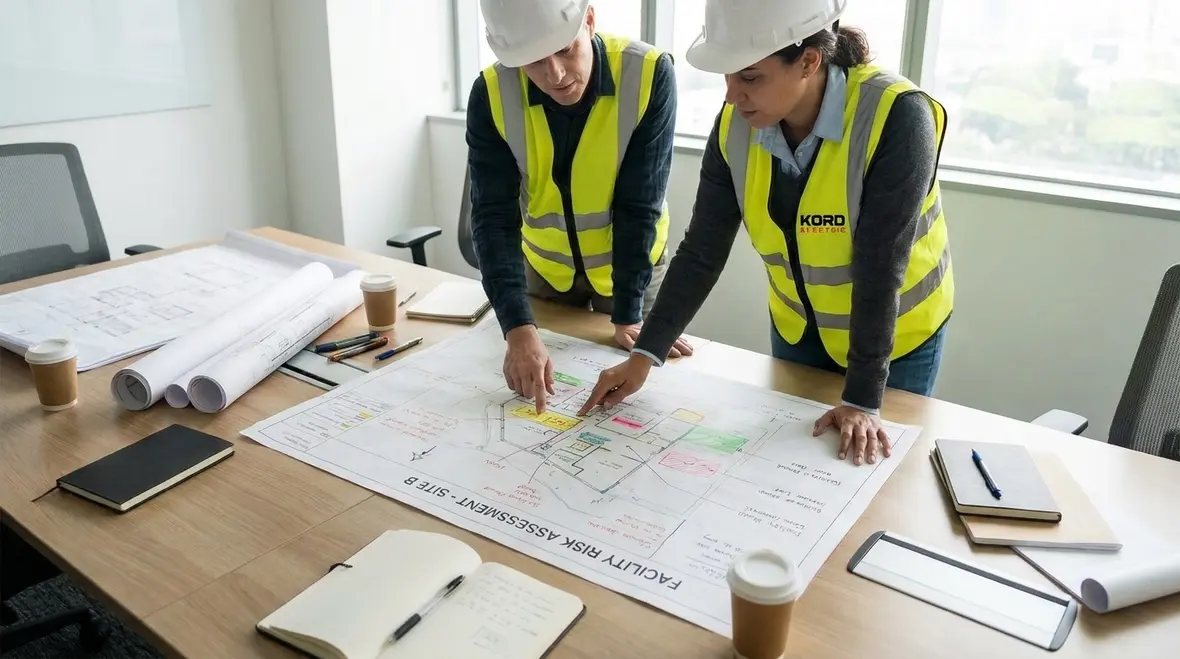
Map the power risks before you buy a single part
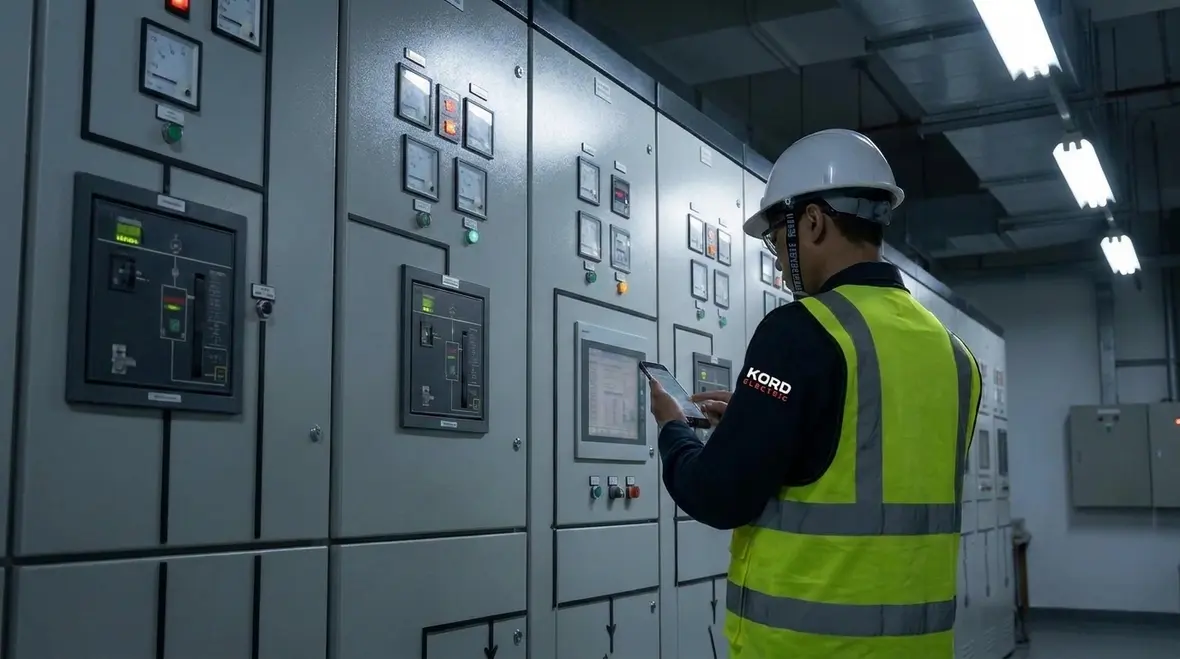
Most teams start with equipment. We start with risk. First, we identify what can fail in a commercial or industrial facility, then we focus on how the rest of the system reacts when that failure happens. That includes utility supply problems, generator behavior, transfer switching, UPS performance, bus and distribution issues, and grounding paths. Next, we translate those risks into testable scenarios, so the plan does not stay stuck in meetings like a bad PowerPoint.
Our approach usually follows a simple idea: if you cannot describe the failure, you cannot test it. Therefore, we help customers define event types such as loss of utility, short duration voltage sags, long transfer times, partial load transitions, and abnormal harmonics. Then we connect those scenarios to the facility’s actual loads, including the build’s mechanical and IT power demands. In other words, we match the electrical model to what the building really carries.
Our technicians also watch for common blind spots, such as missing maintenance records, unclear operating sequences, and control logic that never got verified after changes. As a result, the risk map becomes a living checklist that keeps engineers and service teams aligned.
Design for reliability, then prove it in the real world
Once the risks are mapped, we help teams build reliability into the design, not just into the plan. That means choosing architectures that support redundancy, isolation, and proper transfer behavior. However, good architecture only performs if it can ride out disturbances without causing cascading failures.
So we focus on prove it steps. First, we validate that the system can transfer power between sources within acceptable timing under expected conditions. Second, we confirm load sharing where required and check how the system handles ramp rates and transient behavior. Third, we verify that the UPS and switchgear operate in the intended modes during both normal operations and abnormal conditions.
Our expert service staff often explains it like this: the system must act like a disciplined team, not like people who freeze when the boss calls from across the room. A well planned power chain does not just “work.” It works predictably when stress shows up.
For owners and operators who want to connect this reliability engineering work to earlier planning decisions, our broader data center series digs deeper into data center power reliability and uptime design, electrical distribution planning, and redundancy strategies. Linking these topics keeps decisions consistent from concept to commissioning.
Testing strategies that do not slow operations
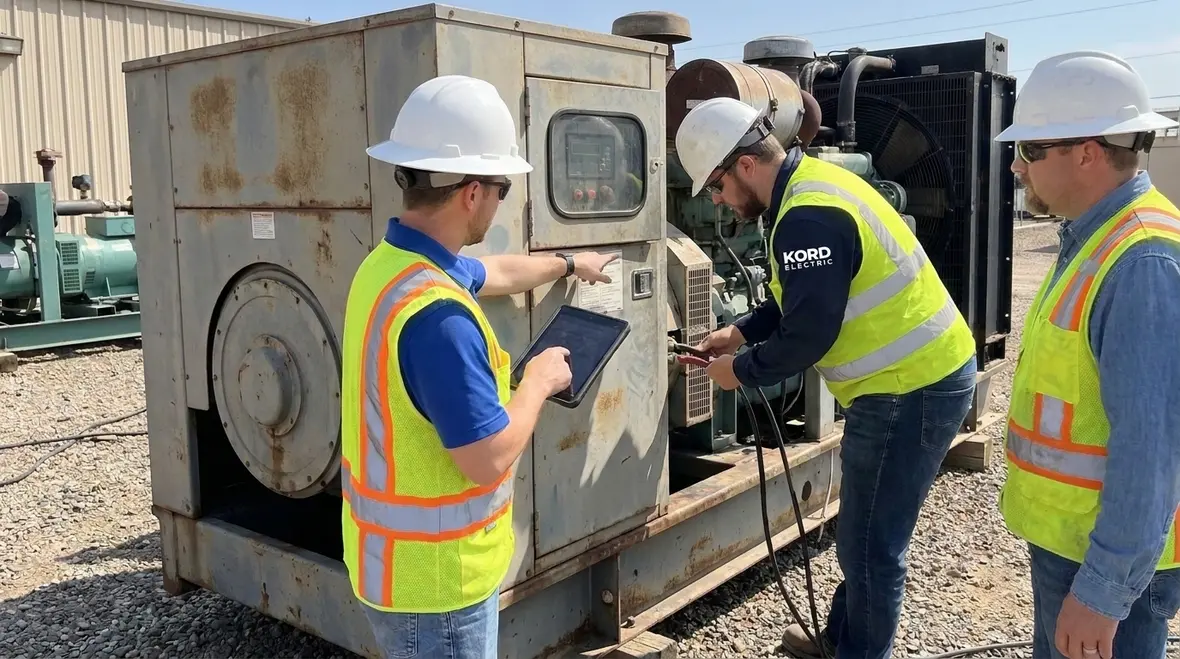
Testing matters, but downtime ruins calendars and customer trust. Therefore, we design testing windows and methods around how commercial and industrial facilities operate. In data centers and major property buildings, we commonly use phased testing so the business keeps running.
For example, we validate functionality in steps rather than flipping every switch at once. We can run controlled tests that confirm correct sequences, alarms, and protections before we attempt more demanding checks. We also align with safety procedures and permit requirements, because reliability without safety is not reliability, it is a headline.
In the field, our teams support test planning that includes documentation, baselines, and acceptance criteria. Then we record results in a way others can use later, which helps future engineers avoid guesswork. And when the test shows something unexpected, we handle it with calm follow up, not blame.
What should you measure during commissioning and ongoing assurance?
During commissioning, the goal is not to “check boxes.” It is to verify behavior. Then, after commissioning, the goal shifts to detecting drift, wear, and hidden changes. To support Data Center Power Reliability Engineers: Roles, Testing & Best Practices, we recommend measurement routines that track both performance and stability.
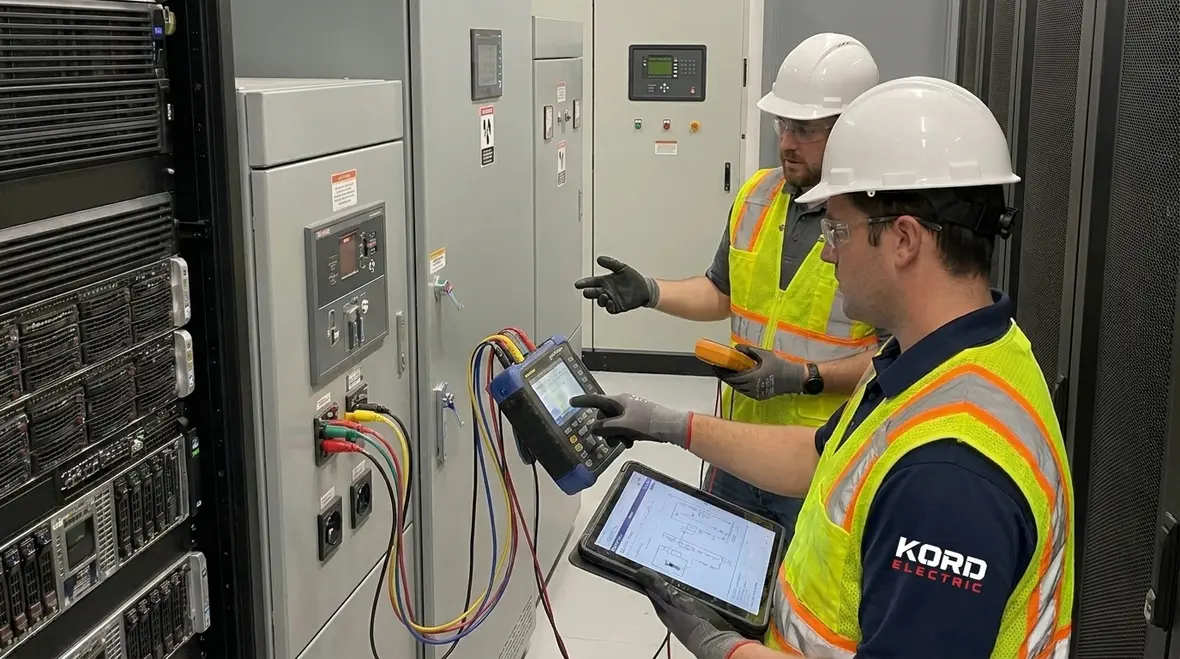
Common things we look at include voltage quality, transfer timing, UPS runtime behavior, harmonic levels, and protection device response. We also review operational data from controls and monitoring systems, because events rarely happen without signals. In addition, we compare measured results against design assumptions. If the system’s behavior changes, we want to know before it turns into a service call that starts with “we noticed last night.”
Our technicians also emphasize repeatability. If a test cannot be repeated the same way, it becomes a one time story instead of a reliability tool. Therefore, we help customers standardize procedures, label critical test points, and maintain clear documentation.
Finally, we support ongoing assurance through maintenance planning and periodic reviews. That means scheduled inspections, functional checks, and trending analysis so the facility improves over time rather than reacting after something breaks.
Dual path reliability: coordination between utility, UPS, and generators
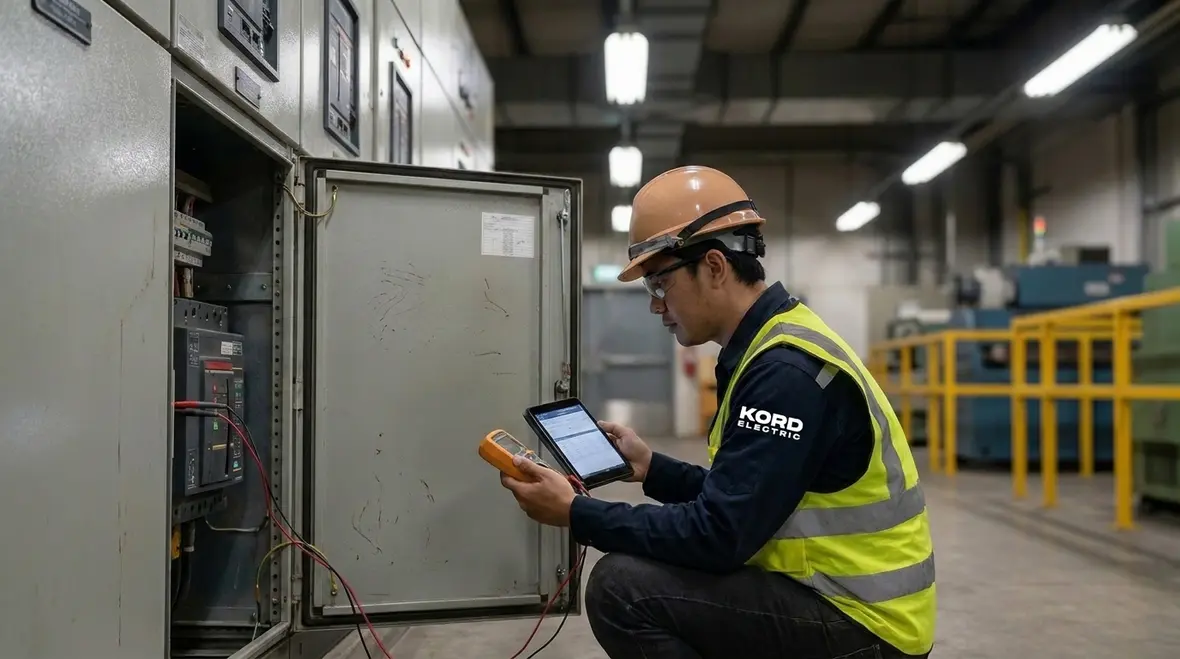
Most failures do not come from one component. Instead, they show up when coordination fails. That is why we focus on the relationship between utility inputs, UPS systems, transfer switches, and generators. If one part reacts slower than expected, the whole chain can behave unpredictably.
At Kord Electric, we help customers evaluate the full power path and confirm that control signals and interlocks work across operating modes. This includes the way controls handle starting sequences, load acceptance, and shutdown transitions. In addition, we review how the system responds to abnormal conditions, such as when a source returns in an unexpected state.
Below, we place typical coordination checks side by side so others can quickly understand what we validate during reliability programs:
For California sites and data centers across the USA, these coordination checks work alongside broader planning topics such as data center power redundancy systems and infrastructure design guidance. Together, they keep dual path power systems predictable instead of theatrical.
Operational best practices that keep reliability from fading
Design and testing create the foundation. However, day to day operations decide whether that foundation lasts. Therefore, we support best practices that help facilities stay stable as systems age and as loads change.
First, we encourage clear operating procedures for different scenarios, including planned maintenance, source outages, and abnormal alarms. Next, we make sure those procedures reflect actual configurations, not old drawings from someone’s folder nobody opens. Then we help teams set up alarm management so operators can act quickly without drowning in alerts.
Our expert service staff also helps customers plan for change. When IT loads grow, when mechanical equipment updates, or when controls get modified, power behavior can shift. As a result, we recommend re validation steps that match the change, such as targeted functional tests or updated baselines.
And yes, we sometimes deliver a gentle joke during training: if your reliability plan reads like a novel no one finishes, then when the power acts up, the facility ends up reading the last chapter under stress. We prefer fewer surprises and more rehearsals.
When facilities want to go deeper on strategy, many pair these operational best practices with our guidance on zero downtime data center power strategies and data center electrical infrastructure planning. That way, operations, testing, and design all pull in the same direction.
FAQ: Data center and major building power reliability
Conclusion: Put reliability engineering to work with Kord Electric
Reliability engineering is not a document. It is a process that keeps commercial and industrial facilities steady when the power story changes. At Kord Electric, our technicians and expert service staff guide customers through risk mapping, coordination validation, and testing that respects real operations. If you want fewer surprises and clearer performance data, we will help you build a power reliability plan you can trust. Contact Kord Electric today to talk about your facility and set up a practical reliability program.
If your team is actively planning or upgrading a facility in Southern California, you can also review how our broader Los Angeles County electrical services support data centers, industrial sites, and major property buildings with code-compliant installations, upgrades, and preventive maintenance that keep the lights on and the loads stable.
For a complementary deep dive into strategic planning that supports uptime, explore Kord Electric’s guide on data center power reliability strategies. Pairing those concepts with the roles, testing routines, and best practices outlined here helps your team turn big reliability goals into everyday habits.