
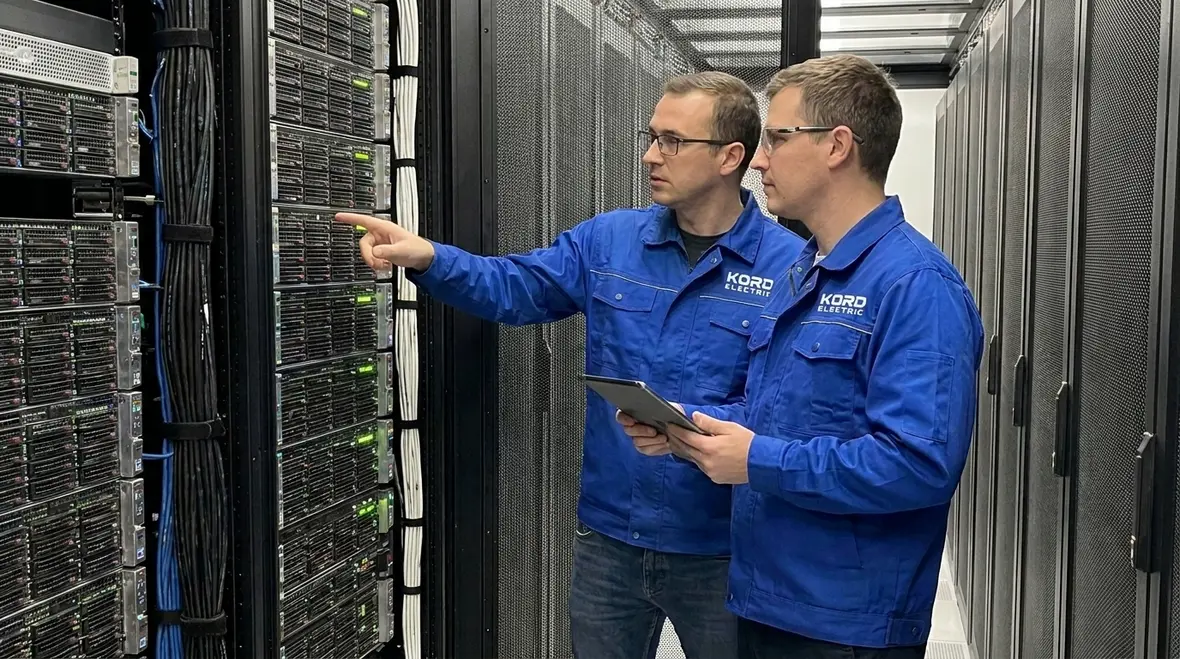
How Data Center Workload Distribution Work Explained
In any serious commercial or industrial facility, the real question is not whether workloads exist, but how those workloads get placed so the data center stays stable when pressure rises. That is where How Does Data Center Workload Distribution Work? becomes practical, not just theoretical. Put simply, we move work across the right servers, the right network paths, and the right power and cooling resources so performance stays steady and failures do not turn into outages. At Kord Electric, our approach stays grounded in what we see in the field, and our technicians and expert service staff explain the logic in plain terms: workloads spread, resources match, and redundancy quietly does its job. And yes, like a well written heist movie, every piece has to show up on time. Even if someone forgets a password, the system still needs to keep running.
How workload distribution maps to real operations
Data center workload distribution starts with how an environment decides where work should go. First, applications generate demands: compute cycles, memory needs, storage reads, and network traffic. Then, orchestration tools and scheduling layers pick a destination based on live capacity and policy rules. In other words, the system does not just send work to any available server. Instead, it follows rules that protect latency, balance load, and reduce single points of failure.
At the same time, our experts from Kord Electric often explain that distribution is not one decision. It happens at multiple levels and at different speeds. For example, a new workload might get placed during deployment, but it can later move when utilization changes. Therefore, the environment keeps watching and adjusts. This is why people notice smooth performance during normal conditions, yet still want predictable behavior during storms, traffic spikes, and hardware faults. In today’s world, uptime is the goal, not a wish and a prayer.
- Compute placement balances CPU and memory across servers
- Network routing steers traffic through healthy paths
- Storage access balances input output load and reduces hot spots
- Policy based control enforces performance tiers and fault limits

How the infrastructure limits the “best” choice
Even when software tries to do the smart thing, physical limits still shape the outcome. Power capacity, cooling delivery, and redundancy design constrain where workloads can run. So, when we ask how does workload distribution work in practice, we also talk about the environment that makes some placements safe and others risky.
For commercial and industrial facilities, power and cooling often drive placement decisions more than people expect. A server can look idle in a console, but if its power feed or cooling zone cannot support another jump in load, the system either avoids it or gets delayed. Over time, that delay becomes part of the user experience. Furthermore, if the design uses multiple power paths, the system aims to use both without pushing one path into overload. That is one reason why Kord Electric focuses on stability minded electrical design for major properties, not just basic installation.
In fact, our technicians frequently say that a data center is like a city. You can route traffic with software all day, but if the roads are too narrow, the map cannot fix physics. Load distribution must respect the real world.
That is also why we often point facility teams toward deeper resources such as Kord Electric’s data center electrical distribution design for reliability and other data center power reliability guides. Those articles walk through how feeder sizing, protection coordination, and cooling coordination either support or limit where workloads can safely land during high demand windows.
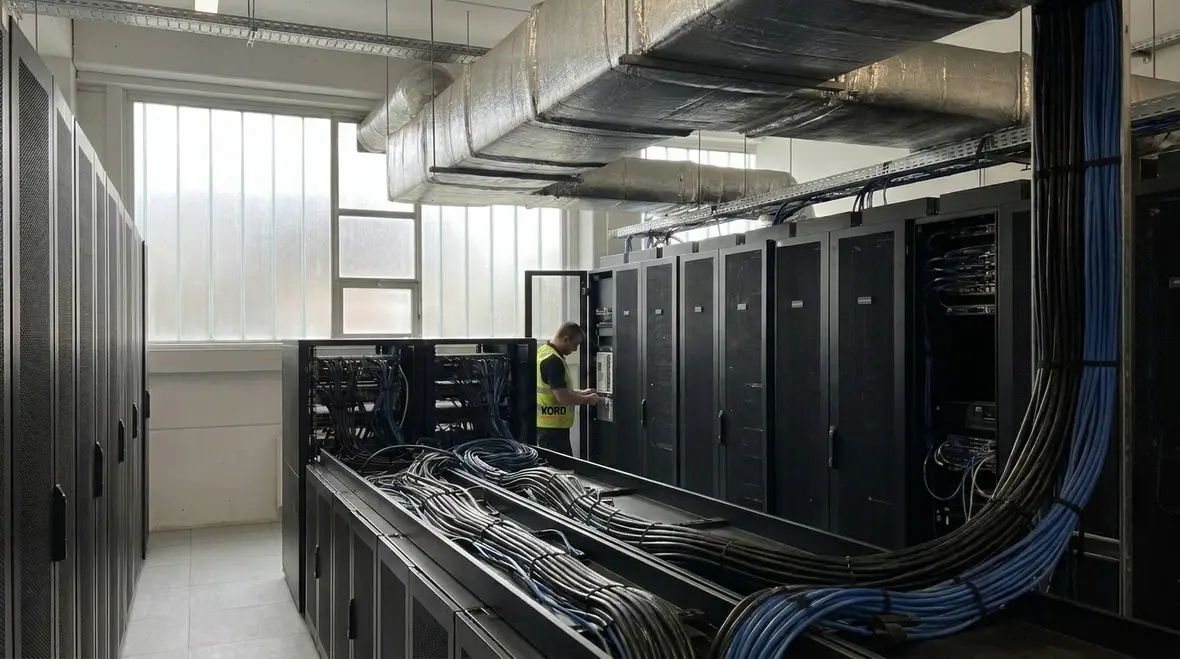
Redundancy and power paths that keep servers alive
Workload distribution and power redundancy work together. When a power event happens, the system should fail over without drama. Yet the failover behavior changes depending on the power design: how many feeds exist, how they connect, and how quickly critical systems switch to alternate sources.
Kord Electric supports this reality by aligning workload behavior with power redundancy planning. Our work builds on the same core idea we outline in our blog, especially data center power redundancy for maximum uptime, where the goal is not just “backup power,” but fast, coordinated continuity. In that mindset, workload distribution should not assume that every component survives every moment. Instead, it should recognize boundaries and use redundancy paths correctly.
So, when workload distribution takes place, it often favors multiple independent routes so a single event does not collapse the entire service. Then, when a failover triggers, the environment expects a clean transition, not a slow shuffle that forces applications to time out. And if you have ever seen a buffering wheel during a video call, you understand why that difference matters. In our world, a smooth failover feels like magic. In the best designs, it is engineering.
That engineering mindset also ties into Kord Electric’s broader work on zero downtime data center power strategies, where transfer schemes, UPS behavior, and coordinated protection all influence how quickly workloads can move during an event without users ever noticing.
Dynamic balancing across compute, network, and storage
To explain how How Does Data Center Workload Distribution Work? shows up day to day, we track the workflow across three areas: compute, network, and storage. First, compute placement balances processing load. Then, the network layer handles traffic and tries to keep latency low. Finally, storage systems distribute input output so one storage node does not get crushed by too many reads and writes.
However, dynamic balancing requires more than raw capacity. It needs visibility, health checks, and fast decisions. Therefore, the system watches signals like resource usage, error rates, and response times. When a server becomes noisy or a link shows packet loss, the scheduler shifts traffic away. In commercial and industrial facilities, that matters because services often run on strict schedules and business hours. If your warehouse management system stutters, your logistics team feels it fast.
Our technicians also remind teams that balancing should include maintenance windows and planned changes. When a facility team takes a switch out of service or performs firmware updates, the workload distribution system should move work in a controlled way. Otherwise, the data center does not just risk performance. It risks losing business critical applications.
- Compute balancing avoids hot spots and throttling
- Network steering reduces latency spikes and reroutes traffic fast
- Storage load sharing prevents bottlenecks during peak use
- Health aware scheduling removes weak paths before they fail
Behind the scenes, this kind of balancing depends on the same electrical fundamentals covered in Kord Electric’s data center electrical requirements for uptime and electrical design data center efficiency guide. If the power backbone cannot keep up, even the smartest scheduler will eventually run out of good options.
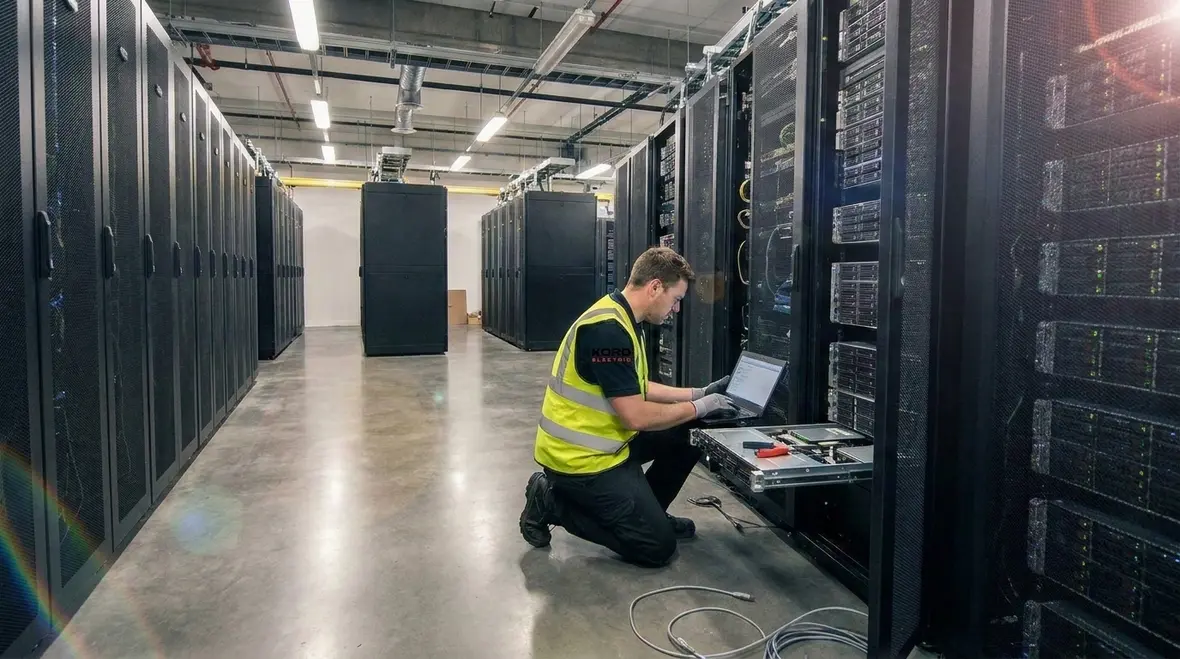
Fault handling, failover, and why timing matters
Now we get to the part people only think about when something breaks. Still, fault handling and failover timing shape how well workload distribution protects uptime. The scheduler and the infrastructure do not just react; they coordinate. When a server, network path, or power feed shows trouble, the system should shift work based on defined priorities and service tiers.
Timing matters because applications have different tolerance levels. Some can retry and recover quickly. Others must preserve state or maintain consistent session behavior. Therefore, good distribution setups define where state lives, how services replicate data, and how quickly traffic redirects. In major property buildings, these choices influence everything from property management platforms to tenant services and security systems.
And because we serve commercial and industrial sites, we also talk about change control. When teams follow careful procedures, faults become manageable incidents instead of chaos. Our expert service staff often works through scenarios with clients, walking through what happens when a component fails, how quickly the system reroutes, and what the facility team should monitor. In other words, we do not just sell power solutions. We help teams understand the behavior they will see during real events.
Those scenarios connect directly to broader reliability planning, including Kord Electric’s work on data center power reliability and uptime design and commercial electrical system uptime for critical facilities. When electrical behavior and workload behavior are planned together, timing stops being a guess and becomes an engineered response.
What Kord Electric recommends for stable distribution
At Kord Electric, we focus on electrical foundations that support safe workload distribution. That means we align power, redundancy, and monitoring with the data center’s operational goals. It also means we help teams plan for peak load, not only average usage, because distribution algorithms depend on realistic capacity data.
So what do we recommend for commercial and industrial facilities and major property buildings?
- Design redundancy deliberately so alternate power paths exist and stay ready
- Validate failover performance so applications see minimal interruption
- Coordinate monitoring signals so automation can react using real health data
- Map power to compute intent so placement rules match real capacity zones
- Plan changes with workload behavior in mind to avoid surprise throttling
Next, we make sure our clients understand that distribution is not a one time project. It is a living system. As workloads grow, as new applications arrive, and as hardware ages, the “best” distribution pattern changes. Our technicians and expert service staff stay available to help teams review operational data, tune processes, and reduce risk. And look, if software feels like it is constantly arguing with the hardware, that is normal. We just want the argument to end with uptime, not downtime.
For teams planning long term, it also helps to study how power scalability and infrastructure design support future distribution choices. Resources such as Kord Electric’s data center power scalability and growth planning, resilient electrical infrastructure for data centers, and electrical design data center efficiency guide give facility managers a practical roadmap they can pair with their workload strategy.
If your campus includes multiple facilities, or you are coordinating data hall work with broader property upgrades, remember that workload distribution reliability also depends on the surrounding commercial systems. Kord Electric’s Los Angeles County electrical services team supports those wider needs, from distribution upgrades to preventive maintenance, so your data center does not have to depend on a fragile surrounding grid inside the building.
FAQ
Conclusion and call to action
Workload distribution keeps commercial data centers stable by placing work where it fits, monitoring health, and rerouting when faults happen. At Kord Electric, we support that outcome with electrical design that aligns redundancy, power paths, and operational timing. If you run a major property building or a mission critical commercial operation, do not leave uptime to guesswork. Reach out to Kord Electric today, and let our technicians and expert service staff help you map distribution to your power reality, so your systems stay calm when everything else gets loud.
If you are reviewing your own environment and wondering where to start, use your workload questions as a guide: How Does Data Center Workload Distribution Work? Which racks, panels, and power paths actually carry the most risk? Which maintenance tasks keep your failovers clean instead of dramatic? Kord Electric’s teams answer those questions in the field every week, and they bring that experience to each new project, whether you operate a single data hall or a portfolio of critical facilities.
From there, you can connect workload behavior with the rest of your reliability plan. Pair your scheduling and orchestration strategy with proven power design and preventive maintenance, and suddenly “uptime” becomes less of a wish and more of an expectation. When data, power, and cooling move in sync, the quiet, boring day in your data center is actually a sign that everything underneath is working exactly as designed.


