
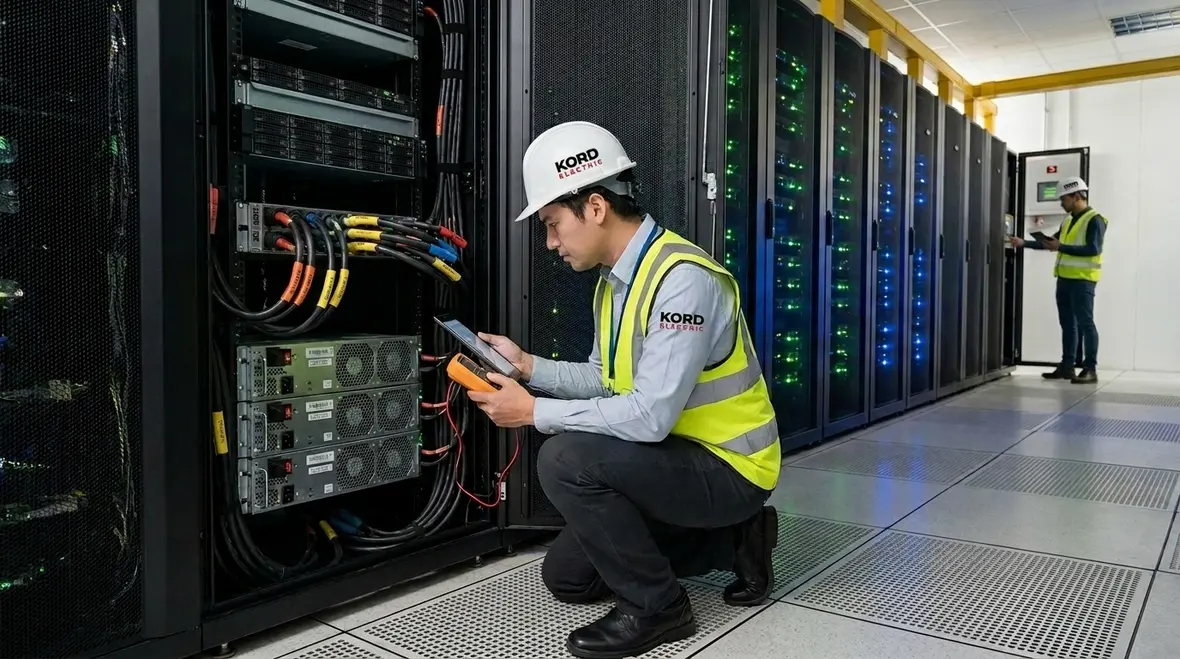
Data Center Power Redundancy for Uptime
Data centers do not get to “try again tomorrow.” At Kord Electric, we help commercial and industrial facilities protect uptime through data center power redundancy that keeps critical loads running when the grid stumbles, a component ages, or a fault shows up like an uninvited sitcom character. We design and support redundant power architectures so your systems keep operating while technicians complete safe, planned work. And yes, we know the joke: electricity is the one guest who never leaves on time. That is exactly why we build power that does.
What does redundant power really mean for a data hall?
In practical terms, data center power redundancy means you do not rely on a single path for energy. Instead, we engineer multiple independent routes so a failure in one section does not take down the whole operation. Therefore, a robust architecture separates power and control elements, uses protected switching, and reduces shared points of failure. We also design the system with maintainability in mind, so others can perform service without turning your facility into a dark science project.
To make this real, our technicians explain the flow from utility intake to distribution and load. Then they explain what happens during abnormal events. For example, when a transformer fails, the architecture should shift the critical load to the other available path. Meanwhile, protections isolate the faulty section quickly, limiting damage and downtime. Because the goal is uptime, not heroics.
Our approach favors clean, clear design documentation and dependable labeling. As a result, when an event occurs, your team understands exactly what is safe to do, what to wait for, and what to monitor.
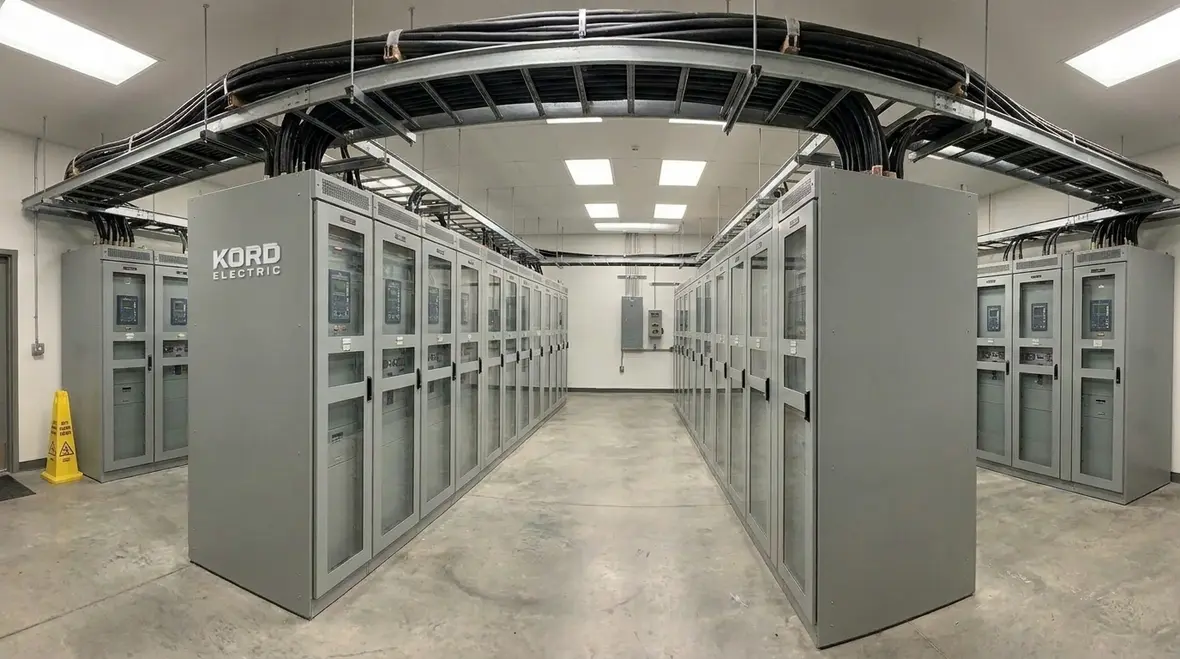
How do we prevent single point failures in commercial power systems?
Most outages do not come from a dramatic “everything fails at once” moment. Instead, they come from a single link in a chain. Therefore, we identify and remove single points of failure inside the power architecture. We look at distribution buses, transfer mechanisms, control power sources, and monitoring paths. Then we ensure the backup path is truly independent, not just theoretical.
For example, if both sides of redundancy share the same upstream protection or the same control supply, a problem in one upstream area can still affect both. So, we coordinate equipment selection and settings, and we verify that failover stays within engineered limits. In addition, we confirm that bypass and maintenance modes still keep critical loads protected.
Just as importantly, we address hidden electrical risks that often show up in commercial buildings when they age or get modified over time. One of the key themes in our blog on hidden electrical risks is that small changes, poor coordination, and overlooked conditions can quietly grow into major failures. We apply the same thinking to data center environments, where “quiet” problems become loud the moment the system has to perform.
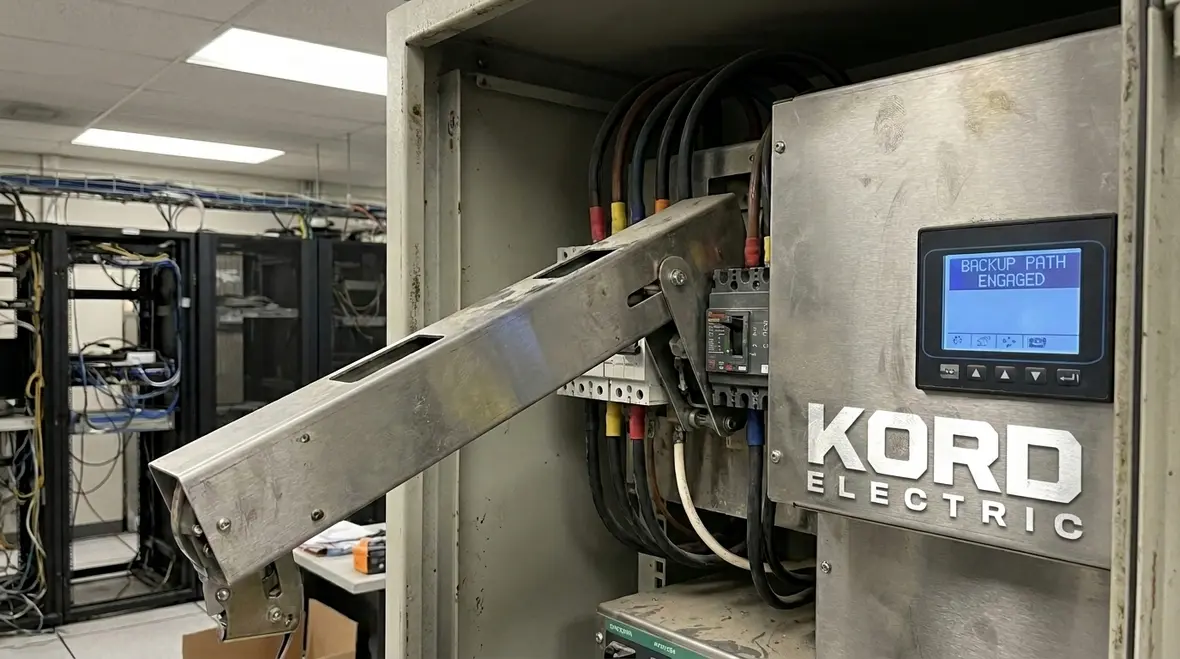
What does fault tolerance look like in real power architecture?
Fault tolerance means the system behaves predictably when something goes wrong. It does not mean the system survives every scenario without stress. Rather, it means the architecture includes protections and switching that contain faults, keep loads within safe bounds, and allow controlled transitions.
We guide our clients through a clear process. First, we map the critical loads and their required power quality and availability. Next, we match those needs with redundancy strategy, switching approach, and protective device coordination. Then we verify that the control logic and interlocks behave as intended.
During a fault, the system should isolate the problem and maintain supply to the critical distribution. If a breaker trips, the design should route power correctly through the alternate path. If a UPS segment fails, your architecture should sustain the downstream load. In short, we engineer outcomes, not hopes.
Meanwhile, our service staff supports ongoing reliability. They help others understand maintenance schedules, test procedures, and monitoring priorities. So, when the next planned shutdown arrives, it feels like a procedure, not a gamble.
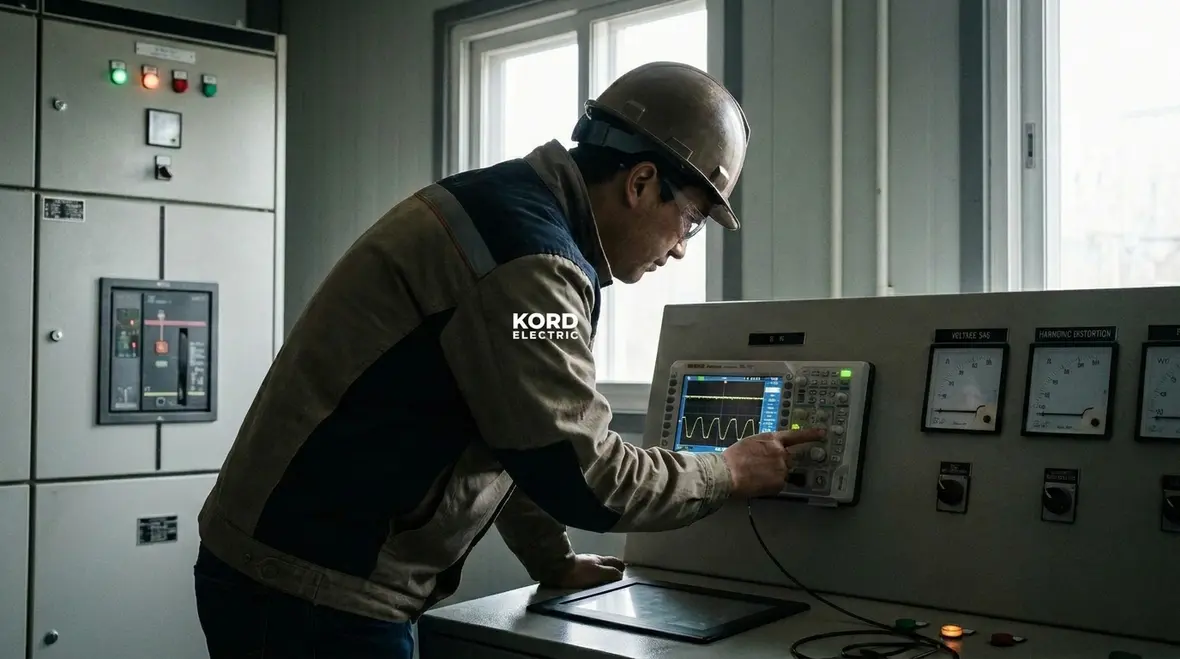
How does power quality affect uptime when redundancy is in place?
Even with data center power redundancy built into the architecture, poor power quality can degrade uptime through equipment stress and unexpected trips. Harmonics, voltage variations, and transient events can push sensitive loads past their tolerances. Therefore, we treat power quality as part of the uptime plan, not an afterthought.
We coordinate power systems so distribution equipment and loads stay within intended electrical limits. We also evaluate the role of UPS systems, generators, transformers, and switchgear in the overall behavior of the power chain. Then we recommend practical monitoring and testing that helps your team catch issues early.
Our technicians also pay attention to how controls interact with power switching. For instance, if transfer timing is off or if sensing thresholds are misaligned, the system can oscillate under certain conditions. That can cause nuisance alarms and interruptions. However, when the design and settings are correct, redundancy works the way you paid for it to work.
Because commercial and industrial facilities often experience ongoing modifications, we help others maintain electrical integrity as changes happen. That way, redundancy does not slowly turn into redundancy in name only.
What monitoring and testing keep redundancy dependable over time?
Redundancy is not a one-time purchase. It is a living system that changes as components age and operating conditions shift. Therefore, we recommend a reliability plan that includes monitoring, scheduled testing, and review of event logs.
In the field, we see how quickly confidence can fade when maintenance is inconsistent. So, we structure service around clear evidence. We help teams verify UPS performance, generator readiness, battery health, transfer operation, and breaker mechanisms. Then we confirm that protective settings stay aligned with the actual system.
In addition, we emphasize documentation and field checks. When labels fade, one technician might guess. When someone guesses, uptime becomes a thriller. Our service staff explains what they find and what it means in plain language, so others can make informed decisions.
We also encourage attention to the “boring” details that prevent the big disasters: torque checks, thermal inspections, and verification of connections. Quiet failures often start with heat and looseness long before they trip anything.
How we design for maintenance without disrupting operations
In commercial and industrial facilities, uptime is not only about failures. It is also about how the system supports planned work. We design with maintenance in mind so others can service equipment while keeping critical loads protected.
That means choosing architectures that support safe isolation, using appropriate switching arrangements, and planning for bypass modes where applicable. It also means designing control systems and interlocks that prevent unsafe backfeed and unintended transfers. Then we help teams understand the operational steps so maintenance does not become a high-stakes improvisation.
At Kord Electric, our technicians walk through the design intent during commissioning and service handoff. We explain which modes maintain supply, which actions require permits, and how to verify stable operation after each step. As a result, your facility can schedule work with more certainty, and your staff can respond faster during abnormal events.
Also, we keep expectations realistic. Redundancy reduces risk, but it does not eliminate responsibility. When everyone knows the system behavior, they can act calmly, even if the situation feels like a cliffhanger from a TV show you cannot stop watching.
FAQ for redundant data center power
Conclusion: Let Kord Electric help you protect uptime now
When a data hall depends on the next transfer, the next test, and the next protection action, you need an electrical partner that builds for real failure modes. Kord Electric helps commercial and industrial facilities strengthen data center power redundancy with thoughtful design, dependable service, and clear technician support. If you want fewer surprises and steadier uptime, we can review your current architecture and recommend practical improvements. Reach out to us today to start a reliability plan that keeps your operation running, even when conditions do not.
If you are formalizing a long-term strategy around uptime, you can also explore our insights on data center electrical maintenance checklists and broader commercial and industrial electrical maintenance plans. Together, these approaches help ensure your data center power redundancy is supported by disciplined testing, documentation, and ongoing care.
For facilities planning new projects or significant upgrades, aligning redundancy design with a dedicated service offering such as commercial and industrial electrical installation services helps keep construction, commissioning, and long-term maintenance moving in the same direction. The result is an electrical system that supports uptime from the first energization through years of real-world operation.


