Electrical Troubleshooting for Businesses Guide
Electrical Troubleshooting for Businesses Keeps Commercial Power Honest
In commercial settings, electrical issues rarely announce themselves politely. They show up as flickering lights, warm panels, tripping breakers, or equipment that behaves like it is haunted. And while some problems feel small at first, others quietly escalate into downtime, safety risks, and higher energy costs. That is where electrical troubleshooting for businesses matters most, because it helps us find the cause, not just the symptom.
When Kord Electric sends our technicians, our expert service staff explains what they are seeing in plain language, then they document the next best steps. In other words, we do not just fix. We also teach your team what changed and why. And yes, we occasionally make a joke about how electricity always “keeps receipts.”
How Common Faults Start in Commercial Lighting and Power
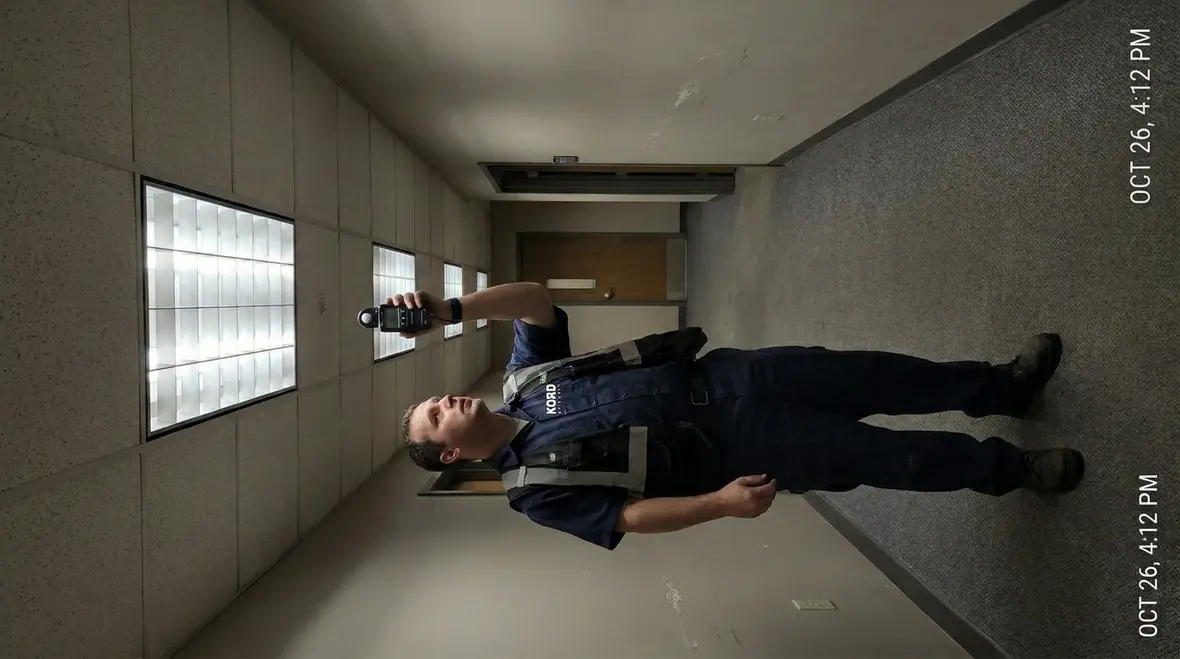
Most electrical troubleshooting in commercial and industrial facilities starts with a predictable pattern: the fault builds gradually, then the building reacts suddenly. For example, older fixtures can suffer from loose connections, failing drivers, or heat damage from dust and poor ventilation. Meanwhile, wiring and terminations can loosen from thermal cycling, vibration from HVAC systems, or routine maintenance that unintentionally stresses a cable.
In practical terms, we often find the same root problems in different outfits. Overloaded circuits show up as dimming under load. Power quality issues appear when motors start and the voltage dips. And corrosion inside conduit can create intermittent contact that no one can reproduce on a sunny day, with all the lights on, and everyone watching.
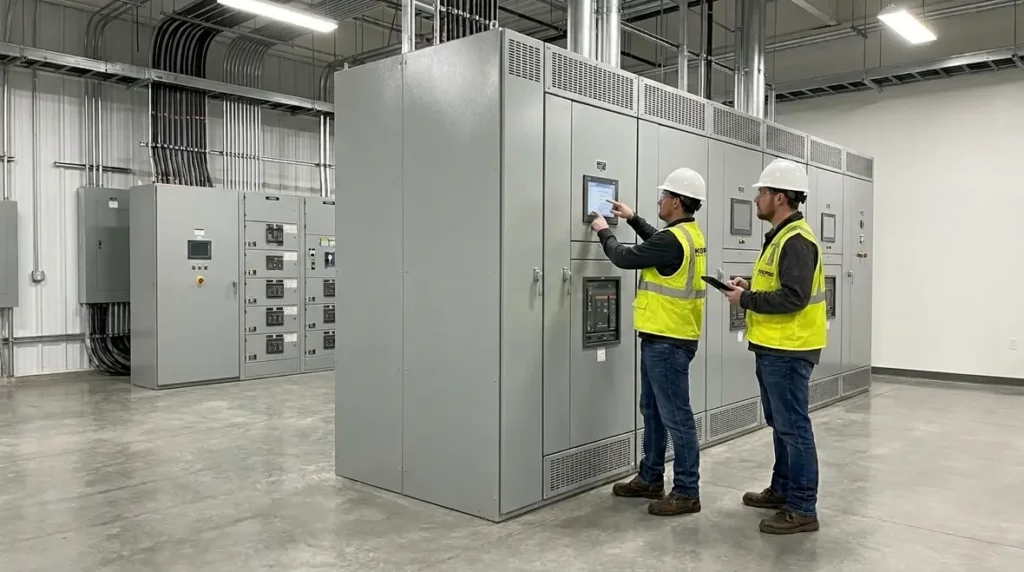
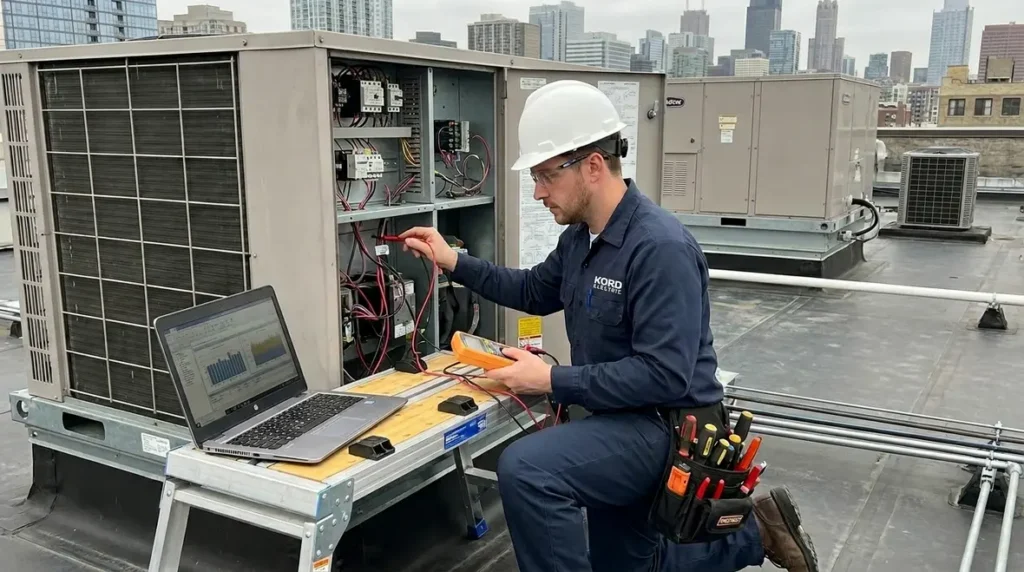
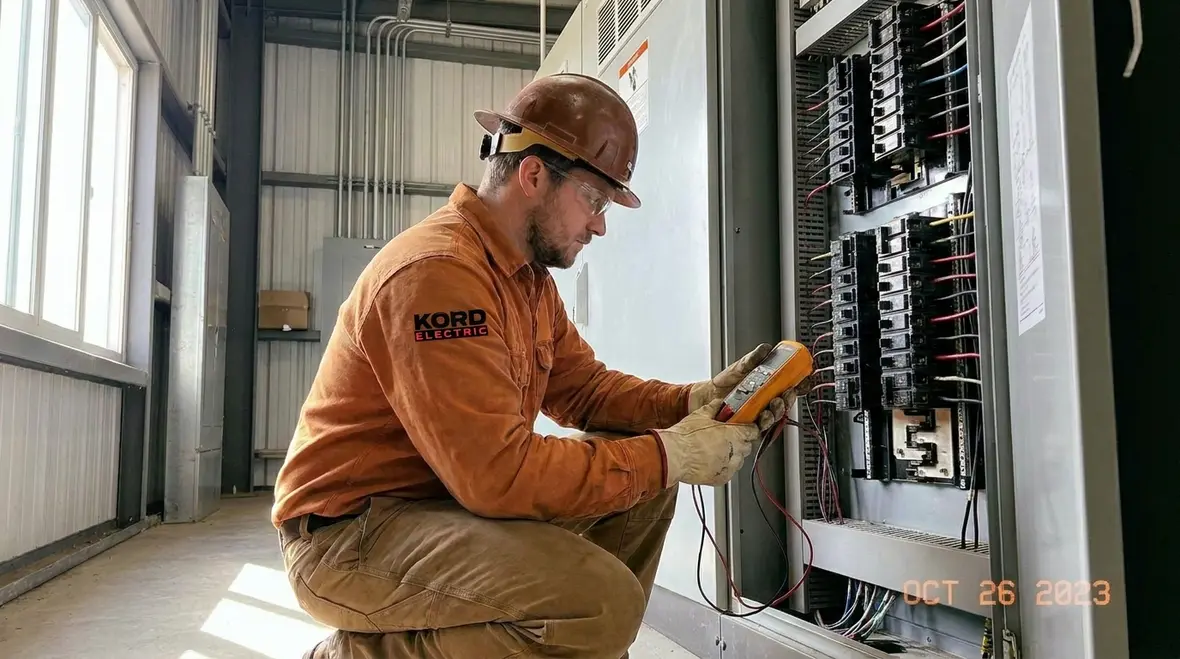
Our expert service staff typically starts by verifying the basics first: the actual load on the panel, the condition of bus bars, the temperature of critical components, and the condition of grounding and bonding. From there, we narrow down the likely cause instead of guessing. Guessing is how you pay twice, and electricity does not care about your budget.
Why Breakers Trip, and Why They Trip Again
When breakers trip in a commercial building, people often assume the breaker failed. However, in most cases, the breaker is doing its job. It trips because current is too high, a short is present, or a ground fault path exists. Then the cycle repeats because the original cause remains.
We treat tripping events like a case file. Our technicians review the timeline, check which circuits trip, and look for patterns tied to equipment schedules. For example, a breaker that trips during shift changes often connects to one of two suspects: motor start surge, or a load that changed due to upgrades or new equipment.
Next, we perform targeted tests. We inspect breakers for signs of heat and inspect terminations at the panel and downstream devices. Then we verify load balance and look for signs of arc damage. If a facility uses sensitive electronics, we also check for power quality issues that can worsen faults over time.
Then we explain the findings clearly. We do not speak in buzzwords. We translate the electrical symptoms into business outcomes like downtime risk and service life. And we keep your team informed so the next reset is not a “try again and hope” strategy.

When Flicker Appears: Wiring, Drivers, and Load Changes
Flickering lights can seem minor until a customer complaint lands on your desk. In commercial environments, flicker affects employee comfort, retail presentation, and sometimes even equipment performance. And once a building has LED retrofits, the flicker investigation often takes a more detailed path.
LEDs rely on drivers and power supplies, so a driver mismatch, poor dimmer compatibility, or a damaged driver can create uneven output. Also, voltage instability from large motor loads can trigger flicker, especially when wiring has resistance from old connections. In multi-tenant settings, another common issue involves shared circuits and varying tenant loads that create inconsistent performance.
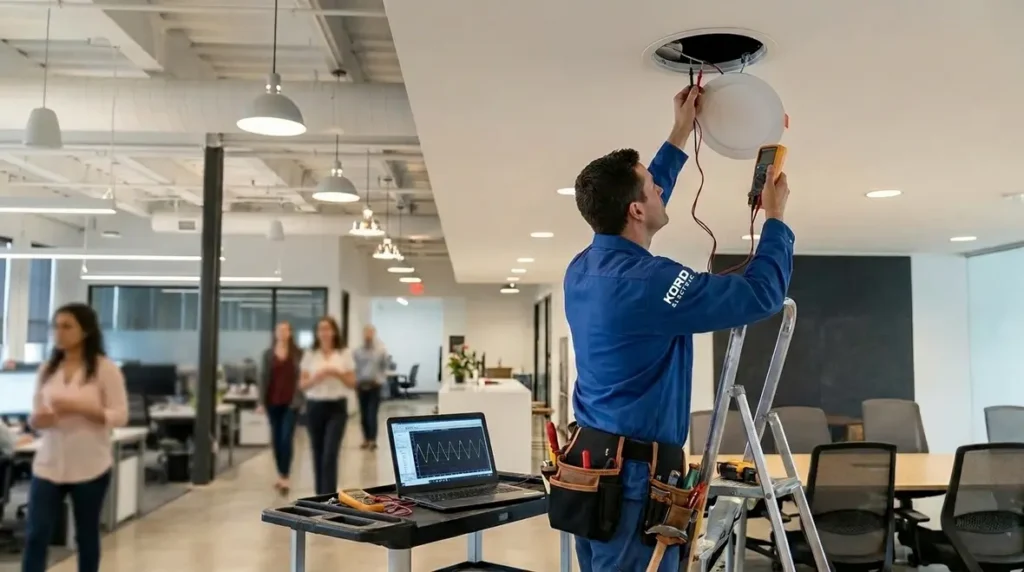
Our expert service staff uses a method that avoids guesswork. We check lighting circuits under operating conditions, then we inspect the upstream panel and the connections powering the fixtures. We also verify grounding and neutral integrity, because poor neutral quality often creates strange symptoms that look like “random” electrical behavior.
If the building recently made a lighting upgrade, we refer to cost and scope guidance from our commercial lighting upgrade cost guide. That resource helps teams plan upgrades that match expected load behavior, dimming strategy, and electrical capacity. In other words, we help reduce the odds of paying for an upgrade and then paying again for repairs that should have been avoided at design time.
Heat, Smell, and Noise: The Safety Red Flags We Do Not Ignore
There are certain signals that we treat as urgent. Heat at panels, burning odor, buzzing from transformers, and visible discoloration around terminations all deserve immediate attention. In commercial and industrial facilities, these signs can point to loose connections, overloaded conductors, failing breakers, or damaged insulation.
We also look for the less obvious clues. Dust buildup can trap heat. Moisture can corrode components. And improper airflow can cause temperature rise that shortens service life. When facilities skip preventative checks, the electrical system becomes a “slow drama” show that ends with a power outage.
Our technicians prioritize safe diagnosis. We verify torque on terminations where appropriate, check temperature patterns, and inspect relevant components for arc evidence. Then we recommend corrective actions that make sense for your operation schedule, so you do not lose production just because the calendar is inconvenient.
And look, we have heard every joke. Someone always says, “If it smells like burning, it is probably fine.” Electricity has a sense of humor too, but it is not a friendly one.
Preventing Repeat Problems: Testing, Maintenance, and Documentation
Good electrical troubleshooting for businesses does not end when the lights come back on. It ends when the facility understands what changed, what was found, and what prevents recurrence. That is why we emphasize testing and documentation during service calls.
In many commercial and industrial environments, we help clients implement a practical maintenance approach. We schedule inspections around your workflow, then we verify key elements like panel condition, connections, grounding paths, and insulation condition. When possible, we track performance trends so a future issue reveals itself earlier.
We also help facilities keep their upgrade plans coordinated with electrical capacity. For example, lighting and HVAC upgrades can increase demand and shift load patterns. If the electrical system lacks margin, the building starts “acting up” under normal operating schedules. That is why our team reviews the bigger picture before recommending changes.
When others fail to document repairs, the next team inherits confusion. Instead, we write clear findings and follow-up recommendations your staff can use. That way, repairs become a history, not a mystery.
Electrical Upgrades and Budget: Aligning Cost, Capacity, and Timing
Businesses often want answers to a simple question: what will the upgrade cost and will it actually work. In our experience, teams can reduce total cost by aligning electrical capacity, lighting design, and operational needs. When upgrades happen without that alignment, the facility can face new symptoms such as flicker, tripping, or uneven performance across zones.
That is why our technicians review existing conditions before we recommend an upgrade path. We consider panel load, circuit layout, dimming controls, and the reality of how your building runs. Then we estimate costs with the scope in mind, including testing and any electrical corrections needed to support safe performance.
If the facility is planning a commercial lighting update, we reference the logic from our commercial lighting upgrade cost guide to help teams forecast what impacts the final number. It is not just fixture pricing. It includes labor, controls integration, and sometimes the electrical adjustments that keep everything stable after installation.
As we explain to your team, a good plan protects both budget and uptime. Electricity is not shy, so we handle the details before they become a billing surprise.
FAQ: Quick Answers for Commercial Electrical Issues
Schedule Kord Electric for Commercial Electrical Troubleshooting
If your facility shows flicker, tripping breakers, warm panels, or performance drops, do not wait for the “mystery outage” to become a headline. Kord Electric works with commercial and industrial buildings, and our technicians deliver calm, thorough electrical troubleshooting for businesses that restores power and reduces repeat faults. We explain findings clearly, coordinate safe access, and document what we do so your team can plan with confidence. Call us today to schedule an assessment and get your system back to steady, reliable operation.
If you want to stay ahead of future faults and hidden risks, consider pairing troubleshooting work with a structured electrical preventive maintenance program. Scheduled inspections, testing, and documentation help keep panels, distribution equipment, and lighting systems honest long after today’s issue is resolved.