
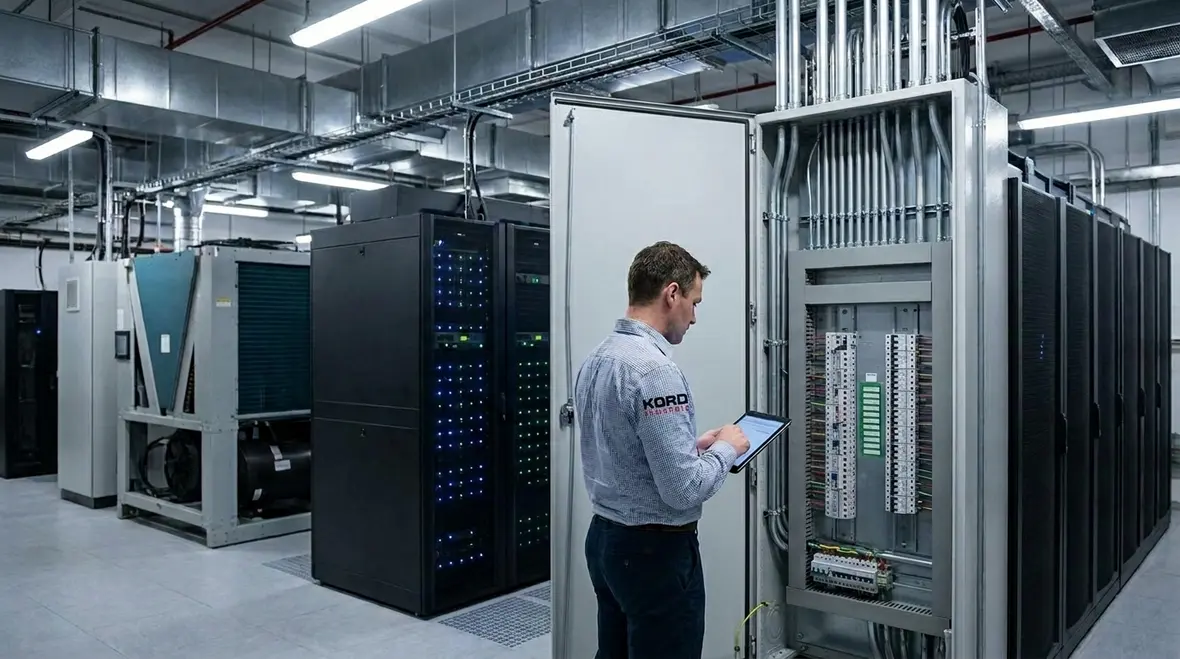
Data Center Cooling Power Efficiency Guide
Optimizing Power Systems for Data Center Cooling Efficiency starts with the right electrical plan
In many commercial and industrial buildings, we see one painful pattern: the facility pays for cooling twice, once at the power bill and again in downtime. When we improve data center cooling power efficiency, the cooling system stops fighting the electrical system and starts working with it. That means steadier power to fans, pumps, and controls, smoother heat removal, and fewer surprises when load ramps up. In practice, our teams at Kord Electric plan and tune the power paths so the cooling equipment performs where it is supposed to perform. And yes, we have heard the jokes about “turning up the AC” like it is a volume knob. Cooling is not a playlist. It is engineering.
Third person, ours, and our approach all point to one idea: optimize the power first, then optimize the cooling. From here, we move through the main electrical choices that shape thermal performance in data center and major property environments.
Map the cooling loads to the electrical reality
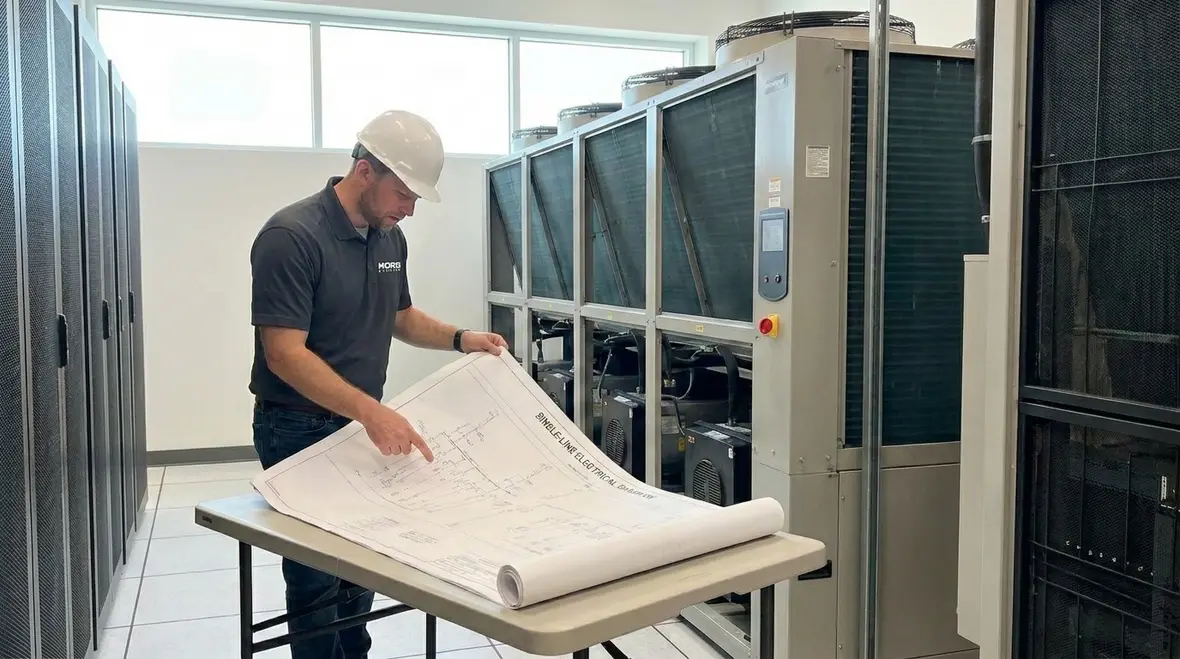
Before anyone touches a chiller, pump, or CDU, we match the cooling plan to the actual electrical behavior of the site. Cooling loads change during normal operation, during maintenance, and during partial failures. Therefore, the power system should not only handle the peak, it should support the ramp and the transitions.
Our technicians and expert service staff explain this in plain terms: cooling does not draw power like a steady lamp. It draws power like a system with moods. For example, variable speed drives ramp motor current, fans shift speed, and control loops react to temperature and pressure. If the electrical design ignores these dynamics, the site can experience voltage dips, nuisance alarms, and reduced efficiency.
To optimize electrical support for cooling, we encourage a load model that includes:
- Startup and ramp profiles for pumps, fans, and compressors
- Standby and failover transitions for critical cooling paths
- Seasonal shifts in thermal demand and setpoint control
- Electrical constraints such as voltage tolerance and allowable harmonics
Then, we review how the distribution system routes power to each cooling subsystem. In most major property and data center builds, the “path of least resistance” is not the best path for stability. We help others select routing and capacity in a way that keeps cooling equipment in its efficient operating window. That is where data center cooling power efficiency stops being a slogan and starts becoming a measurable result.
How does electrical distribution affect heat removal?
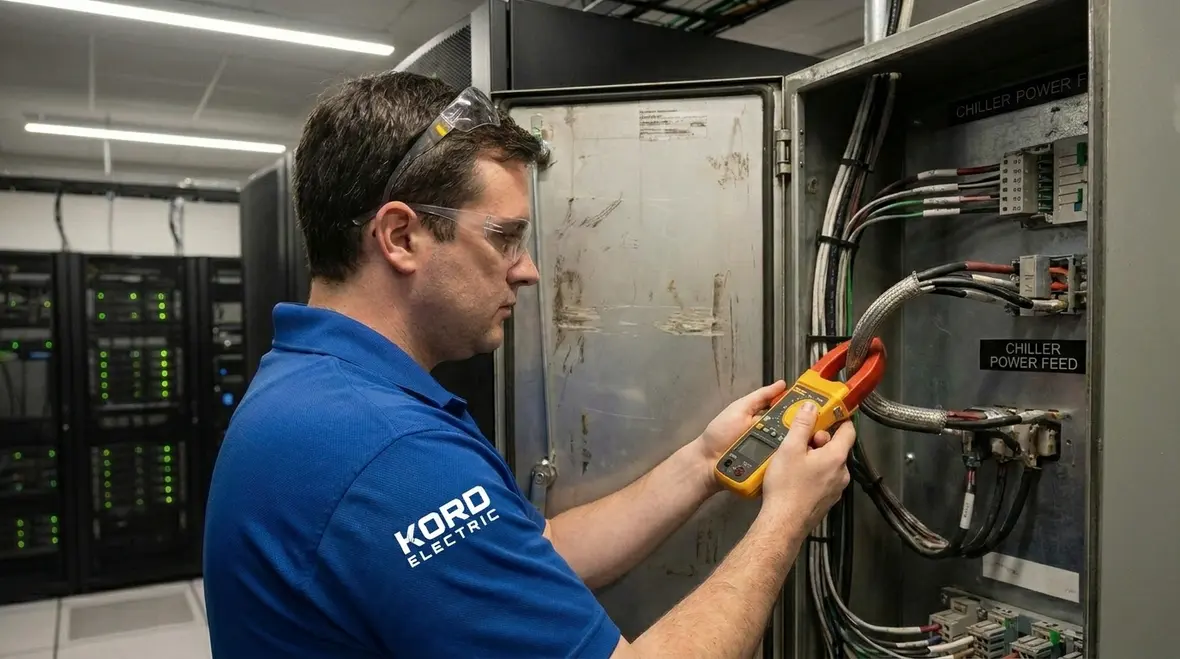
Electrical distribution shapes cooling performance more than people think, because it influences power quality and equipment stability. When a building uses undersized conductors, tight voltage bands, or uncoordinated protective devices, the cooling system pays the price. The equipment might still run, but it often runs less efficiently, or it runs with more control correction than necessary.
In practice, the most common electrical issues we see in commercial and industrial facilities include voltage drop across long runs, poor coordination between breakers and drives, and harmonic distortion created by power electronics. As a result, pumps and fans can lose torque margin, compressors may cycle more, and control systems can chase temperature. That chase consumes energy, and it quietly reduces overall data center cooling power efficiency.
Our expert service staff often describes the effect like this: “If the power arrives tired, the cooling equipment performs tired.” From there, we take a systematic path. We verify:
- Voltage regulation across normal and contingency loads
- Protection settings that match motor and drive behavior
- Harmonic targets for drives, UPS systems, and rectifiers
- Neutral and grounding design for stable control references
When these points work together, the cooling system can hold stable control loops. In turn, stable control loops mean fewer detours, fewer compressor starts, and smoother fan and pump modulation. Cooling becomes calmer. And calmer cooling helps energy stays where it belongs: in useful work, not in wasted conversion.
If you want a deeper dive into how upstream infrastructure choices shape this behavior, Kord Electric’s companion article on Data Center Electrical Infrastructure Essentials walks through how power distribution and layout decisions set the stage for both electrical reliability and thermal performance.
UPS and generator choices that keep cooling stable
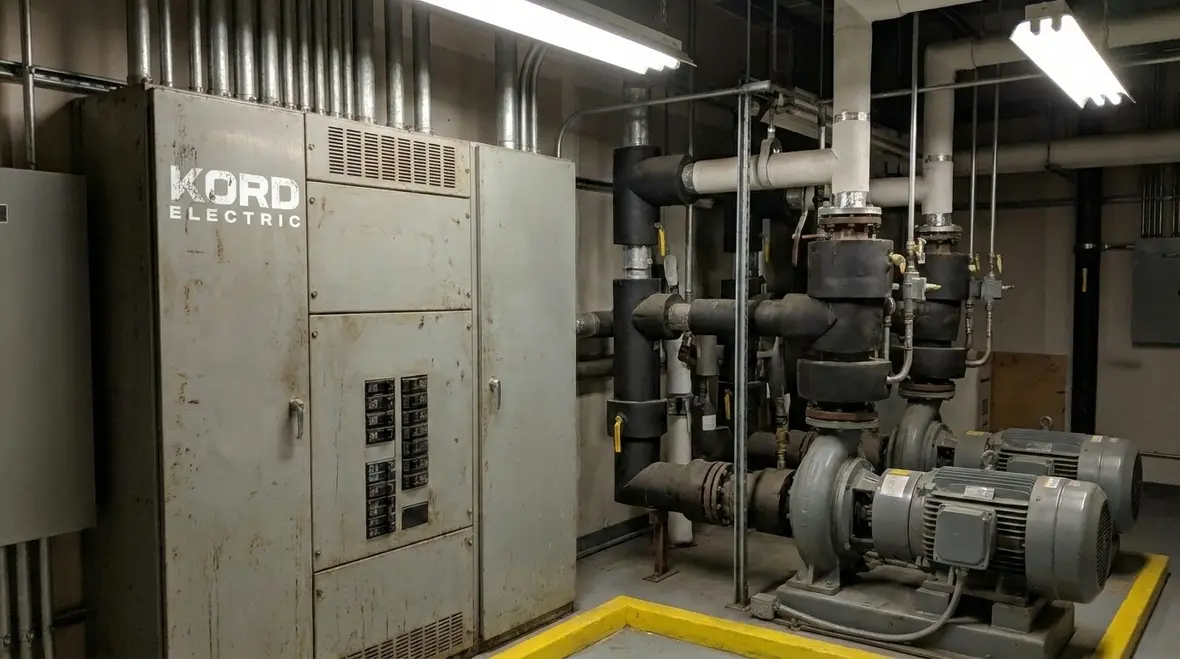
Data centers and mission critical facilities treat cooling as a survival system. Therefore, the backup power strategy must support cooling loads without causing major swings. When utilities experience instability or when maintenance requires a transfer, the electrical system should keep voltage and frequency within the tolerance range of cooling equipment and its control electronics.
Our teams at Kord Electric focus on the system as a whole, not as separate parts. We help others evaluate how UPS topology, runtime targets, and generator transfer logic interact with the cooling load profile. For example, if the UPS runs with a mode that behaves differently under load transitions, drives can see short disturbances. Those disturbances can trigger control fallback modes, and that reduces performance.
We also emphasize that backup power is not only about staying online. It is about staying online in a way that maintains cooling performance. That includes:
- Appropriate UPS load sizing and output characteristics for motor starting behavior
- Generator sizing that considers both steady demand and start-up spikes
- Transfer sequence planning that prevents overloading one segment
- Distribution controls that keep the critical cooling path energized
We admit it, backup power is the “seatbelt” of the electrical room. But if the seatbelt deploys too aggressively during a normal stop, it becomes a nuisance. The right configuration prevents that nuisance while keeping cooling stable.
Power quality, drives, and controls: the hidden efficiency levers
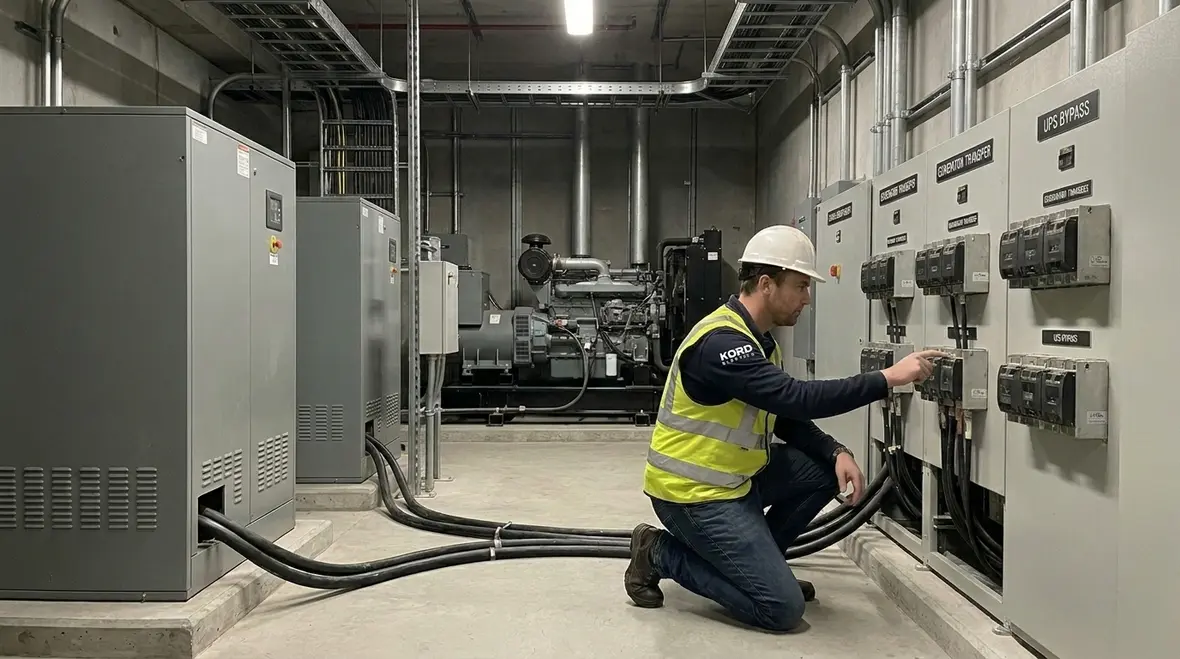
Cooling efficiency often gets discussed in terms of chillers and setpoints. Yet the power side provides hidden levers that directly impact how those machines behave. Most modern cooling systems use variable speed drives for pumps and fans. Those drives are good for energy reduction, but they bring power quality concerns if the electrical design does not account for them.
When harmonics rise, transformers heat up, neutral currents can increase, and sensitive electronics may experience additional stress. Additionally, poor drive integration can lead to hunting, where the control system overcorrects and then corrects again. That behavior consumes energy and can reduce the practical value of data center cooling power efficiency.
Our technicians explain power quality like this: “It is not just about being on. It is about being on clean.” Then we help others set up a plan that targets:
- Harmonic analysis for the cooling equipment load mix
- Filter selection and placement when needed
- Drive settings that match motor and system requirements
- Coordination between building management system and electrical protection
Next, we verify control signal quality and grounding practices. A control system that receives noisy references can push equipment to work harder than the control logic intends. And yes, that is the boring stuff that saves you money. Boring is expensive, like spending five dollars for a donut you do not even like.
Standby cooling and redundancy planning without energy waste
Commercial and industrial facilities and major property buildings usually demand redundancy. That is the right mindset. Yet redundancy can waste energy if the design keeps backup systems running in inefficient modes. Therefore, Kord Electric approaches redundancy with a “ready but not wasteful” goal.
For example, we look at how standby air handling, chilled water pumps, and backup CRAH or CRAC equipment operate during normal conditions. When a site runs too many paths at partial capacity, the system can lose efficiency due to added pressure drops and unnecessary equipment cycling. On the other hand, if redundancy sits idle for too long, it may not respond quickly when a fault occurs.
So we plan redundancy in phases, and we align electrical capacity to the actual cooling sequence. We help others decide when systems should overlap, when they should be staged, and how the power system supports that staging. In a practical sense, we evaluate:
- Load sharing behavior between parallel pumps and fan arrays
- Timer and logic settings that prevent short cycling
- Switchgear and transfer paths that maintain stability
- Capacity headroom that matches contingency requirements
Because the electrical system underpins the mechanical behavior, we coordinate the redundancy plan across both domains. That coordination is how data center cooling power efficiency holds up during real-life events, not just in the daydream of a perfect operating schedule.
How Kord Electric delivers electrical and cooling alignment in real projects
Our company does not treat electrical infrastructure and cooling systems as separate worlds. Instead, we bring them together so commercial and industrial facilities achieve smoother operation. During planning, we review existing single line diagrams, rack and distribution paths, and the cooling power demand profile. Then we focus on what often gets missed: the electrical constraints that determine what the cooling equipment can actually do.
We also follow through during service and upgrades. Our technicians and expert service staff explain what they find, why it matters, and what changes improve performance without creating new risks. In other words, we do not just point at a problem and walk away. We fix the wiring logic, coordinate the protection, and help others get a clean, supported cooling system.
As a result, other teams can reduce energy waste, improve stability, and protect uptime. And that is the real goal: steady cooling with less stress on the electrical system. The best compliment we hear is simple: “It runs right now, and it will keep running right.”
For facilities that want this alignment backed by structured service, Kord Electric’s dedicated Electrical Preventive Maintenance programs help keep the same level of discipline applied year after year across panels, switchgear, and cooling power feeds.
FAQ
Ready to improve cooling performance with smarter electrical infrastructure?
If others are chasing lower utility costs while cooling still feels unstable, Kord Electric can help align the electrical plan with real cooling behavior. Our technicians and expert service staff review power distribution, protection coordination, UPS and generator support, and power quality impacts that affect equipment performance. Then we recommend practical upgrades that improve stability and strengthen data center cooling power efficiency without disrupting operations. Contact Kord Electric today and let us bring calm, reliable power to your cooling system.
When you are ready to turn those plans into a long-term reliability strategy, pairing cooling-focused electrical upgrades with structured Commercial and Industrial Electrical Maintenance Plans helps keep critical systems inspected, documented, and performing under real-world operating conditions.
For mission critical environments that also need upstream reliability tuned for uptime, Kord Electric’s guidance on Data Center Electrical Requirements for Uptime and Electrical Distribution Design for Reliability can be combined with your cooling power strategy for a complete, coordinated approach.
If your facility is ready for service support that matches that level of discipline, explore Kord Electric’s dedicated Electrical Preventive Maintenance Services to keep distribution, switchgear, and cooling power paths aligned with your performance and uptime goals.


