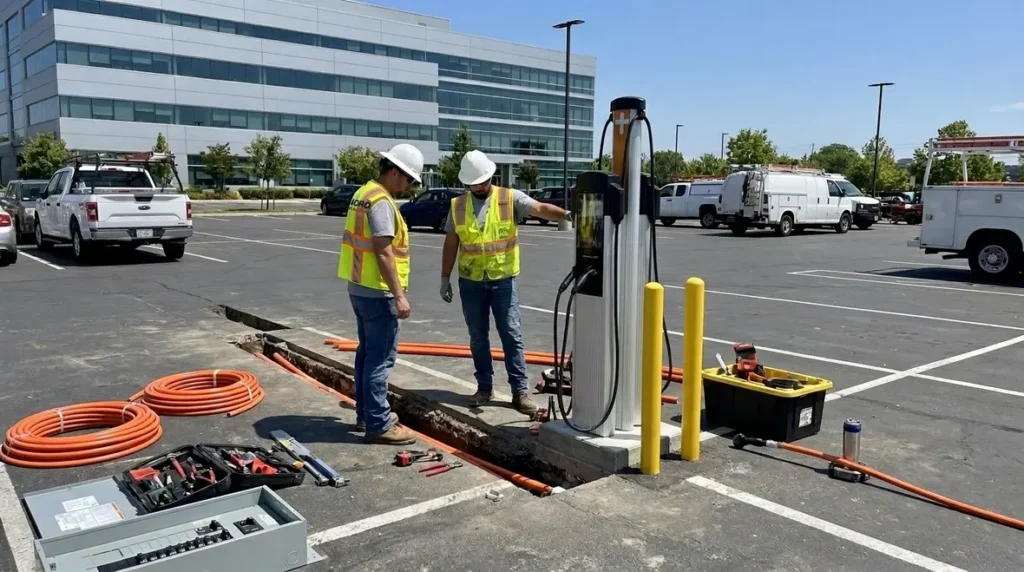
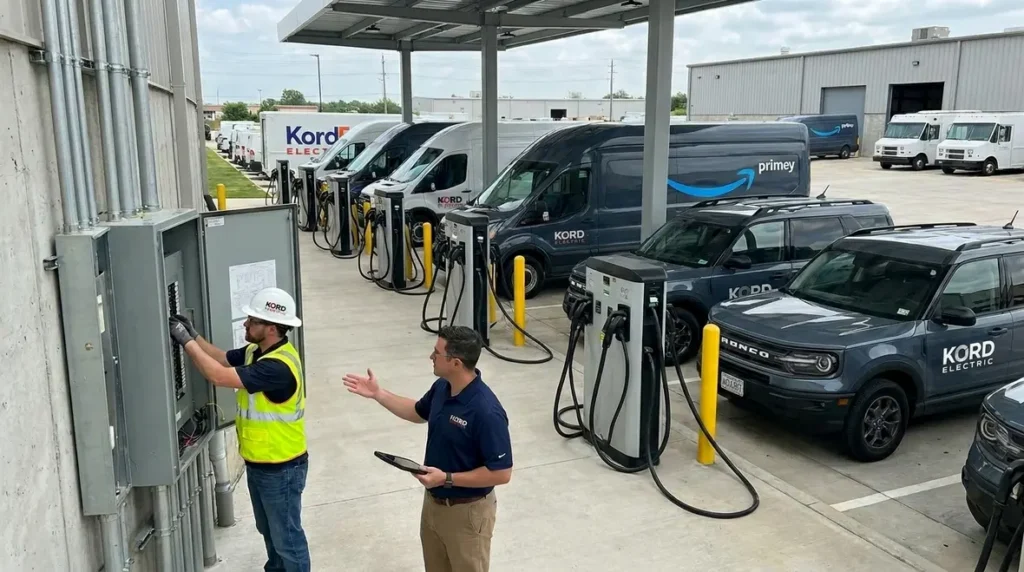
Electric Vehicle Charging for Warehouses Guide
Electric vehicle charging for warehouses is no longer a side project or a nice-to-have amenity. It is quickly becoming core infrastructure for distribution centers, logistics hubs, and industrial campuses that move people, products, and data every hour of the day. As fleets electrify and employees drive more EVs, the question shifts from “Should we install chargers?” to “How do we build charging that actually works at warehouse scale?”
This guide walks through how Kord Electric designs and installs electric vehicle charging for warehouses so that systems stay stable under real loads, grow with the facility, and support business operations instead of disrupting them. We examine power planning, demand behavior, voltage stability, hardware choices, and operational practices, referencing insight from our resource on voltage fluctuations in commercial and industrial facilities to help warehouse teams avoid common electrical surprises.
Along the way, we connect this work to broader electrical reliability strategies that many facilities already explore, including hidden electrical risks in commercial buildings and structured maintenance programs for long-term performance. By the end, you will have a clear picture of what it takes to turn EV charging from a one-time installation into a dependable part of your warehouse power plan.
Electric vehicle charging for warehouses: a serious way to move product and people
Kord Electric helps commercial and industrial facilities and major property buildings scale electric vehicle charging for warehouses. When a distribution center grows, the parking lot grows. And when the parking lot grows, the power plan has to keep up. Otherwise, you end up with chargers that look great on a brochure and perform like a confused microwave during peak lunch hours.
In this article, we explain how teams build charging that holds steady, expands smoothly, and supports daily operations. We also reference guidance from our voltage fluctuations resource so you can avoid common electrical surprises. Meanwhile, our technicians and expert service staff walk through what matters in real terms, not just theory.
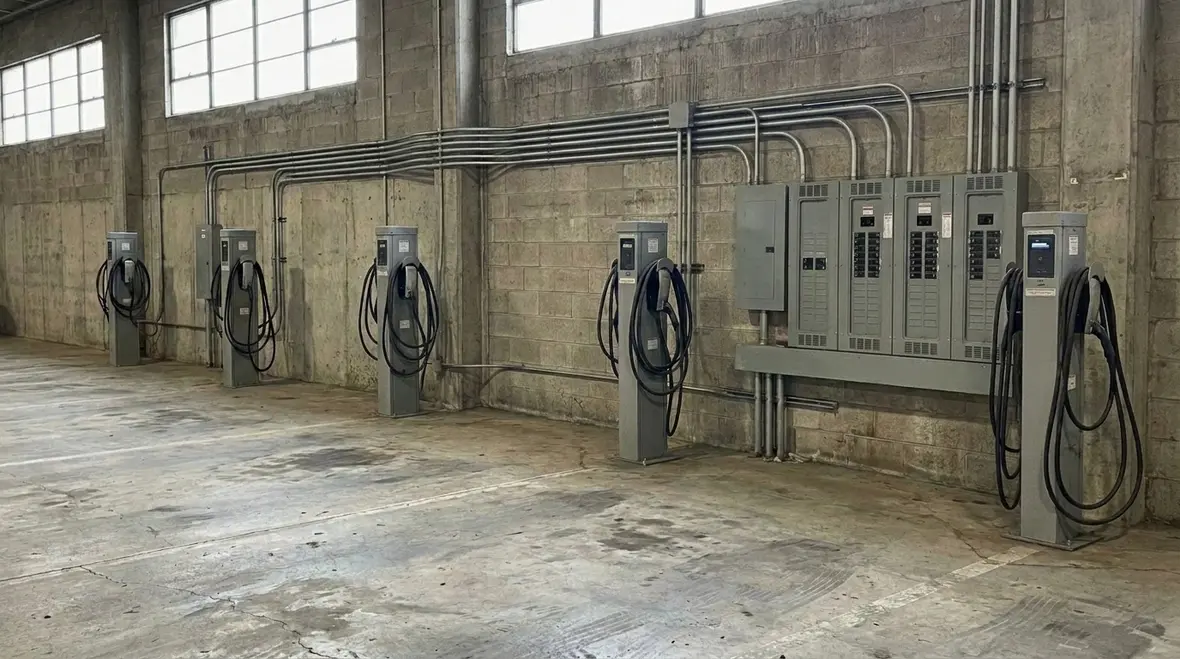
For many warehouses, this shift to EVs intersects with other electrical priorities: data systems, automation, refrigeration, advanced lighting, and safety systems that already lean on the same power infrastructure. That is why Kord Electric approaches every EV project as part of a larger commercial electrical story, not a stand-alone gadget in the parking lot.
What it takes to scale commercial EV charging for modern warehouse power
When others install chargers once and call it a day, the system often struggles later. Scaling electric vehicle charging for warehouses means planning for more vehicles, more shifts, and more load at the same time. That is why we start with an accurate picture of your electrical service, your switchgear, and your site demand patterns.
First, our team reviews your facility’s actual usage, including lighting, HVAC, dock equipment, air compressors, material handling, data or IT loads, and any processing equipment. Then we map how charging will stack across time. For example, employees may plug in at shift end, while fleets may charge after deliveries. That overlap creates spikes, and spikes stress equipment.
Next, we design the charging layout so it does not depend on luck. We coordinate charger placement, cable runs, and panel capacity. We also plan for future growth so you can add ports without ripping up the entire site. In many cases, we build a pathway for expansion using spare conduit space, appropriate breaker headroom, and modular charging hardware that can scale from a few ports to dozens without redoing the backbone.
That planning mindset matches the same disciplined approach we bring to other reliability work across commercial and industrial facilities, from hidden electrical risks in commercial buildings to structured commercial and industrial electrical maintenance plans. Everything is connected, and warehouse EV charging should be treated with the same seriousness.
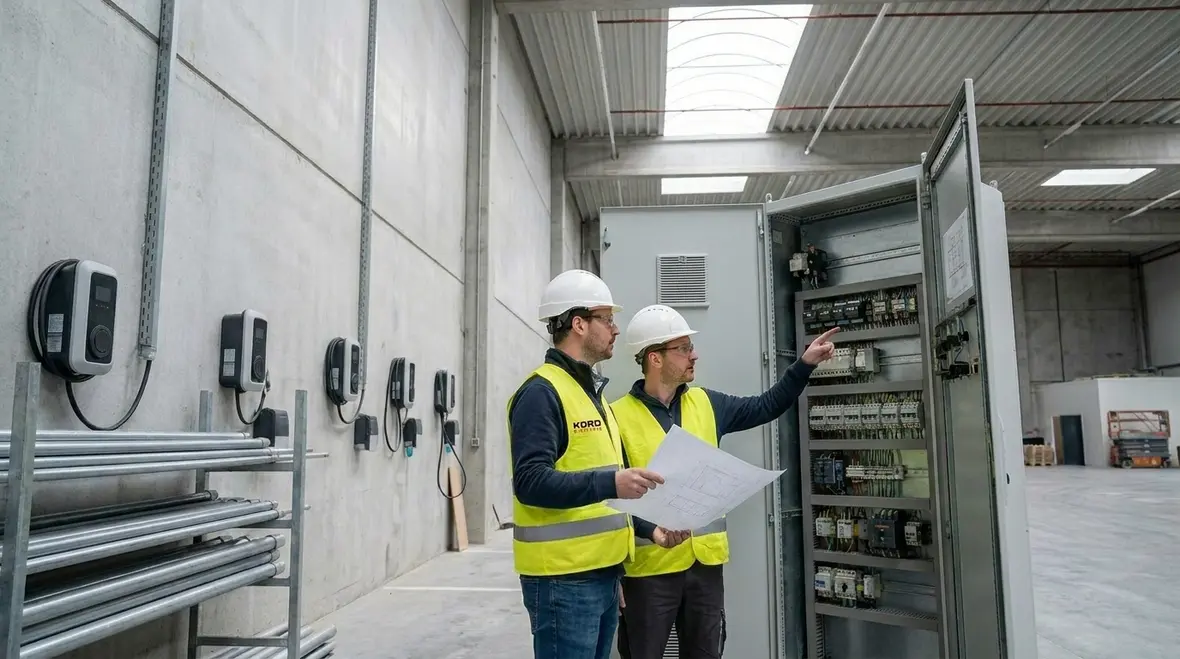
By starting with a full-site view, warehouse leaders can avoid the classic trap: impressive new chargers sitting on top of an overworked, under-documented electrical backbone that was never prepared to handle this kind of load on top of everything else.
Build for demand, not just for watts
Watts are only part of the story. In commercial environments, the bigger issue is how load changes during the day. Therefore, our approach focuses on load diversity and demand behavior. We do not treat every charging session as identical, and we do not assume each driver charges at the same rate or duration.
Additionally, we evaluate how your warehouse uses power seasonally. Summer air conditioning and winter heating can swing the site’s baseline. Meanwhile, charging can land on top of those swings. So, we plan charging schedules and power sharing so the system stays stable without interrupting operations.
To make this easier, our technicians explain the concepts in plain business language on site walkthroughs. They explain what “available capacity” means in your panels and why planning for peak windows prevents expensive rework. It is like traffic engineering for electrons, and yes, it is as glamorous as it sounds.
For facilities already tracking load profiles through preventive maintenance or energy projects, this EV planning dovetails neatly with that data. Warehouses that have invested in electrical preventive maintenance or lighting upgrades often have a head start, because key panels and feeders have already been evaluated under real demand. Electric vehicle charging for warehouses simply becomes the next intentional layer on top of a system that is already being cared for.
Voltage fluctuations and why they matter to chargers
Voltage fluctuations can reduce charging performance, trigger faults, or shorten equipment life. That matters because commercial EV charging for warehouses depends on stable power delivery in real operating conditions. If voltage dips or swings too much, chargers may throttle output or stop when the system detects unsafe conditions.
In our earlier guidance on voltage fluctuations for commercial and industrial sites, we lay out the common causes and what to watch for. For warehouses, those causes often include overloaded transformers, poor connections, large motor loads starting, and aging electrical gear.
Furthermore, long feeder runs and shared service points can amplify voltage drop under heavy demand. Therefore, our engineers and technicians verify electrical fundamentals before installing charging equipment. We check supply quality, connection integrity, and the path from service equipment through distribution to the charger location.
Then we specify appropriate protective devices and grounding practices. We also recommend upgrades only when they actually solve the issue. If the right fix is a connection improvement or breaker adjustment, that is what we pursue. If the right fix is service or transformer support, we map it out with clear steps. We keep it practical because your uptime matters more than a PowerPoint dream.
For warehouse teams that have already seen flickering lights, nuisance breaker trips, or unexplained equipment resets, pairing EV planning with targeted support for voltage issues can deliver outsized benefits. Addressing these underlying power quality problems supports not just chargers but also conveyors, refrigeration, lighting, and IT equipment that share the same infrastructure.
By treating voltage stability as a first-class requirement for EV charging, warehouses can sidestep a whole category of “intermittent” charger complaints that trace back not to the hardware, but to the power feeding it.
Design for expansion across parking, docks, and fleets
Warehouses evolve. A property owner adds space, an operator hires more drivers, and a fleet shifts from mixed fueling to electric. Hence, we design charging that can grow without turning your site into a construction zone every time demand rises.
For electric vehicle charging for warehouses, scaling often means building a smart foundation. That includes conduit planning for future cable routes, charger grouping strategies, and a distribution plan that supports added circuits. We also consider how bays and charging areas align with vehicle flow so drivers can charge without blocking docks or disrupting logistics.
Next, we support fleet and employee charging differently. Fleet charging typically follows predictable schedules, while employee charging can be more varied. Therefore, we can configure systems so the most critical charging needs receive reliable priority when demand peaks.
Our expert service staff also helps teams with operational planning. For example, they explain how to set expectations with drivers and how to use management tools that track sessions and energy usage. When the system runs smoothly, the whole facility benefits, and nobody has to explain to leadership why the charger “was down for no reason.” Spoiler: there is always a reason, and usually it is fixable.
This same expansion mindset often appears in other project types as well, such as lighting retrofits and targeted upgrades for high-demand spaces like commercial kitchens or data rooms. Electric vehicle charging for warehouses fits into that larger pattern: plan the backbone correctly once, then expand through well-defined pathways rather than improvising every time a new vehicle hits the lot.
The result is a site that can grow step by step, aligning capital spending with real demand instead of guessing how many chargers you might someday need and hoping you were right.
Technology choices that keep operations steady
Scaling is not only about power. It is also about choosing equipment that fits a warehouse environment. Kord Electric focuses on commercial-grade charging components that can handle daily usage, outdoor conditions, and frequent access by drivers and staff.
Additionally, we support smart features that help you manage load. These tools coordinate charging output across multiple ports so the site does not exceed capacity. As a result, chargers can share power intelligently rather than competing for it like forklifts chasing the last pallet.
We also plan for safety. Our teams verify protective requirements and install with care so you get consistent performance, not random behavior. And importantly, we consider maintainability. When parts and access points are easy to service, downtime drops and your operating costs become easier to predict.
In every project, our technicians take the time to explain the key pieces. They walk through how the system responds when demand increases, what monitoring can show, and how staff should respond to alerts. That calm, methodical approach builds confidence, and it reduces calls that start with “We pressed a button, and now the charger is… doing charger things.”
Because Kord Electric also delivers dedicated commercial and industrial EV charger installation services, warehouse teams gain access to experience drawn from many different property types, not just logistics yards. Lessons learned from office campuses, public facilities, and mixed-use commercial projects all help refine which technologies stay reliable when scaled up in demanding environments.
Installation, testing, and commissioning for commercial and industrial sites
After design, the real work starts on site. We install with a focus on correct wiring, clean connections, and safe protective setups. Then we test before the chargers go live. That step matters because warehouses run on schedules, not hopes.
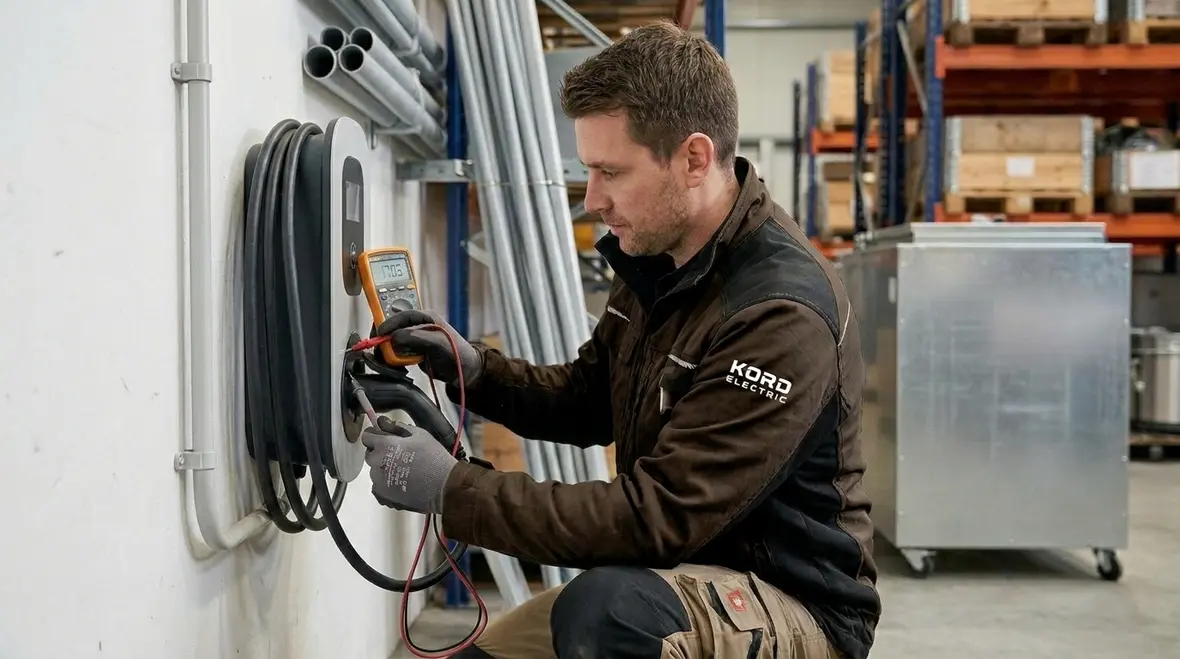
Testing verifies proper voltage at the charger location, correct polarity, grounding integrity, and communication between system components. We also check that each charger starts, responds, and reports status correctly. If a correction is needed, we handle it before drivers depend on the equipment.
Commissioning goes beyond turning it on. We confirm that load behavior aligns with the planned approach for electric vehicle charging for warehouses. We test scenarios that mirror real operations, including concurrent sessions and peak load timing. Then we document the results so your team has clarity.
Because our technicians and expert service staff take pride in the finish, we also include guidance for ongoing operation. We show the facility lead what normal behavior looks like and what alerts mean. That way, maintenance teams and property staff do not guess. They respond, and charging keeps moving.
For many warehouses, this commissioning step also becomes a chance to align EV charging with broader reliability priorities, from panel upgrades to long-term maintenance programs. When electric vehicle charging for warehouses is part of a larger, proactive electrical strategy, facilities are better equipped to support growth without sacrificing uptime.
FAQ about scaling EV charging in warehouses
Take the next step with Kord Electric
Kord Electric helps commercial and industrial facilities scale electric vehicle charging for warehouses with planning, solid electrical work, and steady performance. We design for growth, address voltage stability, and commission the system so it matches real warehouse operations. If your fleet is switching or your tenants and employees demand more charging, we can map a practical path forward. Contact us today to schedule a site assessment and get a build plan your team can trust.
For warehouse leaders looking to weave EV charging into a broader reliability strategy, our team can also coordinate with services such as electrical preventive maintenance for commercial and industrial facilities. Together, these programs support long-term electrical performance from the main service all the way out to the last charger in the lot.