Proactive Electrical Fault Prevention for Commercial Plants
In commercial and industrial facilities, electrical downtime does not show up politely. It arrives like a billing error you cannot ignore. So we use proactive electrical system fault prevention strategies, with targeted monitoring and smart testing, to detect trouble early. Our technicians and expert service staff look for early signs of wear, loose connections, overheating, and hidden insulation issues before they become failures. And just like a good sitcom rerun, the early episode is always easier than the season finale. We build our approach around real-world conditions, because the electrical system in a hospital, data center, or manufacturing building does not care about your schedule.
That is why we focus on detection that happens before damage spreads, and why we document findings so others can act fast. In the next sections, Kord Electric walks through the practical playbook we use every day.
Proactive electrical system fault prevention strategies that prevent surprises in commercial plants
In commercial and industrial environments, the most effective electrical system fault prevention strategies start long before a breaker trips or a panel goes dark. They begin with a mindset: assume problems are building quietly unless you can prove otherwise. At Kord Electric, we treat proactive inspection, testing, and monitoring as standard operating procedure, not a special project you dust off after an incident report. When we apply electrical system fault prevention strategies in hospitals, data centers, manufacturing plants, and major property buildings, we are not trying to eliminate every risk in the universe. We are shrinking the surprise factor and catching faults early enough that repairs feel boring instead of catastrophic.
Those strategies blend several elements: mapping risk across the distribution system, applying condition monitoring tools that actually fit the facility, documenting results in a way that non-engineers can understand, and building reliability directly into the design so faults stay smaller when they do occur. When each of these pieces lines up, commercial teams move from reactive firefighting to calm, methodical control over their power systems. The system may still throw curveballs, but it stops ambushing you on a random Tuesday when production is already behind.
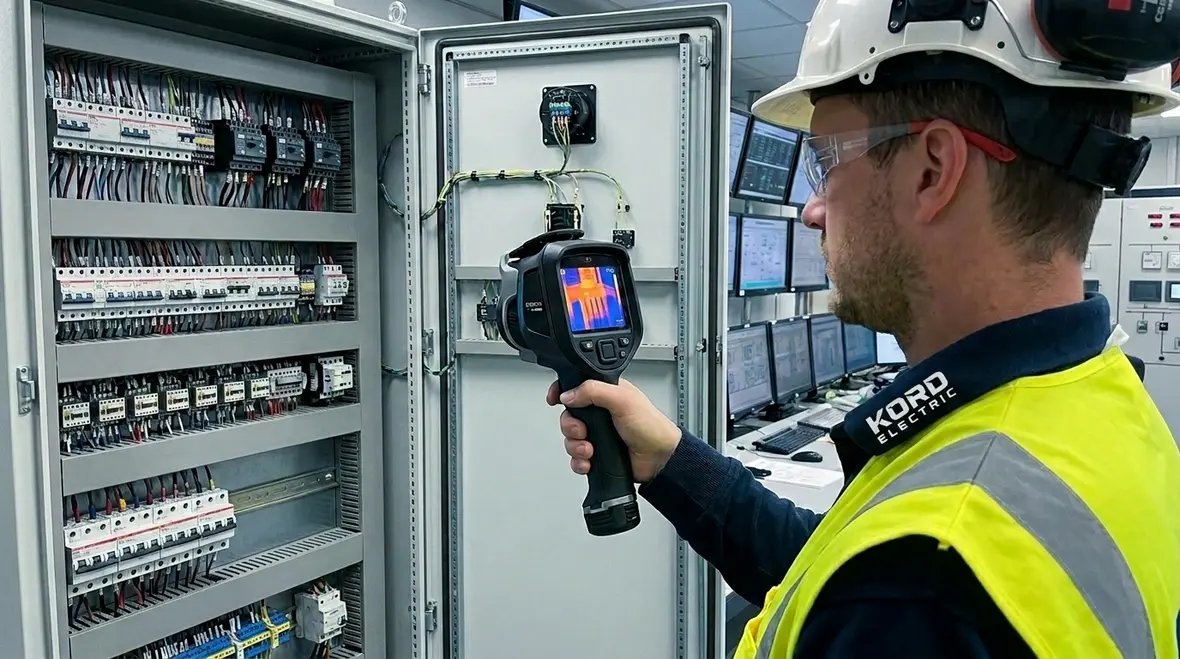
For commercial plant managers, the payoff shows up in fewer emergency shutdowns, less overtime chasing mystery trips, and a calmer, more predictable operating rhythm. Instead of waiting for the “season finale” breakdown, they get smaller, earlier episodes that can be handled during normal maintenance windows. That is the core promise of proactive electrical system fault prevention strategies: fewer plot twists, more control.
Map the risk before it maps you
First, we start with a clear picture of where faults can start and how they can travel. In a major property building, the risk changes by area, load type, and operating pattern. For instance, cooling equipment and process loads may create cycling stress, while standby systems add complexity. Therefore, we build a fault map that connects equipment to failure modes, like breaker problems, feeder issues, busbar hot spots, and control circuit faults.
Next, our expert service staff explains the logic in plain terms. That matters, because facility leaders often need to understand not just what we found, but why it mattered. We do not talk in mystery. We show the path from early signals to likely fault sources, and then we tie those sources to the most effective detection methods.
To keep the plan grounded, we reference design reliability ideas like those discussed in our data center electrical distribution design for reliability guide, especially how careful electrical distribution supports predictable performance. In practice, reliability design helps us know what to watch and where to watch it. The same thinking that keeps a data center calm under load works just as well in a busy commercial plant with heavy machinery and critical support systems.
A good fault map does more than draw dotted lines between equipment names. It ties real-world operating behavior to likely failure patterns. A motor control center that lives in a dusty environment gets different risk scoring than a sealed panel in a climate-controlled electrical room. A feeder that routinely sees rapid load swings earns more attention than a lightly loaded circuit that mostly handles office lighting. When everyone sees these patterns in one place, decisions about where to monitor, what to test, and how often to inspect stop feeling arbitrary and start feeling obvious.
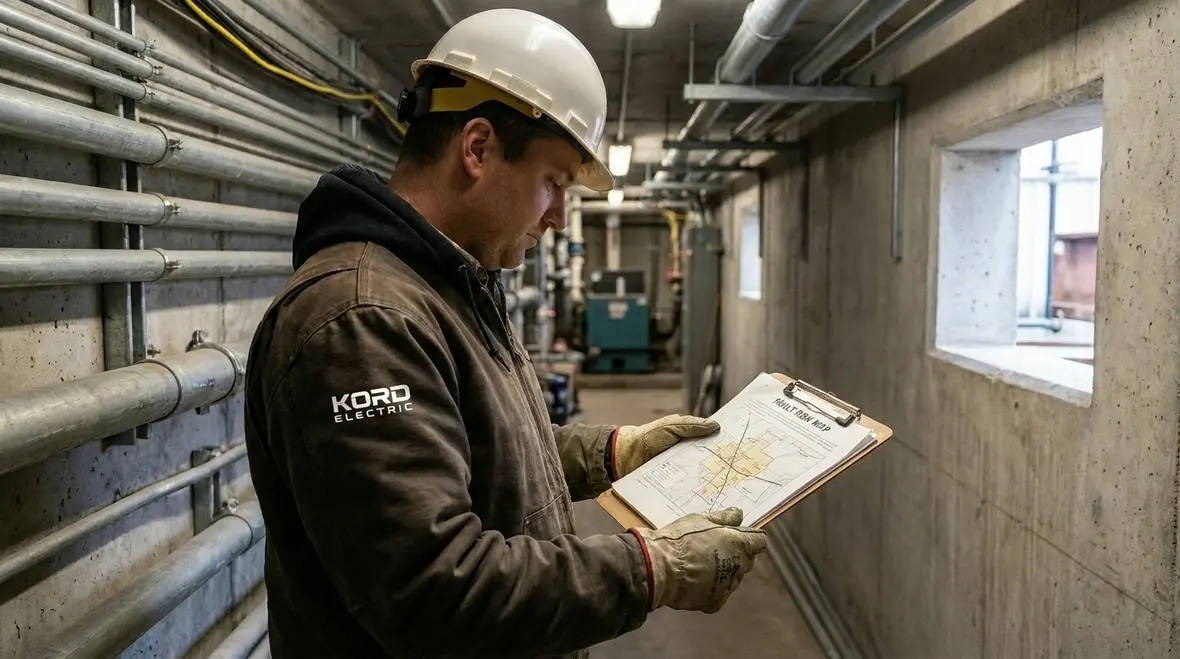
That map also becomes a living reference. As tenants change, production lines move, or data rooms expand, we update the risk picture. Over time, commercial plants build a history of where problems tend to start, which systems behave well under stress, and where to invest the next round of improvements. Instead of reacting to the last failure, they plan around the next likely one.
Use condition monitoring that catches faults early
Once we know the risk areas, we apply condition monitoring that fits commercial and industrial realities. We do not rely on one tool and hope for the best. Instead, we combine methods so one result confirms the next. In a real facility, noise, load swings, and human error can all cloud the picture. Multiple monitoring approaches help cut through that noise and turn scattered readings into a clear story about what is really happening inside the system.
Thermal checks and infrared scans
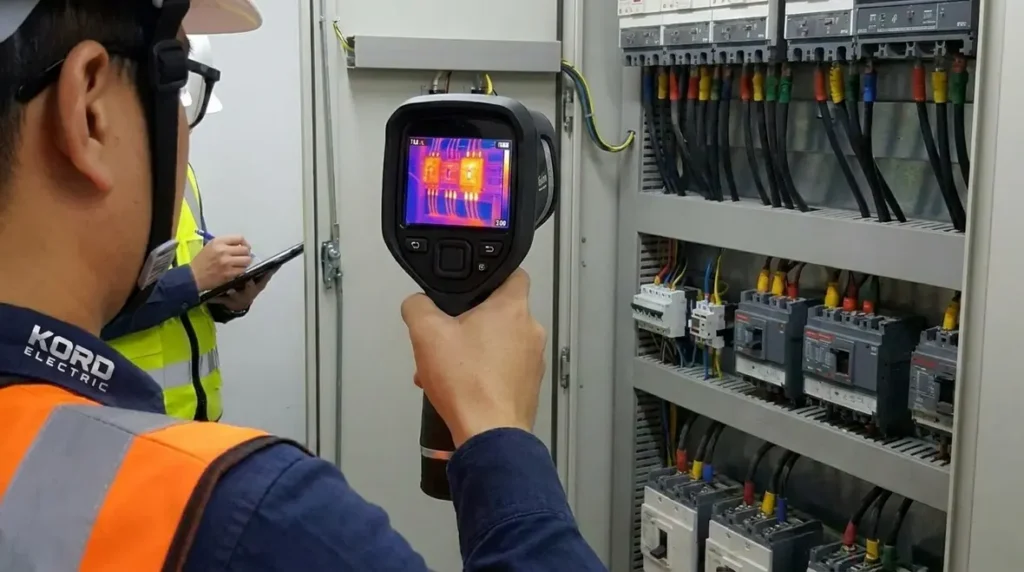
Loose connections and aging terminations heat up before they fully fail. So we perform targeted thermal imaging during stable operating conditions. If a busbar segment or breaker terminal shows abnormal heat, our technicians dig deeper rather than guessing. And when they explain it, they keep it simple: heat means resistance is changing, and changing resistance often means contact issues or corrosion.
Electrical measurements that show hidden stress
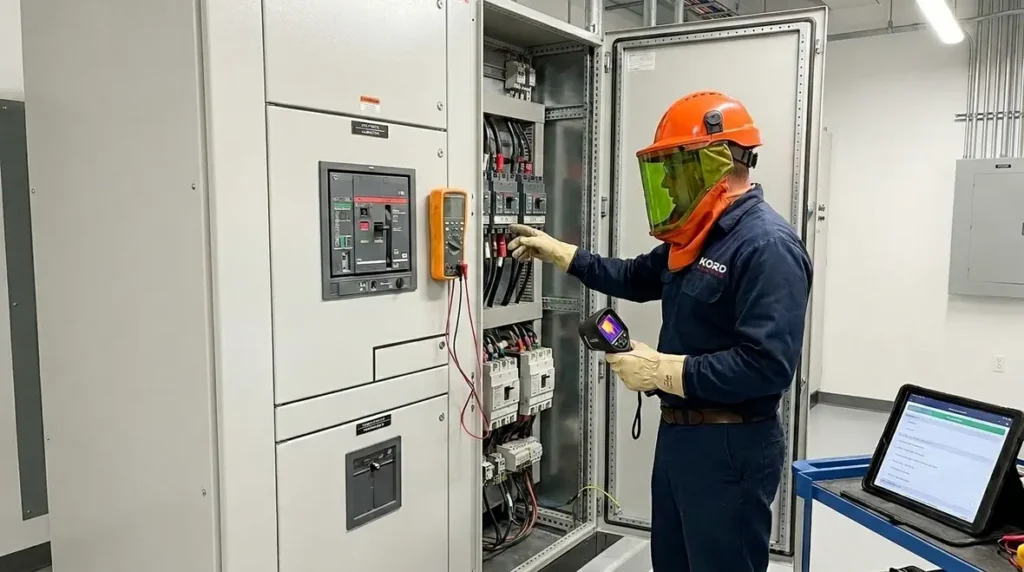
We also track electrical signatures like voltage unbalance, current harmonics, and motor load behavior. Therefore, we can spot insulation stress, failing components, or misalignment long before a trip event. When we review trends, our team focuses on what shifts over time, not just the snapshot.
Insulation testing and continuity checks
In many commercial installations, insulation degradation stays invisible until it becomes a ground fault or breaker failure. So we use insulation testing and continuity verification to assess insulation condition, especially for feeders, panels, and critical circuits serving life safety systems, data rooms, and process controls.
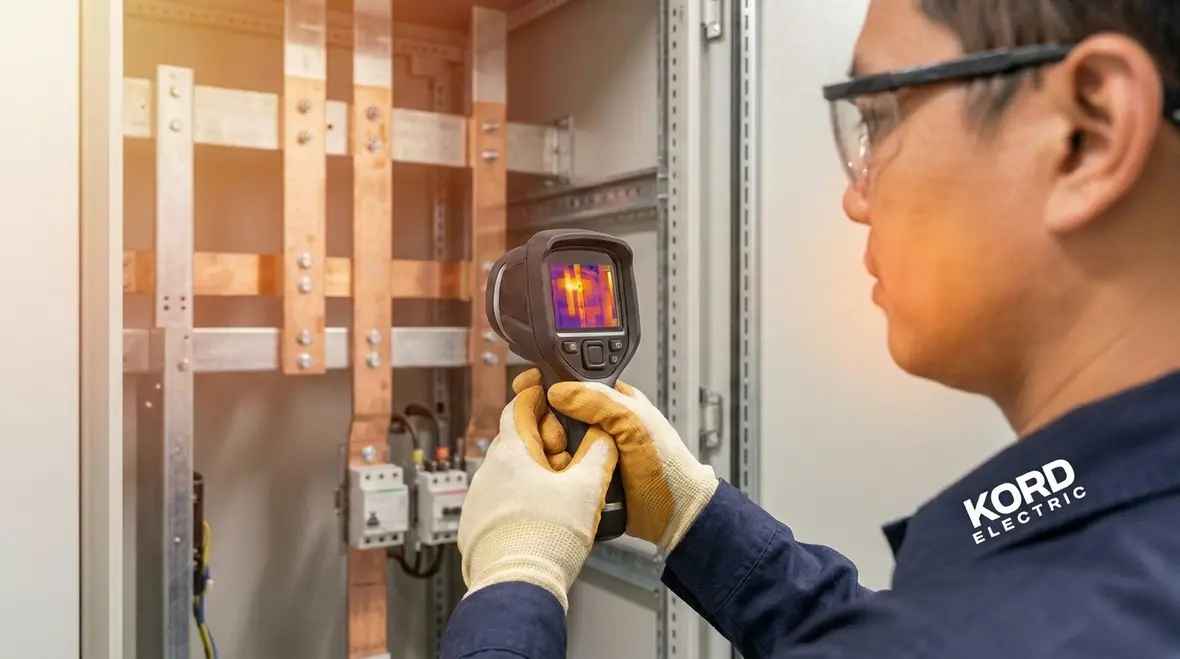
The real power of condition monitoring shows up when we connect these tools. A warm connection on an infrared scan, paired with rising neutral current and a history of minor nuisance trips, paints a strong picture that something is changing behind the scenes. Instead of chalking it up to “one weird reading,” we treat it as an early warning that a fault is trying to form. That mindset shift is one of the quiet but critical electrical system fault prevention strategies we bring into every commercial plant we serve.
Document, trend, and make maintenance decisions with data
Now, detection only matters if it leads to action. So we organize results so facility teams can make confident decisions. We help clients move from “someone said it was warm” to “the terminal ran 18 percent hotter over 60 days.” That style of documentation supports smarter scheduling and better budget planning.
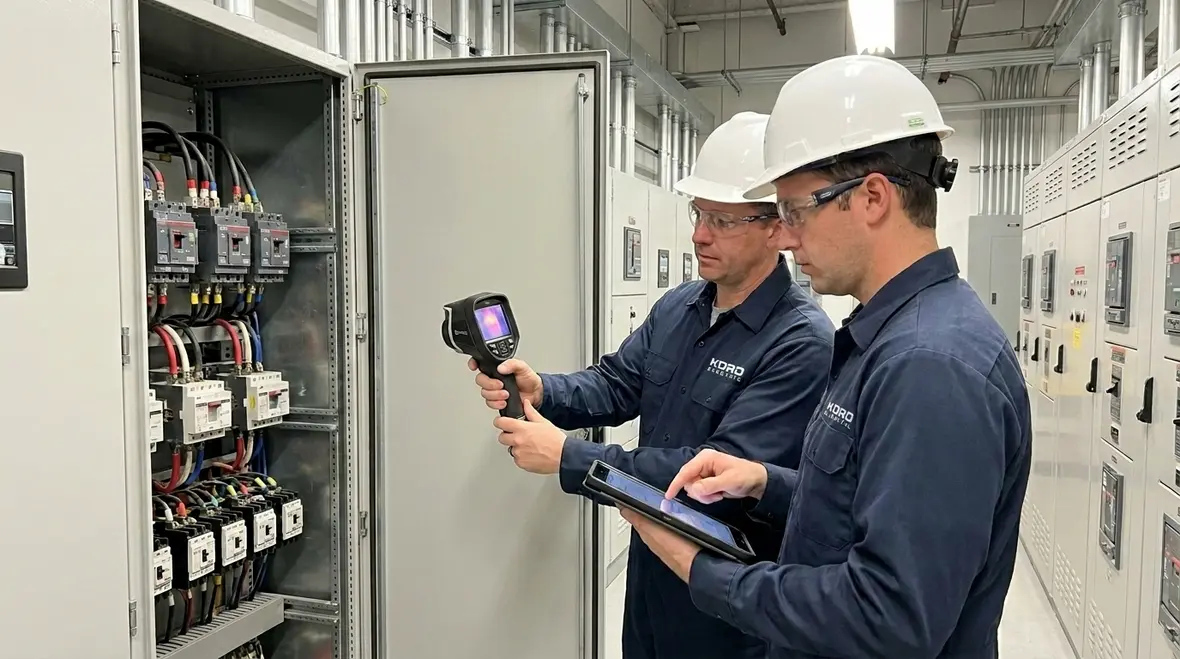
Our technicians and expert service staff often meet with operations managers to explain what the data implies. For example, if trending shows a growing thermal signature at a specific feeder termination, we recommend targeted repair or torque verification before the fault escalates. And yes, we have seen facilities wait until the breaker finally trips like it is auditioning for a reality show. We prefer earlier intervention.
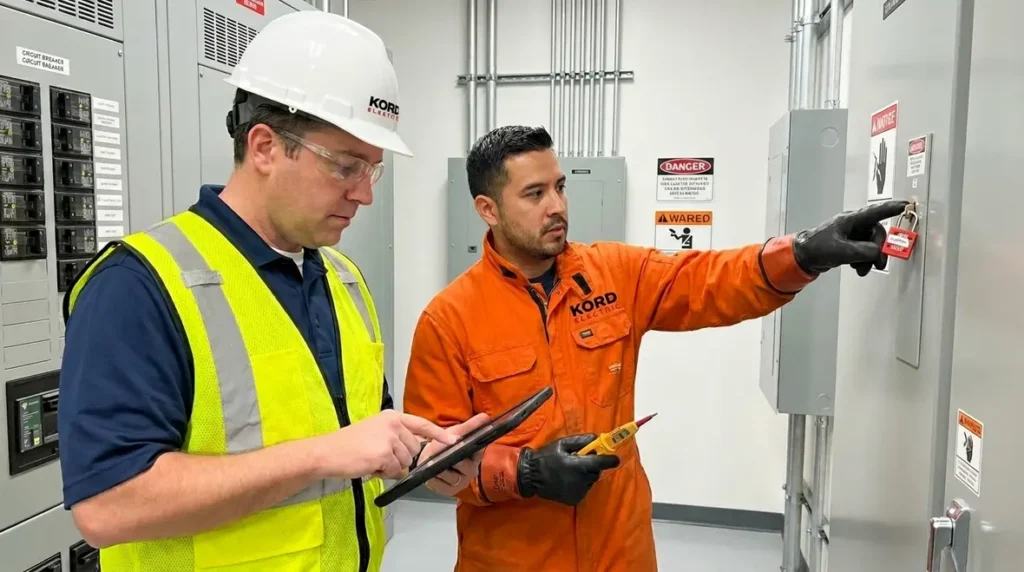
We also recommend a maintenance workflow that fits each building. Then, we define ownership: who monitors, who logs, who escalates, and who signs off on corrective action. When everyone knows the chain of responsibility, faults stop turning into blame games.
Over time, this documentation builds into a long-running health record for the electrical system. Commercial plants can look back and see which panels have needed repeated adjustments, which feeders quietly run cool year after year, and which parts of the facility seem to attract more surprises than others. Those patterns guide capital planning. Instead of replacing equipment because it “feels old,” leaders can point to data showing rising incident rates, increasing thermal stress, or recurring insulation findings. Maintenance stops being a guessing game and becomes an evidence-based strategy.
Design reliability into the system so faults stay smaller
Proactive fault detection works best when the electrical system itself limits damage. That is why we align our detection approach with reliability design. In commercial and industrial environments, we consider how distribution layout affects fault current paths, selectivity, and the ability to isolate problem zones.
For major property buildings, our team helps ensure protective devices coordinate so upstream and downstream breakers work like a well rehearsed ensemble. When coordination fails, a small fault can take out a much larger area. Therefore, we pay attention to selectivity studies and proper protective settings for critical loads.
- clear labeling and separation between critical and non critical loads
- proper busbar and cable management to reduce strain and contamination exposure
- quality installation checks that prevent “future problems” from being planted during construction or retrofits
And because this is a serious topic, we keep the tone steady while still human. Electrical design can feel like a maze, but it does not need to be. With the right structure, others can isolate faults quickly and restore power with less drama.
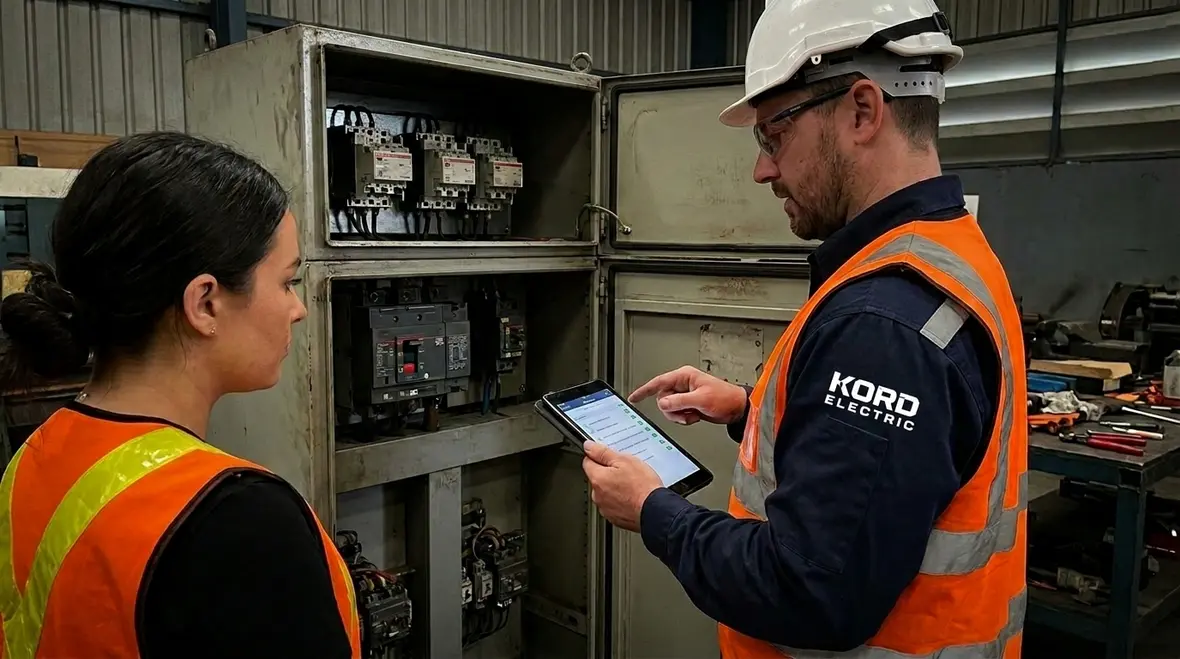
Design choices also influence how effective electrical system fault prevention strategies can be later. A well-labeled, logically arranged switchboard allows technicians to trace problems and verify isolation quickly. A crowded, unlabeled panel with inconsistent breaker types slows everything down and increases the chances of human error. When commercial plants invest in clean, coordinated design up front, every future inspection, test, and repair becomes safer, faster, and less disruptive.
Plan testing and inspection around how commercial buildings operate
Testing is not one size fits all. We plan it around occupancy schedules, process windows, and uptime requirements. Since commercial and industrial facilities often run on strict shifts, we build test windows that reduce risk while still gathering real evidence.
For example, we time thermal imaging when loads are high enough to reveal abnormal heat, but we avoid moments that disrupt operations. Likewise, we schedule breaker inspections when maintenance crews can respond quickly if we find issues. Therefore, our clients get results that matter, not just data gathered during convenient but misleading conditions.
We also tailor inspections by equipment criticality. A switchboard feeding process controls needs more frequent attention than a non critical circulation circuit. Yet, we do not ignore the “smaller” items because they can become the first domino. When a facility supports critical systems, our approach focuses on reliability and fault prevention strategies that reduce both immediate outages and long term degradation.
This scheduling mindset helps commercial plants avoid a common trap: doing all the “big” testing during a convenient shutdown, then forgetting about the everyday equipment that quietly runs year-round. Instead, we blend major inspection windows with lighter-touch checks that fit into normal operations. Over time, the facility gets a continuous stream of insight, rather than a single thick report that gets filed away after a shutdown.
Coordinate response so a detected fault does not become a prolonged outage
Detection gives teams a head start. However, response planning determines the final outcome. We help clients create a clear action path for when we find a risk signal or confirm a problem.
Our technicians explain severity and likely cause based on the evidence. Then, we recommend a repair or mitigation plan that matches the system type and operational impact. This might include torque correction, component replacement, cleaning, insulation work, protective device tuning, or targeted verification testing after repairs.
We also align response with business continuity. In a major propertie building, downtime can trigger cascading effects across tenants, security systems, and critical services. So we coordinate with stakeholders in advance, define isolation boundaries, and verify that critical circuits remain stable during maintenance.
Think of it like disaster planning, except the disaster is a likely fault. We treat it with calm focus, not panic, because panic usually costs more time than the fault itself. When response steps are rehearsed and documented, commercial teams can move quickly: notify the right people, isolate the right equipment, perform the right repair, then verify, document, and restore. The system gets fixed, the outage window stays smaller, and the incident report reads more like a short story than an epic novel.
FAQ: Proactive fault detection in commercial electrical systems
Ready to reduce fault risk in your commercial or industrial facility
Kord Electric helps major property buildings detect electrical issues early, so faults stay smaller and outages stay shorter. Our technicians and expert service staff combine monitoring, testing, and reliability focused planning to support electrical system fault prevention strategies that you can trust. If you want a calmer, more predictable power system, contact us for a proactive assessment. We will review your equipment, discuss your uptime needs, and map a practical detection plan. Then we help your team act before problems escalate.
If your facility is ready to go beyond basic fault finding and into a long-term reliability program, you can also explore how our commercial and industrial electrical maintenance plans support ongoing inspections, thermal imaging, and power quality checks for large properties. Pairing a proactive fault detection strategy with a structured maintenance program gives commercial plants a full toolkit for keeping power steady, even when the operating schedule never slows down.
And when you need a partner for new construction, upgrades, or complex system changes, Kord Electrical Services can support commercial, industrial, and government sites with reliable construction and maintenance expertise. From heavy industrial plants to busy multi-tenant properties, their reliable electrical services help ensure that today’s improvements and tomorrow’s expansions both support the same goal: fewer surprises, safer operations, and fault prevention strategies that hold up under pressure.