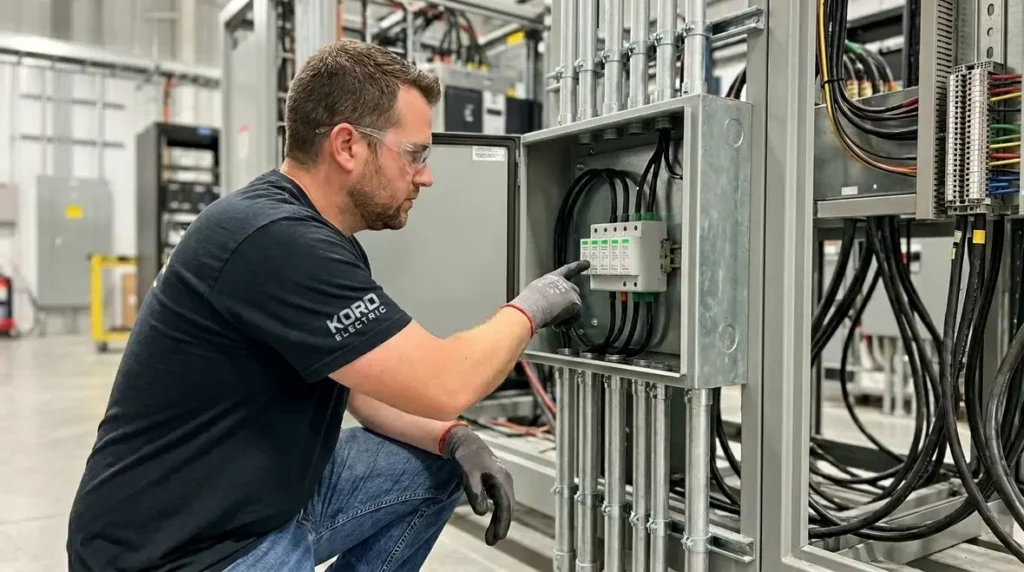
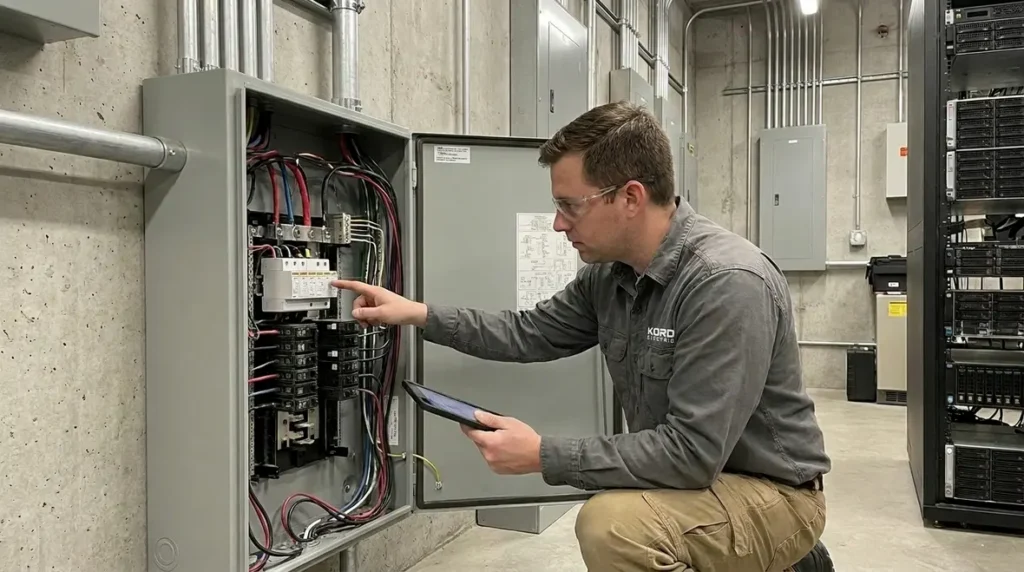
Electrical Fire Prevention California Commercial Buildings
When people think about electrical fire prevention california commercial buildings, they often picture dramatic sparks and a smoke alarm that shows up “just in time.” In our experience at Kord Electric, the real story is quieter, and it starts long before flames. It starts with failing connections, overloaded circuits, poor maintenance, and small issues that grow like mold in a corner no one wants to look at. In California, heat, dust, vibration, and tight schedules can pressure electrical systems in commercial and industrial facilities and major property buildings. So we focus on practical steps that protect occupants, protect operations, and protect owners from the kind of downtime that ruins a quarter.
What causes electrical fires in CA commercial and industrial buildings
Electrical fires rarely come out of nowhere. Instead, they build from heat, friction, and resistance that grow over time. To keep things clear, our expert service staff usually explains it like this: electricity moves through wiring and equipment, and when the path is not healthy, resistance increases. Then heat increases. And then, eventually, you get smoke, melting insulation, arcing, and fire risk.
Here are the big causes we see in electrical fire prevention california commercial buildings programs across warehouses, retail centers, office campuses, and industrial buildings:
- Loose or corroded connections in panels, junction boxes, switchgear, and motor leads, which can create hot spots
- Overloaded circuits where demand stays high and protective devices do not keep up
- Damaged insulation from physical wear, pests, moisture, or poor installation practices
- Faulty equipment such as worn breakers, failing transformers, or motors with internal wear
- Improper wiring modifications where someone “just added a quick line,” and now the system carries a new load it was never meant for
And yes, pop culture got it wrong. Fires are not usually triggered by one magical lightning bolt from the sky. In the real world, it is the small overlooked detail, the one that keeps humming until it cannot anymore.
How to stop hot spots before they turn into flames
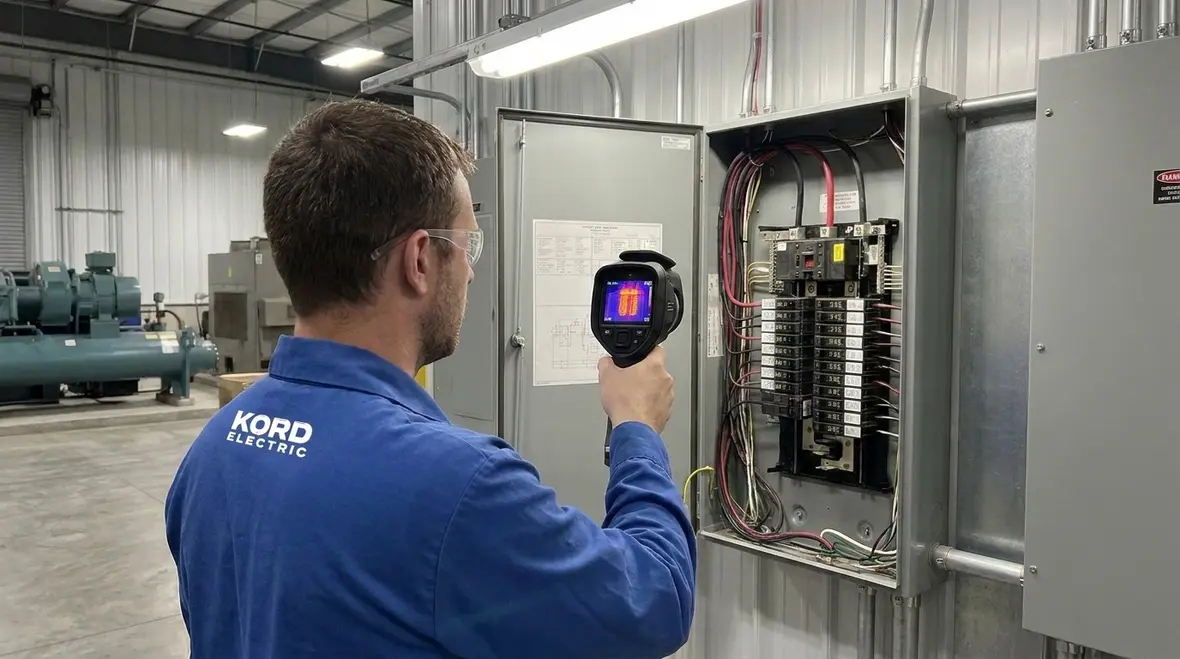
Hot spots are the early warning sign that many building teams miss. They usually show up first as slight discoloration, a lingering burning smell, flickering performance, or nuisance breaker trips. However, by the time someone notices, the damage may already be done. That is why we push prevention through detection and disciplined maintenance.
First, we inspect the electrical distribution system with a focus on where heat tends to collect. Panels, bus bars, terminations, and switchgear are common trouble zones because they concentrate current. Then, we test and verify connections. Next, we document what we find so facilities teams can track risk over time.
Our technicians also guide staff on what to watch for during routine rounds. For example, if a panel cover feels unusually warm, if a breaker keeps tripping after being reset, or if you see repeated odors near mechanical areas, those are not “mysteries.” They are signals. And like a sitcom, the plot does not get better when you ignore it.
Prevent overloads during high demand shifts
Commercial buildings do not operate the same way at 2 a.m. that they do at 2 p.m. Loads change with HVAC cycles, production schedules, refrigeration, charging stations, lighting upgrades, and event nights. When demand spikes and protective systems do not match the actual load profile, failure risk rises.
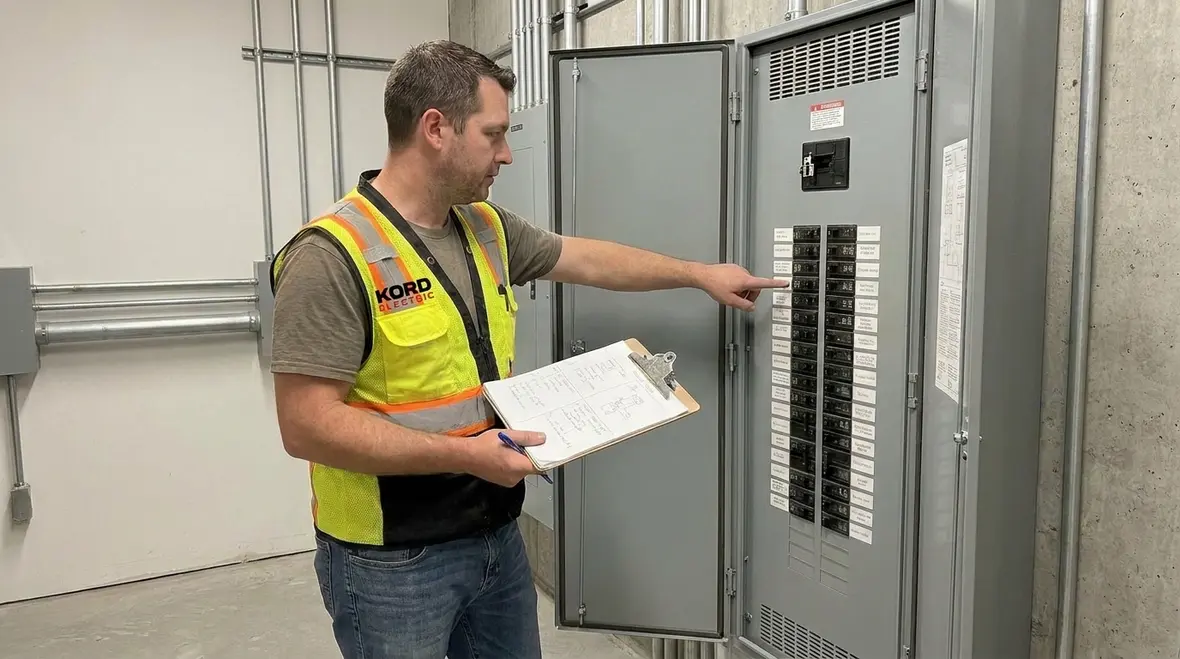
To support electrical fire prevention california commercial buildings, we help owners and managers build electrical systems that can handle real use, not just “design-time math.” That means reviewing panel capacity, feeder loads, and downstream equipment ratings. It also means looking at harmonics and power quality issues when equipment adds electronic loads.
Our expert service staff explains the “why” in plain language. They tell teams not to treat overload symptoms as a nuisance, because repeated stress ages components faster. Over time, that aging raises resistance at connections and increases heat. And then the building starts acting like it is getting tired, even if the rest of the staff thinks the building is fine.
Why maintenance records protect your building and your budget
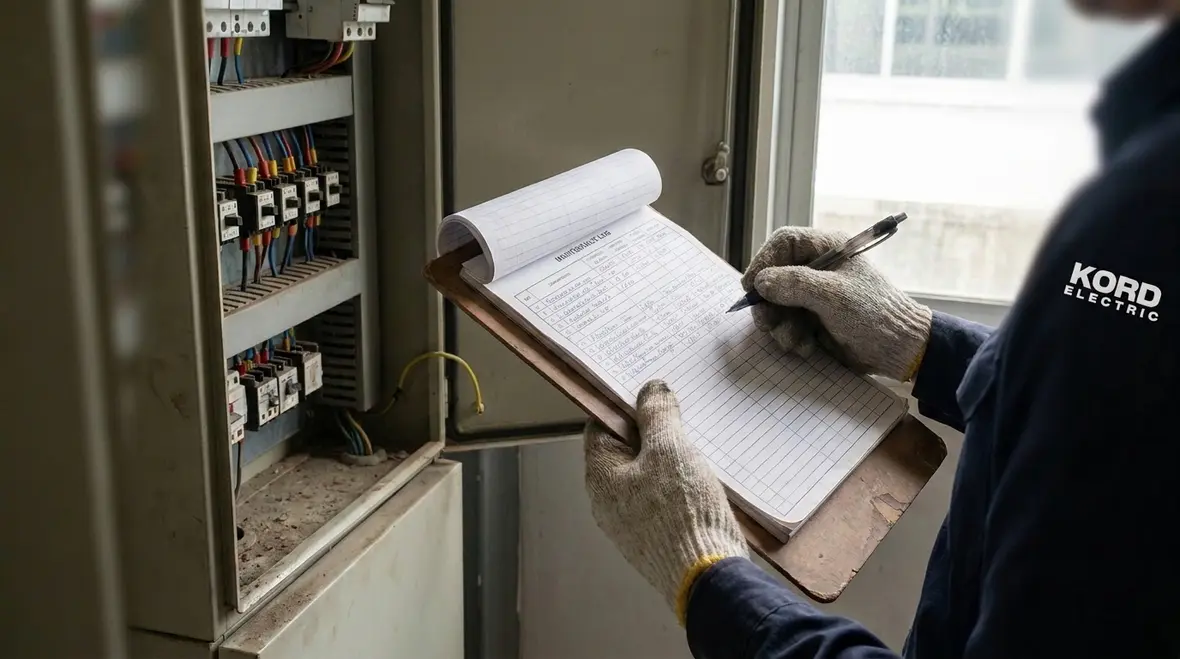
Facilities teams often juggle a long list of priorities. Still, maintenance records matter because they tell you whether problems repeat or fade. When Kord Electric works with a commercial or industrial facility, we treat documentation as part of the electrical safety plan, not as paperwork for its own sake.
We recommend a simple approach: inspect, test, correct, and record. Then review the trends. For example, if we find a loose termination at one panel, we do not just tighten and move on. We ask why it loosened, we check similar terminations nearby, and we note patterns so the same issue does not return in six months.
In the field, our technicians also help teams understand how to align electrical work with operations. If a motor controls panel needs attention, we plan around production windows. If switchgear requires an outage, we schedule it with care. That way, safety improvements do not turn into surprise downtime. It is the difference between being proactive and playing “guess the breaker.”
Safer wiring and equipment choices for commercial properties
Not all electrical systems age the same way. Installation quality, material selection, and environmental exposure make a difference. California buildings face heat, dust, and sometimes moisture, especially near loading docks, bathrooms, basements, and mechanical rooms. In major property buildings, multiple tenants may add loads over time. That creates change, and change can create risk if the system was not designed to evolve.
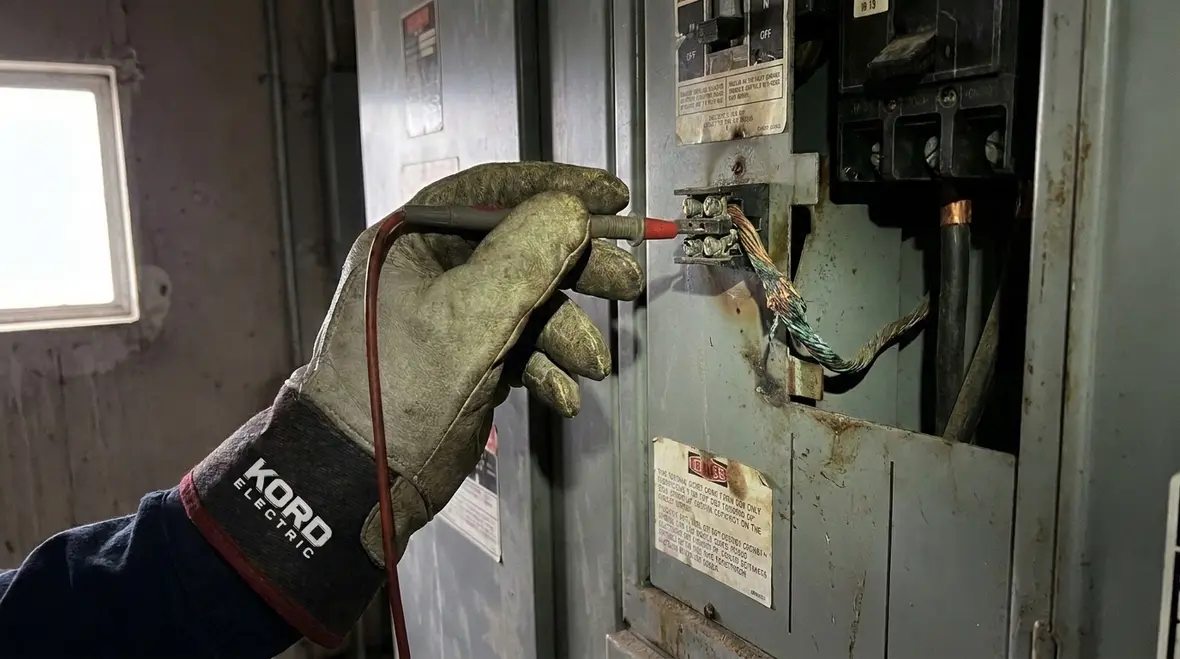
We help commercial and industrial owners make safer choices by focusing on wiring integrity, grounding and bonding, and correct equipment matching. Grounding supports safe fault clearing. Proper bonding reduces stray voltage and helps protective devices work as intended. Correct equipment ratings keep heat and stress under control.
Then we verify the system after work is complete. A common mistake is assuming “it looks right” means “it is right.” Our expert service staff does not rely on eye tests alone. We use testing and inspection methods that confirm performance. If something does not meet expectations, we address it. That is how we keep prevention from becoming a brochure phrase.
Training, reporting, and the human side of fire prevention
Most electrical fire prevention failures are not caused by a lack of equipment. They come from a lack of follow-through. That is why we build a safety process that includes people, not just hardware. Our technicians explain what they find and what actions they recommend, and they give facilities teams clear next steps.
In practical terms, we encourage a simple reporting culture. If anyone in a warehouse, office, or industrial site notices repeated breaker trips, unusual heat at equipment, discolored wiring, or strange sounds from panels, they should report it. Then the team should respond quickly. Slow response turns small faults into larger ones.
We also support training for responsible staff. When staff understand the difference between normal operational noise and arcing sounds, they can catch issues earlier. And when staff know how to describe what they saw, our technicians can diagnose faster. That cuts time, costs, and stress for everyone involved.
What a strong electrical safety plan looks like
A strong plan does not rely on luck. It connects inspections to actions, actions to documentation, and documentation to future planning. For commercial and industrial facilities and major property buildings, we typically build a program around risk areas and operating patterns.
Our approach often includes these elements:
- Regular inspections of distribution panels, terminations, switchgear, and major loads
- Testing and verification to confirm connections and protection devices operate correctly
- Load review to match equipment capacity to real demand and seasonal changes
- Targeted corrections for worn components, heat-damaged wiring, and unsafe modifications
- Maintenance schedule updates based on findings and documented trends
When a program is consistent, electrical systems do not “surprise” anyone. They run, they stay stable, and they stay within safe limits. If that sounds too calm, trust us, it is calmer than the alternative. The alternative is chaos with a smoke smell.
If you want to go deeper on how systematic design and maintenance support safety, you can also review Kord Electric’s guide on electrical fire prevention for commercial buildings and related topics like power quality and emergency power design in our blog.
FAQ
Ready to reduce electrical fire risk in your commercial facility
If you want peace of mind, start with a real safety plan, not guesswork. Kord Electric works with commercial and industrial facilities and major property buildings to identify weak points, verify performance, and schedule corrections before small issues grow. Our technicians explain findings clearly, so your team knows what matters and what happens next. Contact us today to review your electrical system and build an electrical safety approach that keeps your operation steady. Let’s prevent the problem before it ever has a chance to start.
For properties across Los Angeles County, our dedicated Los Angeles County commercial and industrial electrical services support everything from new installations to preventive maintenance and repair. When your facility needs a partner that understands both uptime and safety, we are ready to help you build a calmer, more reliable electrical future.
If you are evaluating your current protection, distribution, or maintenance strategy, you can also connect this electrical fire prevention approach with related Kord Electric services such as emergency power design, power quality analysis, and comprehensive commercial electrical troubleshooting. Together, these programs keep your building ready for real-world loads, California conditions, and the long-term demands of your tenants and operations.