Electrical Infrared Thermography Inspection
Electrical infrared thermography inspection: the calm, early warning system for commercial power
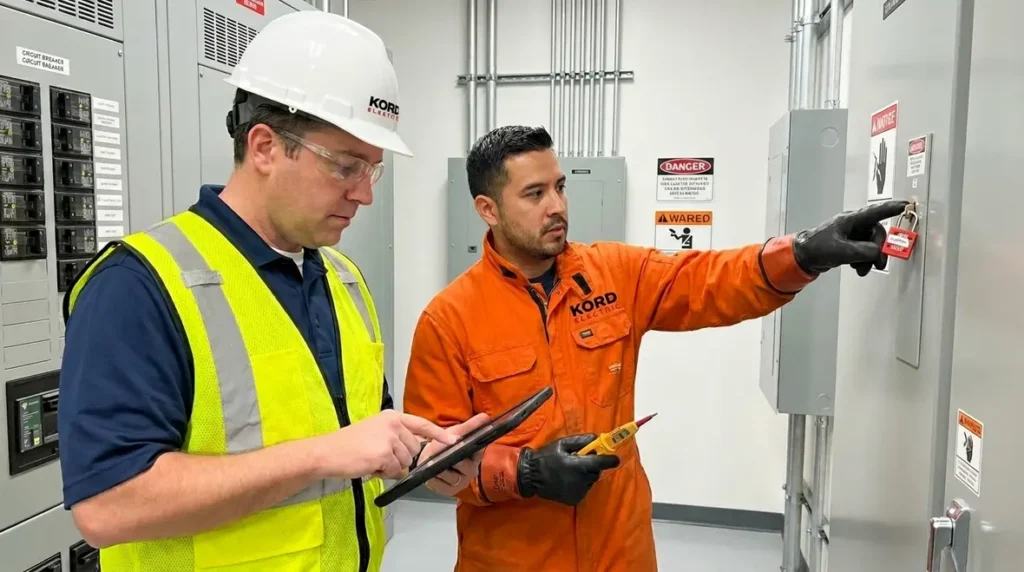
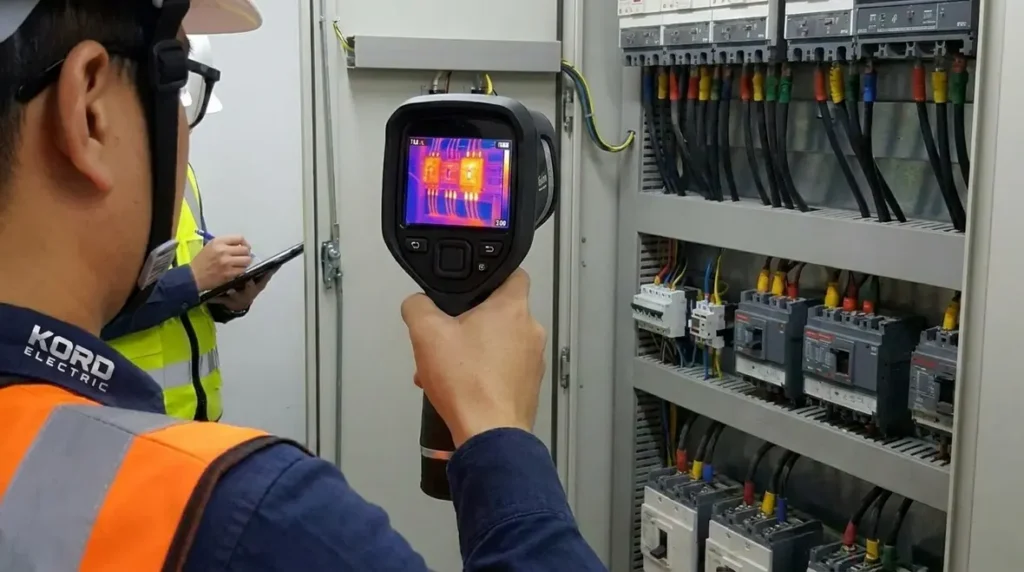
At Kord Electric, we use Electrical infrared thermography inspection to spot hidden electrical faults before they grow teeth. In the intro we also want to make one thing clear: when heat shows up where it should not, the building usually tells the truth first. Our technicians scan panels, connections, bus bars, and motor circuits with infrared cameras while the system runs under real load. Then they compare what they see against expected temperature patterns, so the team can plan repairs instead of reacting during a failure. Think of it like a smoke detector, but for electricity. And yes, it helps prevent the “surprise outage” moment that ruins everyone’s day, including the guy who always says, “It was fine yesterday.”
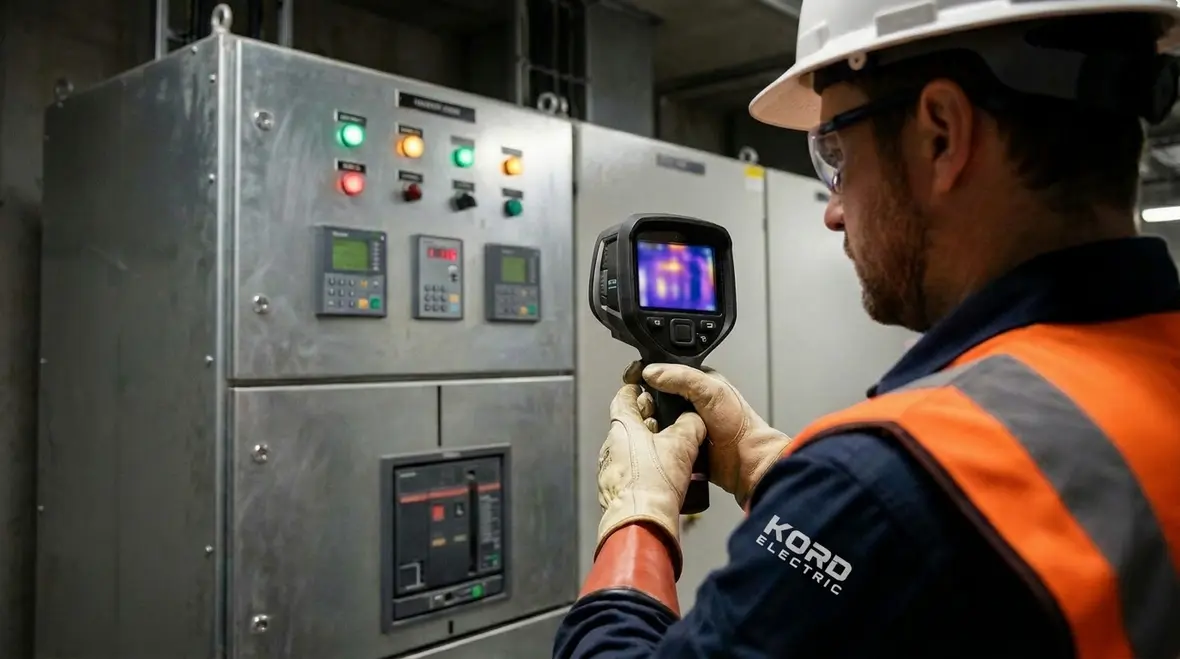
Commercial and industrial properties across Los Angeles run on the idea that power will simply be there when they need it. Electrical infrared thermography inspection is the calm early warning system that quietly checks whether that assumption is still safe. Instead of waiting for equipment to fail loudly, we look for the subtle temperature drift that says, “Something here is not happy” long before breakers trip, insulation breaks down, or a production line takes an unscheduled break.
That early signal matters because most hidden issues begin with tiny imbalances: a termination that was almost tight enough, a bus connection that picked up a film of corrosion, a motor feeder lug that lost torque after years of thermal cycling. The building feels those shifts long before anyone notices a smell or a sound. Thermography lets us see those early changes as clear, repeatable images that support smarter decisions, not guesswork.
Why hidden heat becomes a real business risk in facilities
Commercial and industrial facilities live and breathe on stable electrical performance. Yet most trouble starts quietly. Over time, insulation ages, torque relaxes on terminations, and corrosion creeps into contact points. As a result, current finds a slightly easier path, and the resistance rises. That rise creates localized heat. Then the heat speeds up the damage, and soon the fault becomes harder to fix.
Infrared methods help because they measure surface temperature without opening anything first. Therefore, we can find anomalies in load bearing systems while operations continue. Moreover, our expert service staff explains what each thermal pattern means in plain language. They do not just say “it is hot,” they show why that heat matters for long term reliability, safety, and downtime cost.
In many buildings, a small connection problem can lead to a chain reaction. A panel overheats, protective devices respond late or incorrectly, and downstream components get stressed. This is not a theory. We see it in warehouses, manufacturing plants, data rooms, and large property buildings where every minute matters. And when heat escalates, the repair window shrinks fast.
Hidden heat also stacks on top of other invisible risks. Overloaded circuits, aging switchgear, and makeshift tie-ins all push infrastructure closer to its limits. When that stress combines with rising temperatures, failures stop being abstract possibilities and start becoming calendar events.
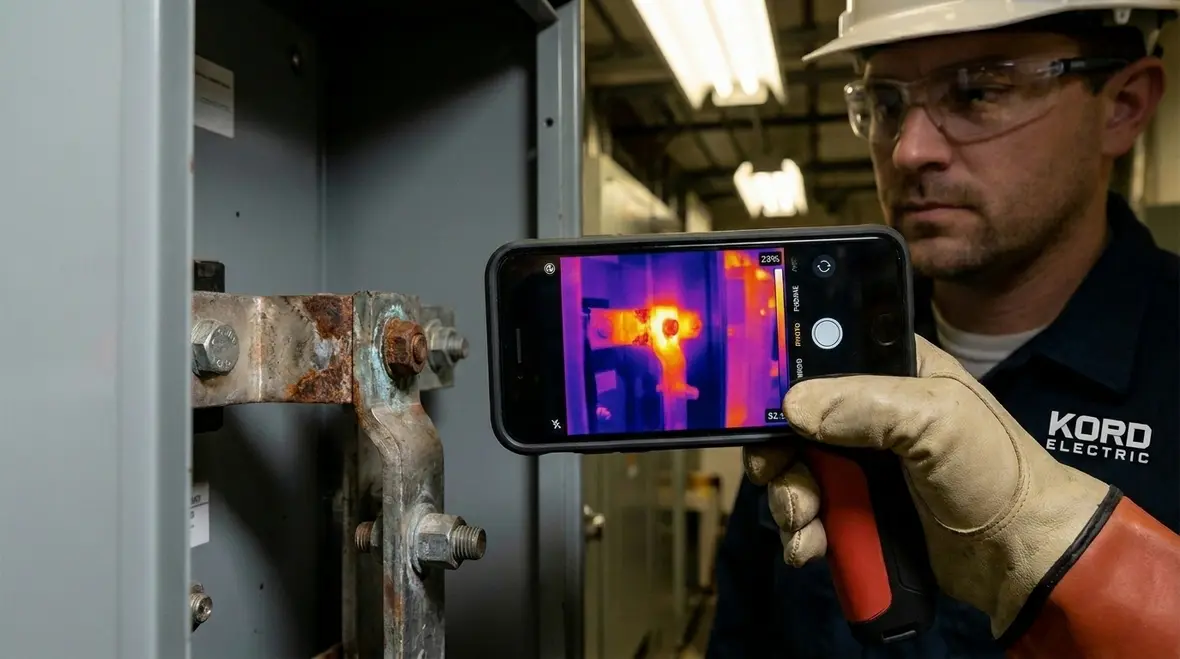
That is why many facility leaders now treat Electrical infrared thermography inspection as part of a broader risk-reduction strategy, alongside practices like tracking hidden electrical risks in commercial buildings and formal electrical maintenance planning. When you connect the dots between thermal behavior, load patterns, and system condition, “mystery outages” become much less mysterious.
Turning temperature into decisions, not just pictures
A thermal image by itself is just a colorful picture. What matters is the interpretation: how far above normal that temperature really is, how long it has likely been rising, and what that means for the equipment’s remaining safe operating time. Our technicians use real world experience, load context, and industry guidelines to keep the focus on risk, not just numbers.
How infrared thermography spots electrical faults before failure
Infrared thermography works because electricity follows the laws of physics, even when people do not follow the maintenance calendar. When current flows through a connection, the contact quality influences resistance. Higher resistance produces more heat at that spot. Consequently, the camera captures the temperature distribution, and our technicians interpret the patterns.
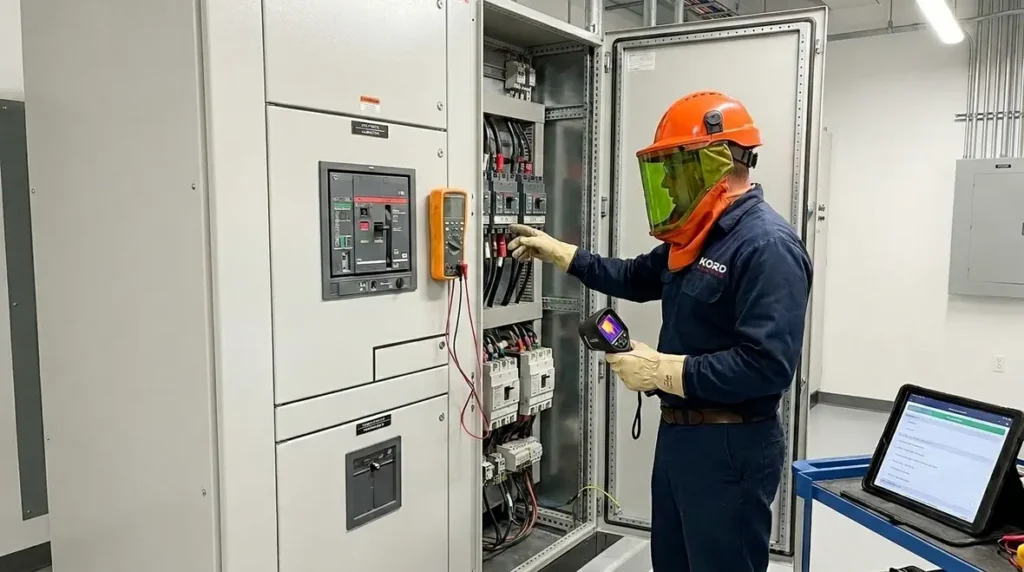
Here is how the process usually unfolds in a facility setting. First, our team schedules the inspection around normal operations. Next, we scan specific equipment: switchgear, distribution boards, MCCs, transformer connections, bus ducts, and critical motor feeders. Then we map the hotspots against the equipment’s design and typical operating behavior.
Importantly, we also account for context. Temperature alone can mislead if load varies, if ambient conditions change, or if the surface coating affects emissivity. Therefore, our expert service staff documents conditions so the readings stay meaningful. In plain terms, they verify that the temperature is not just a camera trick, but a true signal.
When we identify thermal irregularities, we often narrow the cause. For example, a hot lug can point toward a loose termination. A hot phase imbalance can suggest a connection or load issue. A repeating pattern on multiple identical components often signals a common installation or maintenance problem. After that, our team recommends targeted corrective actions such as tightening, re-terminating, cleaning, or replacing affected parts, based on inspection findings.
From infrared image to maintenance work order
Every Electrical infrared thermography inspection we perform is designed to plug directly into your maintenance workflow. High severity findings may require same-day investigation under an emergency work ticket. Lower severity issues can be rolled into scheduled outages or paired with broader electrical preventive maintenance so labor, access, and shutdowns are all planned in one coordinated effort.
What our technicians check on commercial and industrial equipment
Not every scan looks the same, because not every facility runs the same way. Still, we follow a disciplined approach that focuses on components where faults usually start. Our technicians begin with the highest risk equipment and the areas that affect uptime the most.
Typical targets include
Switchgear and panelboards for hot bus joints, breaker connections, and cable terminations
Transformers for abnormal loading patterns and connection heat
MCCs and motor circuits for phase imbalance, starter issues, and feeder hotspots
Bus ducts and large conductors where tightening and corrosion issues can hide
Critical tie ins where feeders converge and a small fault affects many loads
Then we capture images at the right time so the readings align with stable current. Additionally, our team cross references labels, wiring diagrams, and prior maintenance records when available. That way, we connect a thermal anomaly to the exact electrical location, not to a vague “something in there.”
And yes, we know it is tempting to treat this like a “scan and pray” task. But we do not. We treat it like a diagnostic step that leads to corrective work, because that is how facilities stay reliable.
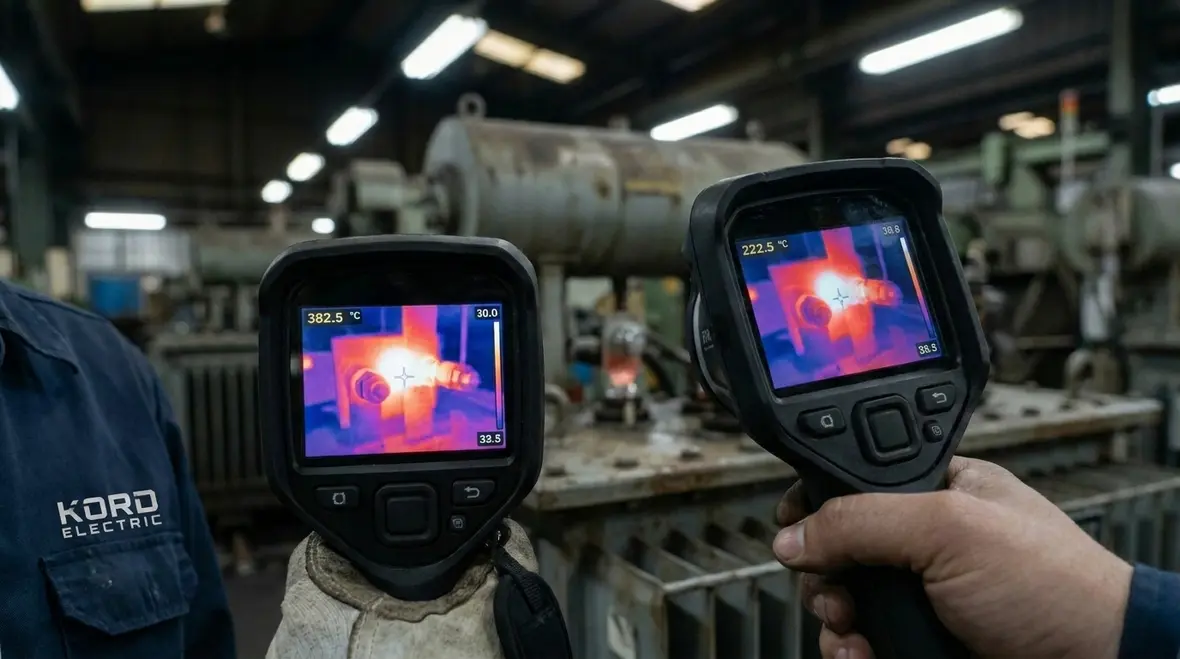
Over time, these inspections also help your team build a real, evidence-based story about how your infrastructure behaves. Combined with insights from topics like commercial and industrial electrical maintenance plans, that story supports better budgeting, better scheduling, and fewer nasty surprises when loads increase or equipment ages.
Inspection planning and reporting that your team can actually use
Infrared thermography inspection only helps if it turns into action. At Kord Electric, we plan the job with the people who run the building, not just with the camera. We coordinate access, identify critical uptime windows, and confirm which equipment deserves priority.
Next, our expert service staff explains the findings in a structured way. Instead of confusing jargon, they translate thermal results into electrical risk. Then we propose next steps based on severity, location, and operational impact.
In most reports, our team includes clear images, temperature notes, and a practical recommended response. For example, a high priority hotspot on a main connection may require immediate investigation. A lower severity irregularity may still deserve scheduled corrective action before it becomes a forced outage. Furthermore, our technicians support maintenance planning by pointing out patterns that suggest systemic issues, such as repeated weak terminations across multiple feeders.
We also advise on how to verify repairs after corrective work. A follow up scan can confirm the temperature behavior improved, which helps your team close the loop. In commercial and industrial settings, that is the difference between guessing and managing.
Bringing thermography into your wider electrical strategy
For many properties, Electrical infrared thermography inspection sits alongside other services such as voltage diagnostics and emergency response. When a thermal scan reveals components that are already running too hot or too close to their limits, tying those findings to past issues like voltage fluctuations in commercial and industrial facilities or previous outages helps your team decide where to invest next, not just what to fix today.
Electrical infrared thermography inspection vs. opening panels
Some teams only discover problems after they open equipment. That method can work, but it can also cost time, disrupt operations, and still miss early thermal drift. Meanwhile, thermography can reveal the issue while everything is still in service, with minimal downtime.
Therefore, we position infrared scanning as a proactive tool. We use it to locate suspect areas, then we plan selective investigation. That approach reduces unnecessary equipment opening. It also helps ensure the work targets the real trouble spot, not the loudest guess in the room. (Electricians have guesses. We respect that. But we still prefer evidence.)
However, thermography does not replace good electrical testing and proper repairs. It guides where to look, and then the team performs the right corrective steps. After repairs, we can repeat scans to confirm the temperatures normalize. That mix of detection, correction, and verification strengthens reliability and supports a defensible maintenance strategy.
In short, the best outcomes come when facilities treat infrared data as a decision tool, not a one time photo session.
How thermography supports emergency response and compliance
When something does fail unexpectedly, a history of Electrical infrared thermography inspection makes emergency service faster and more precise. Technicians can compare current conditions against prior images, zero in on components that were already trending hot, and reconnect the dots between damage and root cause. That evidence helps shape future work, supports documentation, and can inform broader upgrades under services like emergency electrical repair and response.
FAQ: fast answers for facility managers and maintenance leads
Facility managers, operations leaders, and maintenance teams often ask similar questions the first time they consider thermography. Here are some of the most common, along with straightforward answers that keep the focus on real-world decisions instead of theory.
Conclusion and next steps with Kord Electric
If your facility values uptime, safe power, and predictable maintenance, Kord Electric can help. Our technicians perform infrared scanning with a clear goal: detect hidden heat signatures, explain what they mean, and guide the repair plan so problems do not snowball into outages. Reach out to us for an Electrical infrared thermography inspection tailored to your commercial and industrial equipment. Then we will schedule a scan, deliver findings you can use, and help your team act before the next “surprise” day arrives.
For multi-site portfolios and large properties, pairing thermography with structured electrical preventive maintenance programs and rapid-response emergency electrical services gives you both an early warning system and a trusted response plan when issues surface. And if your operations stretch across the region, Kord Electric’s broader Los Angeles County electrical services ensure your facilities receive consistent, compliant support wherever they operate.
In other words, you do not have to wait for equipment to fail loudly before you act. With Electrical infrared thermography inspection, your building finally has a way to raise its hand early and say, “Something here needs attention” while there is still time to fix it on your terms.