Electrical Problems Requiring Commercial Electrician
If a business facility starts acting up, the fix is rarely “just flip the switch.” In fact, electrical problems requiring commercial electrician attention often show up as flickering lights, repeated breaker trips, warm panels, or equipment that refuses to run at the worst possible time. And when that happens, the wrong approach can turn a manageable issue into a costly shutdown.
At Kord Electric, we focus only on commercial and industrial facilities and major property buildings. So when others try to handle these problems like it is a home repair, we step in with a steady process. Below, our expert technicians explain what to watch for, what causes these failures, and how our troubleshooting helps keep operations stable.
What electrical issues signal a commercial emergency
Sometimes the first sign is loud, like a burning smell near a panel. Other times it is subtle, like a charge that runs through the building at random. Electrical problems requiring commercial electrician service usually share one thing: they impact safety, production, or both.
Our team commonly sees issues that fall into these categories. First, there are symptoms tied to power quality. Then there are symptoms tied to wiring, protection devices, or load management.
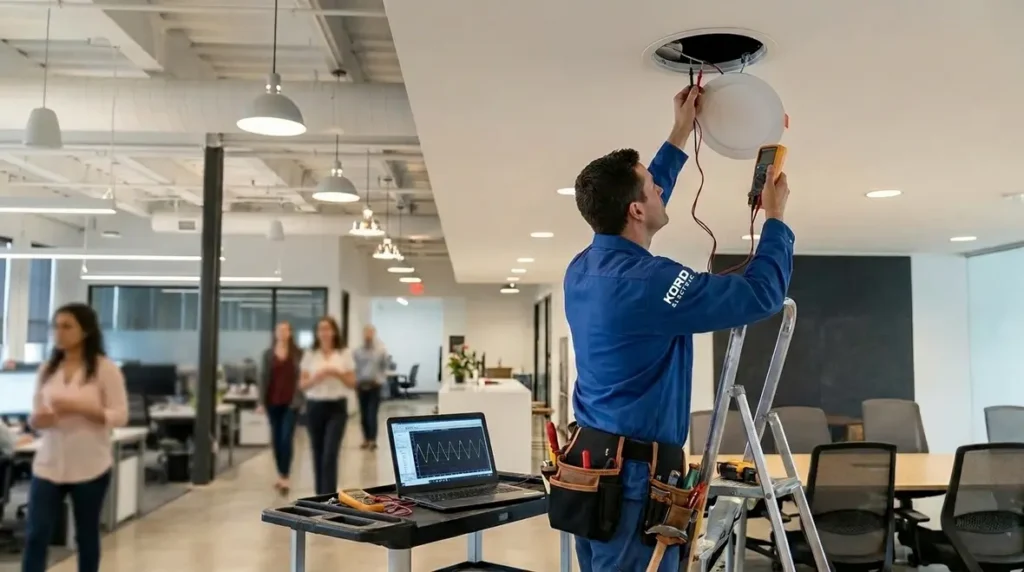
Flickering or dimming lighting during normal business hours, not only during storms
Frequent breaker trips that happen after specific equipment starts
Warm or buzzing electrical panels, especially when a load increases
Unusual odors or scorch marks around outlets, junction boxes, or switchgear
Motors that struggle or overheat, leading to shutdowns
And yes, even though we would love for electrical systems to behave like well trained office interns, they do not. When signs like these show up, a licensed commercial expert needs to diagnose the cause, not guess it.

How power quality problems quietly damage commercial systems
In commercial buildings, power quality issues tend to hide in plain sight. While lights might still turn on, equipment can slowly lose efficiency. Therefore, even if the facility seems “fine,” the underlying problem can wear down motors, drives, controls, and sensitive electronics.
Technicians at Kord Electric often troubleshoot symptoms that point to these culprits:
Voltage dips when large equipment cycles on
Harmonics from variable frequency drives, rectifiers, and modern power supplies
Loose connections that create intermittent resistance and heat
Grounding problems that raise noise and interfere with controls
To explain it simply, think of power quality like a quiet drummer in the back of a band. You might not notice the beat at first, but it messes with the whole performance. Likewise, a building can run for days or weeks while equipment takes damage in the background.
Our expert staff uses a structured approach to confirm what the system is doing. Then we match the findings to the load patterns in the facility. As a result, the fixes target the real cause instead of treating the symptom.
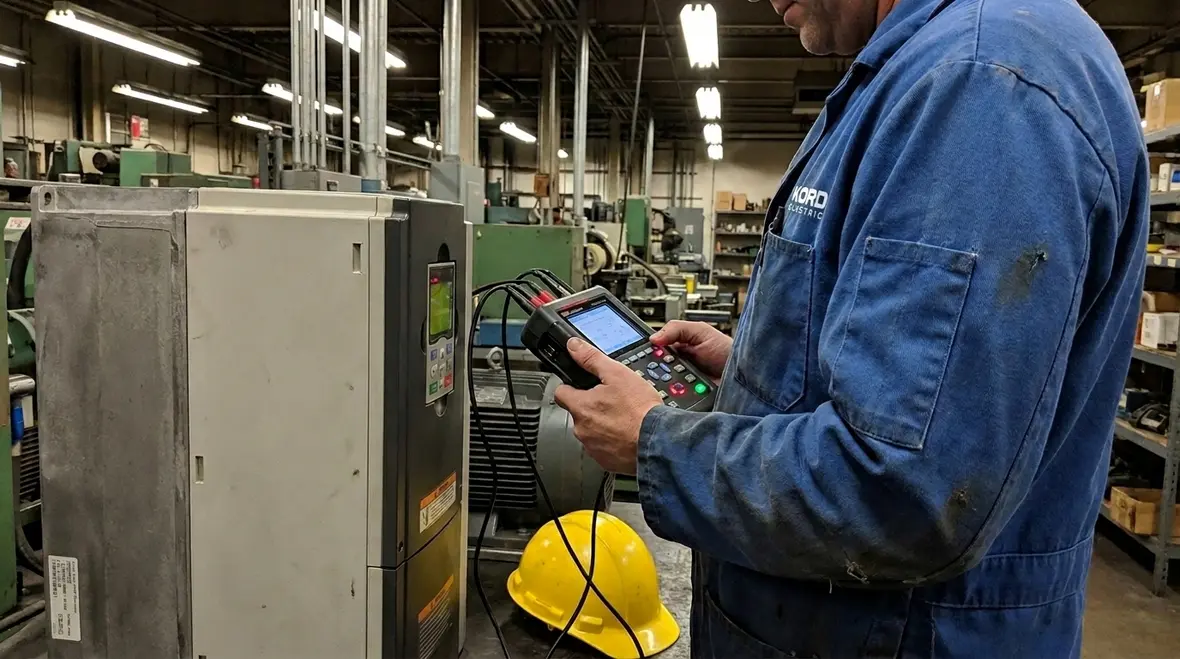
For facilities that want to dig deeper into these hidden factors, pairing this kind of troubleshooting with a focused review like Kord Electric’s industrial power quality analysis for throughput can help reveal how power behavior affects uptime and production.
Why breakers trip and what that usually means
Breaker trips look simple. One minute, the circuit works. Next minute, it does not. However, in a commercial setting, recurring trips usually indicate a bigger story.
When breakers trip, the building may experience one of these conditions: an overload, a short circuit, an arc fault, or abnormal current drawn by failing equipment. Meanwhile, the breaker may also be the wrong type, incorrectly sized, or degraded after years of service. And if a contractor just resets the breaker again and again, the system keeps cycling toward failure.
Our technicians do more than reset. First, they identify what changed. Then they test and verify the circuit behavior under load. After that, they inspect connections and devices for signs of heating, damage, or drift from specifications.
They check load profiles to see which equipment starts before the trip
They inspect terminals and splices for heat discoloration or looseness
They evaluate breaker condition and compatibility with the system design
They confirm ground fault and arc fault performance when applicable
In many cases, what looks like “the breaker problem” is actually a equipment or connection problem. And that is why our team insists on diagnosis, not superstition. Resetting a breaker repeatedly is like rebooting your phone every time someone says “network issues.” Eventually, you need to call the carrier.
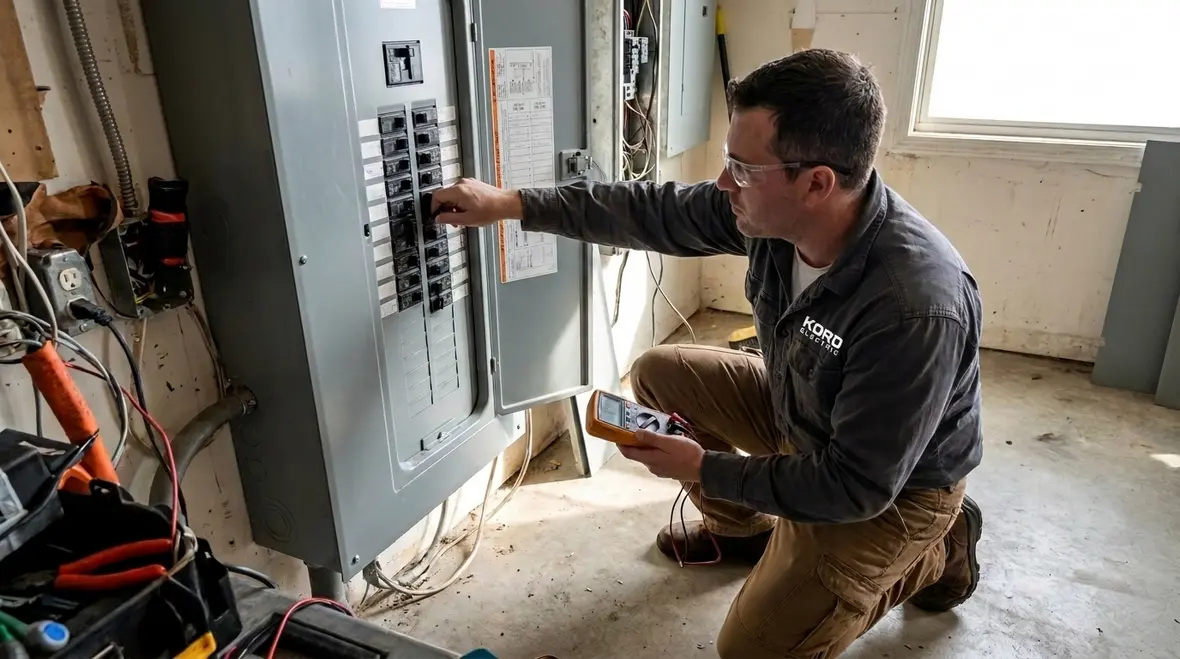
If your facility is already dealing with nuisance trips or unexplained shutdowns, Kord Electric’s approach in their commercial electrical troubleshooting guide for facilities shows how a structured process brings systems back to stable operation instead of chasing random resets.
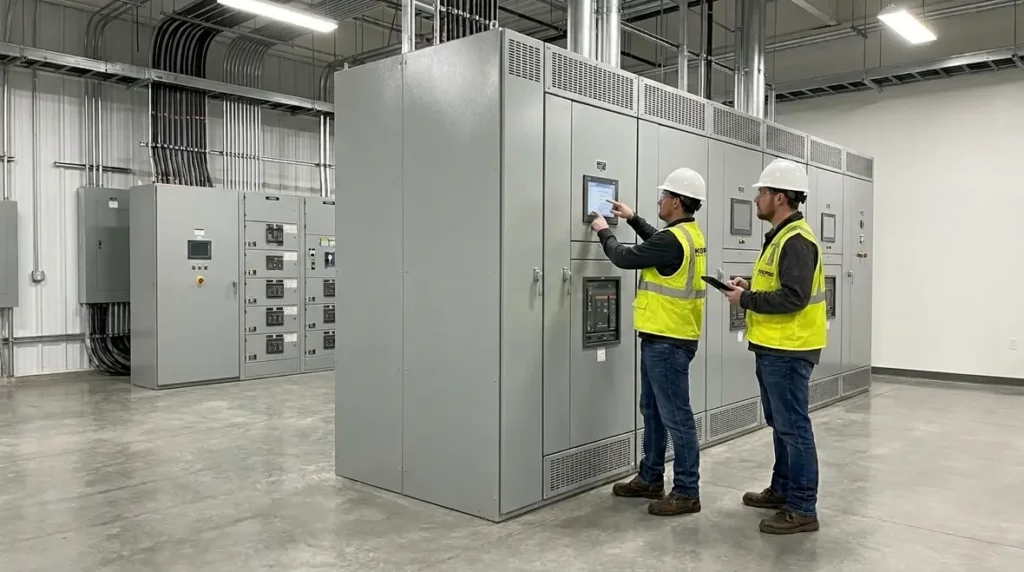
Panel hot spots, buzzing sounds, and the safety risk no one should ignore
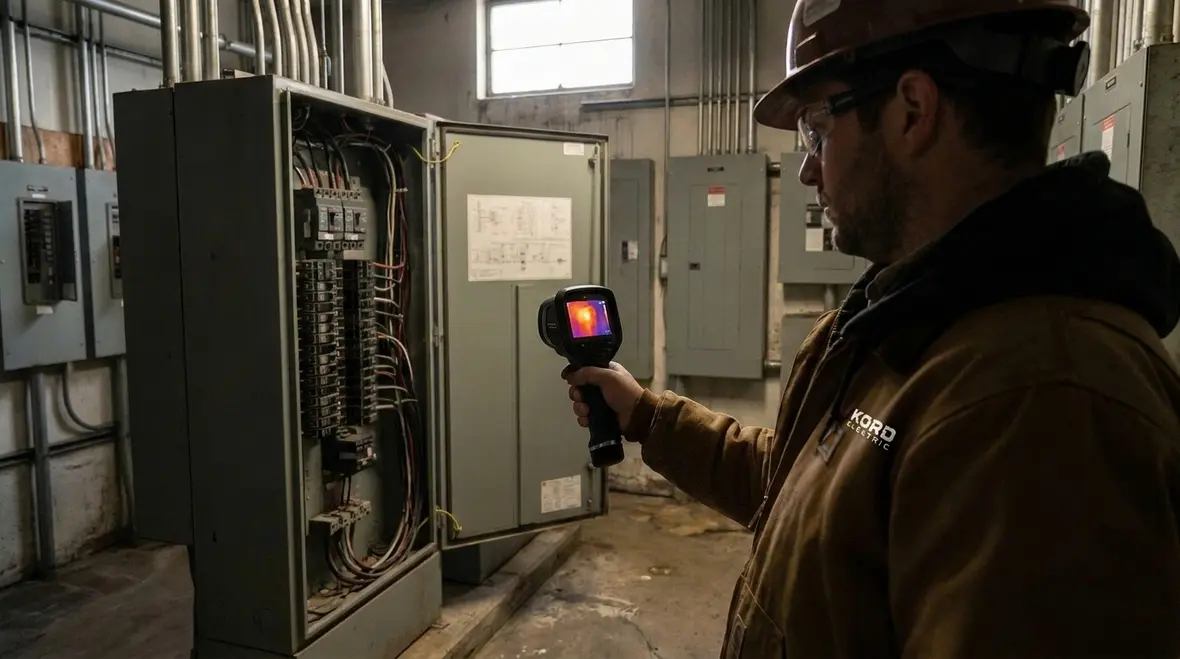
If a panel feels warm or emits a buzzing sound, a technician should inspect it right away. Electricity does not care about your schedule. So when heat builds inside switchgear or distribution panels, it can damage insulation, loosen bus connections, and increase the chance of an arc event.
Many commercial properties rely on equipment that runs continuously. Therefore, even small defects can grow quickly. Kord Electric’s expert service staff explains what they look for during troubleshooting, including:
Loose bus bar connections that create resistance and heat
Worn breaker contacts that increase temperature under load
Moisture intrusion or contamination that affects conductivity
Missing torque values or improper installation practices
Next, our technicians use testing and inspection to confirm the exact source. Then we recommend repairs that match the commercial environment, including safe shutdown planning when needed. We keep the process clear so facility managers know what is happening and why.
And because we operate in the real world, we also help you avoid those “temporary fixes” that later become permanent problems. In other words, we handle it before it becomes a horror story that starts with “We thought it was probably fine.”
Tripping circuits after equipment starts: motors, drives, and controls
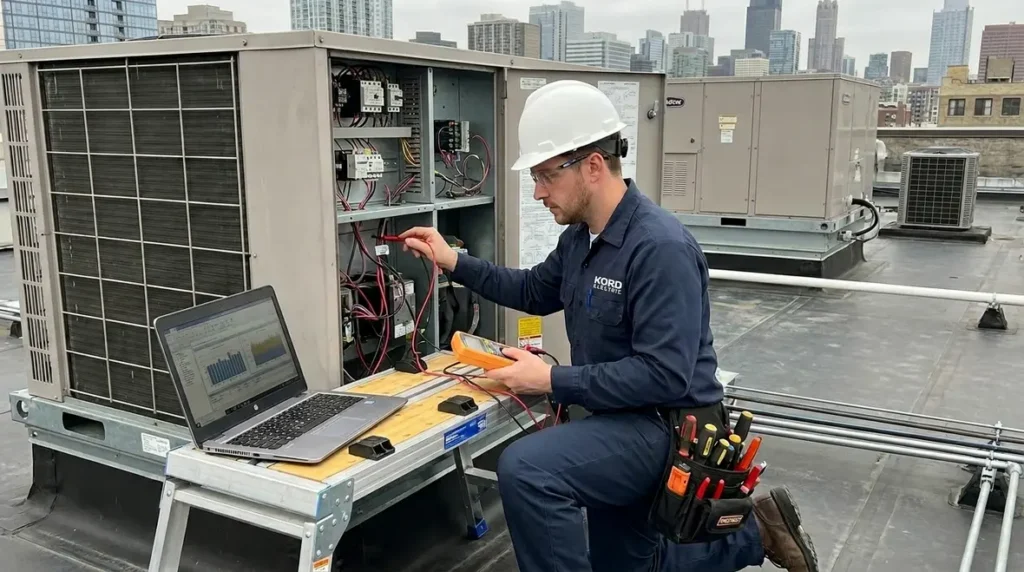
Commercial facilities often run high motor loads: HVAC systems, pumps, compressors, conveyors, and industrial fans. When a circuit trips right after a specific machine starts, the cause often sits inside that equipment or the power path feeding it.
Electrical problems requiring commercial electrician attention show up in this pattern constantly. The facility may experience normal operation until a motor kicks on. Then the breaker trips, or voltage dips disturb other systems.
Our technicians treat this as a coordinated puzzle. They verify motor health, check protection settings, and examine starting conditions. At the same time, they inspect wiring and terminations that carry higher starting currents.
Motor overloads from mechanical resistance or worn bearings
Failed starters or contactor issues that create misfires
Incorrect settings on variable frequency drives
Wiring problems like high resistance connections
Once our experts identify the root cause, we outline next steps that support uptime. Then we coordinate recommendations around operational needs. After all, the goal is not just to stop the trip. The goal is to keep production steady.
Inspections and troubleshooting steps that reduce downtime
In commercial and industrial facilities, troubleshooting must move quickly and accurately. Otherwise, the building loses time and sometimes money. Kord Electric uses a method that respects both safety and schedule.
Our expert service staff typically follows a clear path. First, they review what the building team reports: when the issue starts, what equipment runs at the same time, and what changed recently. Next, they inspect the visible components that can reveal heat, wear, or damage. Then they test with safe procedures suited to the system type.
To keep things practical, we also track how the problem behaves. For instance, flicker might appear only on one panel. Or a trip might happen only when two processes overlap. Therefore, we focus on patterns because patterns tell the truth.
Site walkthrough with facility staff to confirm symptoms and timing
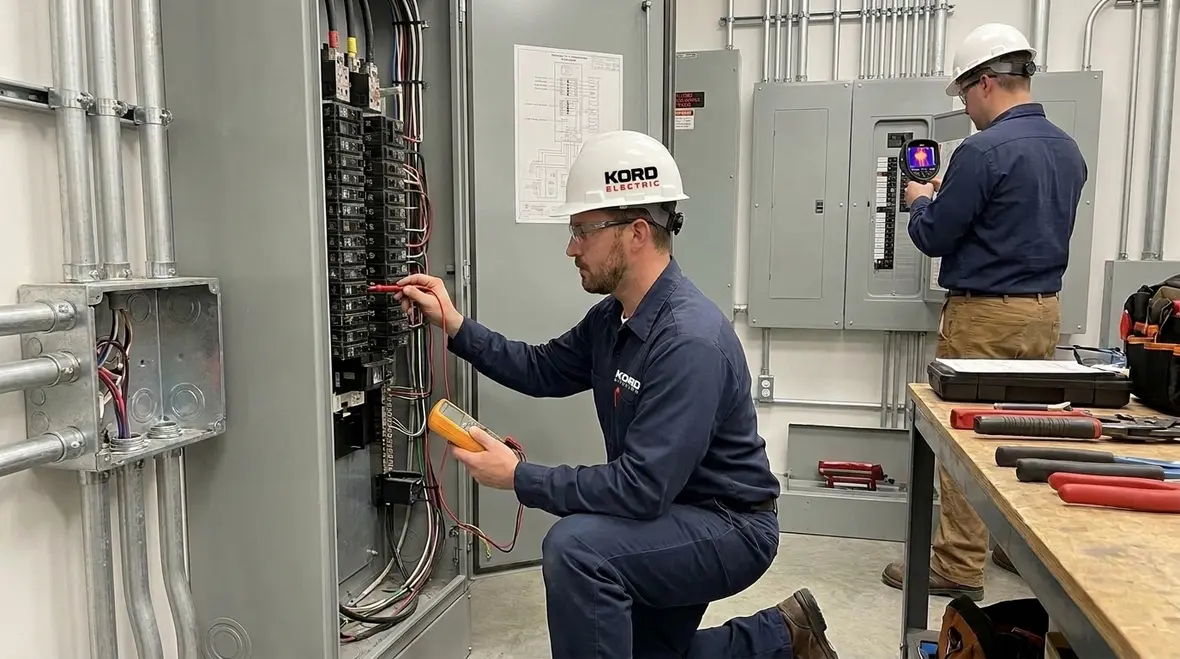
Inspection of panels, terminations, and protection devices
Testing to check voltage stability, current behavior, and load impact
Root cause analysis to avoid repeat failures
Repair or upgrade recommendations aligned to commercial needs
And if you are wondering, yes, our technicians do explain what they find. That way, facility teams know what to expect next. It reduces confusion, lowers repeat calls, and turns “mystery electrical gremlins” into solved problems. Pop culture fans will recognize that vibe as the difference between vague hand waving and a real investigation.
For properties across Southern California, this kind of steady process supports larger goals too, like long-term reliability planning and broader projects similar to the work outlined on Kord Electric’s Los Angeles County electrical services page, where preventative thinking and troubleshooting experience shape system upgrades.
FAQ
Call Kord Electric for calm, fast commercial troubleshooting
When electrical problems start disrupting operations, you need more than a quick reset. You need a commercial electrical team that finds the root cause and restores stable power. Kord Electric serves commercial and industrial facilities and major property buildings with expert technicians who explain findings and next steps in clear language. If you see flicker, heat, buzzing, or repeating breaker trips, contact us now. We will help you stop the problem before it grows, and keep your business running steady.
If your building is already seeing warning signs, pairing a service call with targeted help from Kord Electric’s commercial electrical troubleshooting guide for facilities can give you insight into what is happening behind the panels and how a structured plan prevents repeat outages.
From distribution issues to recurring trips and surprises during high-load periods, Kord Electric can also connect troubleshooting with broader projects like panel upgrades, emergency power planning, and capacity assessments, so your system is ready for the next phase of growth, not just the next reset.
To explore ongoing support or project-based work built around your facility’s needs, you can also review their dedicated service overview for the region on the Los Angeles County electrical services page and coordinate a visit that fits your schedule.