Commercial Electrical Troubleshooting Guide Industrial Sites
At Kord Electric, we often start with one simple thing when a commercial site acts up: we follow a clear commercial electrical troubleshooting guide that our expert service staff and technicians use to find the root cause, not just the symptom. In this article, we walk through how we investigate power issues, protect life safety, and restore business operations in a way that fits major property buildings and industrial facilities. And yes, we know it can feel like chasing a ghost. However, once our team lays out the process step by step, the mystery tends to get quieter, like a sitcom character finally taking the hint.
How we spot the problem in a commercial electrical system
When others call an electrician after lights flicker, panels trip, or motors act strange, we first ask what changed. Then we check what did not change. That contrast helps us avoid guessing, and it speeds up the repair.
In practice, our technicians treat the building like a system, not a pile of devices. So, we start by reviewing the basics: load changes, tenant activity, weather impacts, and recent construction or maintenance. Next, we look for patterns that repeat on a schedule. For example, a power issue that shows up after a certain time of day usually points to load switching, a cooling cycle, or a transfer sequence.
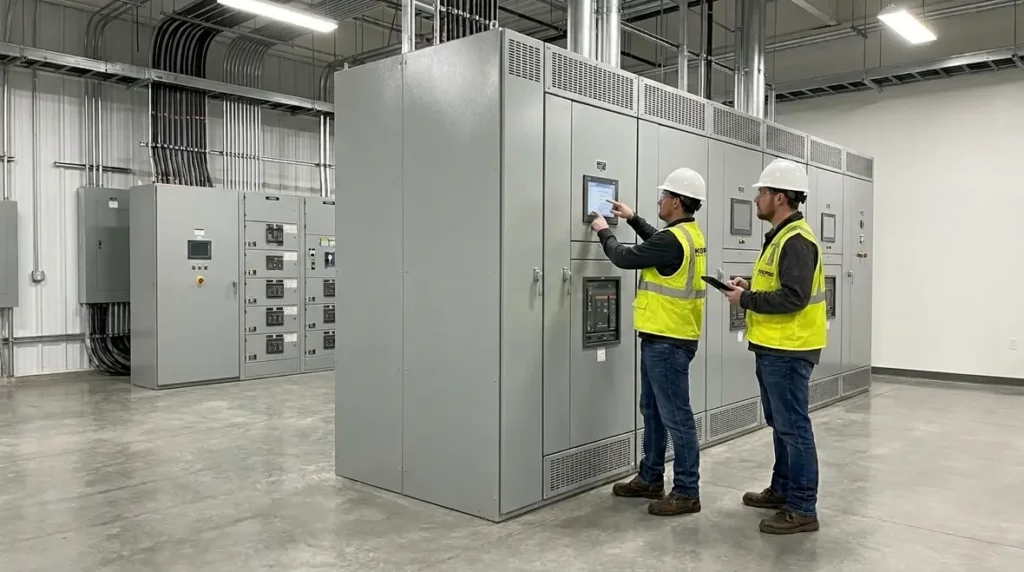
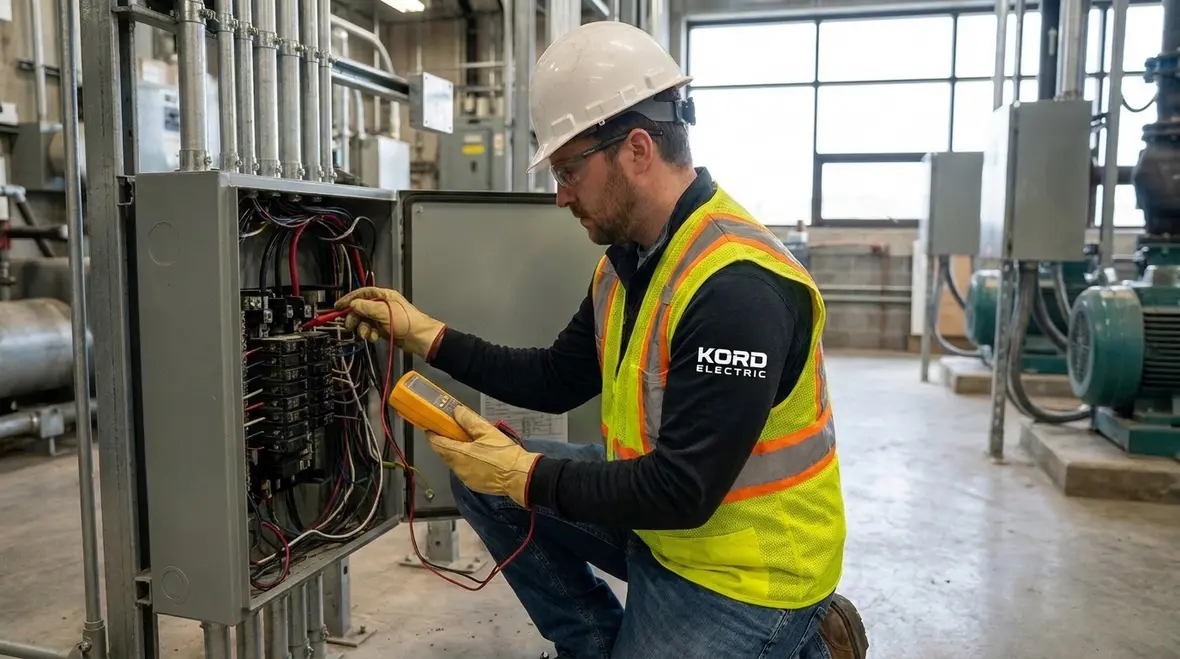
Then we verify the electrical path step by step. We check the service entrance, switchgear, distribution boards, transformers, and branch circuits. After that, we compare measured values to expected ranges. In other words, we use real data before we touch anything major.
For readers who want a broader playbook that covers offices, warehouses, and mixed-use facilities, our Commercial Electrical Troubleshooting Guide for Facilities shows how the same disciplined mindset applies far beyond industrial sites.
Why verification beats guesswork
Commercial electrical problems rarely come from one single place. Usually, multiple factors team up. A loose connection can overheat. Overheating can shift voltage. Voltage shifts can make a motor draw more current. And that extra current can make breakers act like they are having a bad day.
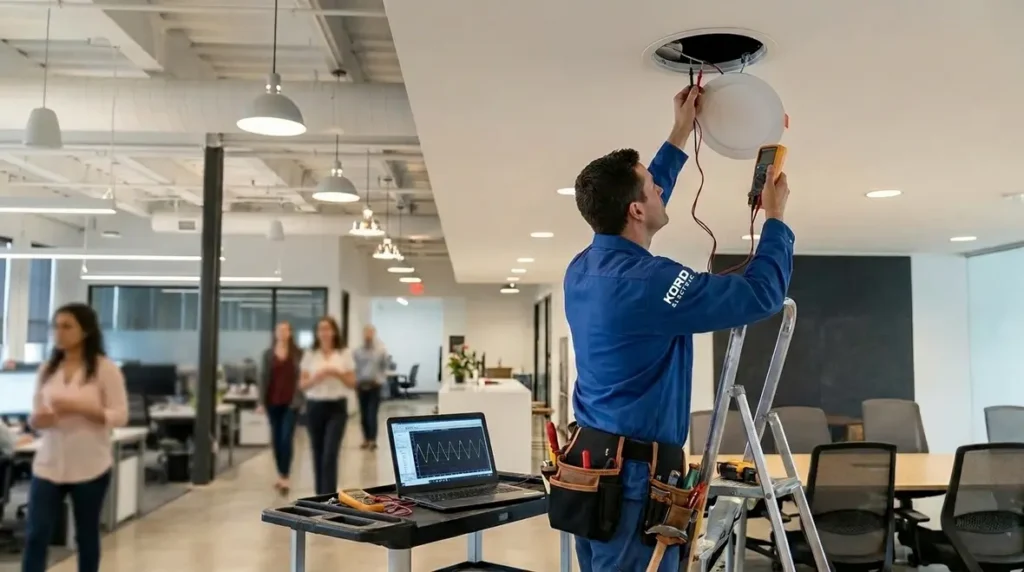
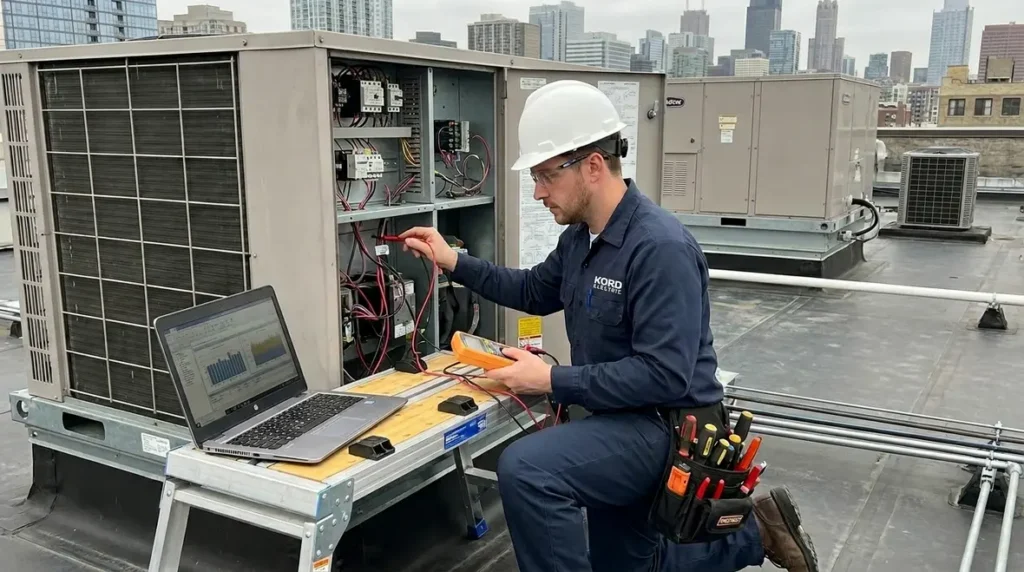
So, our approach relies on verification. First, we examine the failure mode. Is the breaker tripping instantly, or does it delay? Is it one panel or many? Does the issue disappear after resetting? Next, we inspect physical clues like discoloration, arcing marks, and damaged insulation. After that, we measure voltages, load current, and grounding continuity where it applies.
We also record what we find. That gives the facility manager something solid to plan around, and it helps us confirm the fix later. If troubleshooting feels slow, remember this: fast guesses cost more when the building gets stuck in a loop. That is the difference between a professional commercial electrical troubleshooting guide approach and a “let’s swap parts and hope” approach.
Across many projects, from data rooms to process lines, we have seen how a structured verification mindset reduces callbacks and surprises. It is the same calm, stepwise strategy we outline in our broader electrical troubleshooting for facilities guide, where every test has a purpose and every result gets documented.
Common symptoms in major property buildings and what they mean
Because major property buildings run many systems, the symptoms often point in specific directions. We see these patterns again and again, and our team uses them to narrow the scope.
- Lights dim or flicker: this can happen with voltage drops, loose terminations, or unstable feeder conditions. Often, it correlates with large motor starts, elevators, or HVAC cycles.
- Breakers trip repeatedly: this may signal overload, short circuits, ground faults, or abnormal surge currents. Repeated tripping also hints at an upstream issue that keeps reloading the circuit.
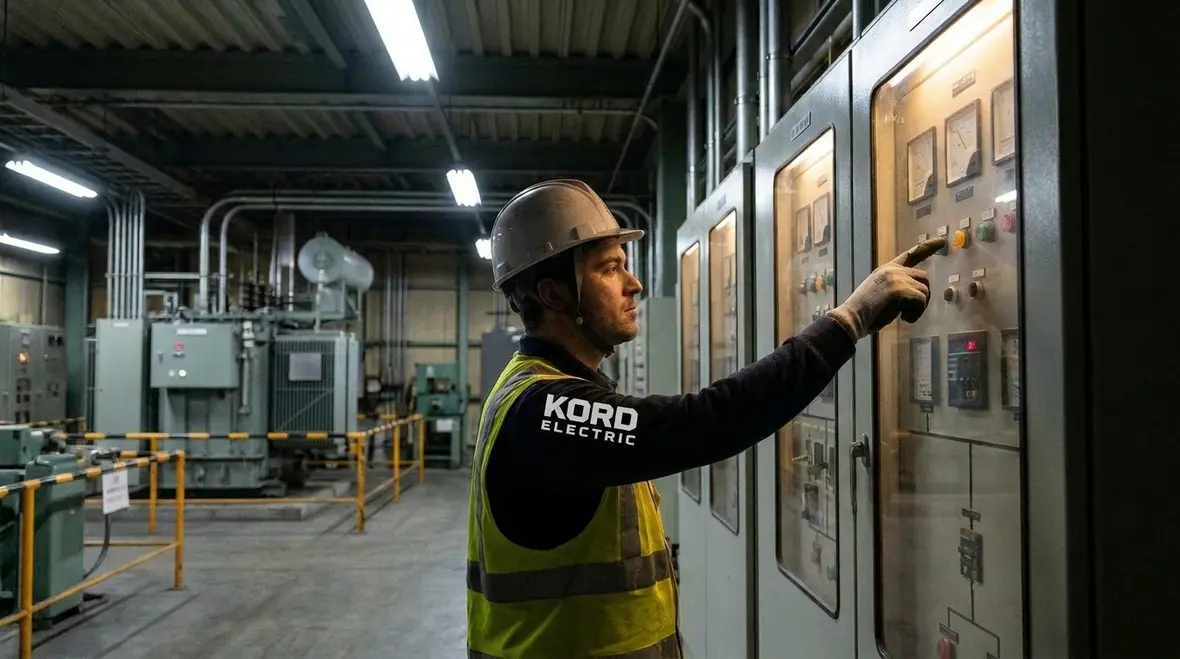
- Transformers run hot: temperature rise can come from loading, cooling faults, or internal winding issues. In many cases, airflow problems and degraded connections contribute.
- Control power fails: if relays and panels lose control, the issue might sit in control transformers, fuses, or wiring that feeds control circuits.
- Motors sound noisy or overheat: this points to misalignment, bearing wear, phase imbalance, or insulation degradation. It can also reflect power quality problems.
Now, here is the part people forget. Even when the symptom feels “electrical,” the cause may sit in a mechanical failure that drives electrical stress. So, we coordinate with facility teams and maintenance staff. Together, we confirm whether the root trigger comes from the electrical side, the equipment side, or both.
When symptoms hint at more systemic issues, it can help to zoom out and look at your whole distribution strategy. Resources like our data center power redundancy insights and broader commercial electrical troubleshooting process articles show how design and troubleshooting go hand in hand across large, complex facilities.
Step by step: how our technicians troubleshoot safely
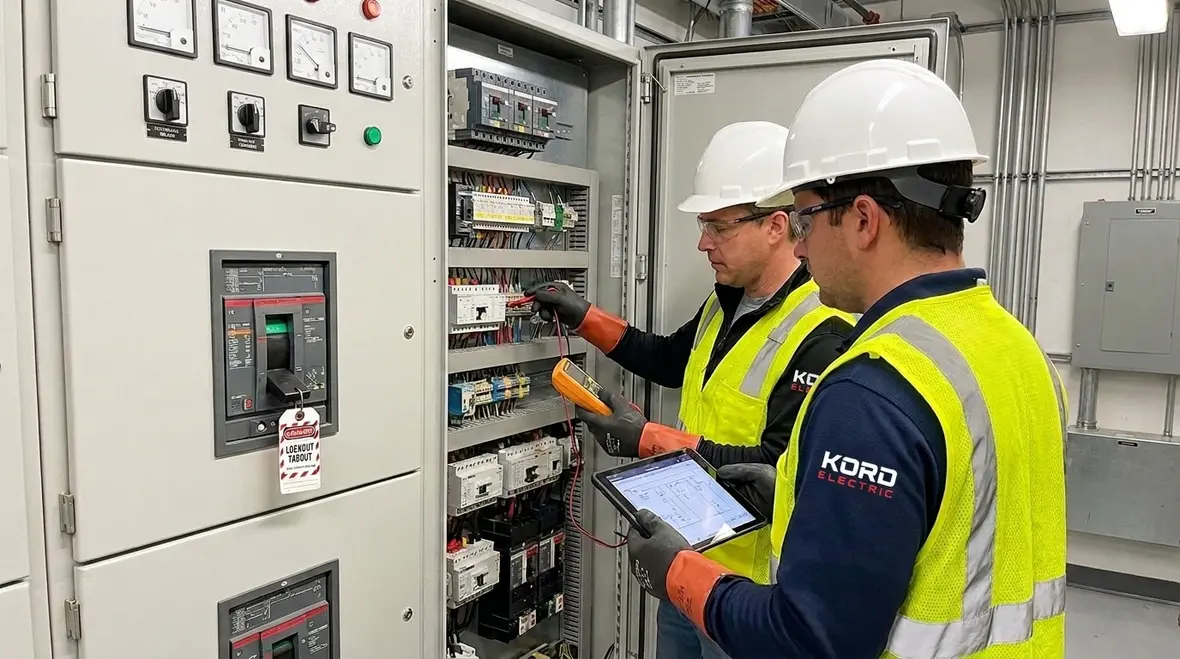
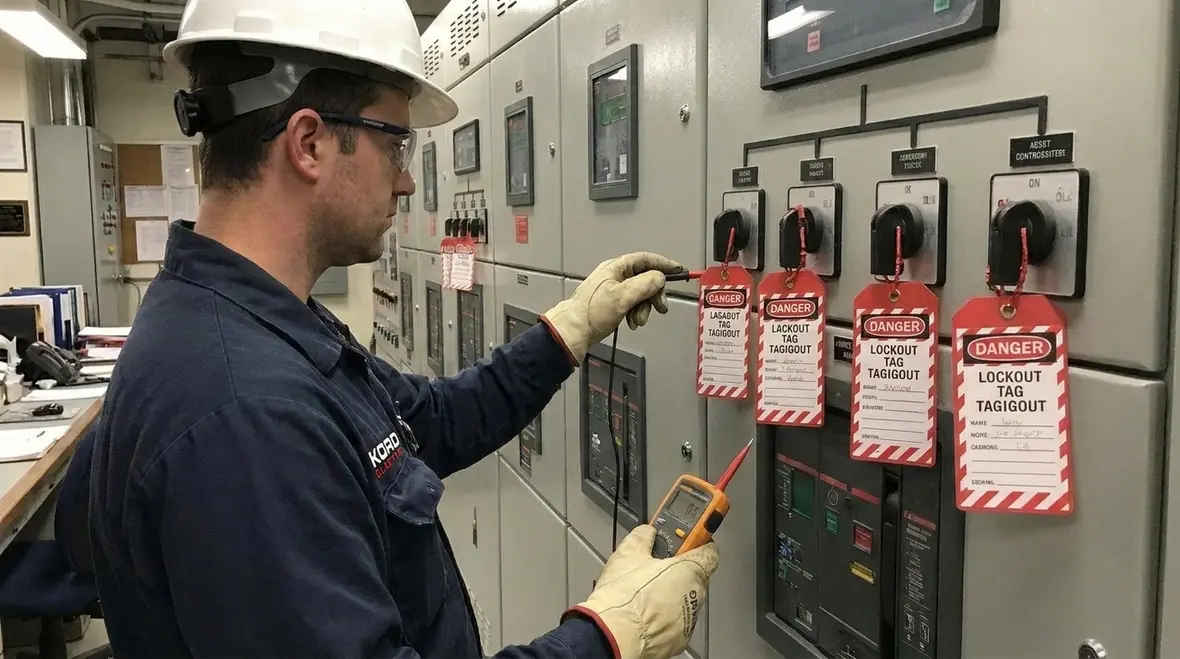
We keep safety at the center because commercial and industrial work does not forgive shortcuts. First, we establish the work scope and confirm the system state. Then we lock out and tag out where required. After that, we verify absence of voltage before we touch conductors. You could say we treat the panel like it is a live stage, and our technicians only take the spotlight after they check the rules.
Next, we use a structured path. Depending on the site, we may do the following:
- Check incoming service conditions and compare phases
- Inspect main and distribution terminations for looseness or heat damage
- Verify breaker ratings and trip settings when appropriate
- Measure insulation resistance for conductors and equipment circuits
- Test grounding and bonding paths to support proper fault clearing
- Review power quality indicators such as harmonics and voltage unbalance
- Confirm motor starting and control wiring sequence for equipment that cycles
Then we apply the fix with care. We tighten and replace components as needed, repair damaged wiring, and confirm the correction with follow-up measurements. Finally, we document findings in a way that others can use later, especially if operations shift or a new tenant moves in. That documentation also helps prevent the “same mystery, new episode” scenario.
For facilities that want a deeper dive into each stage of this workflow, our dedicated commercial electrical troubleshooting process walkthrough expands on how we move from first call to final verification without skipping the critical safety checks.
This safety-first mindset also supports broader projects, from panel upgrades to large capital improvements. When you combine disciplined troubleshooting with well planned electrical services, your facility gains both short term stability and long term resilience.
Managing downtime while we restore power to operations
Commercial sites cannot always pause. Therefore, we plan troubleshooting to reduce downtime. We coordinate with the facility manager, and we align our work windows with critical loads like life safety systems, refrigeration, servers, elevators, and production lines.
To keep operations stable, we sometimes stage the process. For example, we may isolate one feeder while leaving others live and monitoring performance, depending on the safety plan. Also, we communicate clearly about what will happen next so building staff are never surprised.
Additionally, we help our clients prioritize. If a panel feeds nonessential loads, we may address it after the critical circuits. If a transformer or switchgear component shows risk, we treat that as urgent. In other words, we troubleshoot in a way that protects people, secures equipment, and keeps the business moving.
And yes, we get the jokes. Some people compare electrical troubleshooting to detective work, like a classic TV investigator. But the difference is we do not just say “just one more thing.” We test, we confirm, and we fix with proof.
In larger portfolios, this careful scheduling aligns naturally with broader service offerings. Many property teams pair troubleshooting efforts with planned upgrades through Los Angeles County electrical services, so the work that fixes today’s issue also moves the facility toward tomorrow’s reliability goals.
Power quality, grounding, and protection settings that trip up teams
Many commercial issues trace back to less obvious elements. Power quality problems can cause equipment to underperform long before it fails. Grounding and bonding issues can make fault clearing inconsistent, which raises risk. Also, protection settings that do not match the current system design can lead to nuisance tripping.
So, our expert service staff often checks these areas early in the process. We look for voltage unbalance across phases, harmonics from variable frequency drives, and spikes linked to switching events. We verify that protective devices coordinate properly across upstream and downstream panels. We also confirm that grounding paths support safe fault clearing.
This matters because industrial and commercial environments often add new loads over time. When others modify the building, they may upgrade equipment without updating the electrical assumptions. That creates a mismatch. Our commercial electrical troubleshooting guide mindset helps us catch the mismatch before it costs more later.
Sometimes those same issues show up when a facility starts pushing its infrastructure harder, such as during EV charging rollouts or major process expansions. That is why we often pair troubleshooting with broader planning resources, including our commercial electrical troubleshooting for facilities content and our focused commercial electrical troubleshooting guide for facilities, so decision makers can see both the immediate fix and the long game.
FAQs
Ready for a calm, proven troubleshooting process?
If your commercial facility faces flicker, nuisance tripping, overheating equipment, or strange control failures, you do not need guesswork. At Kord Electric, our technicians use a structured commercial electrical troubleshooting guide approach to diagnose safely, restore power responsibly, and document the results for long term reliability. We serve commercial and industrial buildings and major property sites. Whether you need targeted fault finding, help applying a commercial electrical troubleshooting guide across multiple locations, or a broader commercial electrical troubleshooting guide for facilities mindset, we build the plan around your operations instead of forcing your operations to fit the problem.
For facility leaders across Southern California, this troubleshooting approach connects directly to a full range of Los Angeles County electrical services, from upgrades and preventive maintenance to emergency power design. That means the same team that finds today’s issue can also help you prevent tomorrow’s outage, using a calm, proven process instead of trial and error.
If you are ready for fewer surprises, clearer documentation, and an electrical system that behaves more like a steady co-worker than a moody extra, we are ready to help.