Electrical Repairs for Factories and Preventive Maintenance
Kord Electric provides Electrical Repairs for Factories: Common Problems & Preventive Maintenance that keep commercial and industrial facilities running without drama. We see it every day: a plant that powers up fine in the morning, but struggles by mid shift, like a tired sitcom character forgetting their lines. That is why our team focuses on the electrical repairs that matter, then backs them with preventive maintenance that reduces future failures. In the sections below, we explain how we approach common industrial issues, how our technicians diagnose them fast, and how we help facility managers prevent repeat breakdowns. And yes, we will still make it understandable, because nobody’s safety should depend on a mystery blinking light.
Electrical repairs for factories: what usually goes wrong
When we support major property buildings and industrial sites, we usually find patterns. First, the system shows signs before it fully fails. Next, the failure mode often reveals a root cause that maintenance alone cannot fix. Finally, the fix becomes cheaper when we treat it like a process, not a one off rescue.
Our expert service staff explains these patterns in plain terms so your team knows what to watch for. We typically address issues like overloaded circuits, worn terminations, aging breakers, and control malfunctions that stop equipment from starting or restarting. We also see arc fault concerns around high vibration areas, and we find moisture intrusion in outdoor sections that should have been sealed properly months ago.
Meanwhile, a factory environment brings its own challenges. Dust settles where it should not. Heat cycles loosen connections. Motors and drives create electrical noise that can confuse controls. Therefore, the problem is rarely “just electricity.” It is the electrical system working inside a harsh reality.
Industrial power quality issues that disrupt production
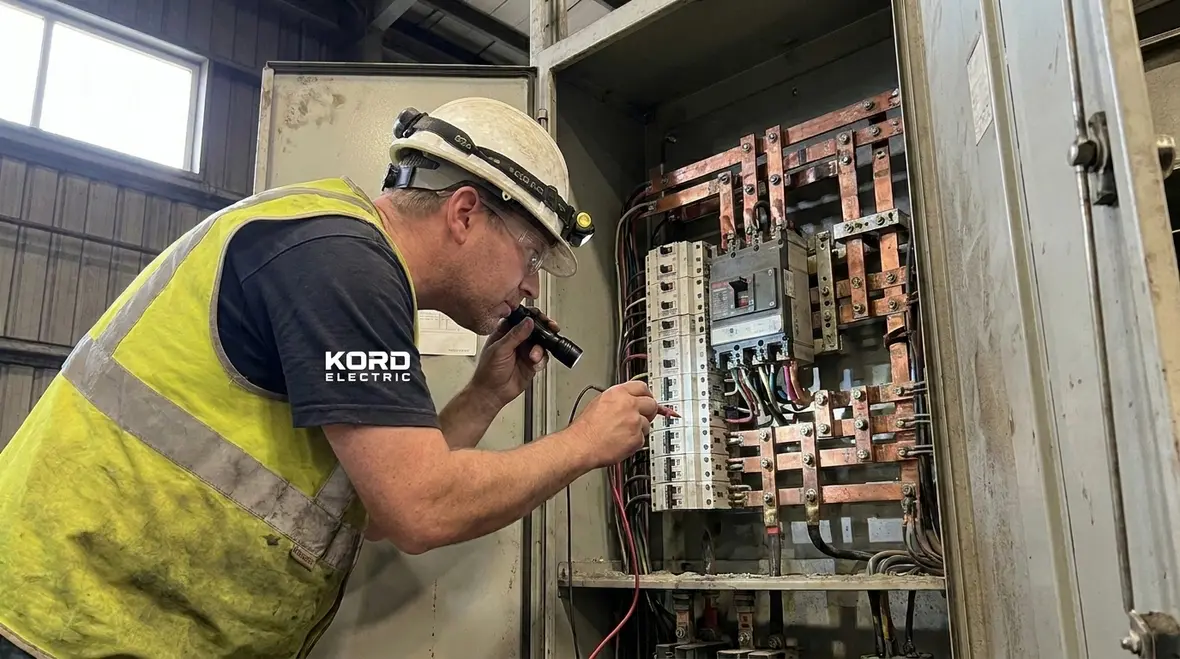
Power quality problems do not always look dramatic. However, they can steal production quietly, the way a pop culture plot twist steals trust. We see frequent causes across commercial and industrial facilities: voltage dips when large equipment starts, harmonics from variable speed drives, and unbalanced phases that overheat motors.
To handle this, we test under real load conditions. Then we compare results to the equipment requirements. After that, we recommend repairs or upgrades that match the actual site demand. This is the part where our technicians slow down, explain what the numbers mean, and show which loads drive the behavior.
For instance, when harmonics increase, we do not just swap a component and hope. Instead, we inspect drive settings, check for missing filters, and evaluate whether the distribution system can handle the current waveform. Similarly, when voltage sags occur, we identify the feeder behavior and the starting current impact from motors, compressors, and process gear. We then help you reduce the event frequency, so machines do not trip like they are auditioning for a slapstick routine.
For facilities that want to dig deeper into diagnostic strategy beyond basic power quality checks, you can also review Kord Electric’s Industrial Electrical System Troubleshooting Guide, which walks through how structured testing supports uptime across large industrial sites.
Motor control failures, overloads, and protective device trips
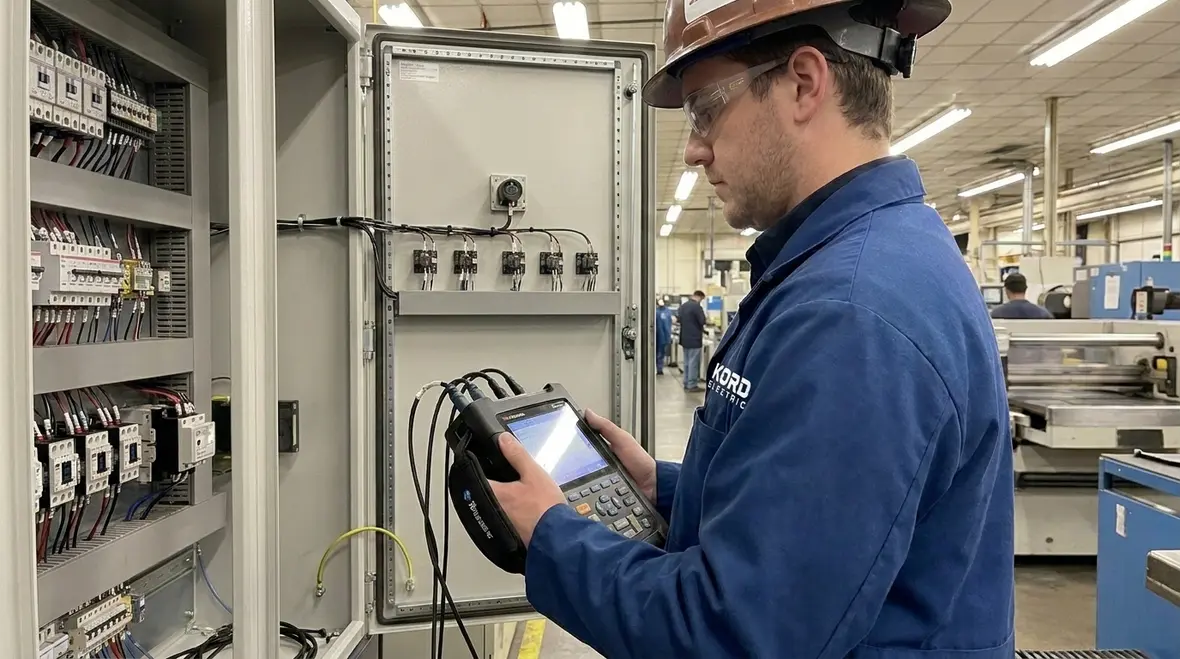
Factories depend on motors. Yet motor control issues can stop lines fast, especially when protective devices trip repeatedly. In many cases, the equipment is not “broken” so much as it is being pushed past safe limits. Sometimes that limit is electrical. Sometimes it is mechanical. Often, it is both, which is why we treat this like a joint investigation.
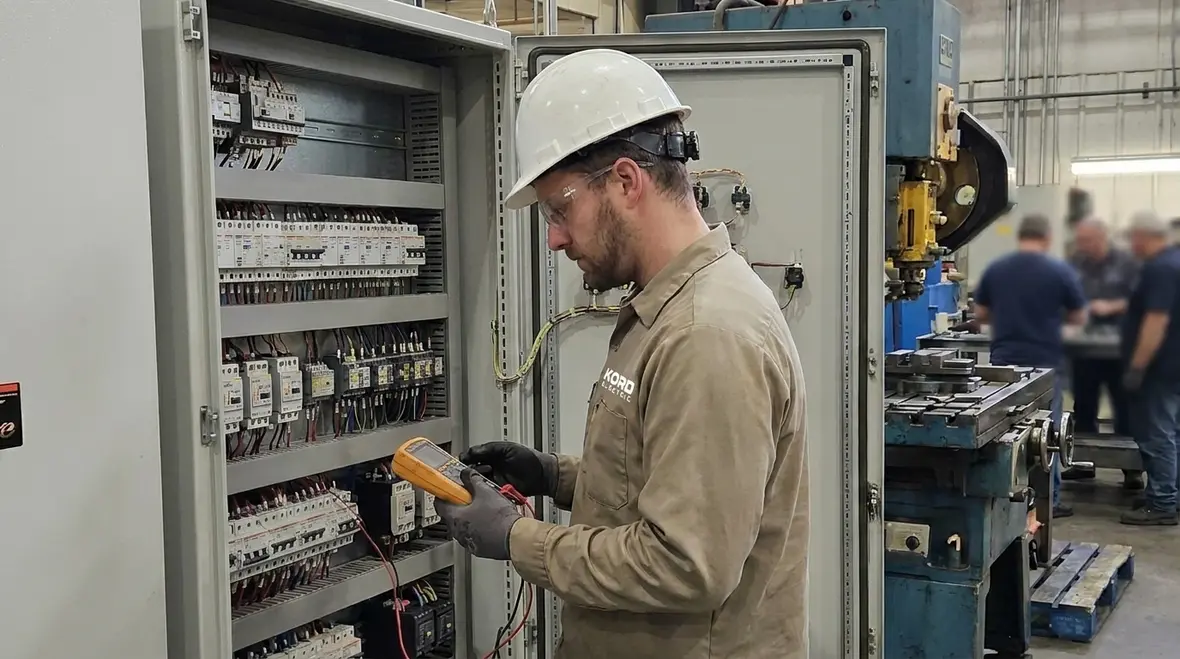
Our electrical repairs for factories focus on the control side and the power side together. We inspect contactors, relays, starter components, and control wiring for heat damage or loose terminations. Then we check overload settings, motor nameplate ratings, and actual current draw during operation. If the overload trips, we ask why, not just how often.
Next, we verify protective coordination. If a breaker trips too quickly, the rest of the system loses power and production pauses. If it trips too late, equipment damage grows. Our technicians explain the coordination goal in a way plant staff can use. In other words, we help your team understand which devices protect which equipment, and how they should behave under fault conditions.
For teams who want a deeper dive into how protective devices behave, Kord Electric’s Commercial Circuit Breaker Troubleshooting Guide breaks down nuisance trips, coordination issues, and practical repairs in more detail.
Preventive maintenance that reduces repeat electrical breakdowns
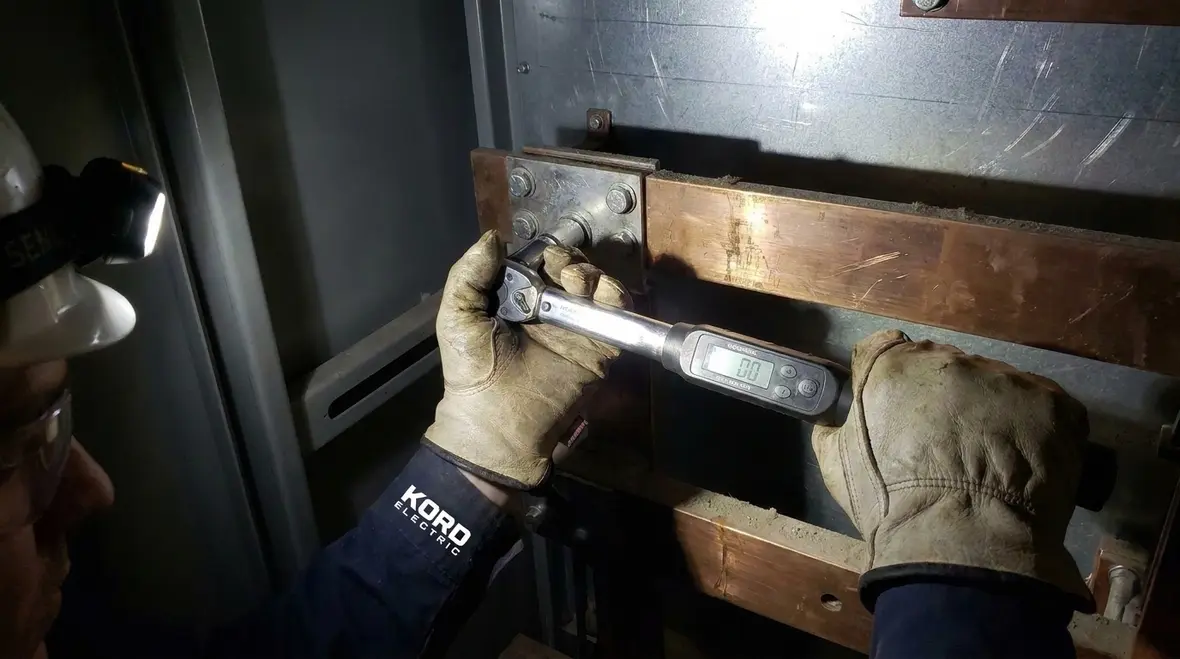
We do not sell preventive maintenance as a checkbox. We build it as a plan that matches your equipment and your operating schedule. The goal stays simple: reduce unexpected downtime, catch early wear, and improve system reliability without disrupting production.
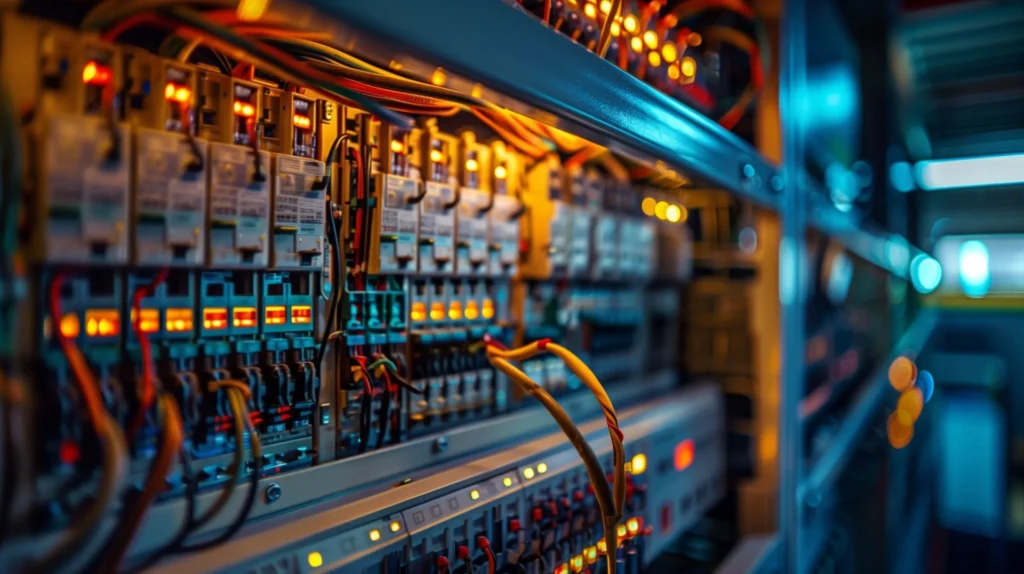
For industrial settings, we emphasize preventive work that covers both visible and hidden problems. That means inspecting lugs and terminations for tightness and heat discoloration. It also means checking breaker health, torque on bus connections, and the condition of switchgear and panels exposed to heat and dust. We include inspections of insulation resistance trends where appropriate, and we review where moisture could enter enclosures.
Additionally, we look at the control system as part of the electrical repairs for factories strategy. We examine control cabinets for signs of condensation, verify terminal block condition, and confirm that protective relays operate within expected parameters.
To keep it practical, we schedule maintenance to match shutdown windows. Then we document findings in a clear format so your team can plan next steps. And when we explain results, we do it with calm confidence. Our technicians speak plainly, because your electricians and engineers should not need a translator to protect your assets.
If you want to see how this planning mindset plays out across common facility issues, you can also read the Kord Electric blog on industrial electrical repair for common issues, which connects one-off fixes with long term reliability strategies.
Switchgear, panels, and wiring: early signs of trouble

Switchgear and panels often carry the most risk because they distribute power to everything else. When a panel develops a problem, it can feel like a “minor issue” until it suddenly stops a whole area. That is why our service staff checks for early signs that your site may ignore at first.
Common warning signs include hot spots, discoloration around breakers and bus bars, repeated nuisance trips, and unusual smells after load changes. Loose connections create heat. Heat damages insulation. Damaged insulation increases resistance. Then the system becomes more likely to fail under load. This chain reaction never takes a day off, so we address it early.
We also check for aging wiring in high vibration areas, and we inspect grounding and bonding because poor grounding can create unpredictable fault behavior. If you run multiple drives, we review whether panels show signs of harmonic stress and whether neutral and ground paths remain properly connected.
When we find defects, we explain the risk clearly. We then propose repairs that align with your reliability goals, safety needs, and budget. Because “safe” should never mean “mysterious.”
For a broader look at how recurring building issues tie back to panels and distribution, Kord Electric’s article on common post installation electrical issues in commercial buildings offers additional context that applies to many factory and industrial environments.
How Kord Electric handles downtime, diagnosis, and communication
Our process matters as much as the repair itself. When a facility calls us, we arrive with a plan: we assess the symptoms, narrow down likely causes, and confirm the diagnosis with testing. Then we repair or replace the affected components. After that, we verify performance under the proper operating conditions.
We also communicate in a way that supports fast decisions. Our technicians explain what they test, what the results mean, and what options exist. As a result, your team does not sit in the dark while downtime grows. We know the clock does not pause because a facility manager has questions.
And yes, we keep the jokes light. If someone hears a breaker “sing” like a sad karaoke performance, we take that seriously. We explain why it sounds that way, and we make sure it does not become the soundtrack to a long outage.
Most importantly, we focus on commercial and industrial facilities and major property buildings only. That focus helps us deliver the right experience for the real world of high load equipment, tight schedules, and safety standards that cannot be compromised.
FAQ
Prevent downtime with smart planning from Kord Electric
Industrial facilities do not need more “maybe fixes.” They need reliable electrical repairs for factories that address root causes and prevent repeat failures. Kord Electric supports commercial and industrial sites with expert technicians, clear communication, and preventive maintenance plans built around your equipment and schedule. If you want fewer trips, steadier power quality, and safer operations, contact us today. We will review your system, explain what we find, and help you move forward with confidence.
If your operation spans multiple buildings or you manage a complex industrial campus, you can also explore Kord Electric’s Los Angeles County electrical services for commercial and industrial facilities, which connect troubleshooting, repairs, and long term maintenance into one coordinated program.
For facility leaders who want to connect today’s fixes with tomorrow’s reliability, Kord Electric’s broader Kord Electric Blog covers topics like electrical fault finding, panel upgrades, and de-energized preventive maintenance, all written for real-world operations teams.