Title 24 Lighting Requirements for California Commercial Buildings
Kord Electric helps commercial and industrial property owners meet California’s Title 24 lighting rules without losing sleep over inspections, surprises, or delays. In our experience, the Title 24 Lighting Requirements for California Commercial Buildings often feel confusing at first because people mix energy code details with design goals. However, when our technicians and expert service staff walk through the requirements in plain language, the path gets clear. And yes, we have seen firms treat lighting like a “set it and forget it” project, only to learn the code does not share that vibe. Like a plot twist in a TV drama, Title 24 shows up when you least expect it, then demands the right decisions were made earlier.
What Title 24 lighting rules mean for commercial buildings
When others say “Title 24,” they usually talk like it is one big rule. In reality, the lighting requirements cover how fixtures operate, how controls work, and how energy use gets measured. For a commercial or industrial facility, that means the design cannot focus only on brightness. Instead, it must also address control strategies, lighting power limits, and compliance paths that match the building’s use.
At Kord Electric, our team explains this in a step by step way. First, we look at the space type and how the building actually runs. Then we connect that reality to what the code expects, especially for controls and dimming where it applies. Finally, we coordinate with the electrical design and the compliance process so you do not end up chasing fixes late in the schedule.
How compliance gets measured in the real world
Most projects run into trouble when people forget that compliance is not just about installing the right fixtures. The compliance process checks the system’s total behavior. In other words, it is not only watts on paper. It is also how long lights stay on, how they dim, and how controls shut them down when spaces are empty.
To keep things grounded, our expert service staff often uses a simple explanation: the code wants the lighting to act like a smart assistant, not like an office intern who never leaves. That means occupancy controls should work where required, schedules should reflect real use, and daylight options should help when daylight is available. When design teams line up the electrical plan with the building operation, the math stops feeling like a magic trick.
Our work also focuses on common commercial and industrial constraints such as maintenance access, ceiling heights, glare limits, and how sensors connect to the rest of the controls. We do not treat these as afterthoughts, because compliance fails when the field cannot support the design.
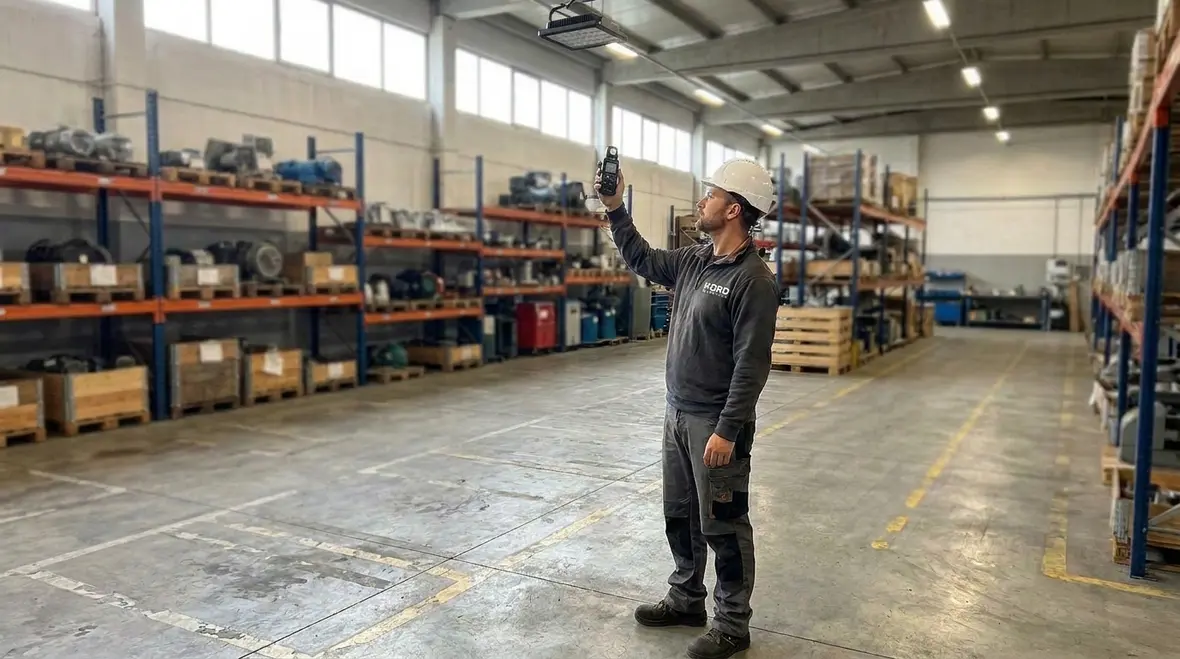
Which spaces get the strictest attention from inspectors
Inspection risk rises in areas where lighting must respond to changing conditions. For commercial and industrial facilities, that usually includes offices, break rooms, hallways, restrooms, conference rooms, and areas with shared or variable occupancy. If a space serves multiple functions or has shifting hours, the controls must match that pattern.
It is also worth noting how exterior and site lighting fits into the larger picture. Others sometimes treat outdoor lighting like a separate universe. Yet Title 24 lighting requirements for California commercial buildings consider how lighting impacts energy use and safety around the property. As a result, Kord Electric helps teams plan interior and exterior lighting together so you avoid mismatched strategies.
And because we are being honest, some spaces feel like they should qualify for exceptions, but they often do not when the actual use gets reviewed. That is why our technicians verify the intended function early. They ask the practical questions, like how the room gets used week to week, not how it gets described in a brochure.
Controls, dimming, and sensors: the part people underestimate
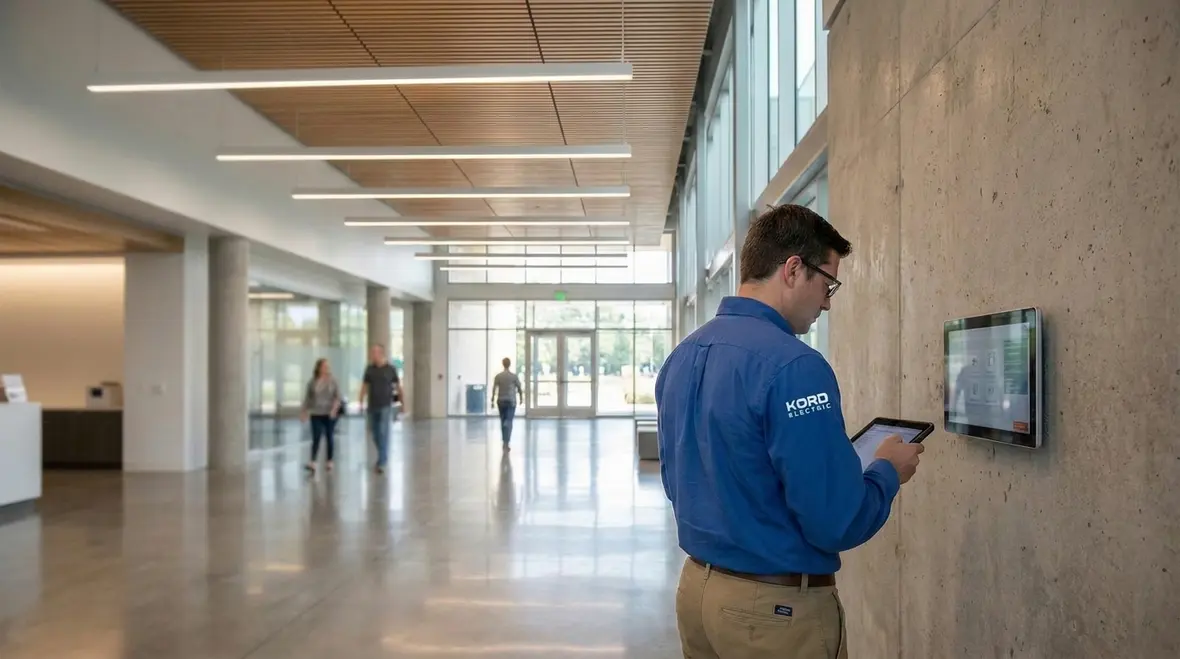
If you want one theme from our work at Kord Electric, it is this: controls make the difference. Fixtures provide light, but controls provide compliance. For Title 24, lighting system control can include time scheduling, occupancy sensing, photocontrol for daylight, and power reduction through dimming. When those elements work together, the building saves energy while still delivering the light quality occupants need.
However, controls only help if they get designed correctly. For example, occupancy sensors should cover the right zones and respond to the right movement patterns. Dimming controls must coordinate with driver types and wiring practices so the system performs smoothly. Moreover, scheduling must align with how the facility actually operates, or else you get lights stuck on too long or dimmed when they should not be.
Our technicians explain these details with patience. We help teams understand how the control logic affects user experience. That means fewer complaints about flicker, harsh transitions, or lights that feel unpredictable. In our field service, we treat the occupants as real people, not just load calculations.
And yes, sometimes a control layout looks perfect in design, then gets muddied by real-world ceiling features. Yet that is why our expert service staff verifies placement, aiming, and control wiring before everything closes up. We do not want your lights to behave like a confused superhero trying to land the plane.
If you want a deeper dive into how smart scheduling supports Title 24 compliance in spaces that never really “turn off,” you can also explore Kord Electric’s Smart Lighting Control Scheduling for Commercial Facilities, which shows how schedules, sensors, and real-world traffic patterns work together in modern buildings.
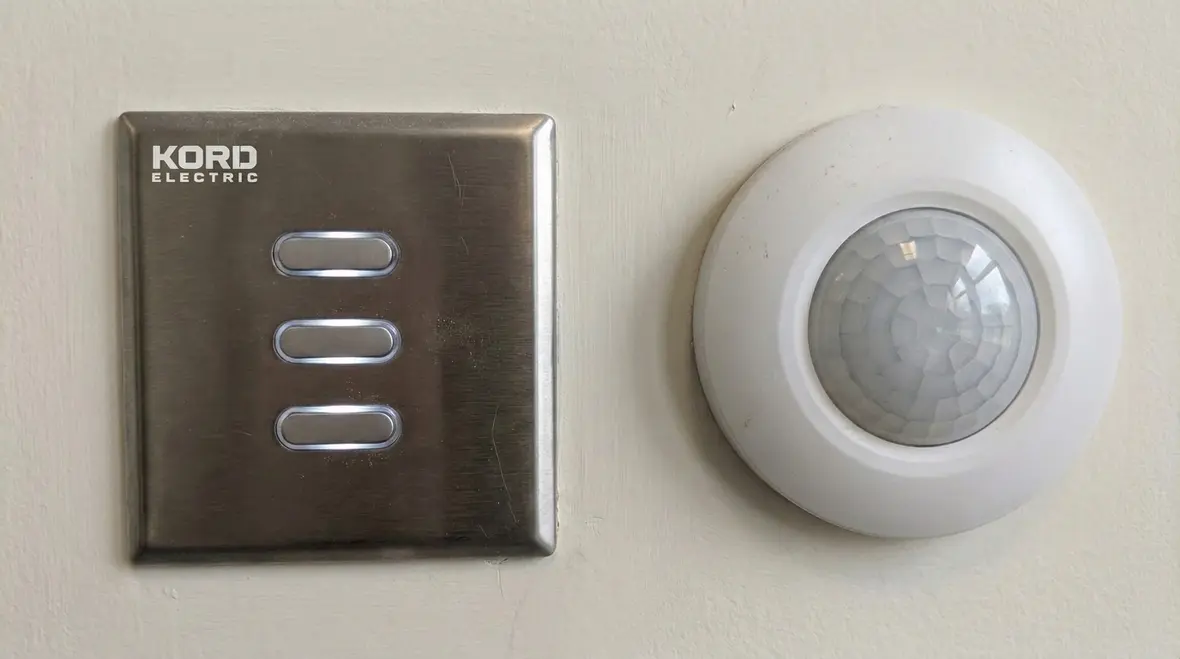
Fixture selection and lighting power limits for commercial builds
Fixture choice matters because Title 24 lighting requirements for California commercial buildings aim to limit lighting power. This affects the allowed watts per square foot in many scenarios. That said, compliance depends on more than picking energy efficient fixtures. It also depends on how many fixtures get installed, where they go, and how they get controlled.
To help teams avoid rework, Kord Electric reviews fixture schedules early. We look for match ups between fixture output, intended illuminance levels, and the control methods specified in the design. Then we confirm the plan supports those levels in the final installation conditions. In industrial spaces, we also consider rugged duty needs, vibration, and how maintenance teams will access fixtures.
Another point others miss is that “bright” is not always “right.” If the design creates glare or uneven lighting, occupants suffer and operations slow down. Meanwhile, compliance still needs to hold. So we guide teams toward layouts that balance efficiency with performance. When designers align lumens, distribution, and control behavior, the system looks better and passes more easily.
For an even broader view of how power limits and control strategies show up across different building types, many clients pair this topic with the California Commercial Lighting Code Guide for 2026, which walks through how Title 24 standards play out in day to day facility decisions.
Steps to plan a Title 24 compliant lighting project from start to finish
Here is a practical flow Kord Electric uses with commercial and industrial partners, so projects do not get stuck midstream. We keep the sequence clear because timing matters with code-based lighting work.
- Confirm the building use and schedule, including occupancy patterns, shift times, and when spaces stay active or go dark.
- Review the proposed lighting layout and flag areas likely to require occupancy sensing, dimming, or daylight control.
- Coordinate fixture selection with expected performance, including distribution and driver compatibility with dimming and controls.
- Plan control zones and sensor placement so the system covers real activity paths, not just the floor plan lines.
- Verify the design with compliance documentation and align electrical submittals to what the compliance method expects.
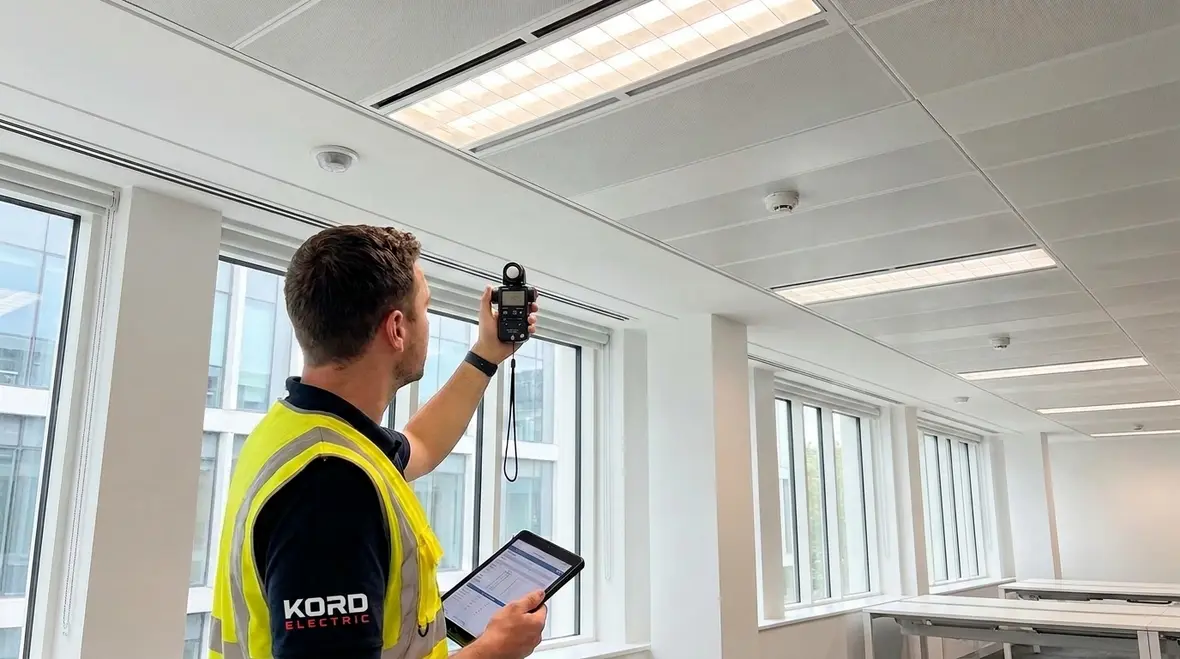
- Install and test using field checks that confirm controls behave as designed, including sequence of operations.
Then, near the end, our technicians and expert service staff do one last pass to catch what others often miss. We look for mismatched device types, incorrect settings, improper wiring, and coverage gaps. In short, we reduce the chance that a “close enough” approach becomes a “why are we here again” moment.
If your project is evolving alongside tenant buildouts or broader power distribution upgrades, it can also help to review how lighting planning ties into commercial tenant improvement electrical planning and inspections, so lighting, wiring, and inspections move forward together instead of in disconnected steps.
One quick reality check about common mistakes
In the field, we repeatedly see the same set of issues. First, teams choose fixtures without verifying control compatibility. Second, they place sensors based on convenience rather than actual movement patterns. Third, they assume scheduling overrides will solve every issue, even when the code expects occupancy response.
Another mistake involves daylight control logic. Some designs treat daylight sensing as optional decoration instead of a system requirement where it applies. As a result, the building either wastes energy or fails performance expectations. By contrast, Kord Electric guides teams to set up those systems so daylight actually reduces power without causing comfort issues.
And for the humorous side, we have heard “it worked on the sample board.” That is like saying a sandwich tastes good because it looked good in the commercial. The real building has different conditions, different occupancy, and different control behavior. So we test and verify.
FAQ: Title 24 lighting requirements for California commercial buildings
If you want even more background on how California’s efficiency rules affect day to day decisions, you can also read Kord Electric’s broader overview in California Title Twenty Four Lighting Requirements, which pairs well with this guide on the Title 24 Lighting Requirements for California Commercial Buildings.
For property owners who want to see how Title 24 fits into other upgrades, such as retrofits and automation, our team often recommends exploring how automated controls and retrofits work together in projects like Energy Efficient Commercial Lighting Retrofit and related control-focused articles in the Kord Electric blog.
Conclusion: get a plan that passes and performs
If you want lighting that looks right, saves energy, and stays compliant, start with a clear Title 24 lighting plan early, not after the fixtures are already on the ceiling. Kord Electric supports commercial and industrial partners with expert guidance from design coordination to installation and testing. Our technicians explain the requirements in plain language and help teams avoid the common control and performance pitfalls. Call Kord Electric today and let us build a lighting system your property can trust, now and through inspection.
When your facility needs hands-on support to actually install and commission systems that satisfy Title 24 Lighting Requirements for California Commercial Buildings, Kord Electric’s dedicated lighting installation services for commercial and industrial facilities keep design, controls, and inspection expectations aligned from the first drawing through final walkthrough.
If your operations span multiple cities or you manage a portfolio of buildings, it also helps to work with a contractor who already understands regional needs. Kord Electric’s Los Angeles County electrical services bring together data-driven design, code conscious installation, and responsive support so you can focus on running your facilities while we keep the lighting and power systems ready.