Electrical Risk Assessment Services for Industry
Kord Electric helps commercial and industrial facilities stay ahead of electrical hazards with our electrical risk assessment services. We send experienced technicians and expert service staff to review real-world conditions, not guesswork from a spreadsheet. In this guide, we explain why regular electrical risk assessments matter so much for warehouses, factories, offices, retail back-of-house areas, and major property buildings. We focus on what others often skip: the small changes that grow into big problems. And yes, we say “small changes” because electricity has a habit of turning “it should be fine” into “why is the breaker on fire?”
How electrical hazards quietly grow in commercial sites
In the early days, many businesses treat electrical safety like a once-and-done task. Then equipment upgrades arrive, staff roles change, maintenance schedules drift, and new subcontractors show up with new habits. Over time, the electrical system no longer matches the original assumptions. For example, a motor replacement may come with different starting currents. Meanwhile, an added production line can increase demand. Finally, a “temporary” cable route becomes permanent, because nobody likes downtime, and downtime is expensive.
Electrical hazards often grow without drama. A loose termination might not spark on day one. Yet, heat cycles can loosen it further. Also, moisture and dust build up in industrial enclosures and hide inside cable trays. As a result, corrosion can develop where inspections do not reach. In addition, altered lighting, new sockets, or extra monitoring gear can overload circuits if the load calculation never gets revisited.
That is why regular electrical risk assessments matter. Our expert service staff looks at how the site actually operates, day after day, shift after shift, and season after season. And when we explain what we find, we use plain language. If someone cannot understand it, they cannot manage it. That is not just safety thinking, it is good management thinking.
What a proper assessment looks like for industrial electrical systems
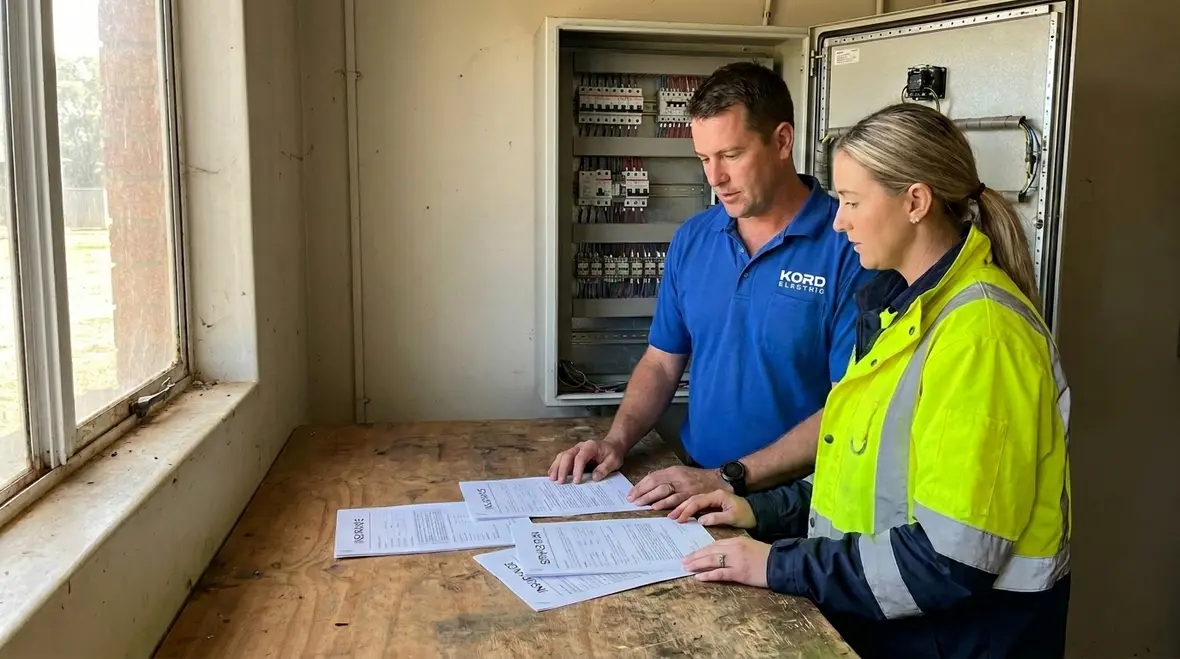
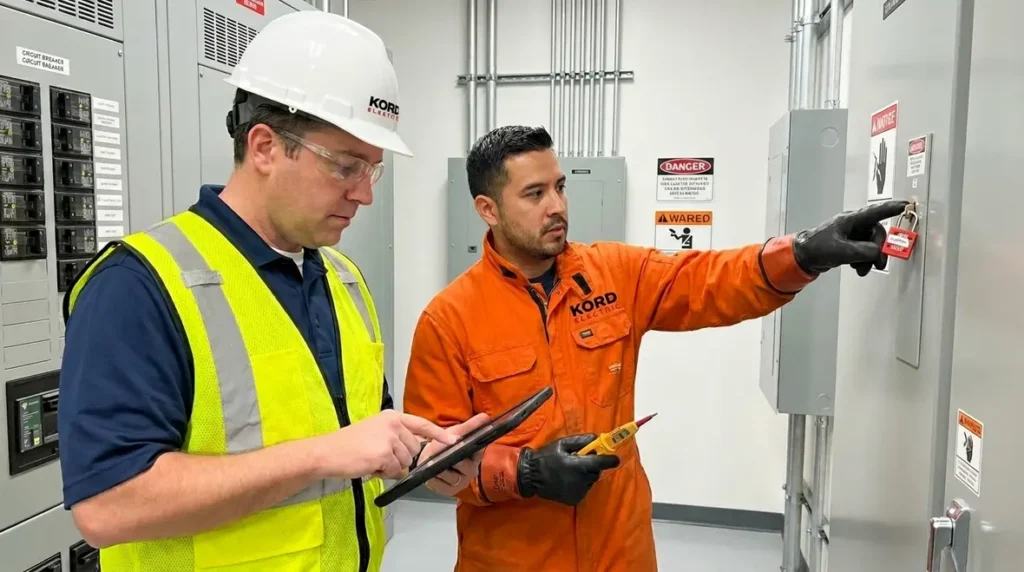
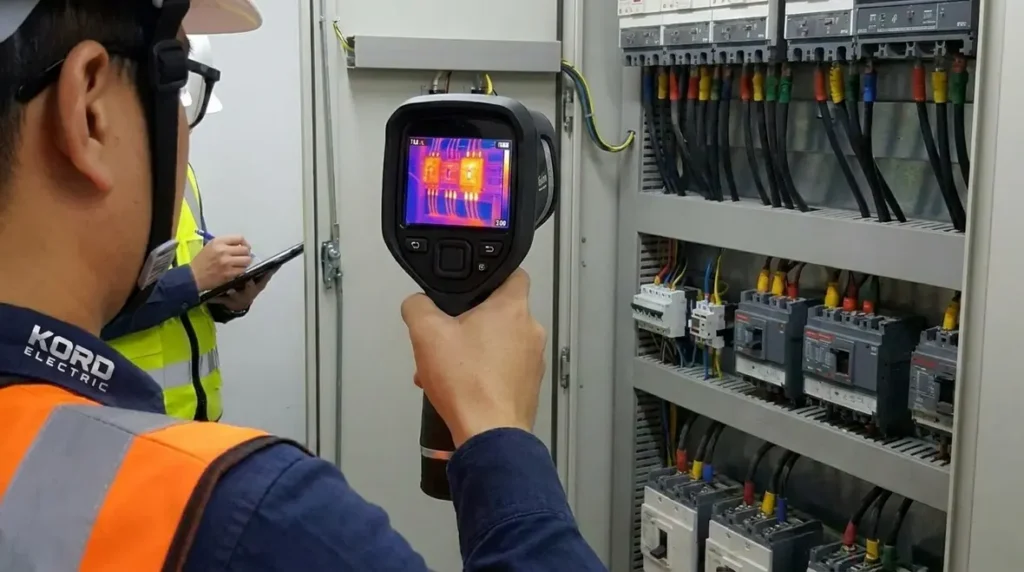
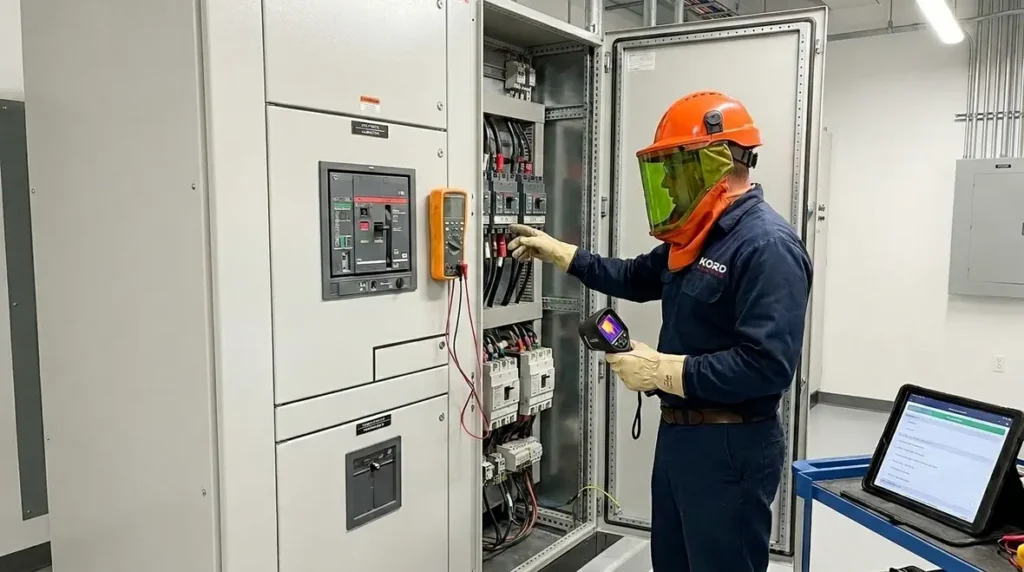
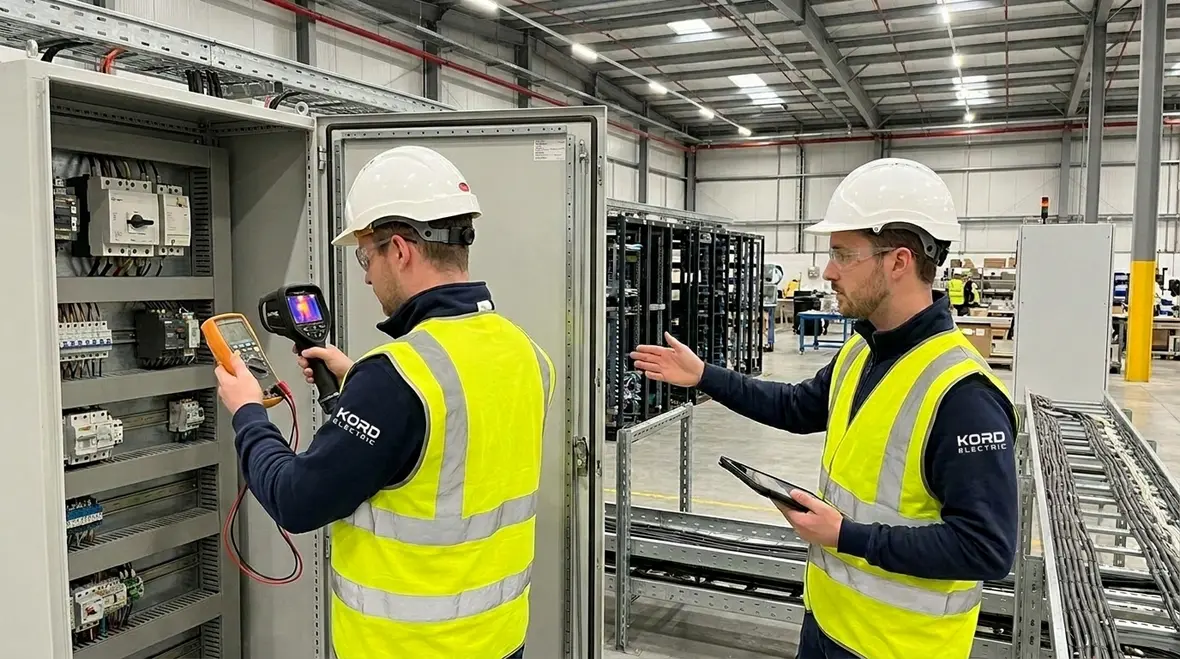
At Kord Electric, we treat an electrical risk assessment as a structured process with evidence. First, we gather site information such as single line diagrams, equipment schedules, past inspection records, and maintenance logs. Then, our technicians inspect key components including distribution boards, switchgear, earthing and bonding points, cables, containment systems, and protective devices.
Next, we check how people interact with these parts. Are access routes safe? Do procedures prevent unsafe isolation? Do lockout and tagout steps get used consistently? Then we look at working conditions. For instance, does the environment create damp or corrosive exposure? Do vibration or mechanical impacts damage conduits or cable glands? Also, do any areas run hotter during peak operations, especially near busbars or in enclosed plant rooms?
We also evaluate protective measures and how they perform in practice. Protective devices should detect faults quickly. Yet, aging components can drift out of spec. In addition, incorrect labels or unclear circuit mapping can lead to wrong isolations. Finally, we review documentation quality. A system with great hardware but poor records is like a great kitchen with no recipe book. People still cook, but they burn things.
These inspections fit naturally alongside structured programs like electrical preventive maintenance, where testing, cleaning, and verification keep critical systems reliable while catching problems before they become outages.
Why regular reviews reduce downtime and insurance headaches
Businesses feel electrical risk when it becomes a maintenance event or an outage. However, the financial pain often starts earlier than most teams expect. If staff must troubleshoot failures without clear evidence, downtime stretches. Furthermore, emergency callouts cost more than planned service. Additionally, repeated faults can damage motors, drives, lighting systems, and control gear, which then multiplies repair time.
Regular electrical risk assessment services also support better insurance outcomes. Insurers look for risk management that is planned and documented. When a facility can show that assessments happen on a schedule and actions get closed out, the conversation changes. Instead of reacting after a problem, the business demonstrates control.
Meanwhile, internal teams benefit from prioritised findings. Kord Electric does not just list issues. We help businesses understand which risks can wait and which ones must get action now. Also, we support stronger maintenance planning. When companies align inspection intervals with real site conditions, they reduce repeat failures and avoid random “mystery tripping” that can make a building feel haunted.
And if someone says, “We have never had an incident,” we politely remind them that electricity does not need a track record. It only needs a condition. Conditions change. So assessments need to change too.
How we help teams turn findings into clear action
Many organisations struggle after an inspection. They get a report, then the report sits in a folder and turns into digital dust. That is not risk management. That is storytelling. At Kord Electric, we push for practical steps that teams can run.
First, we categorise risks based on likelihood and potential impact. Then, we recommend actions that fit commercial and industrial realities. Some fixes need immediate attention, like unsafe access to live parts, damaged cable sheathing, or earthing concerns. Other actions can fit into planned shutdowns, such as upgrading protection settings, improving segregation, or correcting labeling and identification.
Next, we explain the reasoning behind each recommendation. Our expert service staff walks through findings in a way that helps supervisors and maintenance leads make decisions quickly. That matters because electrical systems involve many stakeholders: facilities managers, operations teams, contractors, and sometimes building owners. When everyone understands the “why,” approvals move faster.
Also, we help teams close the loop. We encourage follow-up checks after work completes. Therefore, the business confirms that the risk control actually works, not just that the work got booked. In other words, we verify outcomes, because a repaired cable that still lacks proper termination is not repaired. It is merely hopeful.
These same principles show up across our wider commercial and industrial work, from resolving voltage fluctuations in commercial and industrial facilities to building long-term maintenance strategies that keep critical infrastructure stable.
When should a business schedule electrical risk assessment services
Scheduling depends on site type, asset condition, and how much the environment changes. For commercial and industrial facilities, a sensible approach uses periodic reviews and event based triggers. Periodic reviews keep safety aligned with aging assets. Event triggers catch new hazards when operations change.
Common triggers include major equipment changes, new installations, expansions, refurbishment projects, alterations to switchgear, changes in production processes, and any repeated fault patterns. Also, if a facility experiences moisture ingress, pest activity, or cable damage, it should request an assessment soon after the incident, not months later.
Moreover, many major property buildings need reviews that match how tenants and services evolve. Lighting upgrades, new kitchen or plant equipment, additional access systems, and updated fire integration can all affect electrical risk. If the building plan changes, the risk picture changes.
Our technicians help clients pick a schedule that suits business operations. We aim for a plan that fits operational calendars, minimizes disruption, and stays clear on responsibility. Because nobody wants to schedule safety work in the middle of the busiest shift, unless the goal is to create a story for later.
For many facilities, these assessments pair well with structured commercial and industrial electrical maintenance plans, where inspections, testing, and documentation follow a clear annual or multi-year roadmap.
Dual column overview of typical risk areas we check
Risk area |
What we look for during assessment |
Cabling and containment |
Damage, incorrect routing, poor gland sealing, worn insulation, and inadequate support |
Earthing and bonding |
Continuity, corrosion at connections, correct bonding paths, and verified protective effectiveness |
Switchgear and distribution |
Termination condition, labeling accuracy, protective device fit, and signs of overheating |
Access and segregation |
Barriers, safe working distances, proper enclosure integrity, and controlled access |
Operational practices |
Isolation procedures, lockout approach, maintenance routines, and consistency of records |
Beyond these fundamentals, our technicians also consider site-specific concerns such as sensitive electronics, process-critical automation, and specialized equipment. Where needed, we coordinate with services like lighting installation for commercial and industrial buildings to keep new systems aligned with the overall risk picture.
FAQ on electrical risk assessments for commercial and industrial buildings
Plan your next electrical risk assessment with Kord Electric
Electrical risk does not pause for business hours. It evolves with equipment, environments, and everyday decisions. Kord Electric helps commercial and industrial facilities stay in control through electrical risk assessment services, delivered by our technicians and expert service staff. We inspect what matters, explain findings in clear terms, and support action that reduces downtime and strengthens compliance.
If your building is already dealing with symptoms like unexplained tripping, hot panels, or equipment strain, it may be time to pair an assessment with targeted support such as emergency electrical services in Los Angeles, so that urgent issues are contained while long-term improvements are planned.
For facilities across Southern California, our wider Los Angeles County electrical services cover everything from troubleshooting and repairs to upgrades and preventive maintenance, all built around real-world operating conditions.
If you want a safer site and fewer “we’ll look at it later” moments, schedule your next review and let our team turn today’s small changes into tomorrow’s controlled outcomes, not tomorrow’s surprise outages.