
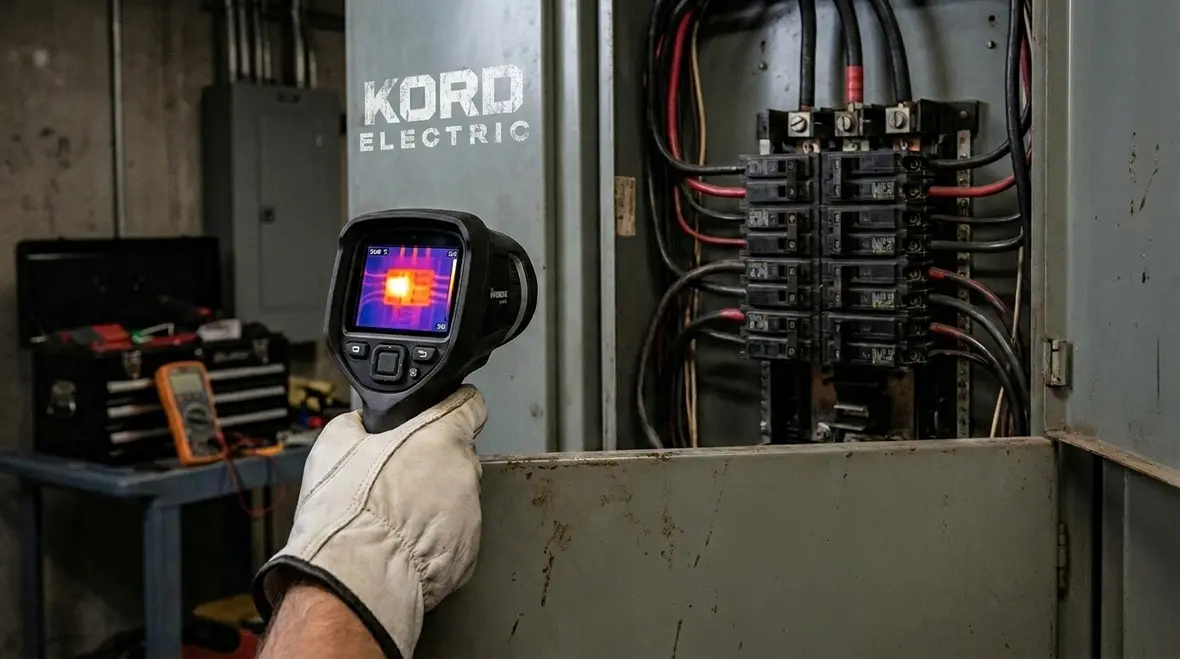
Signs Your Commercial Building Needs Electrical Upgrades
If a commercial facility is losing power, tripping breakers, or burning through maintenance budgets like it is auditioning for a reality show, the staff is usually the last to know. At Kord Electric, we specialize in commercial and industrial electrical service for major property buildings, and we have seen how slow issues turn into expensive downtime. That is why we often recommend commercial building electrical upgrades before the building decides to “self-host” a black out. In this guide, we explain the clear signs your facility needs electrical work, what those signs usually mean behind the walls, and how our technicians help you plan upgrades with calm, straightforward guidance. And yes, we do explain things in plain language, even when the wiring tries to act like a mystery novel.
Warning signs that point to electrical trouble in commercial spaces
In commercial environments, electrical problems rarely arrive as a single dramatic event. Instead, they show up as patterns. First, your lights may flicker when large equipment turns on, like HVAC systems or loading dock units. Then, you notice outlets that feel warm, or you see recurring nuisance trips in panels. When those issues repeat, the electrical system is often struggling with load, aging components, or poor connections.
Furthermore, some symptoms look harmless until they are not. For example, if your facility smells faintly like hot plastic during peak hours, that can indicate overheating terminations. Likewise, if you hear buzzing from switchgear or transformers, that often points to loose connections or failing components. Additionally, if maintenance staff says “it only happens sometimes,” we ask a very simple question: sometimes, for who, and how long?
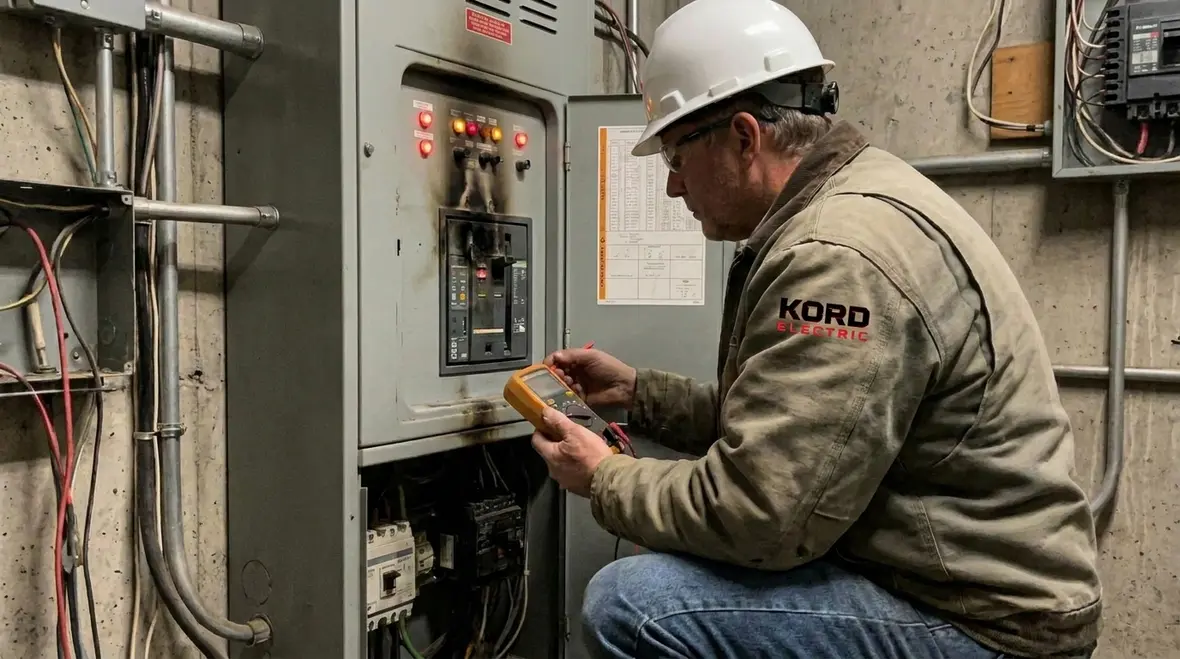
To keep things practical, our expert service staff typically watches for real clues like burn marks at panel covers, frequent resets, or uneven power quality that causes sensitive electronics to behave badly. When you catch these signs early, you reduce the odds of a bigger repair that interrupts operations.
Commercial properties that want a deeper dive into subtle warning signs also benefit from reading about hidden electrical risks in commercial buildings, where slow, behind-the-scenes problems are explained in the same practical, plain language.
Flickering lights, hot panels, and repeated breaker trips
When a facility experiences flickering lights, building managers sometimes blame the utility. However, in many cases, the root cause sits inside the building: voltage drop, overloaded circuits, or degraded connections in distribution equipment. Moreover, if breakers trip often, it can signal overload, short circuits, or protective devices that no longer match the load they serve.
Hot panels add another layer of urgency. Heat is not a marketing slogan, it is a warning. Overheating typically comes from loose wiring, failing breakers, corrosion at terminations, or dust and moisture inside enclosures. Over time, that heat accelerates insulation failure, which leads to arcing, smoke, and serious risk.
As for repeated breaker trips, our technicians treat them like a timeline. Instead of replacing parts at random, we trace the circuit history, review equipment loads, and inspect panels for signs of stress. Then, we recommend commercial building electrical upgrades where needed, such as correcting load distribution, upgrading bus bars, or modernizing protection settings.
And if you are thinking, “We will handle it after the next busy season,” that might be exactly when the system chooses to retire. Electricity does not respect calendars.
If your facility has already seen voltage swings or unexplained dips, it can help to review Kord Electric’s guide on voltage fluctuations in commercial and industrial facilities so you can connect the dots between symptoms, risk, and the long-term upgrades that restore stability.
When power quality and surge protection start failing
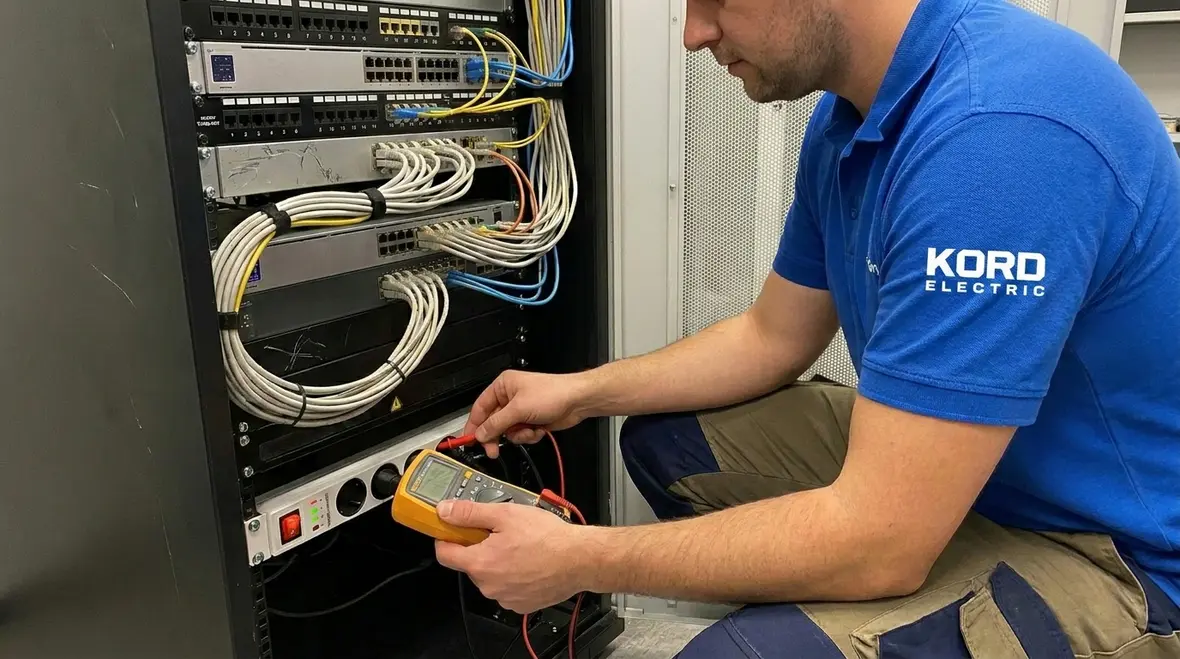
Commercial buildings run on electronics that do not tolerate dirty power. As a result, power quality issues show up as glitches: computers reboot, network switches reset, and certain chargers slow down. Sometimes the building staff notices that symptoms match specific operations, such as starting compressors or elevators. That alignment often indicates a voltage dip or harmonic distortion, which can stress sensitive equipment.
Then there is surge damage. If staff replaces devices more often than expected, or if you see burned network ports, failed controllers, or inconsistent performance in automation systems, you may have insufficient surge protection. Even a single nearby event can send energy spikes through shared circuits. Furthermore, if your facility uses legacy panels without modern coordinated protection, surges may travel where they should not.
We usually approach this with measured diagnostics. Our expert service staff checks power quality indicators and evaluates where transients enter the system. After that, we recommend targeted improvements that fit your building layout, including appropriate surge protective devices and coordination upgrades for distribution equipment.
In plain terms, we help the building deliver steadier power so your people keep working and your equipment stops acting like it is haunted by the ghost of a lightning bolt.
Because surge issues often show up alongside mislabelled or confusing panels, many facility teams also benefit from reviewing Kord Electric’s electrical panel labeling best practices guide so that future troubleshooting and upgrades become faster and more accurate.
Signs of aging electrical distribution and outdated equipment
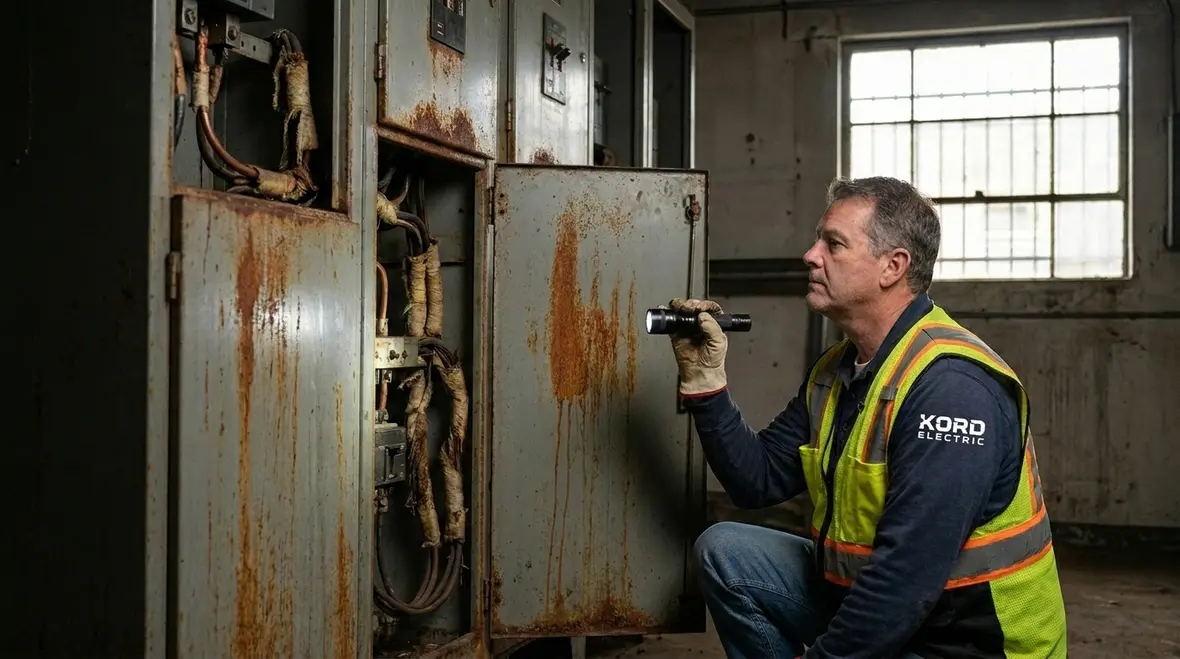
Every electrical system has a service life. Yet many commercial facilities keep older equipment in place far past what is practical. One sign is frequent maintenance on the same assets: switchgear repairs, recurring breaker replacement, or “patch and pray” fixes that never truly stabilize performance. Another sign is that parts are harder to source, especially for equipment installed years ago.
Also, older distribution can lack the capacity needed for today’s loads. Modern facilities often add equipment over time: extra refrigeration units, EV chargers, expanded IT rooms, or new production lines in industrial settings. When the electrical system does not grow with the building, circuits become overloaded. Then, protective devices react sooner, and voltage drops become more obvious.
In addition, aging insulation and corroded terminations raise the risk of arcing. Arcing does not always announce itself with flames. Sometimes it starts as micro-events that worsen connections. Over time, those events lead to failure. That is why we inspect equipment condition, not just symptoms.
Our technicians also evaluate whether the facility needs structural upgrades like updated service entrance gear, improved panelboards, or better grounding and bonding. When we identify gaps, we recommend commercial building electrical upgrades that enhance reliability, support future growth, and meet modern safety expectations.
Leaders who want a deeper understanding of whole-building improvements can also review Kord Electric’s rewiring cost guide for commercial electrical systems to see how strategic upgrades turn aging infrastructure into a long-term asset instead of a recurring headache.

Building expansion, renovations, and new loads that stress the system
Commercial and industrial properties constantly change. A tenant remodel, a new manufacturing line, a newly installed lighting upgrade, or a warehouse automation project can all shift electrical demand. If your team adds loads without updating distribution planning, the system ends up stretched.
In practice, signs appear after the renovation. Suddenly, the building runs at a higher baseline load. Then, voltage readings drift, equipment cycles longer, and certain areas lose performance. You might also see equipment heating where it never used to. That is a big clue: the electrical system is not keeping up with what the building now demands.
Moreover, expansion can expose coordination issues. For example, if old breakers do not coordinate well with downstream devices, faults may shut down larger sections of the building instead of just the affected circuit. That causes downtime you can measure in lost revenue, not just repair hours.
When our expert service staff reviews a renovation or planned expansion, we look at load calculations, available capacity, and the way power flows through the building. Then, we propose improvements that match your operational goals. That might mean upgrading feeders, adding capacity to panels, or improving switching for critical loads.
Think of it like plumbing, but with higher stakes. You can add more people to a building and not update the water line, and you will eventually regret it. Electricity works the same way, just with fewer opportunities to laugh later.
If those changes include new EV charging, lighting, or specialized equipment, resources like Kord Electric’s commercial EV charging installation cost guide and their articles on electrician cost and maintenance planning help you budget upgrades before the first breaker complains.
Safety risks: arcing, moisture intrusion, and code related concerns
Safety must lead the conversation. If you see rusted enclosures, water staining near electrical rooms, or evidence of moisture intrusion around conduits, that elevates risk. Moisture can reduce insulation resistance and contribute to corrosion at connections. Then, when the load rises, the system can behave unpredictably.
Arcing indicators include scorching around breakers, melted insulation, or visible pitting in equipment. Even if the damage seems minor, it often signals a repeating electrical event. Additionally, if your facility uses materials that no longer align with modern safety practices, your risk may grow without warning.
We also see code and compliance issues during inspections. While requirements vary by location and facility type, the key point stays the same: outdated equipment can fail earlier and respond worse to faults. As a result, commercial building electrical upgrades often include not just capacity work, but also safety enhancements that reduce fault risk and improve protective device performance.
Our technicians emphasize a step by step approach. They inspect, document findings, and explain what they find in direct language. Then, they help building leadership choose upgrades that improve safety and reduce downtime, not just patch a symptom.
Because electrical safety rules change over time, many facility teams also review Kord Electric’s explanation of NFPA 70 and the national electrical code to see how modern standards shape upgrades, inspections, and long-term planning.
FAQ: commercial electrical upgrades for major properties
Ready for dependable power? Call Kord Electric
If your team keeps resetting breakers, replacing devices, or living with flickering lights, it is time to treat the electrical system like the core asset it is. Kord Electric serves commercial and industrial facilities and major property buildings, and our technicians explain findings clearly, then recommend practical commercial building electrical upgrades that improve safety and reliability. Call us today to schedule an inspection. We will review what you are seeing, map the likely causes, and build a plan that keeps your operation running. Because downtime is expensive, and so is “waiting to see.”
For facilities in Southern California, you can also explore Kord Electric’s dedicated Los Angeles County electrical services page, which outlines how their team supports complex commercial and industrial properties with compliant, reliable power upgrades.
Whether you are dealing with emergency failures, planning a renovation, or simply tired of wondering what is happening behind the walls, Kord Electric’s combination of diagnostics, maintenance, and strategic upgrades helps your building act less like a suspense story and more like a steady, predictable system you can trust.


