
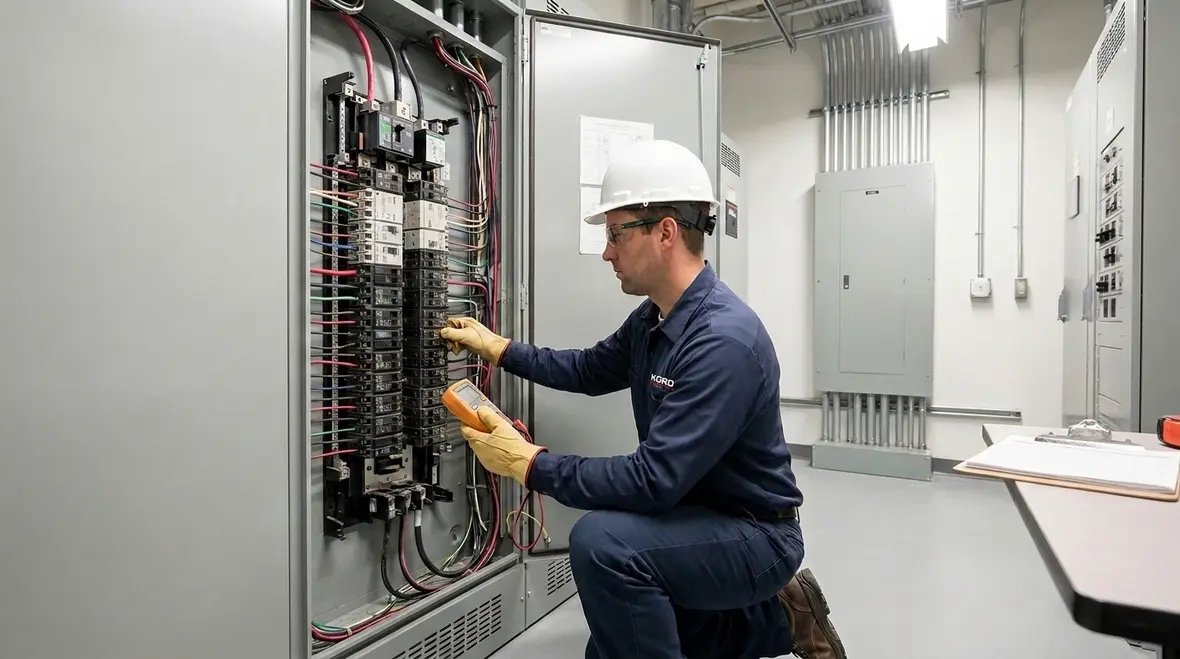
Electrician Near Me: How to Choose a Commercial Electrical Contractor
If you are searching Electrician near me, it usually means you need more than a quick fix. You want a contractor who can handle commercial and industrial systems without drama, delays, or “we will get to it” energy. So, here is what we do when you need Electrician Near Me: How to Choose a Commercial Electrical Contractor, especially for major property buildings. We guide clients through the choices that matter, and we explain things in plain language because our technicians do not just work, they teach.
In the rest of this article, we break down how to pick a contractor that stays safe, stays compliant, and keeps your facility running. And yes, we will keep it real, because electricity never cares about your schedule, and neither should your contractor.
Electrician Near Me: How to Choose a Commercial Electrical Contractor and the real factors that decide quality
When a client asks for an electrician near me, we often start by asking one simple question in our heads, and a different one out loud. Out loud, we ask about the building type, the tenant load, and the system risks. In our heads, we ask whether the contractor can manage commercial scale.
Here is what we look for, and we recommend you look for too:
- Project readiness: Do they review drawings, specs, and site constraints before starting?
- System knowledge: Can they work across power distribution, lighting controls, and life safety systems?
- Process and documentation: Do they provide clear scope notes, test results, and closeout paperwork?
- Safety culture: Do they plan work so people and equipment stay protected?
- Communication: Can your contact explain steps without turning the job into a guessing game?
Then, we help you connect the dots. For example, a contractor may sound confident, but confidence without proof is like a Wi Fi password with no internet. It looks good, and it still does nothing.
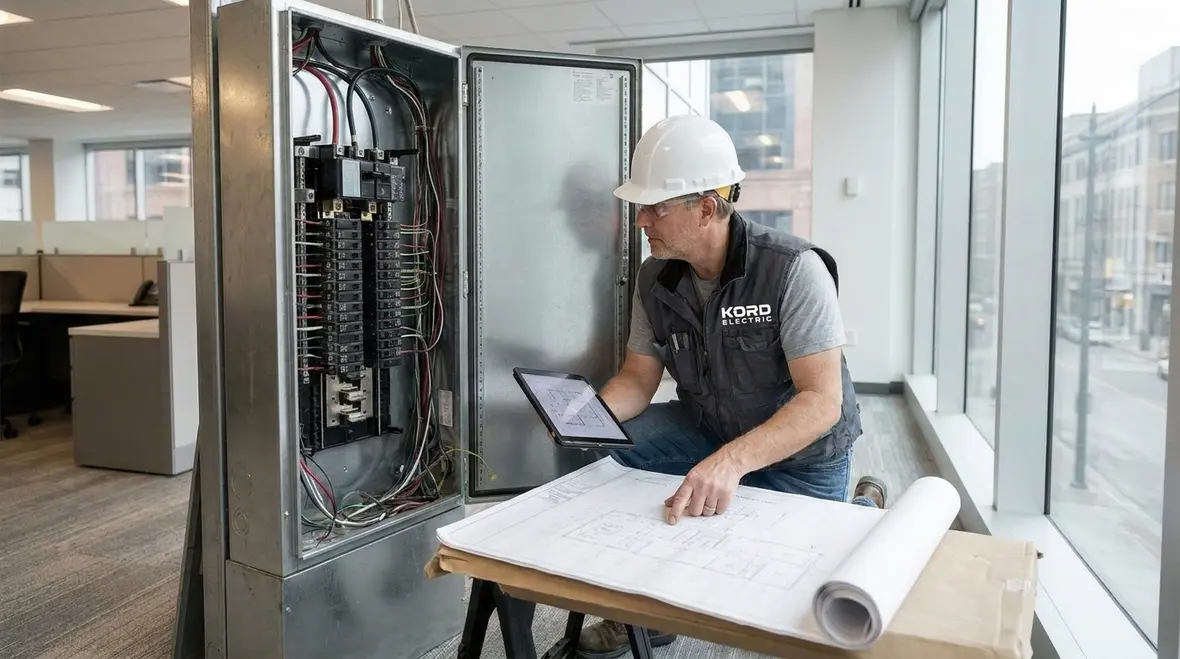
Commercial electrical scope: match the contractor to your building type
Commercial and industrial facilities are not all the same, and neither are the electrical challenges. If you run a warehouse, you think about motor loads, harsh environments, and uptime. If you manage a retail or office building, you often care about tenant changes, lighting performance, and clean power.
So we advise you to align the contractor to your exact need:
- Facilities with heavy loads typically require a contractor who understands load planning and distribution systems.
- Properties with multiple tenants need careful scheduling, clean labeling, and controlled shutdown procedures.
- Major building projects need coordination with other trades and clear test and commissioning steps.
- Life safety and code critical systems demand accuracy and documented verification.
Also, you want technicians who can explain tradeoffs. We tell clients why one approach may reduce downtime, and we explain it without turning it into a textbook. Meanwhile, our expert service staff keeps expectations clear so nobody is surprised later.
If you want to see how this plays out in real projects, you can explore how our team approaches upgrades in major facilities in resources like our commercial electrical service capacity upgrade guide, where we break down how load changes, system stress, and future growth all shape the electrical decisions for bigger properties.
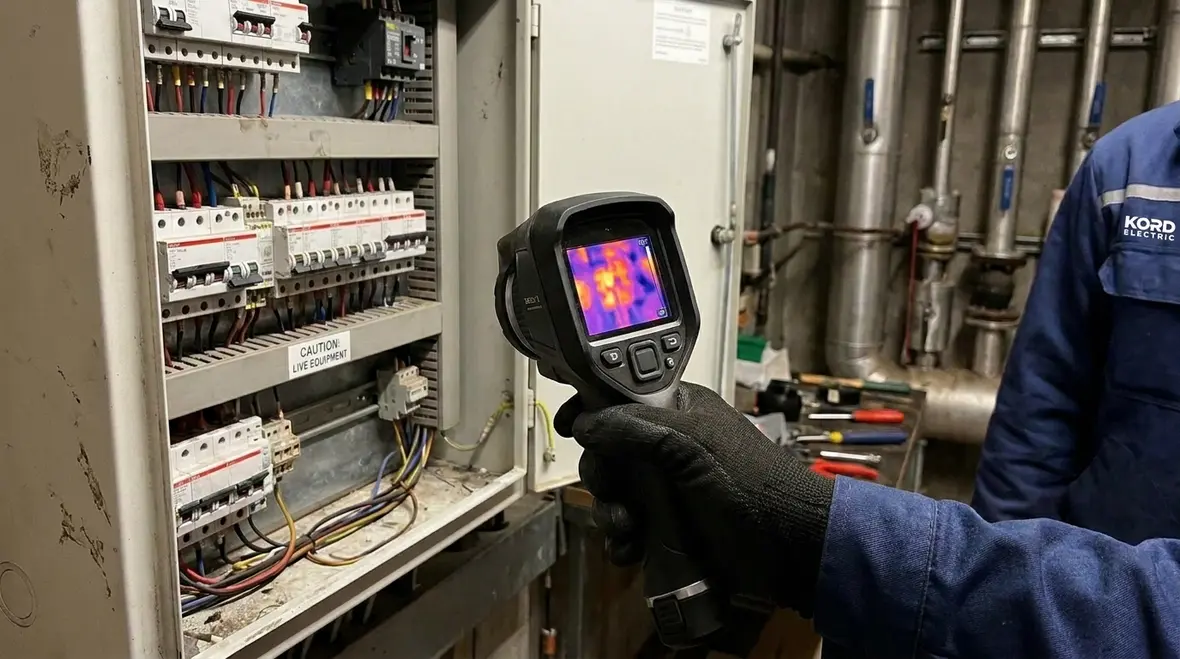
Match scope, experience, and expectations
When you search Electrician Near Me: How to Choose a Commercial Electrical Contractor, you are really asking whether a team has already lived through the kinds of problems your property faces. A good match looks like this: they have experience with your building type, they can talk through risks without guessing, and they can show you past work that is more than a highlight reel.
For multi-tenant buildings, you might also want a partner who understands commercial tenant improvement work from the inside. Our own Commercial Tenant Improvement Electrical: Planning, Wiring & Inspections roadmap walks through how planning, wiring, and inspections come together so each new tenant gets safe, reliable power without creating headaches for the next one.
Licensing, standards, and proof of compliance that actually matters
In commercial work, rules do not exist to slow you down. They exist because people rely on the electrical system every day, and because failures cost more than money. That is why we focus on licensing, inspection readiness, and standards that apply to your facility.
When you vet a contractor, ask how they handle:
- Field testing and verification for new or modified systems
- Code-aligned installation practices for wiring, overcurrent protection, grounding, and panels
- Shutdown and restart procedures for critical circuits
- Documentation for permits, inspections, and closeout
Then we go further. Our technicians do not just “install and move on.” They take time to confirm that the job meets expectations. Moreover, our team supports the realities of commercial property owners by keeping the paperwork tight and the results easy to verify.
Because yes, the inspector may not ask about your feelings, but they will ask about your documentation. Electricity has never been big on feelings.
Compliance as a habit, not a one-time event
A contractor who treats compliance as a checkbox at the end of the job is going to miss things. We prefer a process where code-conscious decisions show up from the first walk-through to the final test report. That includes load calculations, protective device coordination, labeling, and clear records for future work.
If you like to see how that mindset looks in detail, our Electrical Infrastructure Upgrade Planning Guide follows the steps commercial buildings take when power systems need more than a bandage: from early warning signs to inspection prep and long-range planning.
Experience with commercial upgrades, troubleshooting, and downtime control
Most facilities do not fail all at once. Instead, problems show up as flicker, nuisance trips, uneven lighting, failed controls, hot spots, or recurring breaker issues. However, the fix should not be guesswork. It should be a plan.
At Kord Electric, we help clients with both upgrades and troubleshooting, and we build solutions around uptime. That means we think about sequence: what you can shut down, what you must keep running, and how to maintain safe working conditions.
Here is how we approach downtime control:
- We assess first by reviewing existing system details and observing failure patterns.
- We isolate carefully so we do not create new problems while solving the old one.
- We schedule smart by coordinating work windows with your operations.
- We test after so performance returns as expected, not “close enough.”
Then, our expert service staff explains the “why” behind each decision. If a component needs replacement instead of repair, we say it plainly, and we back it up with facts from the job. In other words, we do not sell fear. We sell clarity.
And if you are wondering whether this is overkill, remember that downtime for a major property building is not a minor inconvenience. It can be a headline. Ask any building manager who has tried to reschedule tenants at the last minute.
For a deeper walk-through on how we troubleshoot when systems misbehave, our Commercial Electrical Troubleshooting Guide for Facilities shows how we move from first symptom to final fix without turning your building into a test lab.
Why “electrician near me” really means “electrician who understands downtime”
In commercial and industrial facilities, the cost of downtime is rarely the electrician’s invoice. It is lost production, frustrated tenants, overtime staffing, and very long days. So when you choose a contractor, you are choosing how they think about risk. Do they plan outages early, explain contingencies, and coordinate with your team? Or do they show up, open panels, and hope for the best?
Our commercial electrical troubleshooting process connects directly to planned maintenance and upgrades, which is why so many facilities pair it with programs like our commercial electrical preventative maintenance checklist or Los Angeles County electrical services that keep systems ready long before a failure tries to make the evening news.
How we communicate on job sites and keep projects predictable
Electrical work can feel slow when the communication is vague. However, when a contractor runs a clear process, clients usually feel calm even during complex work. We aim for that calm.
We communicate through practical steps:
- Clear scopes so you know what is included and what is not
- Upfront timelines that reflect site realities, not wishful thinking
- Task status updates that explain what changed and why
- Clean labeling and organized closeout
Additionally, our technicians take time to explain things as they go. That means less confusion for facility teams, and fewer “wait, what did we agree on?” moments. People often forget that the best electrical contractor is not only skilled. The best contractor is also dependable.
Also, we respect the property. We work like we expect the facility to keep running after our tools are gone, because that is the standard. If someone promises a miracle timeline without planning, that is not a plan, it is a magic trick.
For teams that prefer a data-first approach, our Data-Driven Electrical Design for Commercial & Industrial Facilities article shows how modeling, coordination, and careful communication up front turn complex electrical scopes into predictable projects instead of stressful improvisation.
Keeping multi-phase projects on track
On larger sites, electrical work often spans phases and budget cycles. So picking an electrician near me is also about picking someone who can think in versions: what happens this shutdown, what can wait, and how do today’s decisions protect tomorrow’s schedule?
We treat communication as part of the deliverable: site notes, marked-up drawings when needed, clear recommendations, and a shared understanding of what success looks like when the last panel door closes.
Choosing Kord Electric for industrial and major property buildings
Some contractors work across everything and master nothing. We do not. We focus on commercial and industrial facilities and major property buildings. That focus matters, because we build experience that translates into better results on the next project, not just a successful story on the last one.
When clients contact us through Kord Electric, our team aligns quickly on the goal. Then we confirm details like the system scope, the building constraints, and the operational needs. After that, our technicians and expert service staff coordinate the path to completion with clear explanations and documented outcomes.
To be direct, we do not treat a major building like a small job in a bigger costume. Instead, we treat it like the system it is. And when the job includes complex power distribution, electrical upgrades, or troubleshooting under real-world constraints, we bring the method you need.
So if you are asking for Electrician Near Me: How to Choose a Commercial Electrical Contractor because you want a dependable partner, we are ready. We can help you evaluate options, plan the work, and move forward with confidence.
If your site is in Southern California and you are weighing next steps for a facility, our Los Angeles County electrical services for commercial and industrial facilities bring together design, construction, troubleshooting, and maintenance so you are not juggling separate vendors for every new challenge.
FAQ
Conclusion: call Kord Electric before the problem grows
If you need an electrical contractor for a commercial or industrial facility, do not gamble with random availability. Call Kord Electric and let our technicians and expert service staff map the right plan for your building. We focus on major property work, safe execution, and clear communication from start to finish. Then, you get practical guidance, solid results, and less downtime stress. Reach out today so we can review your scope, discuss timelines, and move your project forward.


