Emergency Backup Power System Testing Guide
Emergency Backup Power System Testing: The Calm Before the Storm
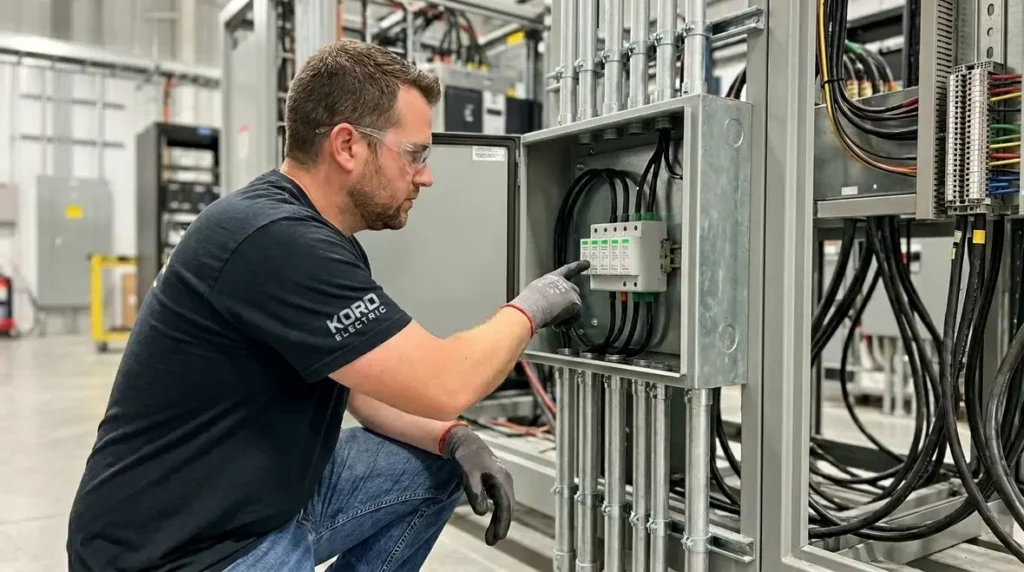
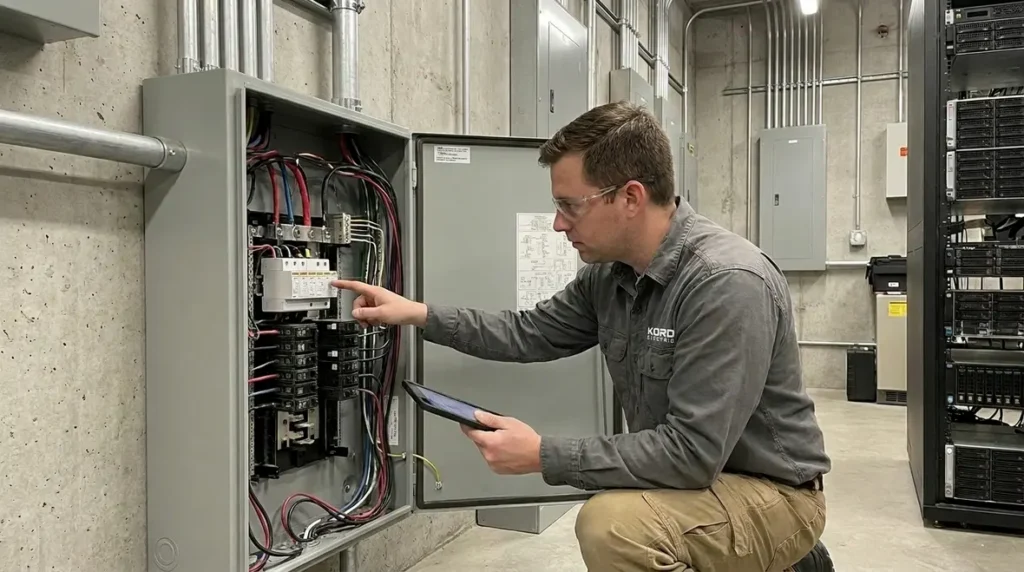
When emergency backup power systems fail, the problem rarely arrives with a warning sign. At Kord Electric, we start with emergency backup power system testing not as paperwork, but as protection for commercial and industrial facilities and major property buildings. Our technicians and expert service staff check the system while it still behaves, so the building team does not have to discover the truth during a real outage. And yes, we have seen plenty of “it worked last time” situations. Last time is adorable, like saying the smoke alarm is a “suggestion.”
Still, the point is simple: proactive backup power testing prevents costly failures. Therefore, we explain what we do, we show what we find, and we help facility leaders stay ahead of risk instead of chasing it after the lights blink.
Why proactive testing keeps downtime from becoming a disaster

Commercial operations rely on power for more than comfort. They need it for safety systems, critical processes, data, access control, refrigeration, elevators, and life in general. Consequently, backup generators and transfer equipment must perform exactly when called. Yet many organizations test only when something feels “off,” which is like waiting to service a fire extinguisher until the office already smells like panic.
Proactive backup power testing helps because it validates performance under controlled conditions. As a result, we identify issues early: weak battery strings, aging controls, worn connections, fuel delivery concerns, and transfer logic problems. Then we correct them before they turn into multi day outages, expensive emergency labor, or damaged equipment.
Most failures do not happen out of nowhere. They build quietly over time, and testing turns that quiet problem into measurable data. In other words, we trade surprises for schedules.
What our expert team checks during an emergency power test
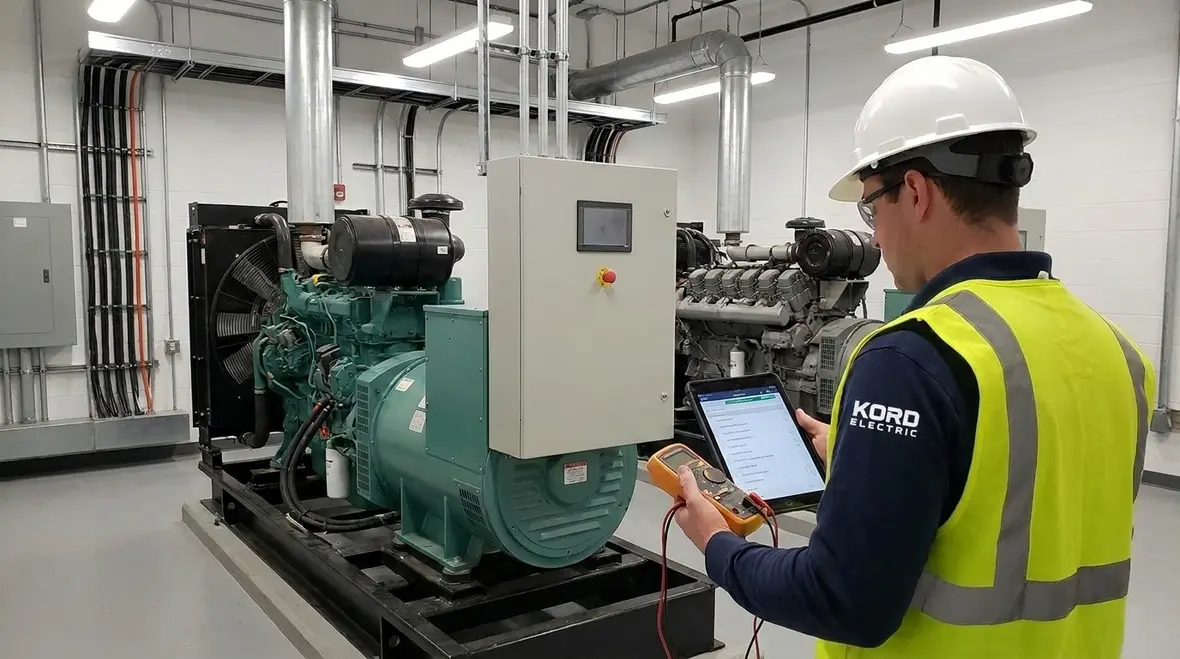
Kord Electric sends technicians who approach each system like it is part of the building’s safety culture, not a box that can be ignored. First, we review the system documentation and recent maintenance history. Then we inspect key components and controls. After that, we verify operation step by step, so the test covers real behavior, not just a checkbox.
During emergency backup power system testing and related checks, our team typically verifies the essentials such as:
- Generator starting sequence, including signals from controls and protective relays
- Transfer to emergency source, ensuring the switchgear and transfer switch react as designed
- Voltage and frequency stability during load changes
- Fuel system readiness, including supply behavior during operation
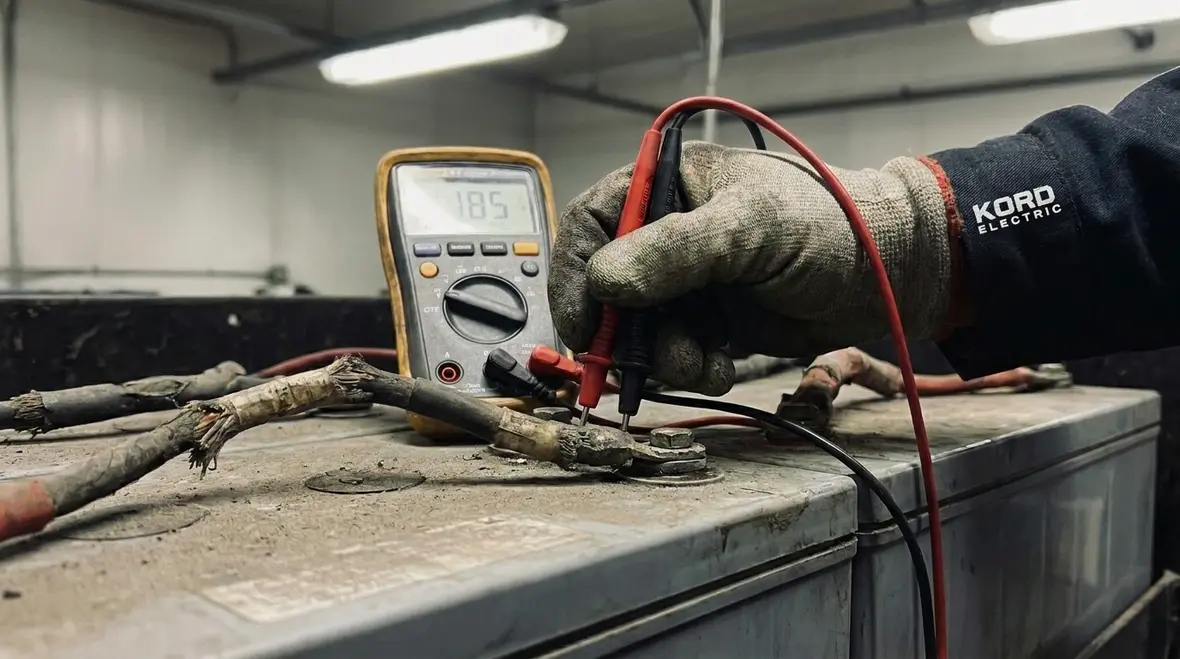
- Battery health for dependable crank and control power
- Load handling performance, so critical loads stay protected
In addition, we do not stop at “it started.” We watch how the system behaves while it runs. Therefore, our technicians also check for abnormal trends that can point to future breakdowns, like excessive voltage drop, unstable output, or control board faults.
For facilities already investing in broader reliability strategies, pairing these tests with a structured electrical preventive maintenance program can turn one-time checks into an organized reliability plan that protects critical systems year-round.
How testing prevents hidden failures that only show up under pressure
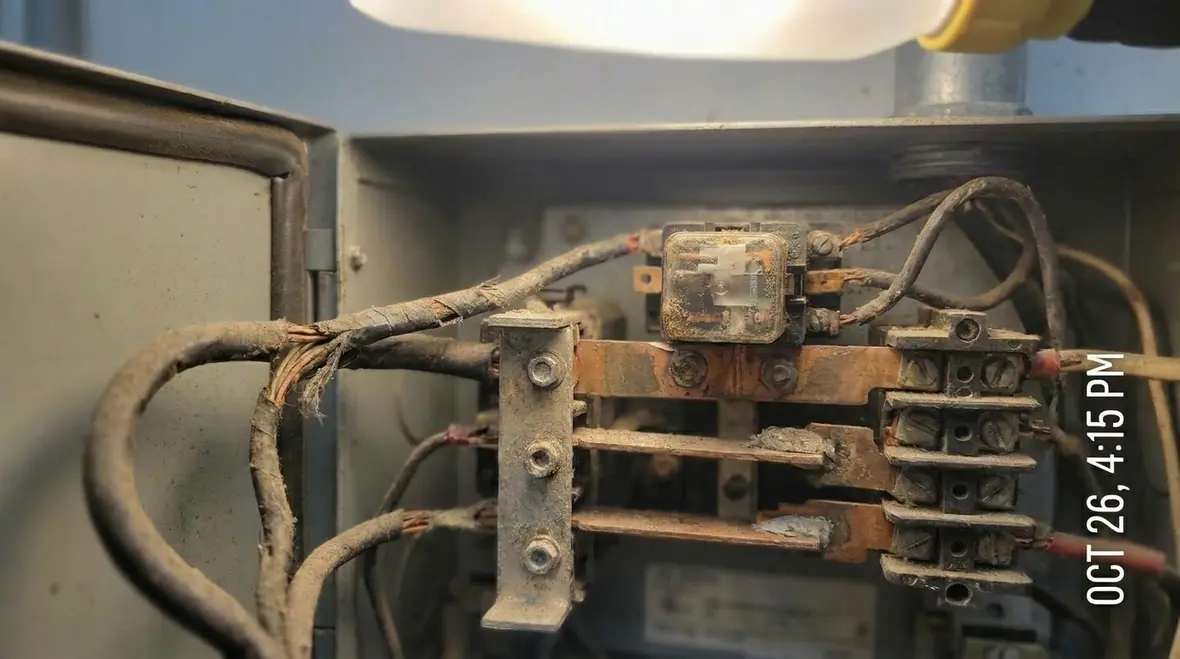
Some problems hide behind normal operations. So the generator can sit quietly for months, looking fine, while internal components drift away from spec. Then an outage hits, and suddenly the system must perform in seconds, with real demand and real stress. That is where failures tend to appear.
For example, transfer switch contacts can degrade while appearing operational during light checks. Likewise, control wiring can corrode in ways that do not show up until the system runs under load and the electrical environment shifts. And battery systems can weaken gradually, so the generator starts on one test but struggles when the conditions stack up during an actual event.
Meanwhile, fuel performance can change due to storage conditions. Even when fuel exists, the system may not deliver what it needs at the right flow rate. Thus, emergency backup power system testing is not just starting the generator. It is verifying readiness across the chain of events.
To keep this practical, our expert service staff explains findings in plain language. We connect the observed behavior to likely causes and we recommend fixes that facility leaders can schedule with confidence.
Many facilities also combine generator and transfer testing with broader power quality checks. When issues like voltage fluctuations are caught and corrected early, backup systems face less stress and deliver more stable performance when they are needed most.
Cost control: testing that saves money without cutting corners

When people hear “testing,” they often think it is an added expense. However, proactive backup power testing tends to be a cost control tool because it prevents bigger bills. In many commercial and industrial situations, a failure leads to emergency callouts, rushed parts replacement, overtime labor, and downtime that directly affects revenue or compliance. Therefore, the budget question becomes simple: pay earlier for verification, or pay later for reaction.
Testing also reduces risk of secondary damage. If a system transfers improperly or output drops during critical load handling, other equipment can face stress. Over time, that stress shortens life and creates more maintenance needs. So the real cost is not only the event itself, but the chain reaction that follows.
Kord Electric works with building teams to plan testing windows and coordination. We understand that major property buildings do not pause just because a vendor scheduled a test. Consequently, we schedule around normal operations and communicate clearly, so operations teams stay informed and safe.
And yes, we keep the humor gentle. Nobody wants to be the person who says, “We will test it after the outage.” That is not a maintenance plan. That is a dare.
For facilities that want to go beyond one-off visits, pairing emergency backup power system testing with structured commercial and industrial electrical maintenance plans can turn cost control into a long-term reliability strategy.
Planning a test schedule that matches how your facility actually runs
A smart testing plan fits the facility, not a generic template. That is why our technicians start by learning how the building functions. For example, a data and telecom environment may require different verification emphasis than a distribution facility. Likewise, a high occupancy tower has safety expectations that differ from an industrial site with heavy equipment.
In general, proactive testing should address operational needs, seasonal impacts, and equipment age. As equipment gets older, the margin for error shrinks. Therefore, testing needs to be more frequent, more detailed, or both, depending on findings.
Our team also considers system complexity. Switchgear, parallel configurations, voltage regulation, and integrated control systems all influence what we verify and how we interpret results. So we focus on the parts that matter most to reliability.
We then document outcomes clearly. Facility leaders receive results that show what worked, what changed, and what needs attention. Transitioning from “we ran a test” to “we proved readiness” is where the real value lives.
For some properties, that plan lives inside a broader electrical preventive maintenance program. For others, it becomes part of a risk management strategy tied directly to insurance, compliance, and resilience goals.
FAQ: emergency power testing for commercial and industrial buildings
When the system says “ready,” you need proof
Anyone can claim the generator is “good.” But proof matters, especially when safety and critical operations depend on performance. Proactive backup power testing gives facility leaders something stronger than confidence. It provides verification, documentation, and actionable next steps.
At Kord Electric, we rely on experienced technicians and expert service staff to check the system’s full behavior, not just its surface signals. As a result, commercial and industrial buildings and major property buildings avoid costly failures, reduce downtime risk, and protect the equipment that keeps operations moving.
If you want reliability that holds up when it matters, contact Kord Electric today. We will review your current setup, discuss testing goals, and schedule emergency backup power system testing and verification with a plan your team can trust. Don’t wait for the next outage to find out what “ready” really means.
If your facility is already facing an urgent issue or an unexpected outage, our dedicated emergency electrical services team can respond quickly, stabilize the situation, and then help you build a preventive testing strategy so the next call is planned, not panicked.
From emergency backup power system testing to full-scale preventive maintenance and emergency response, Kord Electric helps commercial and industrial facilities treat power reliability as a system, not a guessing game. That calm before the storm? It is not luck. It is preparation.
Schedule Your Emergency Backup Power System Testing
Ready to turn “we think it will work” into documented performance? Our team can help you create a testing schedule that matches your operations, integrates with existing maintenance plans, and supports long-term reliability goals across your entire electrical infrastructure.
Whether you manage a high-rise tower, a manufacturing facility, a data-driven environment, or a multi-building campus, emergency backup power system testing is your chance to measure readiness while the lights are still on, not during the scramble when they go out.