Emergency Electrical Risk Management for Offices
Emergency electrical risk management for offices starts before the lights flicker
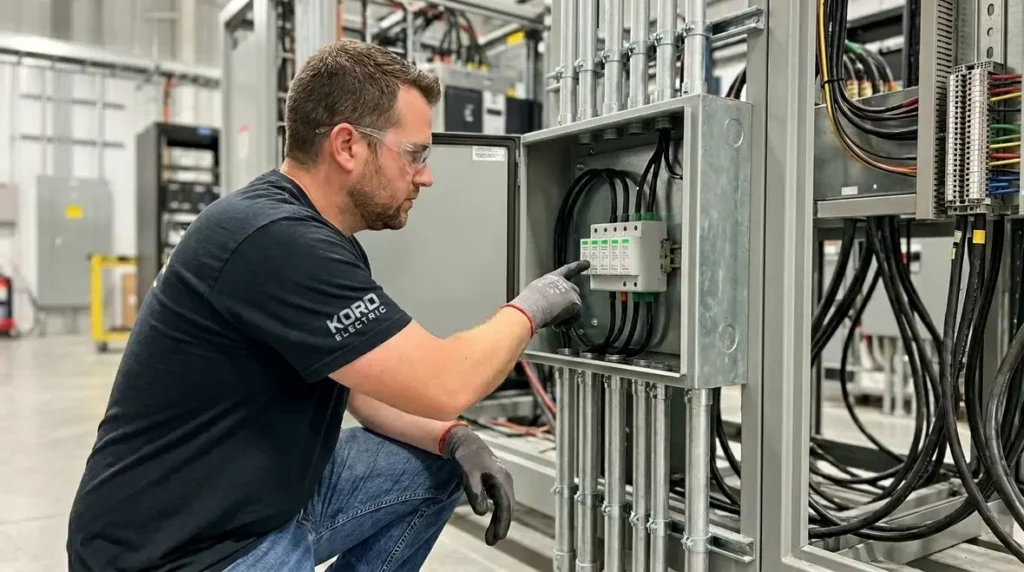
When electrical trouble hits a commercial workspace, it rarely arrives with a polite knock. It often shows up as nuisance tripping, warm panels, dim task lighting, or a smell that makes people look around like, “Is this the new scent of productivity?” At Kord Electric, we build emergency electrical risk management for offices into daily operations, so failures cost less time, less money, and fewer headaches.
Our technicians and expert service staff plan for what can go wrong, then act early. And if something still goes sideways, our team responds fast with a clear process. In other words, we do not wait for “surprise” maintenance. We prevent it.
What office electrical failures usually begin with

Most office electrical failures do not start as dramatic explosions. They start smaller, and then grow. Over time, loose terminations create heat. Moisture works its way into enclosures. A panel that looks fine during a walk through can still hide a hotspot that only shows up under load. And because offices run on schedules, equipment may stress circuits right when people need it most.
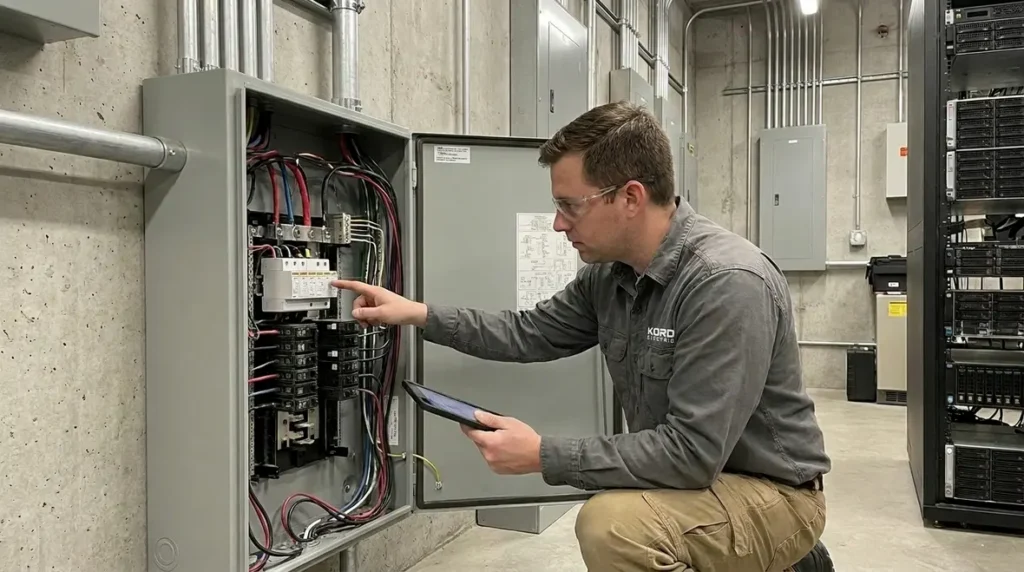
To keep things calm, our electrical professionals review common risk points such as distribution panels, feeders, grounding, and branch circuits. Then we connect those findings to real office use. For example, we look at where loads concentrate: HVAC controls, server closets, copy rooms, kitchen equipment, and after hours lighting. When a facility loads unevenly, weak parts fail first.
Also, let’s be honest. People tend to blame “the power company” when breakers trip. Sometimes that is true. Mostly, it is not. We help facilities prove the cause by checking the system, not just the symptom.
How proactive risk management reduces emergency calls
In commercial and industrial facilities, emergency work costs more because time matters and production or daily service gets disrupted. Therefore, we focus on early detection and disciplined maintenance. We use a proactive approach that supports safe operation and helps avoid sudden breakdowns.
First, we establish an electrical risk baseline. Next, we measure how conditions change over time. Then we schedule repair work before damage spreads. That matters because electrical problems often worsen in quiet ways. A slightly overheated connection today can become a burned termination tomorrow.
Our service staff also documents what they find, so others in your team understand the “why.” If we replace a component, we explain what failed and how similar failures can be prevented in other areas. That kind of clarity helps property managers make better calls without second guessing.
And yes, we use humor carefully. When someone says, “It’s probably fine,” we gently remind them that “fine” is a voltage level, not a maintenance plan. Then we get to work.
Code compliance that prevents costly surprises
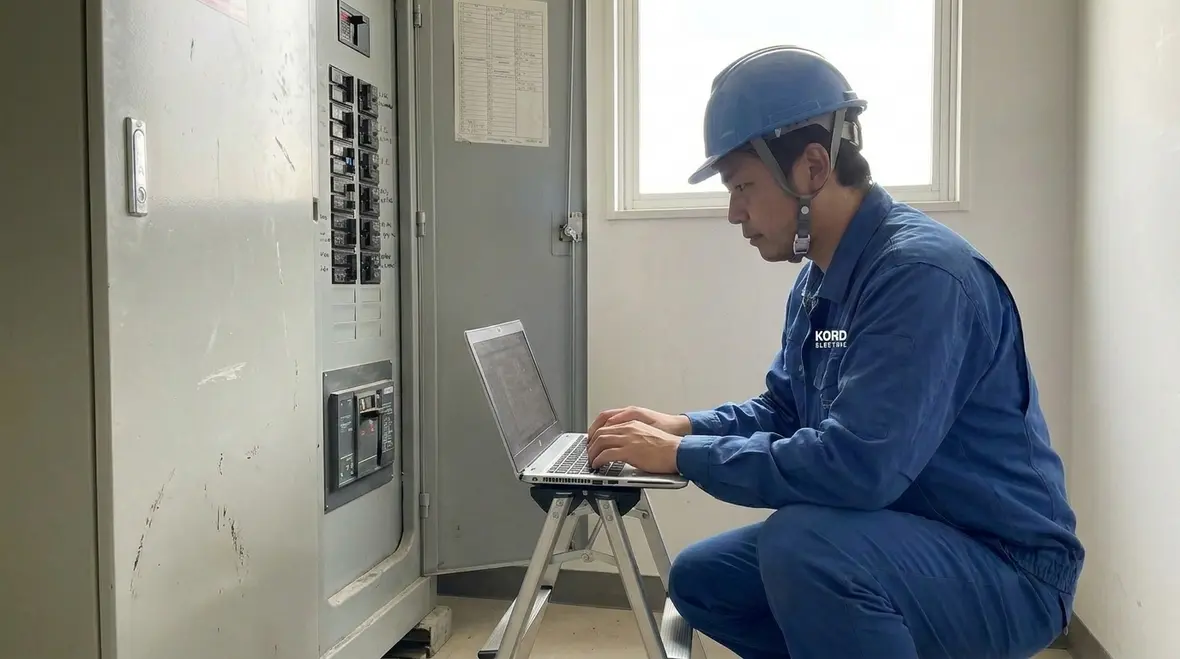
Electrical systems in offices must meet safe installation rules. Beyond safety, code compliance also protects operations by reducing fault conditions and improving protective device behavior. Kord Electric supports facilities by aligning field practices with the expectations laid out in our lighting installation code compliance guide, as well as broader electrical safety rules that apply to commercial spaces.
Our team pays attention to details that often cause real-world problems. For lighting, we verify proper wiring methods, correct luminaire support, correct controls, and safe circuit protection. For the rest of the system, we check how conductors terminate, how equipment grounds connect, and whether protective devices match the load they serve.
In addition, we coordinate with facility operations to keep compliance work from turning into a full week of downtime. We plan testing at off peak hours when possible and we stage materials so the job stays efficient. When your office still needs power, our technicians work like they respect that fact. Because they do.
Thermal checks, breaker behavior, and testing that actually matters
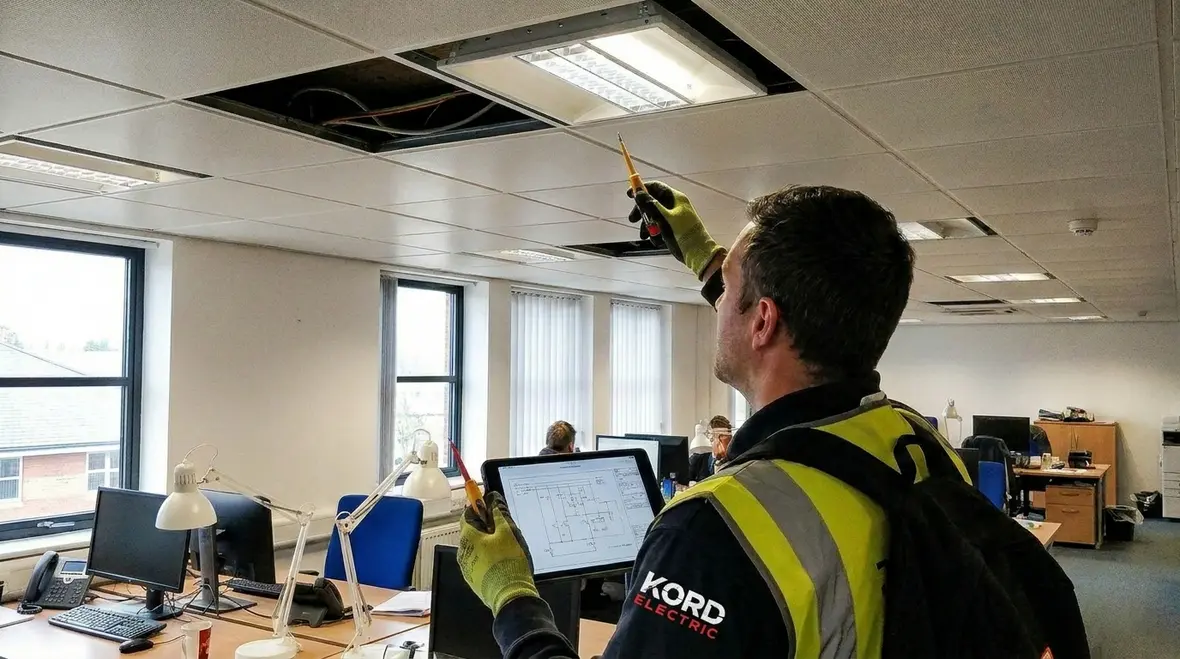
People often schedule electrical service only after something breaks. However, proactive risk management for offices relies on testing that reveals weakness early. We use practical methods to find problems that routine visual checks can miss.
For example, we commonly evaluate:
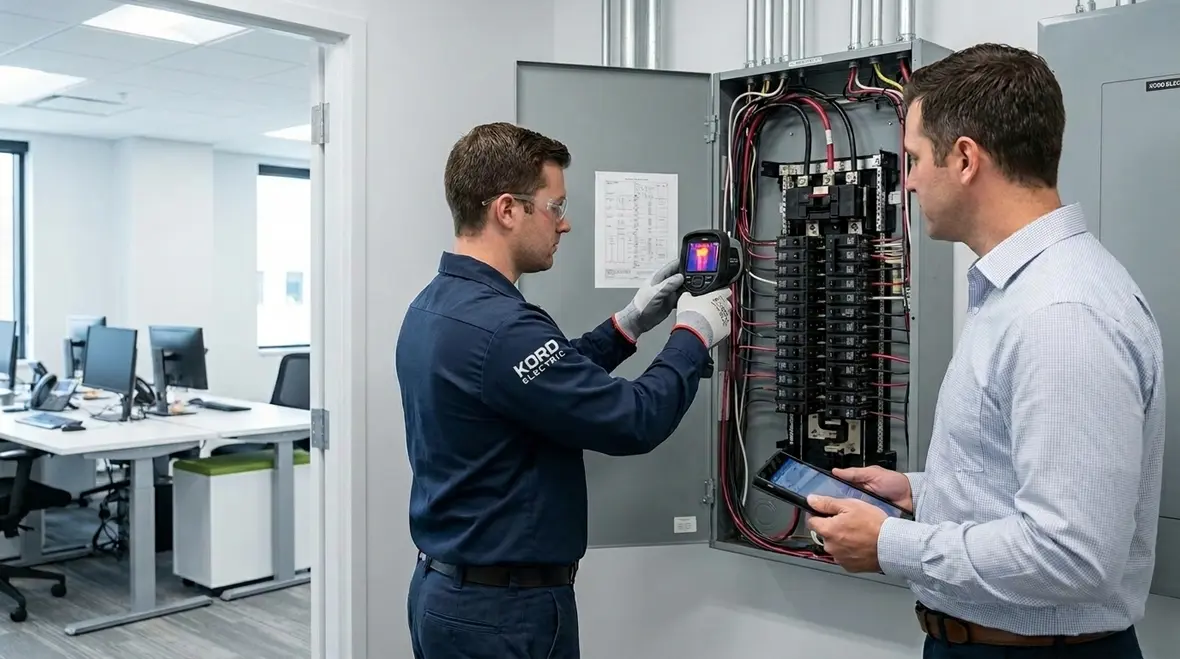
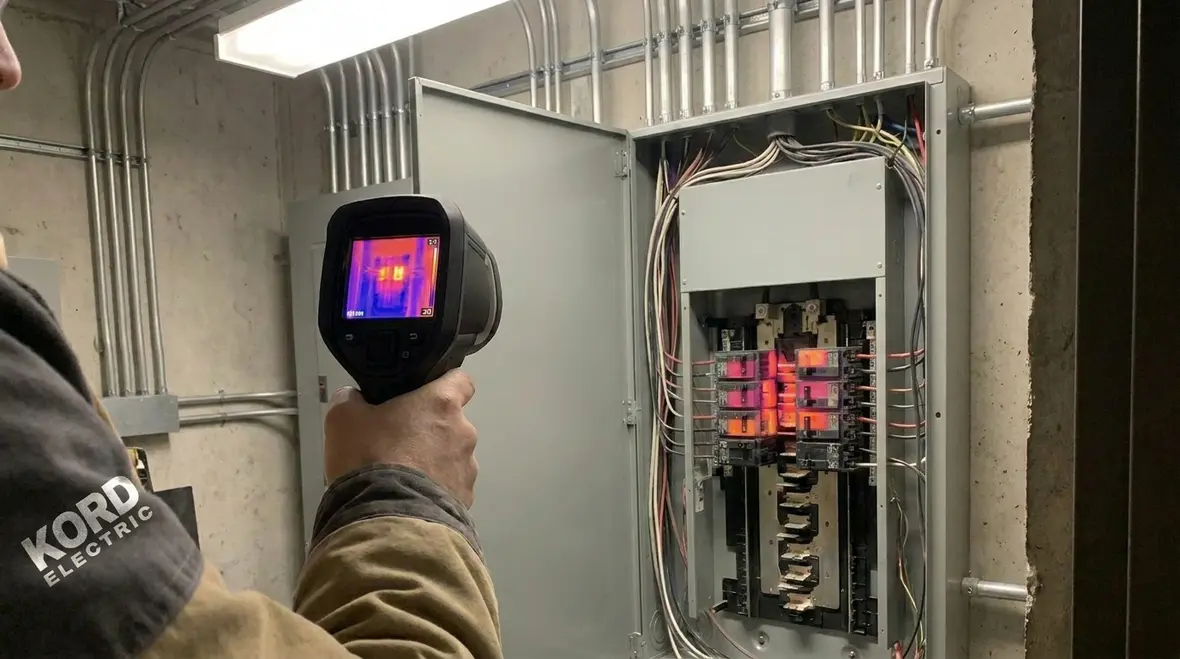
- Thermal condition: We look for abnormal heat at terminations, bus bars, and connections during typical load conditions.
- Breaker and protective device behavior: We track nuisance trips and verify settings so the system protects itself in a real fault, not just in a lab.
- Grounding and bonding: We confirm stable connections that support safe fault clearing and reduce shock risk.
- Load balance: We address uneven phases that can lead to overheating and premature wear.
As loads grow, systems drift. Therefore, we treat testing as a living process. We review results, then recommend actions based on risk, not guesswork. This avoids the “replace everything” approach that budgets hate and managers regret. We target the actual weak links.
And if you ever wonder whether testing is worth it, imagine the alternative. You can either check the system now, or you can let a failure decide the schedule. The system does not care about calendars, so we do.
Building an office electrical risk response plan
Prevention matters, yet emergencies still happen. When they do, the difference between chaos and control is a plan that staff can follow under stress. Our emergency electrical risk management for offices includes clear steps that support fast decision making.
We help facilities prepare by defining key roles and procedures. That can include:
- Notification flow: Who calls, who receives info, and who authorizes shut down or isolation.
- System isolation logic: How to identify affected sections safely without expanding the fault.
- Asset tracking: Where critical panel schedules, one line drawings, and equipment locations exist.
- Temporary continuity steps: How to keep essential functions running while repairs complete.
Then we coordinate response expectations with your facility team. Our technicians explain options in plain language. That means your staff understands what happens next and why. We do not talk like a manual. We communicate like professionals who respect your time.
Also, we advise owners and managers to avoid the classic move of “just reset it again.” Yes, sometimes it works. No, it should not become a routine habit. Resetting can hide an ongoing issue and delay safe repairs.
Maintenance scheduling for commercial facilities that run every day
Commercial and industrial sites often operate with tight service windows. So instead of forcing broad shutdowns, we help clients set a maintenance rhythm that fits real life. That schedule ties to equipment age, operating hours, and risk level.
We recommend that facilities avoid one size fits all calendars. Instead, we plan service based on:
- Equipment loading and duty cycles
- Past fault history and component condition
- Construction changes, renovations, and added circuits
- Environmental factors like humidity or dust exposure
Our expert service staff often sees the same trend. When a building adds new tenants, power needs shift. Even if the panel capacity “looks” fine, new loads can change heat patterns and protective behavior. Therefore, we treat upgrades as an opportunity to re check the system, not a reason to assume everything stays stable.
That approach keeps work organized and reduces the chance that a minor issue grows into a larger emergency. It also helps owners protect their investment.
Case style examples from real office environments
To make this practical, here are a few patterns we commonly see in large buildings and major property systems.
- Tripping during peak hours: A facility reports that breakers trip mainly in the afternoon. After our team checks load balance and terminal conditions, we often find overheating at a frequently loaded termination that worsens under higher demand. Once corrected, the trips stop.
- Warm panel complaints: Tenants say the electrical room runs hotter than it used to. We typically find airflow blockages, overloaded circuits, or connections that need tightening and replacement. Then we verify thermal stability and confirm protective device response.
- Lighting inconsistencies: Flicker or uneven brightness can signal wiring or control issues. Using code aligned practices for commercial lighting installs, we correct the wiring and controls setup so the system performs consistently.
Our point is simple. When we investigate with care, we remove guesswork. And when we explain the findings, your team knows what changed and how to prevent a repeat.
Emergency electrical risk management FAQ for offices
Ready to protect your commercial office before the next failure?
At Kord Electric, we help commercial and industrial property teams strengthen electrical safety through proactive inspection, code aligned work, and a practical emergency response plan. Our technicians and expert service staff explain findings in plain language, so your team can act with confidence. If you want to reduce unexpected downtime and protect your systems, reach out to Kord Electric today. We will review your needs, map risks, and build a plan that fits your building and your schedule.
If your office also needs targeted upgrades to support safer, more efficient lighting as part of your risk plan, explore our recessed lighting installation services. Aligning lighting, panels, and protection into one coordinated strategy turns emergency electrical risk management for offices into a predictable, manageable process instead of a series of surprises.
When you are ready to coordinate inspections, maintenance, and code compliant upgrades under one roof, our commercial and industrial team is here to help you build a safer, more resilient electrical system around your office operations.