Emergency Electrical System Design for Continuity
Introduction: Emergency Electrical System Design that keeps businesses running
When the lights go out, the clock starts counting. That is why Kord Electric focuses on Emergency Electrical System Design that supports real business continuity, not wishful thinking. We build systems that protect people, keep critical loads alive, and reduce downtime when utility power fails. And yes, we design it with the kind of calm confidence that says, “We already planned for this,” even if the problem arrives like a surprise plot twist from a crime show.
In this article, our experts explain how robust emergency power planning works for commercial and industrial facilities and major property buildings, using reliable methods drawn from our design approach and experience.
1) What we mean by robust emergency power planning
In a commercial building, “emergency power” is not one device. It is a whole network of decisions that work together. We design for continuity across the entire chain: detection, transfer, power source, distribution, and load management. Then we verify that the system still behaves correctly under stress, because a system that works in testing but fails in a real event is basically a very expensive paperweight.
Our technicians guide the process with a clear sequence. First, we identify life safety and mission critical loads. Next, we define time requirements, such as how long each load must run. After that, we select the right emergency distribution approach so power stays stable and predictable. Finally, we test and document the setup so operators can trust it when seconds matter.
2) How redundancy and selectivity prevent blackouts
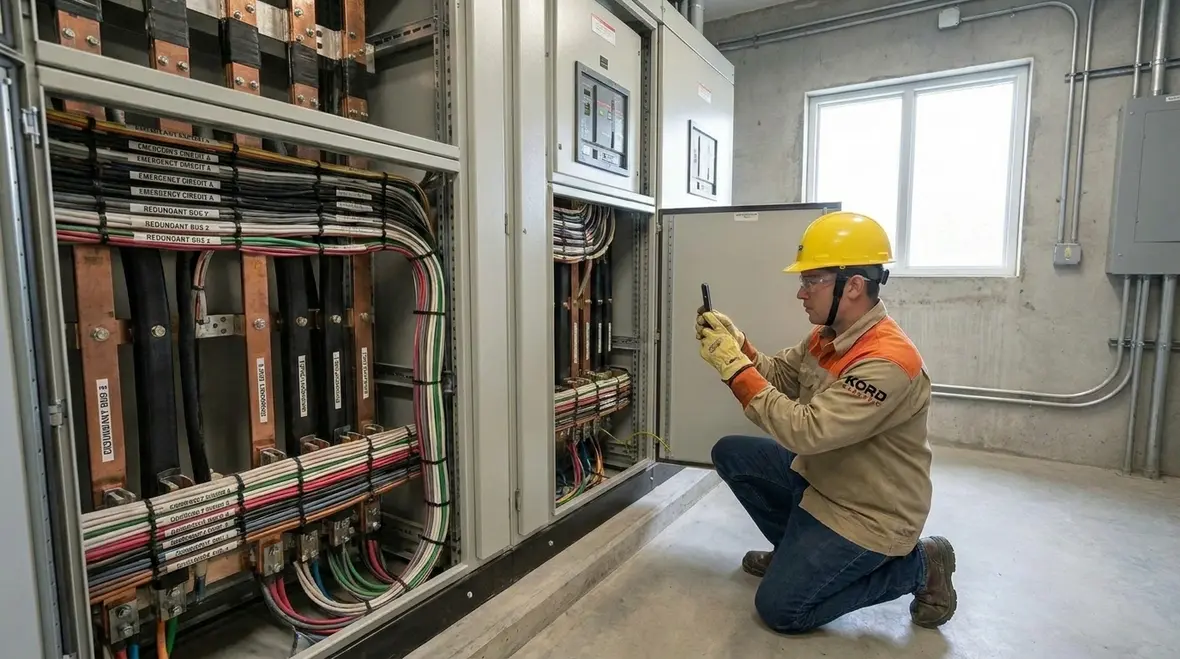
Redundancy means you do not bet everything on one path. Instead, we provide alternate paths so faults do not spread. Selectivity means protective devices isolate the problem fast, so healthy sections keep running. Put simply, we keep the fault in a small room, not the whole building.
During design, others at our team translate code and engineering goals into practical layouts. For example, we separate essential feeders and use properly rated protective coordination. We also ensure the emergency transfer scheme supports the loads it serves. If your system relies on a single switchgear lineup without backup paths, you might as well flip a coin during an outage, and most accountants already do enough gambling without us helping.
3) Emergency design begins with load mapping and priorities
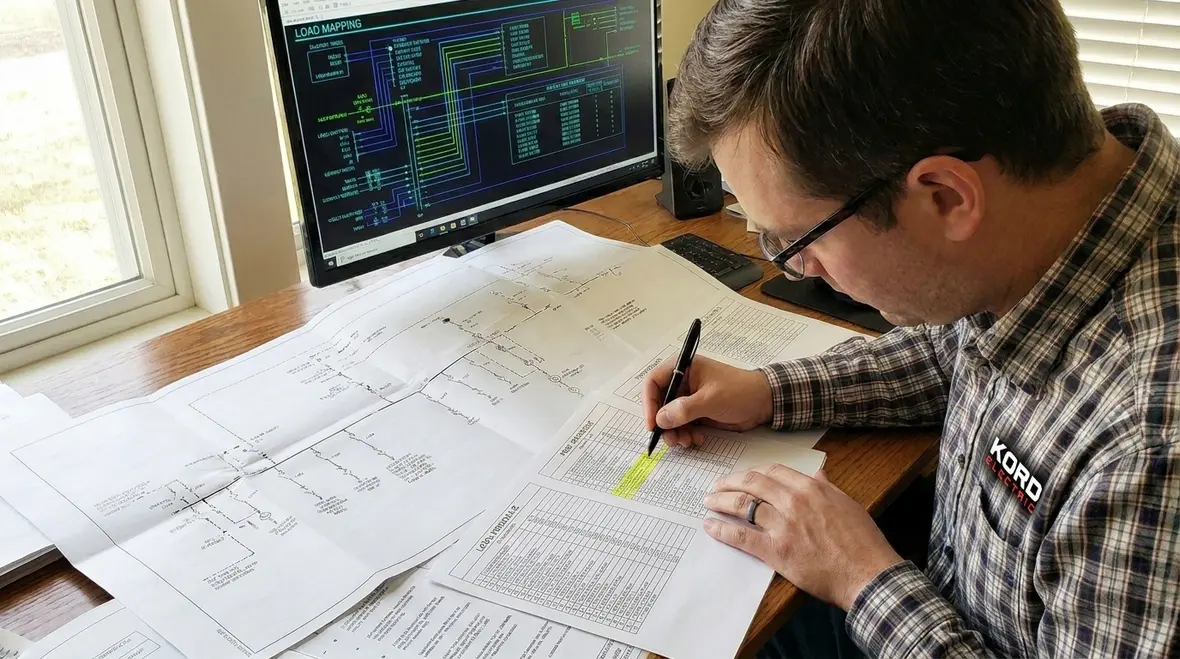
Before we touch equipment, we map loads like we are building a schedule for a storm. We collect electrical one line data, review panel and motor lists, and confirm operating schedules for critical areas. Then we rank loads by priority. Life safety loads typically carry the highest priority, while other critical processes, communications, security, and mechanical functions follow based on your continuity plan.
We do this because emergency systems often fail for boring reasons. A load was forgotten, a motor locked up, or a circuit draws more current than the design assumptions. Therefore, our technicians verify motor starting behavior and inrush current for both the emergency source and the distribution components. We also check voltage drop so devices work as intended, not just “technically powered.”
To support this step, our service team frequently uses reliability concepts that align with our data center electrical distribution design for reliability approach, where careful feeder planning and proper coordination keep uptime high. Even when the facility is not a data center, the logic stays strong.
4) Distribution architecture that maintains reliability under stress
Distribution design is where the real business continuity math happens. In many projects, we see the biggest risks in how power routes through the building. So we focus on architecture that supports stable transfer, safe operation, and dependable delivery to critical loads.
We typically build emergency distribution around these principles:
- Defined critical buses that clearly separate emergency loads from non essential loads
- Controlled transfer paths that support the emergency power source and prevent harmful backfeed
- Protection tuned to the system so short circuits and overloads isolate quickly
- Clear labeling and documentation so operators can act without guessing
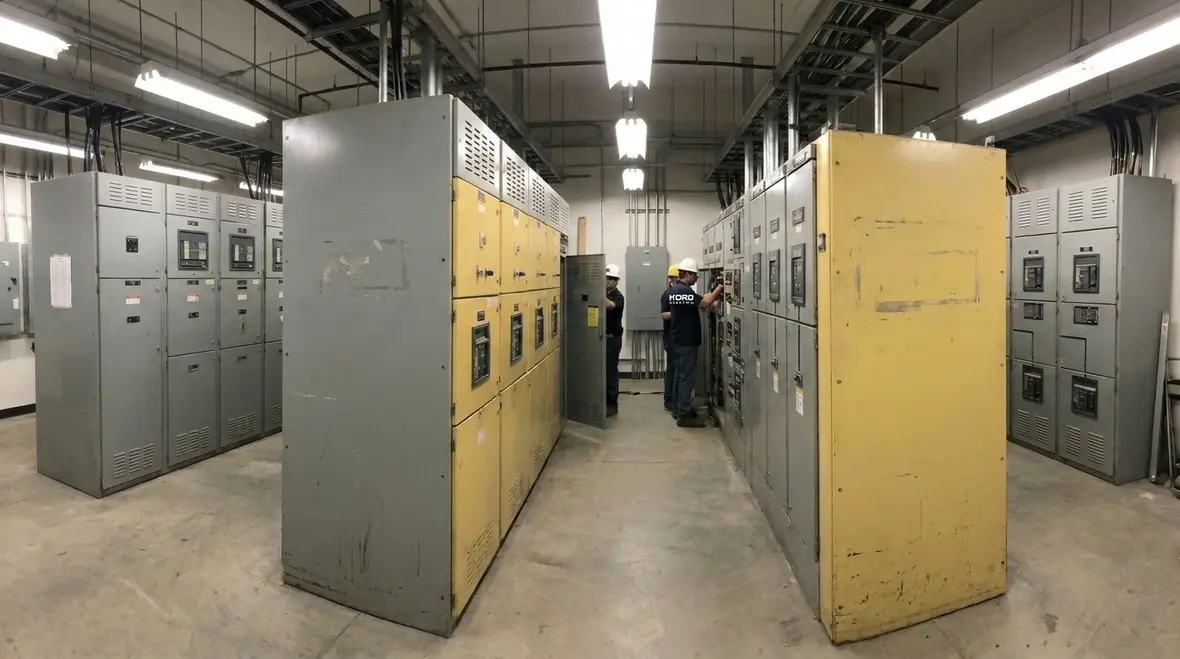
When a power loss event hits, the system must move from utility to emergency in a controlled way. Therefore, we verify interlocks and transfer logic, especially for switchgear and switchboard configurations. We also confirm that the emergency distribution layout supports maintenance without breaking the continuity plan.
And yes, we keep it readable. Our technicians know that operators do not want a scavenger hunt when they are trying to restore order. If an emergency manual looks like it belongs in a library basement, we rewrite it.
5) Transfer, timing, and coordination: the calm moves during a chaos moment
Emergency systems have a rhythm. Utility power fails, the system detects the event, the transfer sequence starts, and emergency power ramps to stable operation. However, timing errors and coordination gaps can cause nuisance transfers, equipment stress, or load rejection. So we design transfer schemes with a careful eye and we validate sequences before installation is complete.
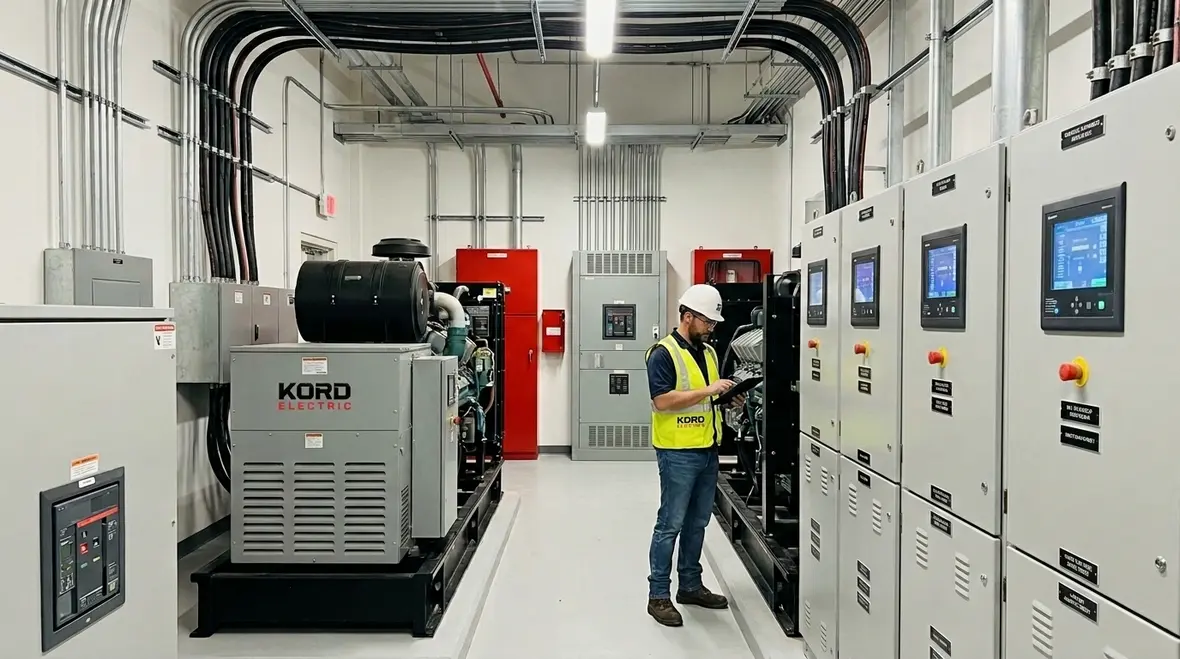
Our team pays close attention to coordination between generators, automatic transfer switches, and critical distribution panels. We also consider how loads behave during transition. For example, some systems require a short delay for damper sequences, pump control, or control power stability. Others need a set startup order so motors do not all try to start at once like they are auditioning for the same role in a superhero movie.
Then we test. Our technicians run acceptance testing that checks transfer times, breaker operation, alarms, and protective device response. As a result, the system behaves consistently during real events, not just during controlled conditions.
6) Monitoring, alarms, and documentation that keep people safe
A robust emergency system is only half engineered. The other half depends on how it is operated. That is why Kord Electric includes monitoring and clear alarm strategy in our Emergency Electrical System Design planning for commercial and industrial facilities and major property buildings.
We help teams answer these practical needs:
- What alarms appear first during an outage event
- Which alarms require action and which are informational
- How operators confirm that critical loads remain powered
- How maintenance staff schedule inspections without guessing
Our technicians also explain key behaviors in plain language. We do not hide behind jargon. We walk your operations team through what each indicator means, what actions to take, and what to check after the event ends. In other words, we make the system understandable, because a building should not rely on one heroic electrician who knows the alarms by heart. (That is not a strategy. That is a prayer.)
7) Reliability lessons from high uptime designs and how we apply them
Many readers associate extreme reliability only with data centers. Yet the same design mindset applies to hospitals, campuses, industrial plants, and multi tenant major property buildings where downtime carries real cost. Our internal approach, reflected in our data center electrical distribution design for reliability article, emphasizes structured planning and coordination across the system, not just picking a generator and hoping.
We apply those reliability lessons by refining distribution paths, validating protection coordination, and supporting clean integration with control systems. Then we tailor the design to the facility’s needs. For example, a manufacturing operation may prioritize motor loads and process controls. A major property building might prioritize elevators, security, life safety, and tenant support systems. A commercial office complex might focus on HVAC controls, communications, and emergency lighting.
Importantly, we keep the design practical for the build. Therefore, we coordinate equipment locations, cable routing constraints, and switchgear lineup space so the system installs correctly and remains serviceable. For large portfolios and municipal or county sites, pairing Emergency Electrical System Design with a dedicated service relationship across facilities in regions like Los Angeles County commercial electrical services helps keep standards consistent while still matching each building’s reality.
FAQ
Conclusion: Ready for continuity you can trust?
Emergency events do not wait for business hours, and they do not care how busy your team is. Kord Electric helps commercial and industrial facilities and major property buildings plan and build reliable emergency electrical power with a practical, test driven approach. If you want an Emergency Electrical System Design that supports true business continuity, we will review your loads, power paths, and transfer strategy. For organizations that also want rapid response when something unexpected happens, Kord Electric’s dedicated emergency electrical services help close the loop between good design and real-world reliability. Contact Kord Electric today to schedule a design consult and move from worry to readiness.