Emergency Lighting Compliance Guide for Facilities
In high traffic commercial and industrial facilities, an effective emergency lighting compliance guide protects lives, supports safe egress, and keeps your inspections from turning into a surprise party you never wanted. Using our approach, Kord Electric helps others maintain the devices that must work when power drops and people need clear paths fast. To do that, we follow best practices, log key test results, and coordinate repairs before failures stack up. Our expert service team explains the why behind each step, so facility managers can make smarter decisions instead of guessing. Now, let’s build a maintenance plan that holds up in real conditions, not just on paper.
What emergency lighting rules matter most in major property buildings
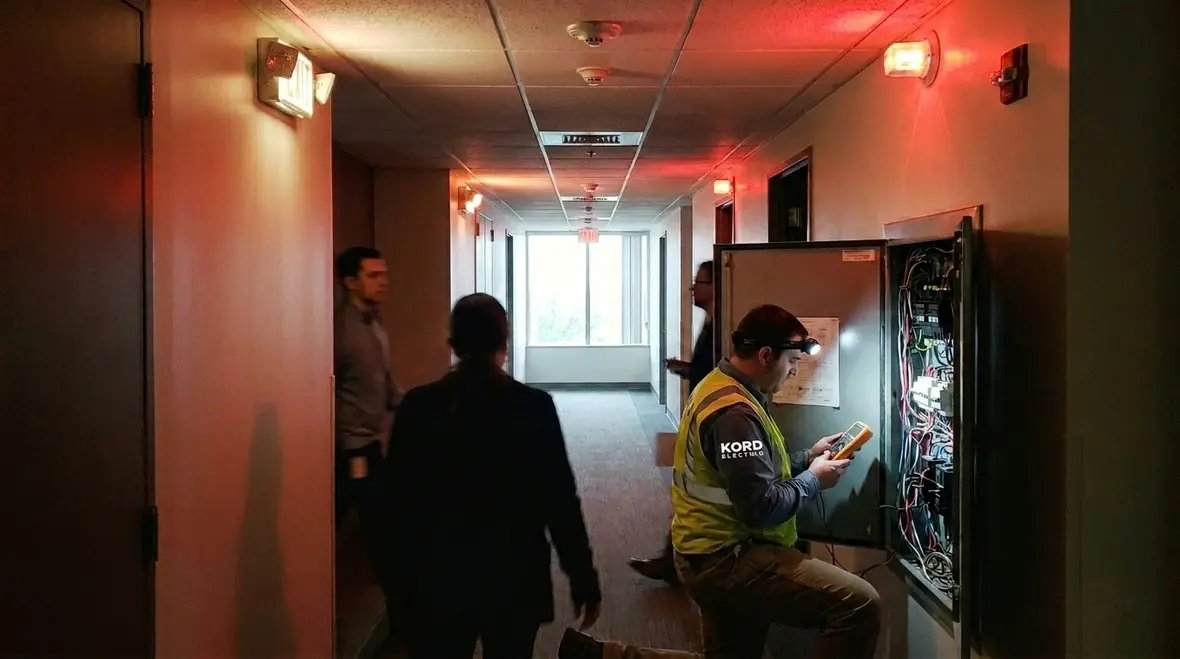
In most commercial and industrial facilities, your emergency lighting must meet adopted code requirements, plus the intent of life safety standards. While the exact trigger and enforcement can vary by jurisdiction, the practical expectations stay consistent. First, emergency fixtures must illuminate the right areas during a loss of normal power. Second, they must do so for the required duration. Third, they must pass functional tests and be ready for inspection documentation.
Because high foot traffic adds pressure, failures get noticed quickly. A hallway that looks fine during the day can become chaos at night. For that reason, Kord Electric focuses on compliance in the spaces people actually move through, including exit routes, stair enclosures, corridors, and areas that connect to the egress path.
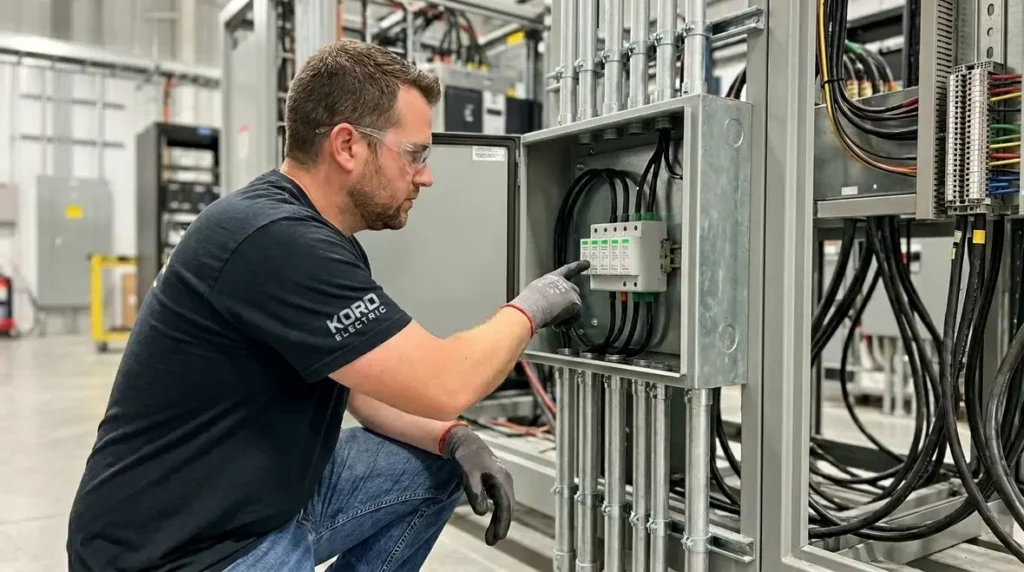
Our technicians also watch for a common issue: teams sometimes maintain the building electrical system but treat emergency lighting like a separate island. Yet emergency lighting depends on power conversion, wiring integrity, and proper behavior at the panel and device level. So, when we support a facility, we connect the dots between emergency fixtures and the electrical systems that feed them.
How we build a maintenance schedule that actually gets followed
A maintenance plan fails when it only lives in a binder. So we set expectations that match how your building operates. Then we align test frequency with the risk and the device type, such as battery backed units, exit signs, and self contained fixtures. Next, we separate routine checks from deeper inspections, so staff know what to do during busy weeks.
Our expert service staff typically uses a structured cadence that includes functional testing, visual checks, and documentation updates. During that process, we consider seasonal changes and occupancy patterns. For example, a hospital wing behaves differently during flu season. A retail tenant build out changes traffic patterns after remodels. High traffic facilities evolve, and your emergency systems should stay current with those changes.
And yes, we remind clients that batteries have a lifespan, even if they feel like they are working “just fine.” Batteries do not negotiate. They age quietly and then they fail loudly when you least want them to.
Routine inspections that catch problems before the test day
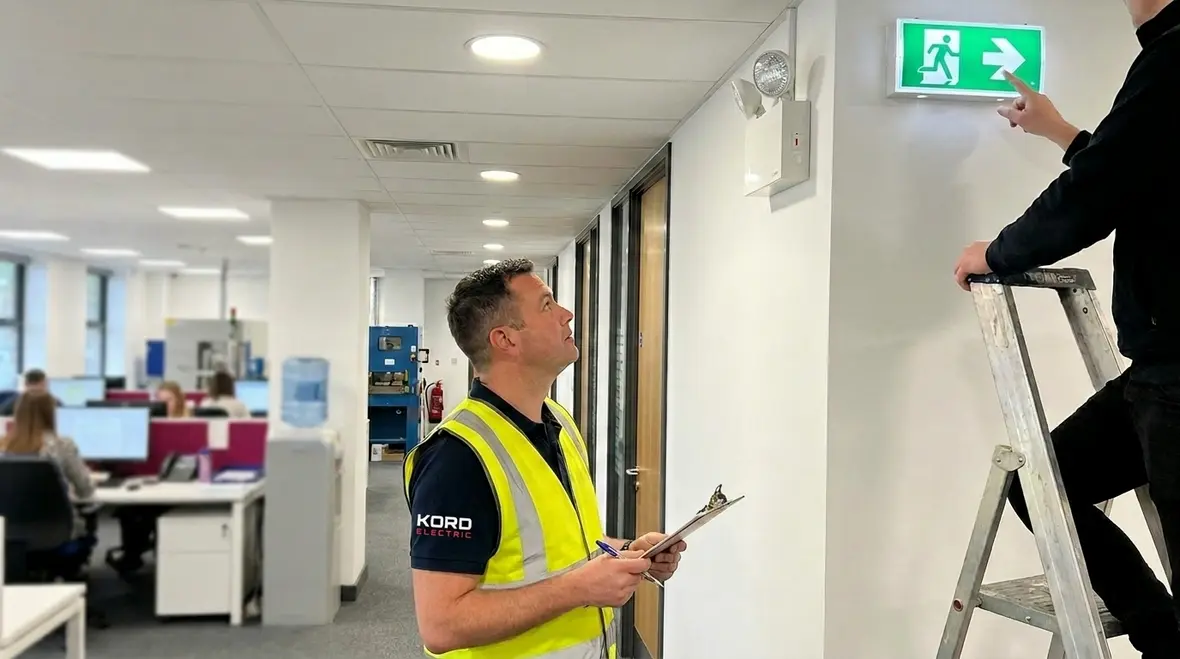
We recommend a visual and functional inspection workflow that catches drift early. During site walkthroughs, our technicians check mounting condition, lens clarity, vandal resistance, and signs of moisture or corrosion. Next, we verify that fixtures remain free of obstructions like storage carts, temporary signage, or construction debris. Then we confirm that emergency lighting placement still matches the egress route plan, especially after renovations.
After the walk, we confirm performance data from prior tests. When results look inconsistent, we investigate. For instance, a cluster of fixtures near a certain corridor can point to a wiring problem or a zone issue. Likewise, repeated failures on similar models can point to battery aging or a common installation detail.
If the facility manages multiple floors, we help others prioritize high risk areas first. That is not because we enjoy paperwork. It is because test time is limited and your people and operations deserve smart sequencing.
Why panel and switchgear health ties directly to emergency lighting performance
Emergency lighting usually relies on reliable power transfer, backup sources, and stable electrical distribution. Therefore, panel and switchgear maintenance matters. Even if emergency fixtures pass a test today, weak electrical infrastructure can trigger failures later. That is why, in addition to fixture level checks, we align our emergency lighting compliance work with electrical system health.
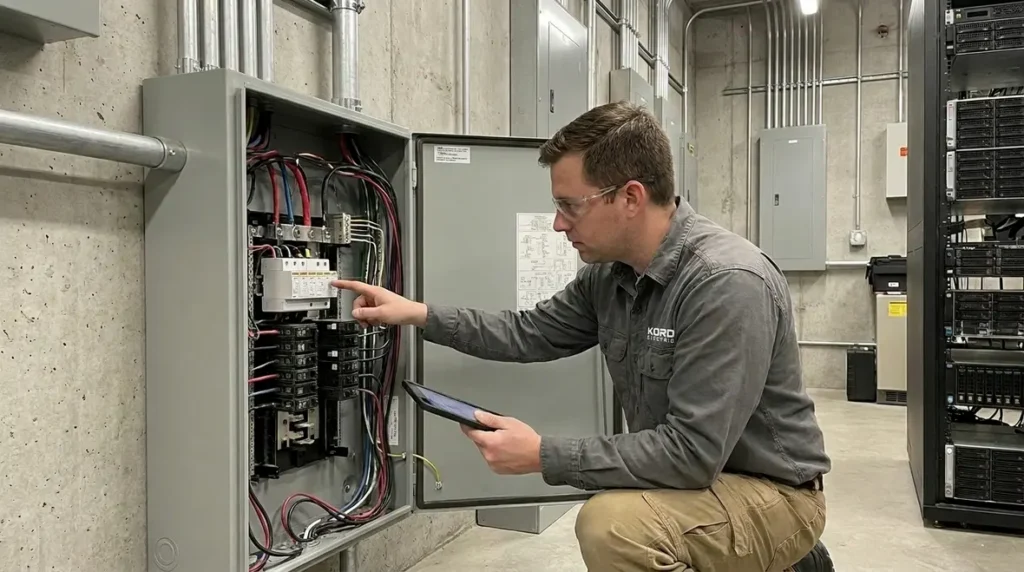
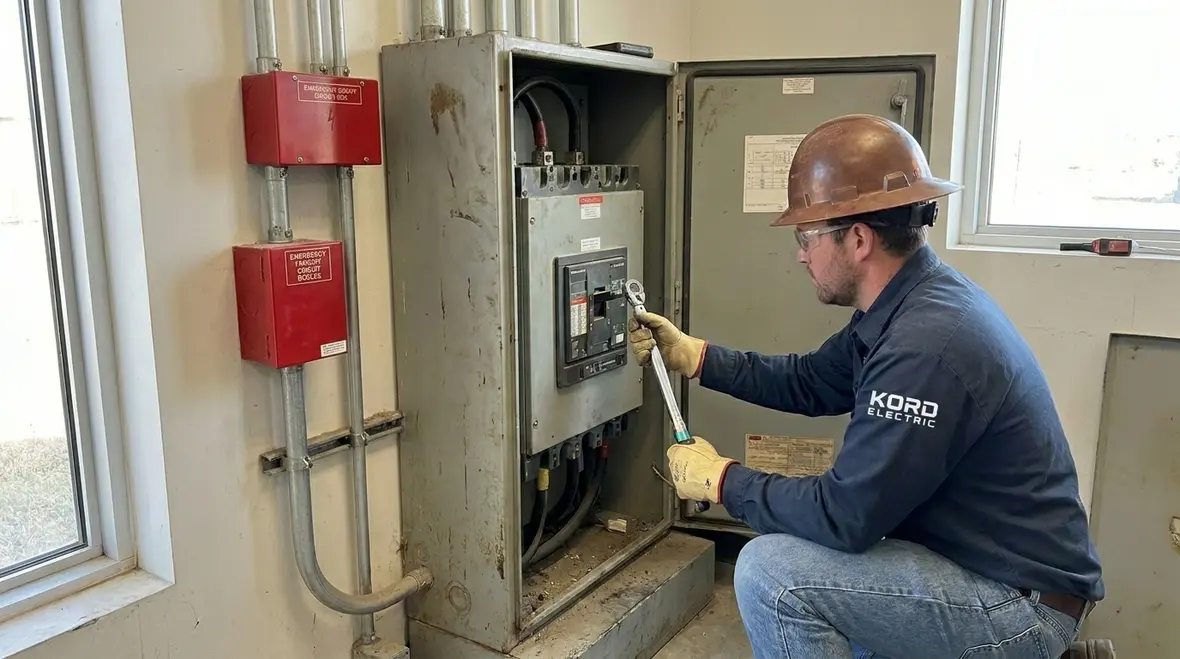
Kord Electric also draws guidance from our work on NFPA 70B electrical panels and switchgear maintenance, which supports the idea that preventive care reduces unexpected downtime and improves system readiness. Our technicians focus on clean connections, proper torque where required, correct terminal condition, and signs of overheating. When electrical panels and switchgear show early symptoms, they can affect how reliably emergency circuits behave at the moment of power loss.
To keep this practical, we often coordinate maintenance windows with facility schedules, then we document what we find and what we correct. As a result, the facility gains a clearer picture during audits, and the emergency lighting system has a better chance of doing its job when the lights go out.
Think of it like this: emergency lighting is the messenger. Panel and switchgear health is the road it travels on. If the road fails, the message never arrives.
Battery care, load behavior, and real world testing in high traffic sites
In many major property buildings, a large share of the system depends on battery backed equipment. So we focus on battery condition, charging behavior, and the ability to meet required duration. Functional testing verifies immediate operation, but duration testing confirms the full story. In other words, it is not just whether the lights turn on. It is whether they stay on long enough for safe egress.
We also consider load behavior. When occupants move, open doors, and create shifting electrical loads, the building conditions can reveal weak points. That is why we test with a plan, not by flipping random switches and hoping for the best. Our technicians confirm the test method, run the right duration checks, and record results with clear device identification.
For facility teams, that documentation matters. It supports inspection readiness, and it helps others spot patterns across months and years. If one corridor shows recurring issues, we can address it through targeted replacement, corrected wiring, or updated placement checks.
We even remind clients that emergency lighting failures often look like small problems at first. A dim fixture, a delayed response, or intermittent operation can start as “maybe it is fine.” Then it is not fine, and the building learns about Murphy’s Law the hard way.
Documentation, inspection readiness, and how we keep records organized
Compliance is not only about passing tests. It is also about proving what you did, when you did it, and how you responded. Kord Electric helps others organize documentation so it stays useful. Instead of collecting data that nobody can find, we support a clean record trail tied to device location, test type, and outcome.
During our service visits, our expert service staff explains the findings in plain language and links them to next steps. If devices require repair, we recommend actions based on condition and risk, not just replacement for the sake of a quote. If the system meets the required performance, we still record it, because “no issues” is the best kind of report, and it prevents repeat surprises later.
When inspectors arrive, they want clarity. They want consistency. And they want the facility team to show that maintenance did not stop after installation day.
How this emergency lighting compliance guide connects to broader electrical maintenance
An emergency lighting compliance guide should not sit apart from the rest of your facility’s electrical strategy. In many commercial and industrial buildings, the same teams that schedule emergency lighting tests also coordinate electrical preventive maintenance and emergency lighting testing services. When those programs align, your records stay cleaner, test windows get easier to schedule, and findings from one system can inform risk assessments across the whole site.
We also see strong results when facilities connect their emergency lighting maintenance to panel labeling and system documentation. Clear labeling and updated drawings make it far easier to trace which circuits support which egress paths, especially under time pressure. That matters when you are troubleshooting a failing run of fixtures or confirming that new work did not compromise an existing emergency path.
Over time, this structured approach turns scattered tasks into a repeatable system. Instead of chasing one-off failures, your team runs a disciplined program that covers visual checks, functional tests, duration testing, panel health, and documentation in a single, well organized cycle.
FAQ: Emergency lighting compliance in commercial and industrial facilities
Final word from Kord Electric: get your emergency plan tightened now
If your facility serves commercial and industrial tenants or major property buildings, you cannot treat emergency lighting as a “set it and forget it” item. Kord Electric can help you maintain reliable performance through practical scheduling, disciplined testing, and clear documentation. Our expert service staff explains the details, then we execute the work so your team stays ready for inspections and real emergencies. Contact us to review your current program, identify weak spots, and build a maintenance rhythm that stays compliant.
For facilities across the region, that often means tying this emergency lighting compliance guide directly into broader service planning. Our team supports everything from preventive maintenance programs to Los Angeles County electrical services for commercial and industrial facilities, so your egress lighting, distribution gear, and normal power all work together instead of fighting each other behind the scenes.