Emergency Power Continuity Strategy Guide
At Kord Electric, we treat reliability like it is a business asset, not a wish. Our emergency power continuity strategy starts before the lights ever flicker, then it carries forward through testing, monitoring, and disciplined maintenance. In other words, we do not wait for a blackout to “learn a lesson.” We plan for the moment when power stops, we keep critical systems alive, and we help teams respond fast with clear procedures. And yes, we explain it in plain language when our technicians or expert service staff walk a facility manager through the plan. Even if someone jokes, “Great, so the generator talks to us like a butler,” the core promise stays the same: dependable power for commercial and industrial facilities and major property buildings.
What does a robust emergency plan look like for a facility
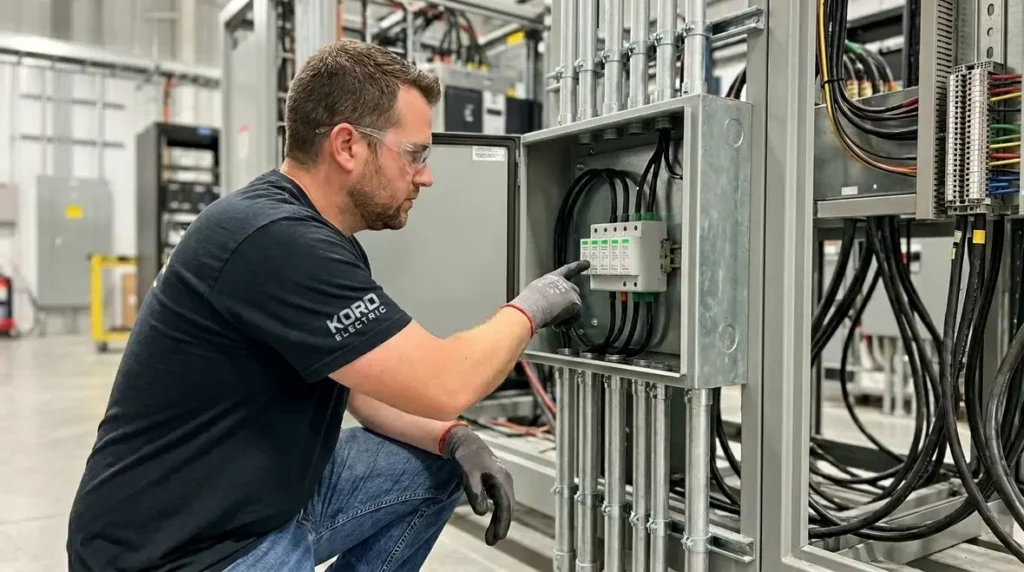
Others might build an emergency plan that looks impressive on paper, then fall apart when something changes. We build ours like a system that has to work on a Tuesday at 2:00 a.m., not just during a tabletop exercise. First, our technicians review how the facility operates, then we identify which loads truly matter. That includes life safety devices, fire alarm systems, security, critical IT and communications, pumps, controls, and any process equipment that can’t simply shut down without cost.
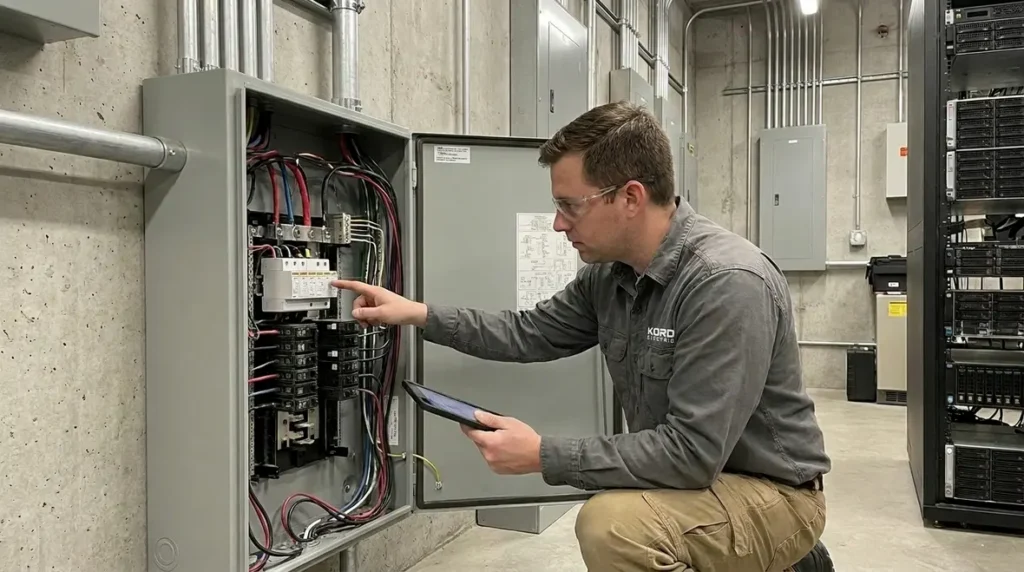
Next, we map how those loads connect to backup power. We also check the electrical one line, ATS and transfer logic, generator sizing, distribution paths, and protection settings. Then we confirm there is a realistic path from “utility power lost” to “critical power stable.” Finally, we tie it to people. We define who does what, where they stand, what they check, and how quickly they escalate. That matters, because during an outage, calm beats panic. Our expert service staff often tells clients the same thing: “Your plan should feel like muscle memory, not like reading a manual while alarms scream.”

How we build emergency power continuity strategy into design
When Kord Electric develops the emergency power continuity strategy, we begin with risk and workflow, not guesswork. Then we choose a backup approach that matches the facility’s duty cycle and load profile. For many commercial and industrial buildings, that means generator systems sized for starting surges and steady state demand, along with proper transfer switching and load management. For major property buildings, we coordinate with life safety requirements and tenant operations so that critical services stay online in a controlled way.
We also focus on distribution. A generator can be “large enough” and still fail to support the right circuits if the transfer and panel routing are not engineered cleanly. Therefore, we verify load shedding logic and confirm that critical circuits land in stable downstream panels. If a project includes UPS systems for specific controls or sensitive servers, we align that with the generator startup timing. In addition, we ensure the fuel strategy can support the expected runtime. Because if power fails and fuel access becomes a scavenger hunt, that is not continuity, that is a reality show no one asked for.
Finally, we design for serviceability. We want technicians to reach key components quickly, especially during stressful events. That makes maintenance faster and troubleshooting clearer, which leads to fewer surprises later. For facility leaders building long term reliability programs, our electrical preventive maintenance services help extend that same disciplined mindset across panels, switchgear, and other critical equipment.
Load prioritization that prevents the “everything trips” moment
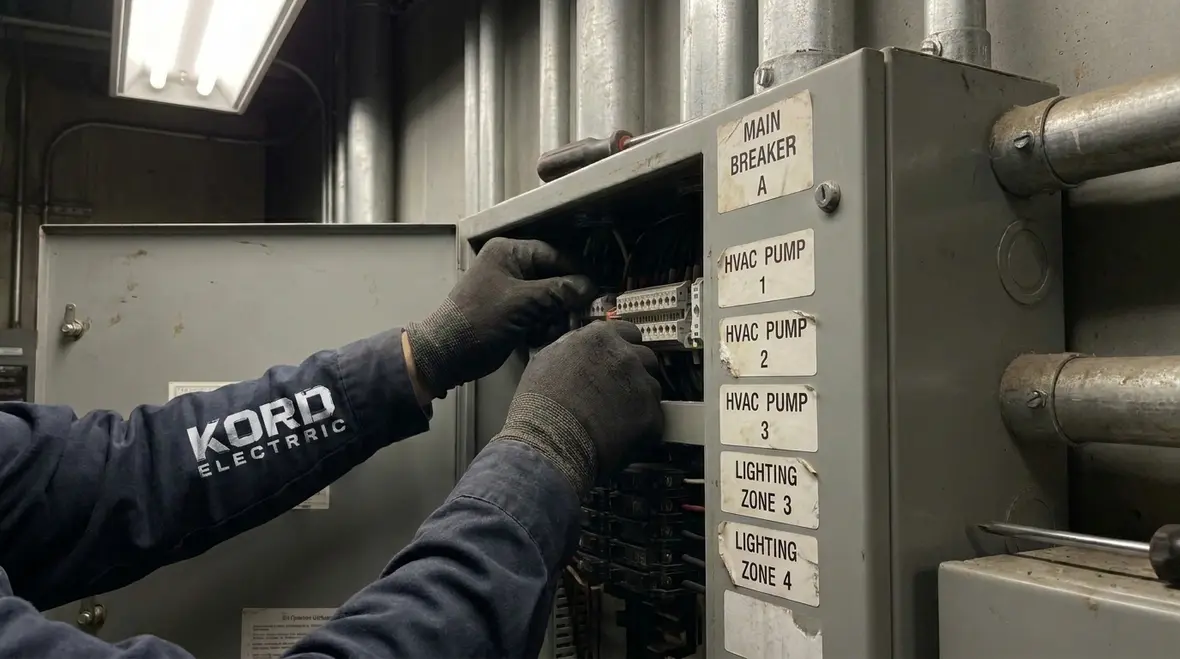
Load shedding sounds simple until you watch a system try to power every circuit at once. Then you understand why we take prioritization seriously. We classify loads based on function and time sensitivity. Some loads must run immediately. Others should start in sequence after stabilization. And some loads should wait, because starting them during transfer can overload the system and extend outage time.
Our team typically builds a priority scheme that includes, at minimum, life safety and security circuits, then critical process and operations circuits, then building systems that restore comfort and control. We also account for motor starting currents, HVAC controls, and any equipment with high inrush. To keep things practical, we create a list that operations staff can understand quickly. Then we validate it during commissioning and later during field tests.
Meanwhile, we also check protective devices and settings. If a breaker trips under load, the building does not get continuity. So we coordinate protection, verify selectivity, and confirm that critical branches behave correctly under fault conditions. Our technicians do not just “install and move on.” They verify. And when they walk the site with the facility team, they explain what they are doing, why it matters, and what to watch for. That way, when someone asks, “Why did this circuit drop but that one stayed up?” the answer is not vague. It is clear.
Monitoring, testing, and disciplined maintenance that keep it dependable
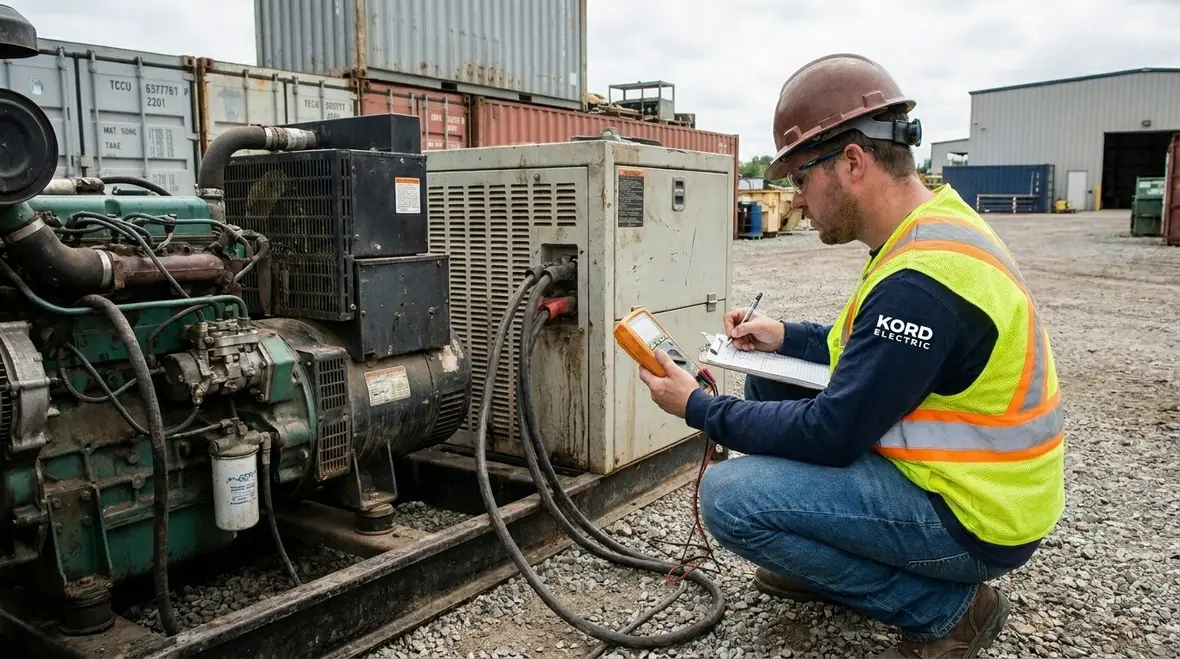
A strong continuity plan ends up useless if the system only performs during emergencies. Therefore, Kord Electric builds an ongoing maintenance rhythm that supports the actual performance needs of commercial and industrial facilities and major property buildings. We set up schedules for inspection, battery checks, fuel quality review, filter service, coolant and oil maintenance, and control system verification. We also confirm that transfer switches operate smoothly and that annunciation points remain accurate.
Testing plays a major role. We run periodic exercises that mirror real conditions as closely as possible, including load bank testing where appropriate. We review outcomes, track trends, and correct issues before they become failures. And we document everything so that facility teams can make decisions with real data instead of hopeful thinking.
In addition, we help clients strengthen response readiness. When our expert service staff explains a test result, we connect it to risk. If a parameter drifts, we explain the “why” and the “what next.” That makes it easier for leadership to approve corrective actions without sounding like they are funding a ghost story. For many facilities, pairing this with structured commercial and industrial electrical maintenance plans turns once-a-year testing into a continuous reliability program.
Emergency response procedures that guide teams under pressure
Even the best hardware needs good hands. So we support facilities by shaping response procedures that people can follow during stress. We help define alarm responsibilities, inspection steps, and escalation paths. We also coordinate how operations teams verify that critical loads receive power and remain stable. That includes checking transfer status, verifying generator parameters, and confirming that communications and monitoring systems report correctly.
We also advise on communication practices during outages. Facilities often have multiple departments, contractors, and tenant contacts. Therefore, we establish a chain of communication that prevents “everyone calling everyone” chaos. In many cases, our technicians assist with procedure workshops so teams understand how the electrical system behaves. Then, when an outage happens, they know what to look for and what to ignore.
And yes, we do not just hand over a binder. We train people so that the plan stays alive. Like a good pop culture reference, the best emergency plan is “peak season,” not a one time cameo.
Common weak points we find in commercial power backups
During assessments, we often see a few patterns. First, loads are not updated after equipment changes. A facility grows, tenants revise spaces, and electrical requirements shift. Then the backup system still thinks it is serving the old building. Second, generator sizing sometimes ignores starting surges. That leads to nuisance trips or long stabilization periods. Third, fuel management suffers. Maybe the facility has fuel logs but no plan to verify quality and consumption. Fourth, transfer switching logic may not match the intended priorities, especially after panel modifications.
We also notice that commissioning gaps show up later. If a system did not receive full verification, then small issues linger quietly. Then an outage turns those issues into a headline. Another weak point involves controls and monitoring. When staff cannot interpret alarms or do not know what a specific message means, they lose valuable minutes. And minutes in a critical environment are expensive.
So we address these weak points through review, correction, and clear training. Our approach helps the facility avoid “it worked once” reliability. We aim for “it works again and again,” because customers and tenants expect continuity, not a guess. For a deeper dive on how failures emerge when backup systems are not aligned with real world risk, many facilities also review our article on emergency power failures in commercial buildings and use those lessons to tighten their own strategies.
FAQ about emergency power continuity strategy
Call Kord Electric before the next outage
If a business continuity plan only exists during emergencies, it will fail when it matters most. Kord Electric helps commercial and industrial facilities and major property buildings build a practical emergency power continuity strategy that includes prioritization, disciplined maintenance, and clear response procedures. Reach out to our team for an assessment, load review, and a continuity plan your staff can actually use. Then you can stop worrying about the lights and start focusing on operations.
For facilities seeking a broader reliability roadmap alongside their emergency power continuity strategy, our dedicated electrical preventive maintenance service page outlines how structured inspections, testing, and documentation protect panels, switchgear, emergency systems, and everyday distribution equipment across large commercial and industrial properties.
Contact us today, and let’s turn uncertainty into stability with a tailored emergency power continuity strategy that connects design, field performance, and long term maintenance into one reliable plan.