Emergency Power for Businesses: Backup Systems & Reliability
Emergency Power for Businesses: Backup Systems & Reliability is not a “nice to have” for commercial and industrial facilities. When the grid drops, businesses need dependable electricity to keep critical systems running, protect equipment, and maintain safety. At Kord Electric, we design, install, and service emergency power systems that match the real risks found in major property buildings. In other words, we plan for the moment when everything goes quiet and the alarms start doing their best impression of a fire drill. Then we make sure your power does not follow the crowd.
Across commercial and industrial facilities, emergency power is really about keeping people safe, protecting revenue, and giving your operations the chance to ride through an outage without turning it into a full shutdown. That demands more than a single generator in the parking lot. It requires a clear design, disciplined testing, and a service team that treats reliability like a daily responsibility, not a once-a-year performance.
Kord Electric builds these systems with the same mindset we bring to our broader reliability work, including projects covered in our guide to Emergency Power Systems for Businesses: Backup Power & Continuity. We focus on real buildings, real outages, and real people who need the lights, life safety systems, and equipment to keep working when the grid does anything but cooperate.
Emergency power in commercial buildings: what we protect
Commercial and industrial sites rely on more than lights and outlets. In major buildings, power loss can quickly impact refrigeration, security, elevators, life safety systems, fire pumps, data networks, and production processes. That means a good emergency setup must cover the loads that keep people safe and operations alive.
When we talk with facility managers, we focus on the systems that cannot wait. We also explain that “backup power” is not one single answer. It is a carefully planned chain of decisions, and we guide that chain step by step. Our technicians and expert service staff take the time to explain how loads transfer, how voltage stays stable, and why maintenance schedules matter long after installation day feels like a victory parade.
And yes, if you have ever watched a generator fail during a test, you know the feeling. Like finding out your seatbelt is decorative. We help you avoid that by pairing emergency sources with transfer equipment, protection, and monitoring that all agree with each other when the grid falls away.
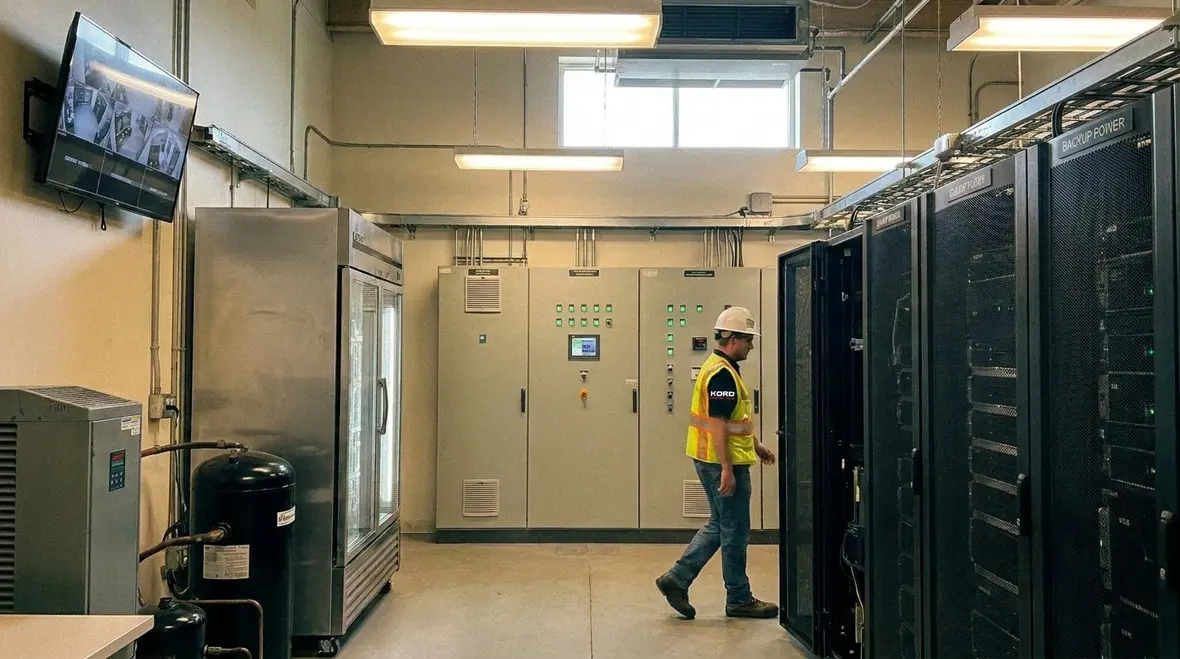
In practice, we protect more than obvious life safety loads. Emergency power often supports refrigeration for food or temperature-sensitive materials, IT rooms and communications gear, access control systems, stair and path lighting, sump and fire pumps, and key HVAC components that keep conditions inside the building safe. Our emergency power designs connect directly to those priorities so the building can keep functioning, not just glowing in the dark.
How backup systems work when the grid fails
Emergency systems usually follow a simple sequence: detect an outage, start the standby source, and transfer power to the correct circuits. However, the details matter. The best designs reduce downtime and protect sensitive equipment from voltage dips and unstable power.
First, the system monitors utility voltage. Then it sends a signal to start the backup source. Next, power transfers through transfer switches designed for the building’s needs. Finally, power stabilizes so your critical loads can run as intended. Each of those steps depends on settings, wiring, and equipment choices that either support a calm transition or turn the event into a guessing game.
To make this practical, we often walk through the concept of “time to critical loads.” Some loads tolerate a brief interruption. Others do not. Therefore, we help our clients choose whether they need fast-transfer arrangements, staged loads, or separate power paths. In some facilities, that means pairing generators with UPS systems so control systems and servers never see more than a blink while larger equipment starts and stabilizes in the background.
Our technicians also explain control logic in plain language. They describe why proper settings prevent nuisance starts and why coordinated testing catches issues before an actual outage. In short, we build systems that behave like trained professionals, not like someone guessing during karaoke. That includes clear annunciation during faults, safe shutdown sequences, and power return plans that avoid slamming every circuit back on at once.
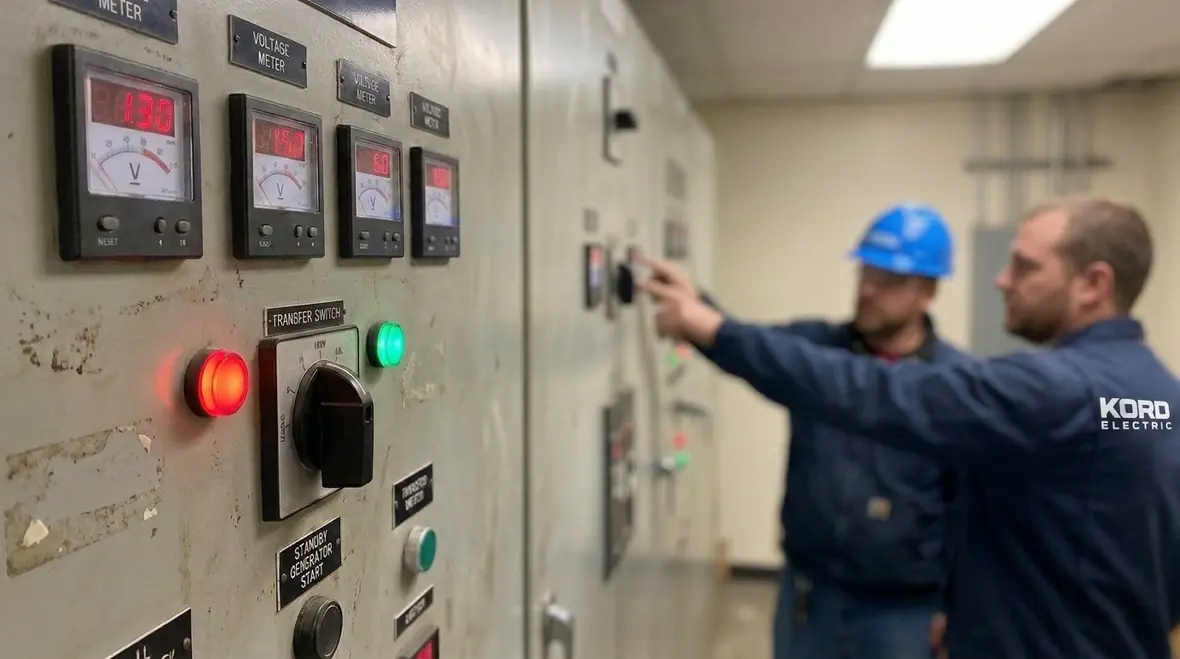
This is also where Emergency Power for Businesses: Backup Systems & Reliability connects with commercial redundancy. In some buildings, multiple sources, automatic transfers, and layered distribution create a path where one failure does not take everything down at once. Our work on redundant power systems for commercial buildings builds on these same ideas—planning the sequence from outage to recovery so your critical loads never feel like they have been left on their own.
Standby generator options and when they fit your facility
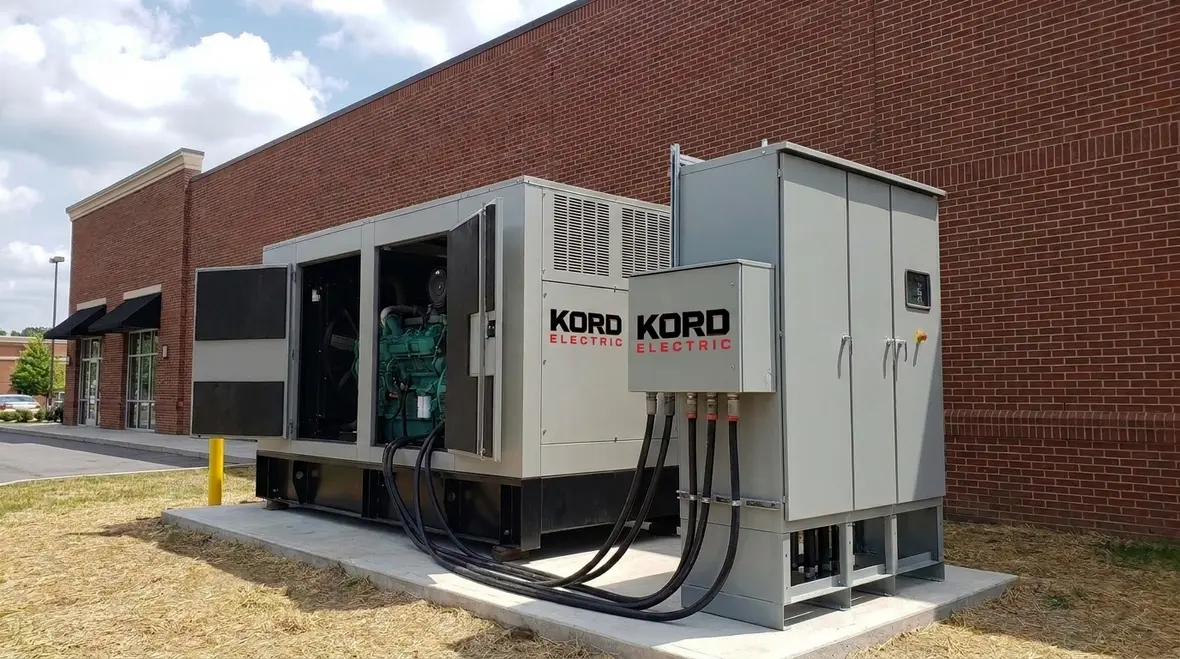
Standby generators remain one of the most common solutions for emergency power in commercial and industrial buildings. They can run essential equipment during an outage and provide steady performance when planned correctly. A generator on its own, though, is only one piece of the emergency power chain. Location, ventilation, transfer method, and controls all share the responsibility of keeping your building stable.
Choosing the right generator involves more than horsepower. We evaluate building size, critical load requirements, runtime needs, and available fuel options. Some sites require quick response. Others prioritize long-duration operation during extended grid issues. We look at startup currents for motors, voltage and phase requirements, and how your system will behave when power returns and everything wants to wake up at once.
We also consider how generators integrate with your electrical system. For example, proper sizing reduces stress on the unit and helps maintain stable voltage. Meanwhile, correct exhaust, ventilation, and enclosures protect both equipment and occupants. Our team guides these decisions so your project stays aligned with facility constraints, noise requirements, local codes, and clearances that keep maintenance both safe and practical.
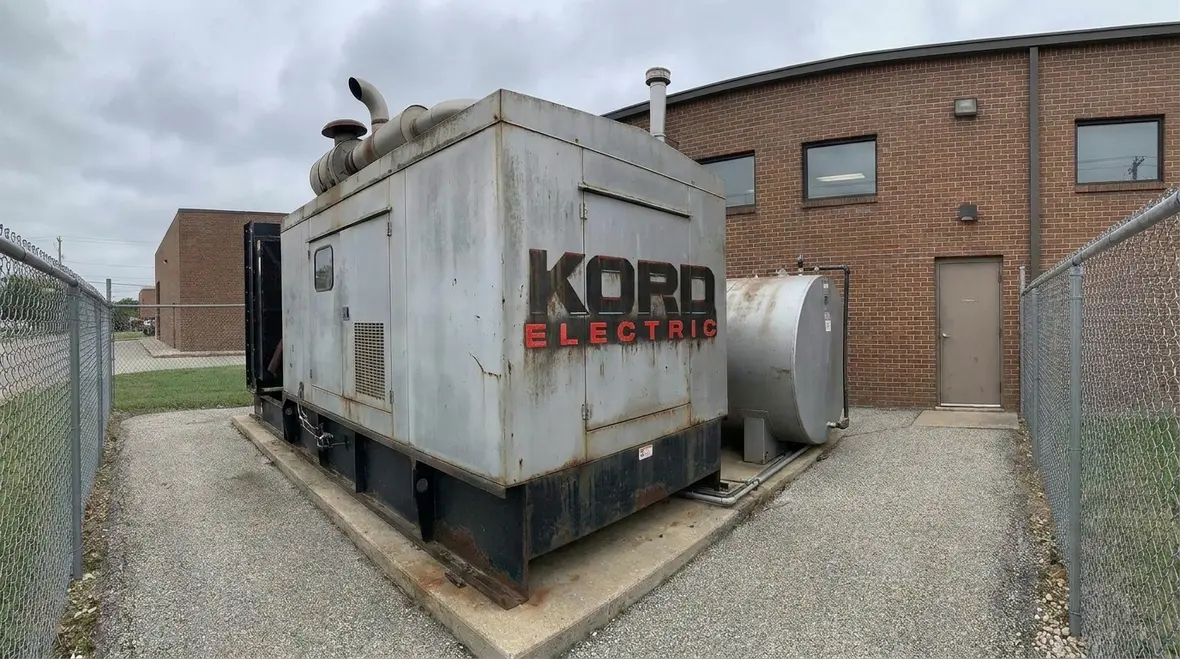
Then, of course, there is fuel storage and replenishment. We help you plan for realistic operations, not ideal scenarios. After all, generators do not run on optimism. They run on fuel, maintenance, and good planning. Our generator-focused planning aligns with the approach we describe in our commercial emergency power generator planning guide, where we tie fuel, runtime expectations, and facility behavior into a single, dependable plan.
Transfer switches and switchgear: the unsung heroes
People notice the generator, sure. Yet in day to day reliability, transfer equipment often decides whether your backup power performs smoothly. Transfer switches and related switchgear manage how the building transitions from utility power to emergency power. They determine which panels receive backup power, how quickly, and under what conditions. They also decide how safely power returns when the grid comes back.
When a transfer switch works correctly, it delivers power without harmful backfeed and without damaging equipment. When it fails, the results can include downtime, equipment stress, and safety risks. That is why our emergency power projects always include a close look at contact wear, wiring integrity, grounding, and control settings. If those go wrong, even the best generator will sit quietly while critical loads wait in the dark.
That is why we take time to review transfer method choices with commercial and industrial clients. We explain how different configurations impact performance and maintenance. Our expert service staff also discusses installation details like wiring integrity, contact condition, grounding, and protective settings. For facilities with multiple emergency panels, we coordinate the system so transfer behavior matches your building, not a generic diagram pulled from somewhere else.
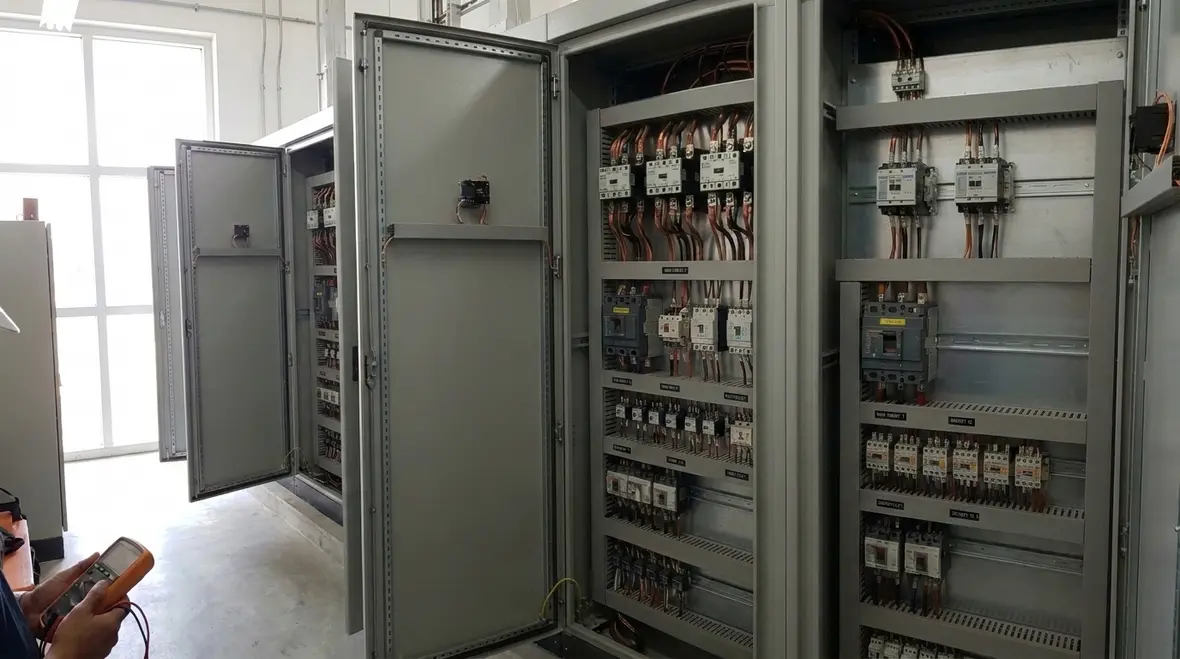
Additionally, coordinated systems matter. If your emergency power covers multiple panels or critical loads, we help ensure the electrical architecture supports your operation. In other words, we make sure the system does not just start, it actually feeds the right circuits at the right time. That is the difference between “a generator installed” and Emergency Power for Businesses: Backup Systems & Reliability that you can trust during actual outages.
Reliability you can measure: maintenance, testing, and monitoring
Reliability does not happen on its own. It takes maintenance, inspections, and testing that match how your facility actually runs. At Kord Electric, we set expectations clearly: the system must be ready before an emergency arrives. That means tracking performance, documenting results, and correcting problems long before a storm or grid event shows up on your doorstep.
We recommend periodic inspections that include engine and generator checks, battery testing, control system verification, fuel system review, and transfer equipment operation. We also review load bank testing when appropriate. This helps confirm performance under realistic electrical demand. When needed, we align that testing with the disciplined routines described in our emergency power system testing for commercial buildings guide, so you have consistent evidence instead of a stack of random test notes.
Then we focus on monitoring and records. Clear logs show what we inspected, what we adjusted, and how the system responded. Therefore, when someone asks, “How do we know it will work?” we can show the evidence, not just the promise. Monitoring systems and periodic reports keep owners, operations, and maintenance teams aligned around the same information instead of relying on memories from the last outage.
Our technicians explain each step during service visits. They make sure facility teams understand what “pass” means, what “watch” means, and what actions we recommend next. We keep the process calm and professional, even if the maintenance report looks like a novel. Nobody enjoys reading a book about batteries, but someone has to, and we are that someone.
Emergency power design for industrial loads and critical buildings
Industrial facilities and major property buildings often include loads that behave differently than typical offices. Motors, drives, process controls, and temperature sensitive systems can demand a thoughtful approach. If the design does not account for these realities, the backup system may start but still fail to support operations. That is why we combine electrical engineering detail with what actually happens on the floor, in the plant, and in shared property infrastructure.
We help clients map critical loads, then plan how to supply them with stable power. We also evaluate starting currents and how motor loads can impact voltage during transitions. In addition, we account for communications systems and safety equipment that must run reliably. Where appropriate, we include UPS strategies and staged transfer logic so sensitive controls keep their brains while larger loads start in a controlled sequence.
For commercial and industrial projects, we coordinate electrical engineering decisions with practical site constraints. We consider where equipment sits, how airflow works, how maintenance access stays safe, and how local requirements shape design choices. As a result, the final system supports real operations, not just theoretical calculations. Our work here connects naturally with the broader planning we describe in our article on Emergency Power for Business Continuity design, where electrical resilience supports the rest of your business continuity strategy.
Our team also explains staging concepts when required. Some facilities benefit from prioritizing essential circuits first, then bringing additional loads online as conditions stabilize. This reduces stress on the source and helps keep the building steady. Think of it like managing a line at a theme park. If everyone rushes at once, chaos wins. If you stage the line, everyone eventually gets their turn without the system melting down.
In some projects, emergency power design becomes part of a larger modernization effort. The same principles that guide our work on modern electrical systems for commercial buildings also show up here: smarter controls, better monitoring, and infrastructure built for the way your facility operates today, not the way it ran ten years ago.
FAQ: Emergency power for commercial and industrial sites
Frequently asked questions about planning and next steps
For many commercial property teams, the next question after “Do we have backup power?” is “Does it actually cover what matters?” That is why we connect Emergency Power for Businesses: Backup Systems & Reliability with larger electrical planning. If your building is due for a broader upgrade, or if tenants keep adding equipment, it may be time to revisit how your emergency sources, distribution, and controls all fit together in one plan instead of separate projects.
Kord Electric works across the region to support commercial and industrial facilities with assessments, testing, and upgrades. Our dedicated Los Angeles County electrical services team, for example, helps owners and managers coordinate local projects from emergency power improvements to broader electrical modernization so the building works as a whole, not just as a collection of disconnected fixes.
Ready for reliable backup power? We help you plan the next move
If you run a commercial or industrial facility, you cannot leave power readiness to luck. Kord Electric designs and supports Emergency Power for Businesses: Backup Systems & Reliability with clear load planning, careful installation, and expert service. Our technicians explain every step, so your team understands what we did and why it matters. We connect emergency power choices to your real operations, from critical loads and testing routines to how your building will behave during the next unplanned outage.
Whether you are reviewing an existing system or starting from scratch, we can align generators, transfer equipment, distribution, and monitoring into a single plan that supports your safety, uptime, and long term reliability goals. Our emergency power work also ties into related services like infrastructure upgrades, testing programs, and continuity planning, so reliability does not stop at the door of the electrical room. When you are ready, we help you turn “we hope it works” into “we know what will happen” the next time the grid stumbles.
Contact Kord Electric to review your critical loads, understand your current risks, and build a reliability plan that stands up during real outages, not just during “imaginary worst case” meetings. Together, we will design Emergency Power for Businesses: Backup Systems & Reliability that keeps your building, your people, and your operations moving when it matters most.