Emergency Power System Testing Protocol Guide
When a commercial or industrial facility loses power, the emergency power system becomes more than equipment. It becomes the difference between safe operations and chaotic downtime. That is why emergency power system testing matters, and it starts with a routine testing protocol that is clear, repeatable, and documented. At Kord Electric, we rely on disciplined routines because “we checked it once” does not keep a building calm during a real event. Our technicians walk the job step by step, verify function, and explain what they see in plain language, so owners and facility teams know exactly what is happening and what comes next.
Why routine emergency backup testing prevents surprises
In the real world, emergency systems fail quietly for months, sometimes until the day they are needed most. Then the issue shows up, like a pop quiz you absolutely studied for, but your pencil is missing. Routine emergency power system testing helps catch those problems early, before they turn into costly repairs, schedule disruptions, or safety risks.
We tell our clients to think like an operator, not a spectator. Testing creates a feedback loop. When parts age, connections loosen, or control logic drifts, the results show up in the data. From there, our expert service staff can correct the issue on a known timeline, not under pressure.
Also, regular testing supports better budgeting. Instead of reacting to a failure, we plan maintenance around actual findings. That keeps facility managers from having to make emergency decisions at 2 a.m., when everyone’s patience is as thin as a light switch cover.
How we build an emergency testing protocol that holds up under pressure
Our approach stays consistent across commercial and industrial environments, because consistency is what keeps results reliable. First, we define the scope: what equipment is included, what modes must be tested, and what operating conditions should be observed. Next, we schedule tests so they do not disrupt production, life safety activities, or critical building functions.
Then we move into procedure, and this is where many teams cut corners. We do not treat testing like a checklist that gets tossed into a folder. Our technicians follow a step by step plan that includes verification, operation, measurement, and confirmation that the system returns to normal service correctly.
Finally, we document everything in a way facility teams can use. That means results, observations, and any recommended corrective actions. If a component shows abnormal behavior, our team explains the “why,” not just the “what,” so you can plan repairs with confidence.
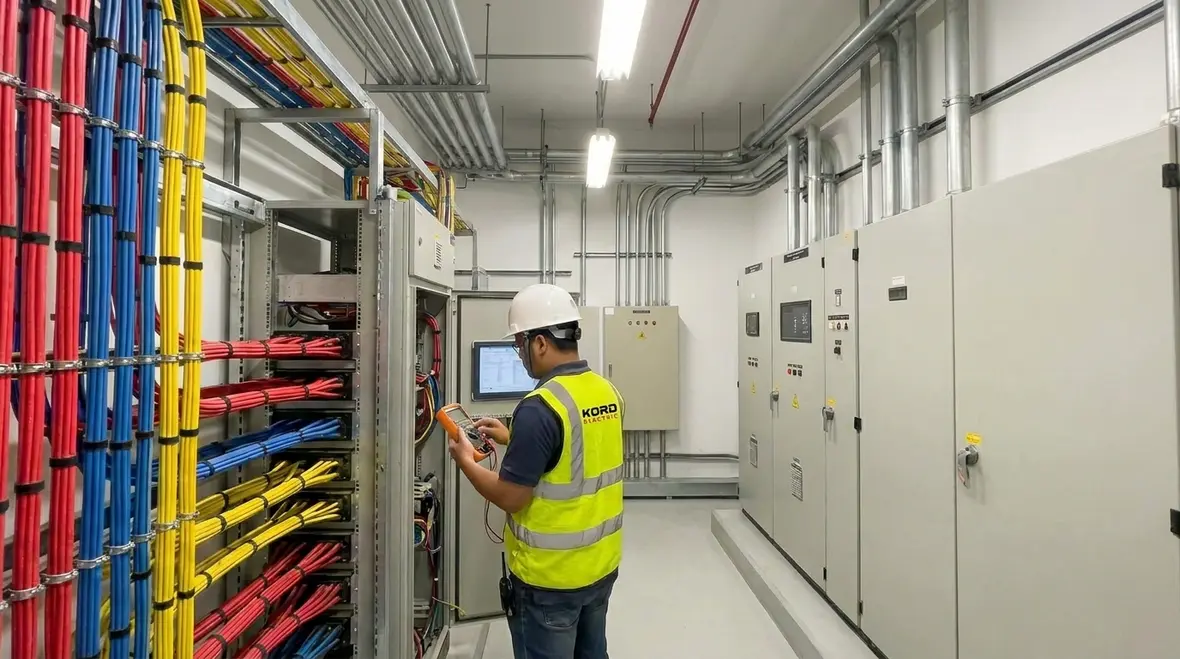
What maintenance of electrical panels and switchgear changes during testing
Testing does not live in isolation. It depends on the health of the electrical infrastructure that feeds the emergency loads. That is why we often connect emergency testing outcomes to panel and switchgear condition.
When we review electrical panels and switchgear, our expert service staff focus on performance and reliability, not just surface checks. In the Kord Electric blog guidance on NFPA 70B electrical panels and switchgear maintenance, we emphasize the kinds of activities that strengthen reliability over time: inspecting and maintaining equipment so the whole system stays ready. During emergency power system testing, any issue in upstream equipment can create a ripple effect. A control fault, a loose connection, or worn components can influence transfer behavior and cause unexpected delays.
So, we use testing results as a window into equipment condition. If a transfer takes longer than expected, for example, we look at what else could be contributing: contact condition in switchgear, protective device behavior, or control wiring integrity. This approach prevents blame games and keeps the investigation grounded in what the system actually does.
Common failure points our technicians look for during functional tests
Even when systems look fine, the failure points tend to repeat across commercial and major property buildings. That is good news, because it means we can be systematic. We focus on areas where problems show up during real operation, especially under load or during transfer.
Here are the issues our technicians often find during emergency testing:
- Transfer switch behavior: delayed operation, inconsistent signals, or contacts that do not switch cleanly
- Control power reliability: control circuits that sag under stress or behave differently than expected
- Generator readiness signals: starts that occur, but do not stabilize as they should
- Battery and charger condition: weak capacity, irregular charge behavior, or alarms that were never acted on
- Load acceptance: emergency loads that do not energize correctly or sequence improperly
- Alarm and monitoring accuracy: faults that do not show up until the moment you need them
And yes, we have seen “everything passes” during informal checks, only to fail when the system operates as designed. That is why we do not rely on wishful thinking. We rely on measured performance, and we explain the findings in a calm, business friendly way so decisions get made faster.
How often should commercial sites test and who should own the schedule
Most commercial and industrial facilities benefit from a testing rhythm that balances code expectations, operational realities, and equipment condition. The exact frequency depends on the system type, the site usage, and the governing requirements, but the core concept stays the same. We should test often enough to prove readiness and catch degradation early.
Just as important, the schedule should not live only in someone’s memory. Facility teams need a clear plan, and ownership should be assigned. At Kord Electric, we help establish that structure. Our technicians coordinate with maintenance leaders and building operations so tests happen when they can be observed, managed, and followed by corrective work if needed.
We also help clients avoid the classic trap: treating testing as a one day event. Instead, testing becomes a program. When results come back, we plan next steps, verify corrections, and adjust procedures if the facility’s load patterns changed.
What documentation should be in place after emergency power system testing
Testing without documentation is like taking notes during a meeting and then throwing them away. The information has value, but only if someone can retrieve it later and understand it.
After testing, our team provides records that support facility oversight and help guide future work. That includes results, measured data where applicable, observed conditions, and any identified concerns. We also highlight recommended corrective actions and priority levels, so teams can address urgent items first.
We make sure the report is readable by the people who actually run the building, not just by engineers who enjoy paperwork like it is a hobby. Facility managers often ask what changed since the last test. With strong documentation, we can answer that clearly and keep trends visible.
In addition, good records help demonstrate that maintenance and testing follow a controlled process. That matters for audits, internal governance, and risk reduction.
FAQ: emergency testing, protocols, and what facilities should expect
Facilities questions about emergency testing usually boil down to the same core concerns: what gets tested, how it is tested, and what happens if something does not perform as expected. Clear answers keep everyone calm and on the same page.
Connect emergency power testing with a broader maintenance strategy
Emergency power system testing works best when it is tied into a larger electrical maintenance strategy. At Kord Electric, that often means pairing generator and transfer switch checks with broader electrical preventive maintenance, panel inspections, and routine documentation across the facility. When emergency testing and ongoing maintenance share the same playbook, facility teams get cleaner data, fewer surprises, and a clearer roadmap for upgrades.
The same disciplined mindset that protects emergency power also supports other reliability projects, from voltage quality reviews to commercial and industrial electrical maintenance plans. When testing reveals a concern, we can align the fix with scheduled maintenance, so you are not paying for duplicate shutdowns or rushed weekend work. Over time, your emergency power system testing program becomes a tool for smarter planning, not just a box to check.
For properties that want emergency preparedness to feel calm instead of chaotic, connecting testing, maintenance, and documentation creates a single, repeatable process. That is where uptime, safety, and budget discipline all pull in the same direction.
Choose a calm, documented approach with Kord Electric
Emergency readiness should feel steady, not like a last minute scramble. Kord Electric helps commercial and industrial facilities build routine emergency power system testing protocols that catch issues early, protect uptime, and keep decision makers informed with clear documentation. Our technicians explain findings in plain business language, then we plan the next steps with you. If you want a dependable testing program for your facility, contact Kord Electric today to review your current approach and strengthen your system readiness.
If you are ready to fold emergency power system testing into a structured maintenance plan that covers generators, transfer switches, panels, and critical loads, explore how our dedicated emergency electrical services and preventive maintenance programs support commercial and industrial facilities that cannot afford downtime.