Industrial Power Quality Problems and Solutions
Industrial facility power quality problems we see on real sites
In commercial and industrial facilities, industrial facility power quality rarely fails all at once. It usually shows up quietly, then it grows teeth. At Kord Electric, our technicians track these issues in real time across major property buildings and manufacturing spaces, where one bad cycle can turn into downtime, heat, and surprise repair bills. And yes, power quality problems can feel like that friend who always “just has one more problem” before leaving. We have to stay calm, measure what matters, and fix what is causing the trouble.
In this guide, third person voices will follow how we approach common power quality issues and troubleshooting, step by step. In the end, facility leaders and site managers will know what to check, what to ask for, and how to verify the fix. After all, the goal is steady power, safer systems, and fewer interruptions.
Why voltage sags, swells, and interruptions happen
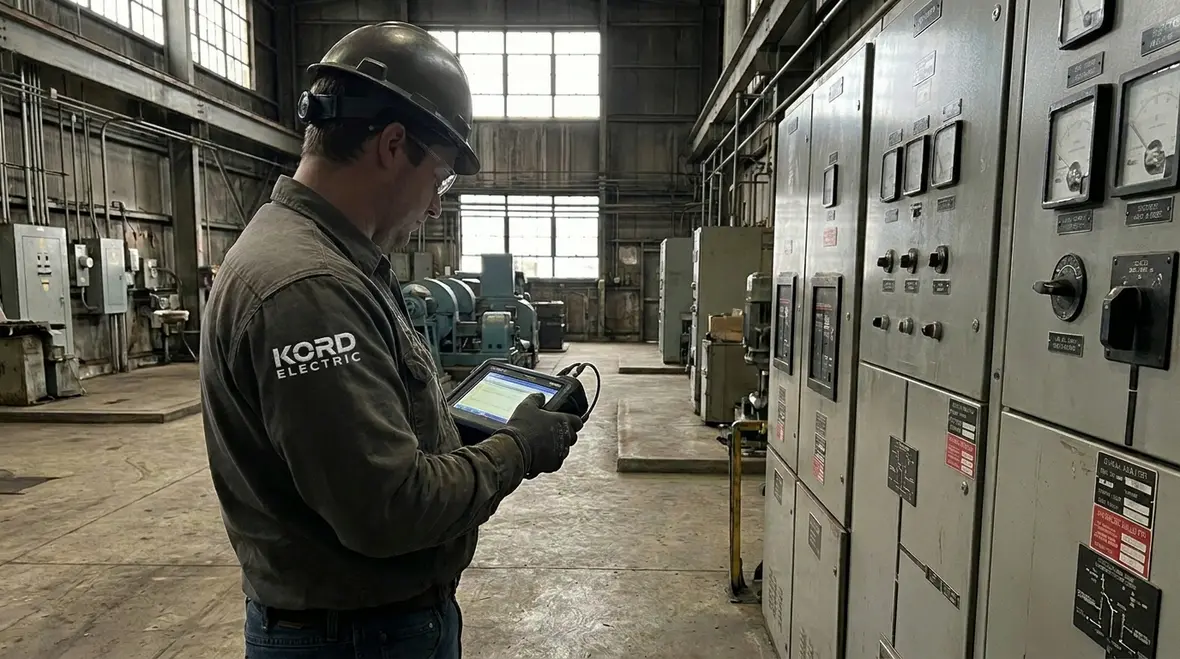
When a plant motor starts, a lighting bank trips, or a transformer shifts load, voltage can dip or rise for a short time. Those events become voltage sag, voltage swell, and interruption. Even if the event lasts only a cycle or two, sensitive drives, PLCs, and controls can misbehave. To troubleshoot, Kord Electric’s expert service staff starts by isolating the time and location of the event, then compares it to load activity schedules.
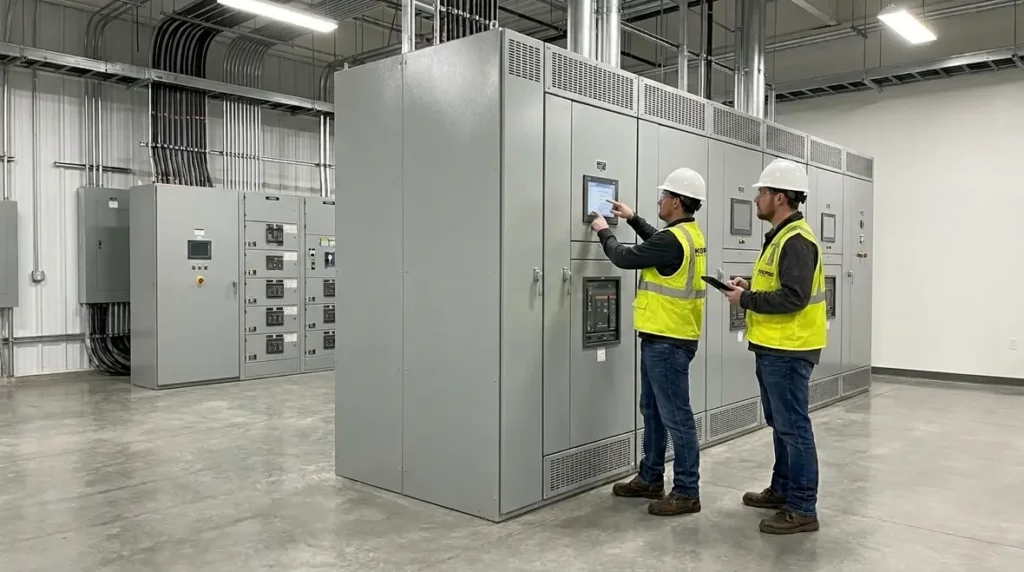
First, we review event logs from switchgear, UPS systems, and power meters. Next, we confirm whether the symptoms match known switching moments. Then we test the feeders that supply the affected equipment. If the facility has multiple buildings, we also verify upstream utility behavior at the service entrance, since the utility side can trigger the instability before it reaches the internal bus.
Common causes include large motor starts, loose terminations, transformer tap issues, overloaded feeders, and intermittent utility conditions. After that, we look at mitigation options, because prevention works better than panic. A properly sized UPS, correct transformer configuration, or targeted capacitor tuning can help reduce repeated voltage disturbance effects.
Harmonics: the quiet force behind overheating and nuisance trips
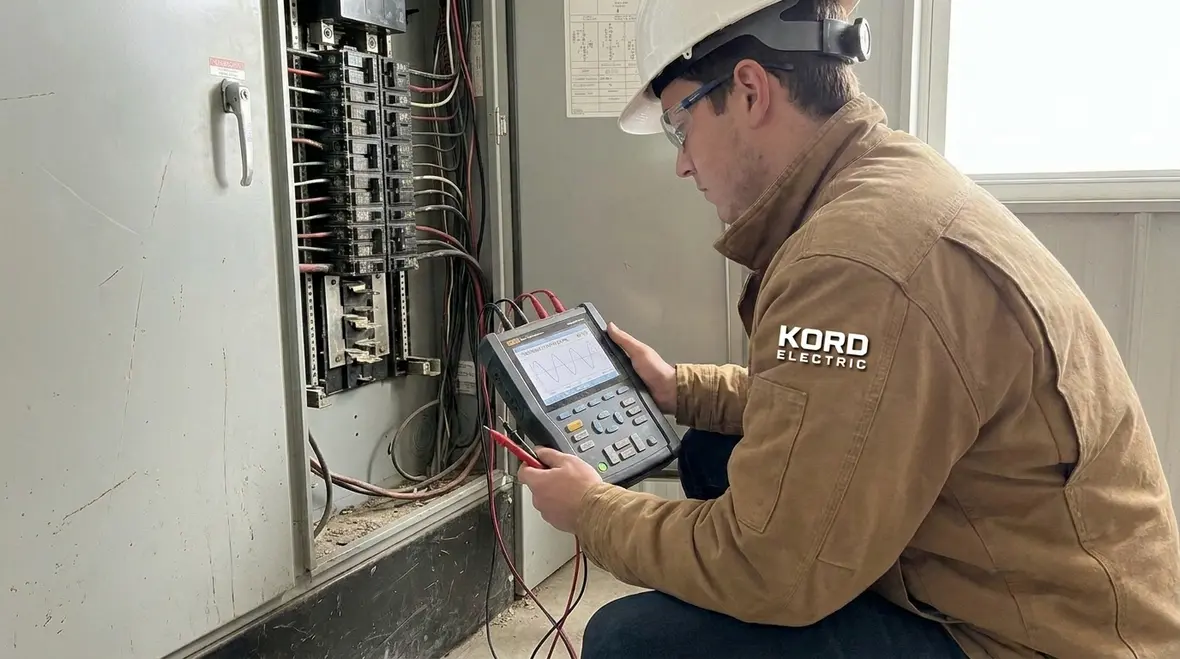
Harmonics show up when non linear loads pull current in ways that do not match the ideal sine wave. Variable frequency drives, LED lighting drivers, uninterruptible power supplies, and some process equipment contribute to harmonic distortion. As distortion rises, motors can run hotter, transformers can hum, and breakers may nuisance trip. The facility ends up paying for “invisible” problems, which is a very expensive magic trick.
To troubleshoot harmonics, we measure total harmonic distortion and look at specific harmonic orders, especially the 5th and 7th. We also evaluate where the harmonics enter the system by tracing current at distribution panels and at main switchgear. Then we compare the meter data to load changes, such as equipment upgrades or new production lines. Often, the problem begins after lighting retrofits, HVAC control changes, or drive replacements.
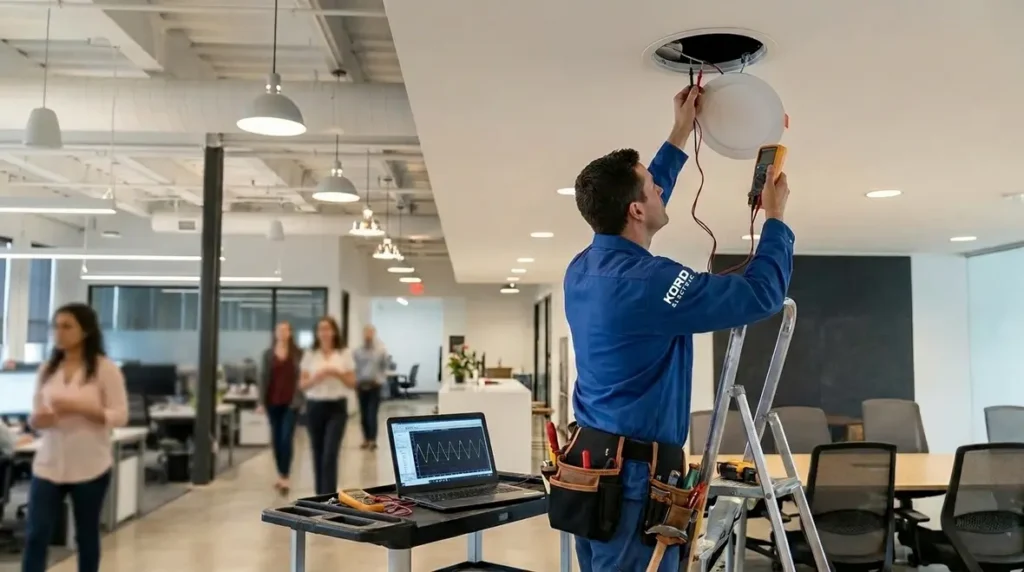
If harmonics affect a commercial lighting upgrade, our team explains the tradeoffs clearly before any work starts. For example, when facilities plan upgrades, they often consider cost and payback, including electrical fit, panel capacity, and how lighting drivers impact power draw. The Kord Electric article on commercial lighting upgrade cost guides teams through those decisions so the facility does not “save” money up front and then spend it later in repairs, overheating, or repeated switching failures.
Once we identify the source, our expert service staff recommends solutions that fit the building, such as properly rated transformers, tuned filters, harmonic aware drives, or load balancing. After installation, we verify results with follow up measurements, because “it should be fine” never passes inspection.
Unbalanced loads and electrical noise that messes with controls
Unbalanced loads happen when single phase loads do not distribute evenly across phases. For three phase systems, that imbalance can overheat neutral conductors, stress transformers, and cause communication errors in sensitive controls. In many facilities, this occurs after tenant work, equipment swaps, or changes in panel assignments. It also shows up when one phase feeds more process loads while others run light, even if total demand looks reasonable.
Electrical noise, on the other hand, includes high frequency interference that can corrupt signals in control wiring, trigger faults, or cause intermittent sensor errors. Industrial automation and modern building control networks can be more sensitive than older systems, and noise problems can look like software issues. Nobody wants that meeting where someone blames a “mystery glitch,” so we test the wiring, grounding, and shielding before we let anyone rewrite code.
To troubleshoot unbalance, we check current per phase at key distribution points, then we identify panels or feeders with skewed loading. We also inspect neutral connections and terminations, because loose or degraded neutrals can worsen imbalance and create hot spots. For noise, we examine grounding and bonding, cable separation from power conductors, and the installation practices for panels and control enclosures.
As a result, Kord Electric’s technicians focus on the building’s real layout. We do not guess. We take measurements, then we correct wiring paths, rebalance circuits, and improve grounding where required. Finally, we document what we found and what changed, so the facility can maintain stable performance long after the initial fix.
Frequency drift, EMI, and the small timing issues that cause big failures
Most facilities think in terms of voltage and current, and that is fair. However, frequency drift and electromagnetic interference can also cause trouble, especially in systems that rely on timing, coordinated controls, or sensitive metering. Frequency errors can happen due to generator behavior, transfer switch issues, or upstream disturbances. EMI can come from nearby variable frequency drives, arc furnaces, or even poorly routed communications cables.
When frequency drift is suspected, we verify frequency at the service entrance and at downstream critical panels. If the facility has a generator, we compare the event logs against transfer sequences. If the problem happens during utility to generator switching, it points to control logic or transfer equipment timing. If it happens while utility stays normal, upstream disturbances may be the trigger.
For EMI, we use careful inspection and targeted testing. We separate signal and power wiring where needed, check filter components, and inspect shield continuity. Then we validate whether the equipment faults match noise sources, like motor drives ramping up or welding loads starting. This is where technicians earn their keep, because the cause often hides in plain sight, like a pop culture villain who only shows up during the “almost done” scene.
After correction, we verify stable operation with test results. Our expert service staff also trains facility personnel on what to watch, so minor changes do not turn into major failures later.
How we troubleshoot power quality fast without creating new problems
Speed matters, but so does precision. Kord Electric troubleshoots commercial and industrial facilities using a structured approach that limits disruption. First, we confirm the symptoms and the scope: what equipment fails, what alarms appear, and when the issues happen. Next, we map the electrical distribution: service entrance, main switchgear, feeders, panels, and end use areas.
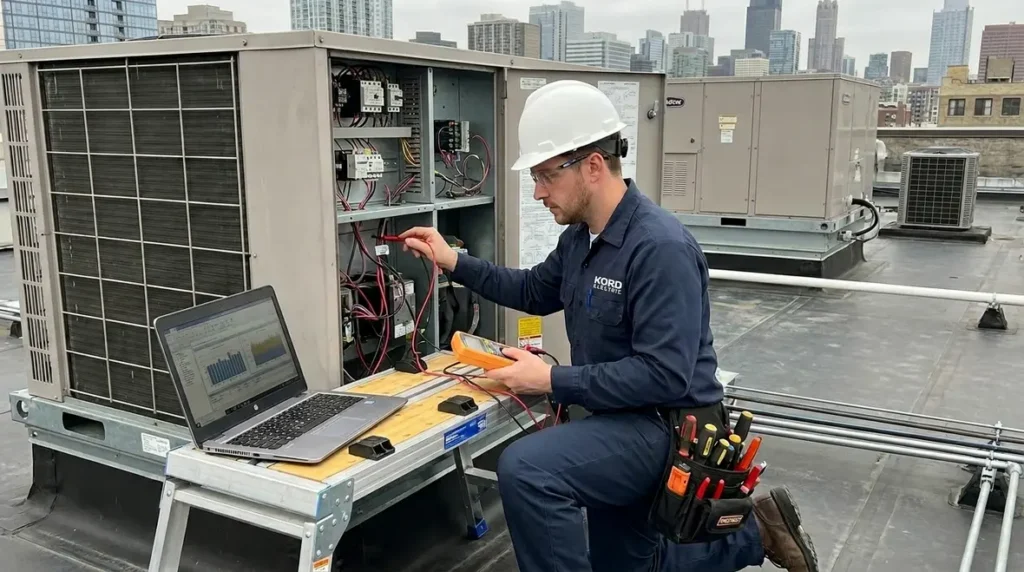
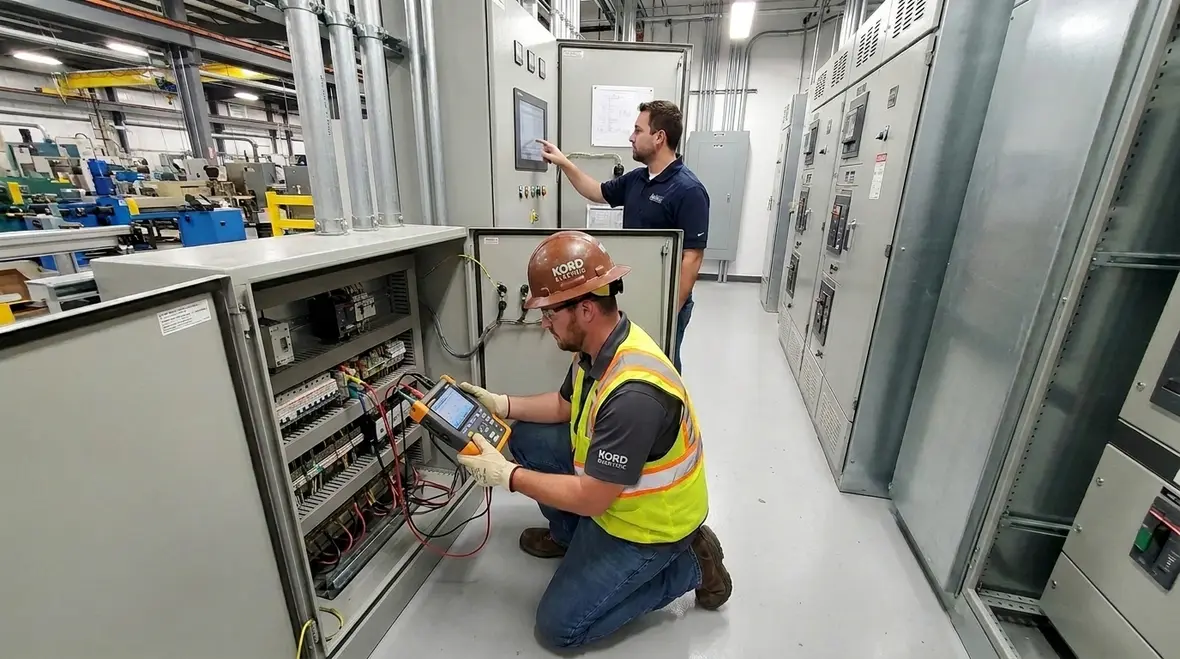
Then we collect data. We use power quality meters and loggers where needed, because the site cannot solve what it cannot see. After that, we test likely causes in a safe sequence, starting with the simplest checks such as connection quality, panel loading, and obvious switching patterns. We do not replace parts just to “see if it helps.” That approach costs money and makes reporting difficult.
In parallel, we coordinate with operations. If a facility runs production schedules, we plan test windows. This keeps downtime low and reduces the chance that troubleshooting itself will upset sensitive processes. Also, we explain findings in plain language, so managers and engineers can make decisions fast.
As a final step, our technicians verify results after the fix. We document before and after readings. Then we provide a clear path for long term stability. In short, we treat power quality like a system, not a single event.
When lighting upgrades and drive changes increase power quality risk
Commercial lighting upgrades and modern drive based systems can improve efficiency, and that is the right direction. Yet upgrades can change how current behaves in the circuit. LED drivers, power supplies, and dimming controls can increase harmonic content if the system design does not account for it. Additionally, some retrofit projects add loads without revisiting panel capacity, feeder ratings, or existing filters.
To handle this responsibly, our expert service staff evaluates the electrical design before the first fixture is mounted. We review existing load profiles, panel schedules, and the impact on distribution. If the facility follows a lighting upgrade plan, we consider how driver characteristics interact with the upstream system. We also help teams estimate costs and risks in a practical way, using guidance like the Kord Electric commercial lighting upgrade cost guide. That type of planning supports better decisions, including what to upgrade first and what to test before the work is fully installed.
Then we test after completion. We verify current draw, harmonic levels, and stability under normal operating conditions. This approach protects both the facility and the upgrade budget. Because nothing ruins a retrofit faster than a new set of nuisance faults, overheated components, or recurring tripping that only shows up at peak production.
How industrial facility power quality usage ties into long term reliability
Industrial facility power quality usage is not just an engineering phrase. It describes how real sites draw, shape, and sometimes distort the power that keeps production moving. Large motors, process heaters, digital controls, and dense lighting systems all share the same electrical backbone. When that backbone sees repeated events like sags, swells, harmonics, or EMI, the damage rarely appears in one place. It shows up as nuisance trips in one area, “mystery” communications errors in another, and heat damage in equipment that never quite runs as cool as it should.
Because of this, power quality work crosses over with broader electrical services. Kord Electric supports commercial and industrial facilities across the region with structured testing, documentation, and corrective work that align with ongoing Los Angeles County electrical services. That connection matters when facilities want not just a one time fix, but a long term plan that covers power quality, capacity, and safety as a single, unified strategy.
FAQ about industrial power quality troubleshooting
Final call: secure stable power with Kord Electric
Power quality problems do not fix themselves, and guesswork costs more than good testing. Kord Electric helps commercial and industrial facilities identify the real cause of voltage events, harmonics, unbalance, and electrical noise, then verify the results after every corrective step. Our technicians explain what they find in clear terms and align the solution with your production needs and building priorities. If you want stable operation and fewer nuisance trips, contact Kord Electric today for a site power quality assessment. To see how this support fits alongside other reliability focused services, explore our dedicated industrial and commercial resources, including regional electrical support and specialized troubleshooting for complex sites.
From voltage fluctuation diagnostics to full facility assessments, the same disciplined approach that improves industrial facility power quality usage also strengthens overall electrical reliability. When leaders coordinate power quality work with broader service offerings, they gain a clearer picture of where to invest next and how to keep systems stable as operations grow.
If your facility is planning upgrades that may affect power quality, or if you are already seeing nuisance trips and unexplained alarms, this is the right moment to bring in a team that focuses on commercial and industrial sites every day. Kord Electric’s technicians pair field measurements with practical recommendations, so corrective work supports both uptime and long term asset performance.
For facilities that want to align power quality improvements with broader capital planning, review how Kord Electric approaches major upgrades such as lighting modernization, distribution changes, and targeted reliability projects. These efforts often share the same circuits, panels, and schedules, so planning them together protects both budgets and production timelines.