Preventative Electrical Maintenance for Manufacturing
Electrical Maintenance for Manufacturing Facilities That Prevent Problems Before They Start
At Kord Electric, we build preventative electrical maintenance schedules for manufacturing facilities that protect production, reduce downtime, and keep safety teams sleeping a little easier. Our electrical maintenance for manufacturing focuses on the real world: bus bars that heat up, breakers that age, panels that collect dust like it pays rent, and motor drives that quietly drift out of spec long before anyone sees a fault. So, we plan work when it helps your operation, not when it disrupts it. Then, our technicians and expert service staff document findings in plain language and explain what we see and why it matters. In the rest of this article, we walk through how we set schedules, what we check, and how we keep plans practical for commercial and industrial plants and major property buildings.
Why preventative schedules matter when your uptime is the product
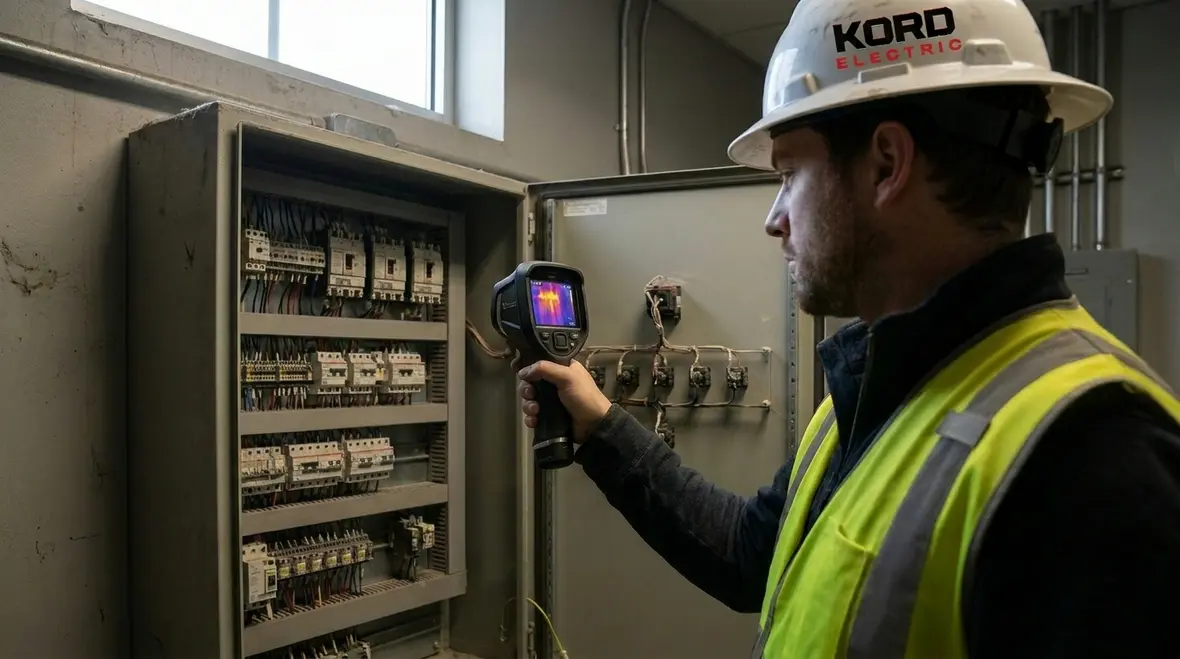
In a manufacturing facility, electricity is rarely “background noise.” It is the bloodstream of the plant. However, many teams wait until trouble shows up as a tripped breaker, a stalled conveyor, or a phase imbalance that turns a normal day into a long one. Instead, we help clients shift to preventative electrical maintenance by creating schedules that catch early warning signs. As a result, you avoid the surprise failures that steal shifts, overtime, and customer trust.
We also plan for the fact that electrical wear is not equal across a facility. For example, a feeder near heavy machinery often tells a different story than one in a clean office wing of the same building. Therefore, we schedule inspections based on load, environment, and risk, not on a generic calendar that sounds good in a meeting and fails in the field.

How we build a maintenance schedule that fits your facility
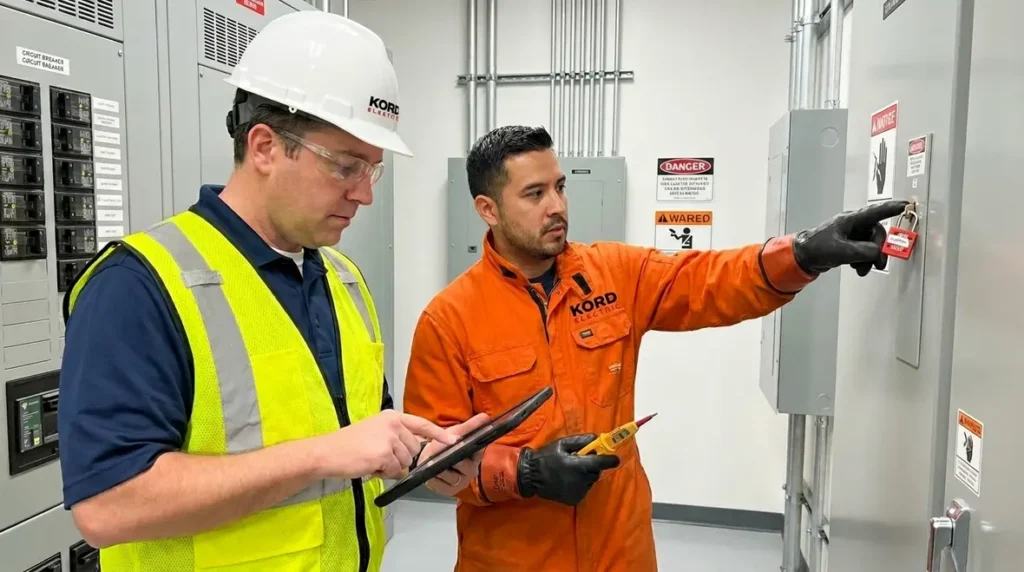
When our expert service staff designs a plan, we start with your site reality and then we translate it into tasks your maintenance team can follow. First, we review one line diagrams, equipment labels, prior service history, and any utility events you experienced. Next, we categorize equipment by criticality, so a main switchboard gets a different level of attention than a minor distribution panel.
Then we set frequencies. Some tasks need to happen monthly because they respond quickly to operating conditions. Others can follow a quarterly or annual rhythm. Still others run on a “condition-based” approach, where results drive the next step. For instance, if thermal imaging shows a hotspot, we do not wait for the annual window. We act sooner, because that hotspot is basically your equipment saying, “Hey, we should talk.”
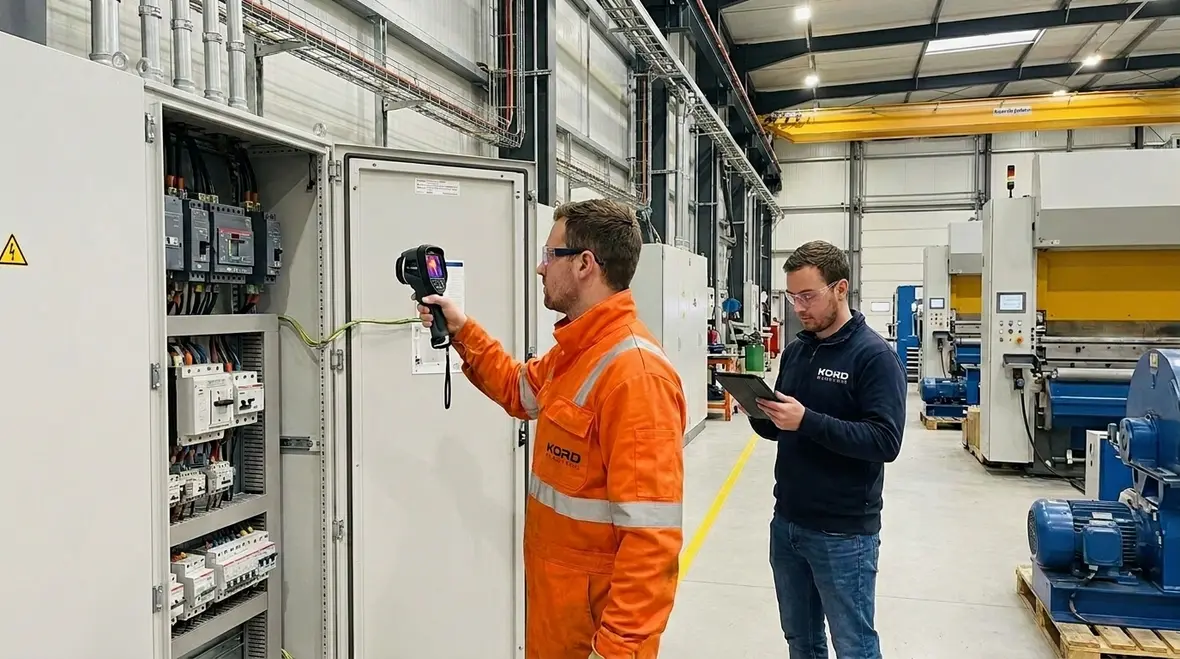
We also coordinate with operations. In manufacturing, the best maintenance schedule respects your production plan. So we align outages and inspections with downtime windows, planned shutdowns, and shift patterns. That way, electrical maintenance for manufacturing supports throughput instead of fighting it.
What we inspect and test on a repeating cycle
Preventative work is only effective when it includes real checks, not just visual tours. At Kord Electric, we build schedules around common failure modes and how they appear over time. Below is the kind of work we plan into cycles for commercial and industrial facilities and major property buildings.
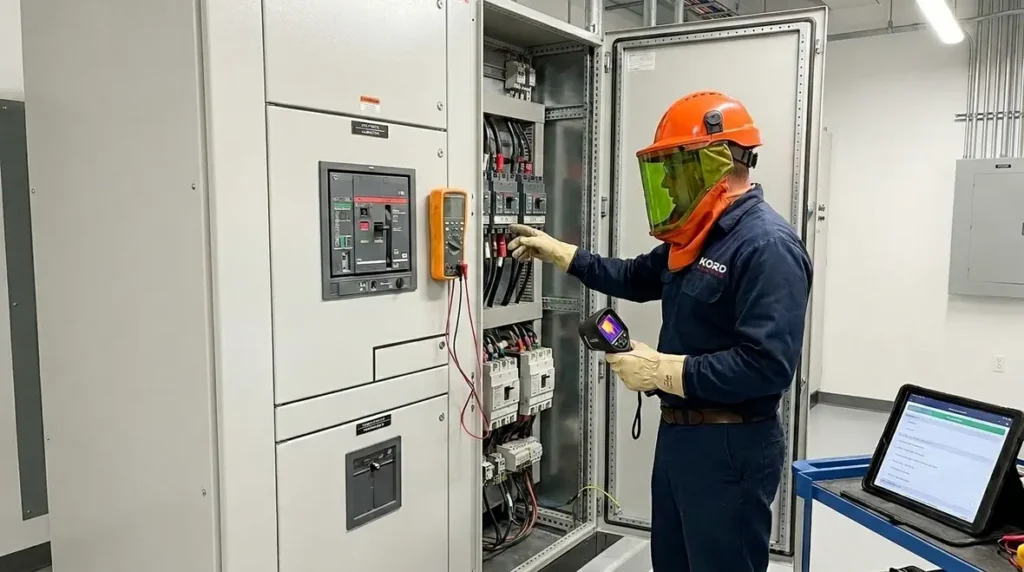
Switchgear and panel inspections where we check torque, alignment, labeling, and signs of heat stress.
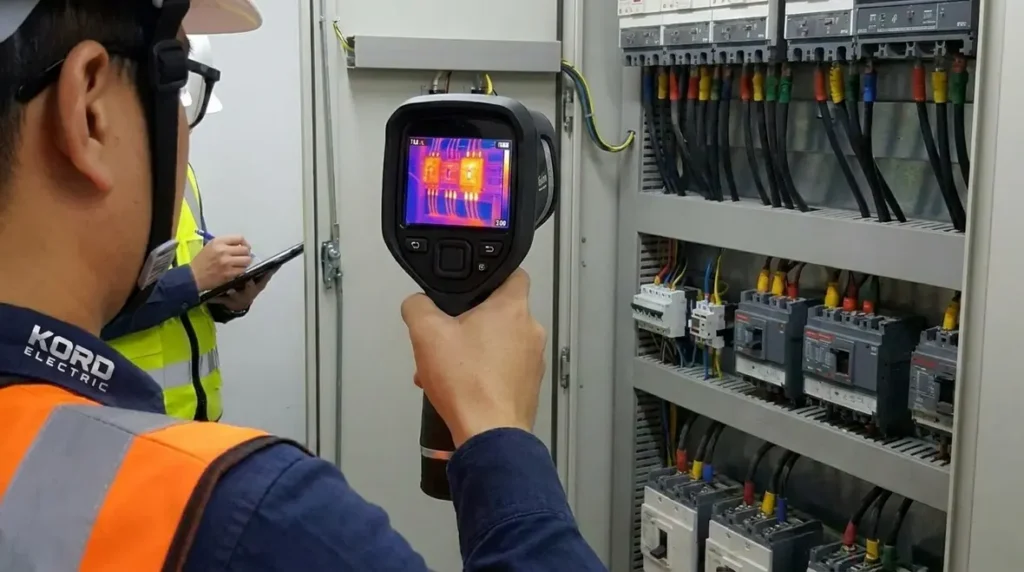
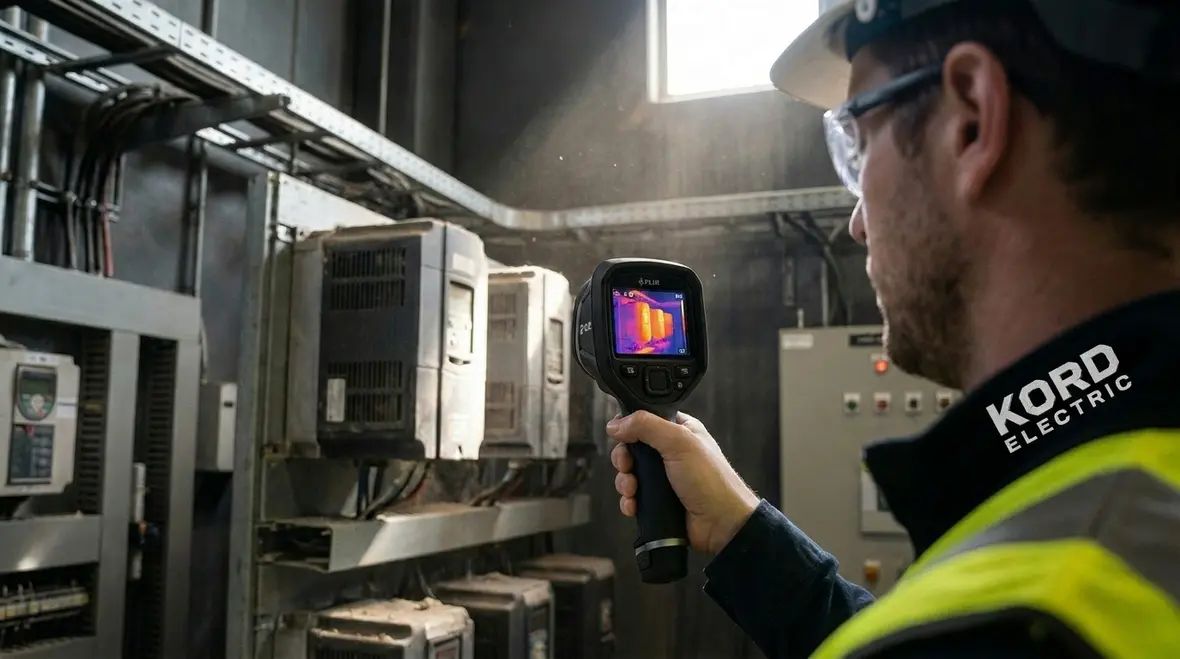
Thermal scanning to identify overheating connections on bus bars, terminations, and splices before they fail.
Breaker and contact maintenance where we verify operation and look for wear patterns.
Motor and drive evaluation focused on consistency, insulation behavior, and protective settings.
Grounding and bonding checks because poor grounding can turn small problems into safety events.
Load testing and power quality monitoring where we track harmonics, voltage imbalance, and transients that degrade equipment.
Visual and cleanliness controls for enclosures, because dust and moisture are the uninvited guests of electrical rooms.
We make sure technicians explain results as they go. For example, if a connection shows elevated temperature, we do not just say “it’s warm.” We show what is likely happening, what could worsen if you ignore it, and what to prioritize. Honestly, the goal is simple: keep your equipment from acting like it is in a bad sitcom where the plot always hinges on a last-minute failure.
Choosing the right intervals for reliability, not guesswork
Most facilities do not need the same exact schedule everywhere. Equipment age, operating hours, and environmental conditions all matter. Therefore, we help clients set intervals that balance safety, cost, and operational impact.
Here is how we commonly think about timing. First, critical gear that serves production often gets more frequent attention because one failure can halt lines. Second, areas with harsh conditions, like dust, vibration, or high humidity, require tighter cycles. Third, if your facility uses variable frequency drives, heavy starting loads, or sensitive process equipment, we plan power quality checks more regularly because those systems react to electrical “drift.”
In addition, we use results to refine schedules. If tests show stable readings, we can keep intervals realistic. If readings trend worse, we adjust. In other words, we do not lock you into a routine that ignores reality. We tune the plan as you learn from the data, and our technicians help you understand that data without turning it into a spreadsheet horror movie.
Recordkeeping and reporting that people actually use
Preventative electrical maintenance for manufacturing only works if someone can act on the findings. So we provide documentation your team can use in the real world, not just for compliance paperwork that never gets opened.
Our reports typically include equipment location, test results, condition notes, and recommended next steps with priorities. As a result, engineering, maintenance leadership, and safety staff can align on what needs attention now and what can wait. Additionally, we recommend follow up tasks such as torque verification, targeted component replacement, or additional testing when conditions suggest deeper investigation.
We also encourage clarity in communication. Our expert service staff explains what caused the problem signs, how quickly they could worsen, and what impact they might have on uptime. When we do our jobs right, your maintenance meetings become calmer. They stop sounding like a mystery novel where every clue arrives after the lights go out.
If you are building long-term strategy around reliability, it also helps to align your preventative plan with broader programs like Kord Electric’s dedicated electrical preventive maintenance services so inspection data, repairs, and upgrades all point in the same direction.
Dual view: schedule planning and field execution in one workflow
Sometimes teams struggle because planning and execution live in different worlds. So we designed our process to connect the two, and we do it with one goal: reduce risk while protecting output.
|
Schedule planning
|
Field execution
|
For manufacturing environments where electrical maintenance for manufacturing lives alongside broader commercial and industrial needs, we often connect these workflows with structured programs like Kord Electric’s commercial and industrial electrical maintenance plans, so your preventative strategy scales cleanly across plants, warehouses, and major property buildings.
FAQ about preventative electrical maintenance
Take the next step with Kord Electric
If your facility depends on stable power, you deserve a preventative program built for real operating conditions. Kord Electric will help you plan preventative electrical maintenance schedules for manufacturing facilities, support commercial and industrial buildings, and protect major property systems with clear testing, thorough documentation, and expert technician explanations. Do not wait for the next nuisance shutdown. Contact us today, and we will review your electrical setup, recommend a practical schedule, and start reducing risk where it counts most.
For organizations across the region, especially within Los Angeles County electrical services coverage areas, Kord Electric can combine electrical maintenance for manufacturing with troubleshooting support, electrical maintenance inspection services, and long-term planning so your plants, warehouses, and major properties stay quietly reliable.
If you are already experiencing unstable power or repeat failures, pairing your preventative schedule with focused support like Kord Electric’s guidance on voltage fluctuations in commercial and industrial facilities helps protect sensitive equipment while your broader electrical maintenance strategy matures.