
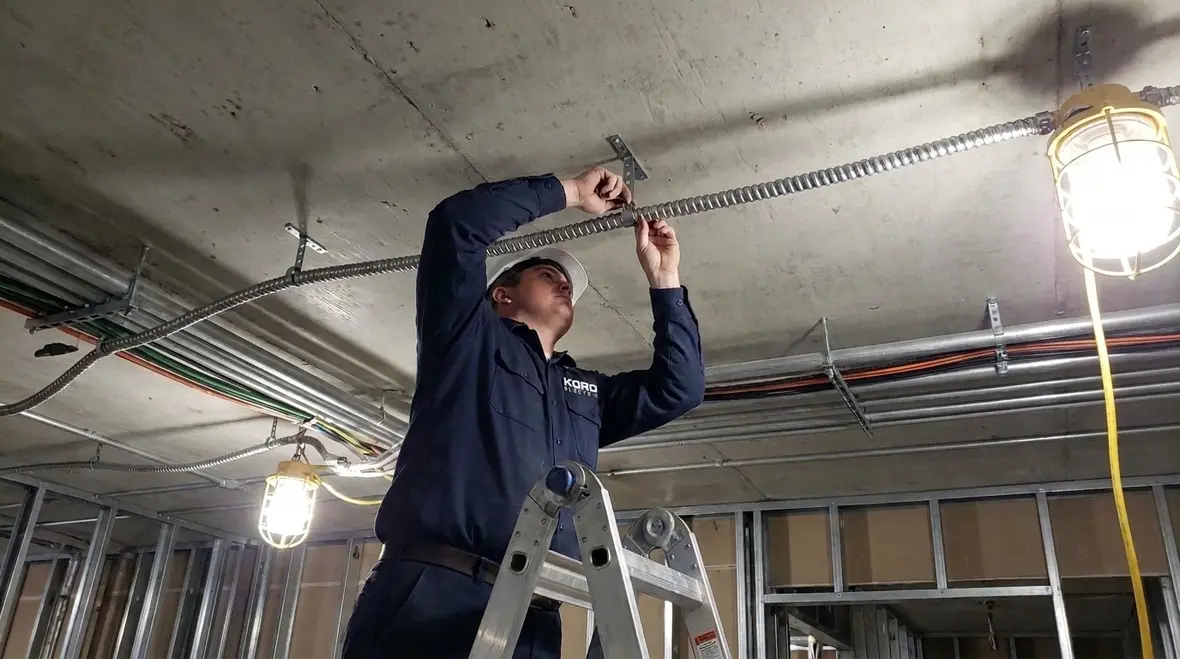
NEC MC Cable Securing Supporting Under NFPA 70 Section 322.30
NEC MC Cable Securing and Support Starts With NFPA 70, Section 322.30
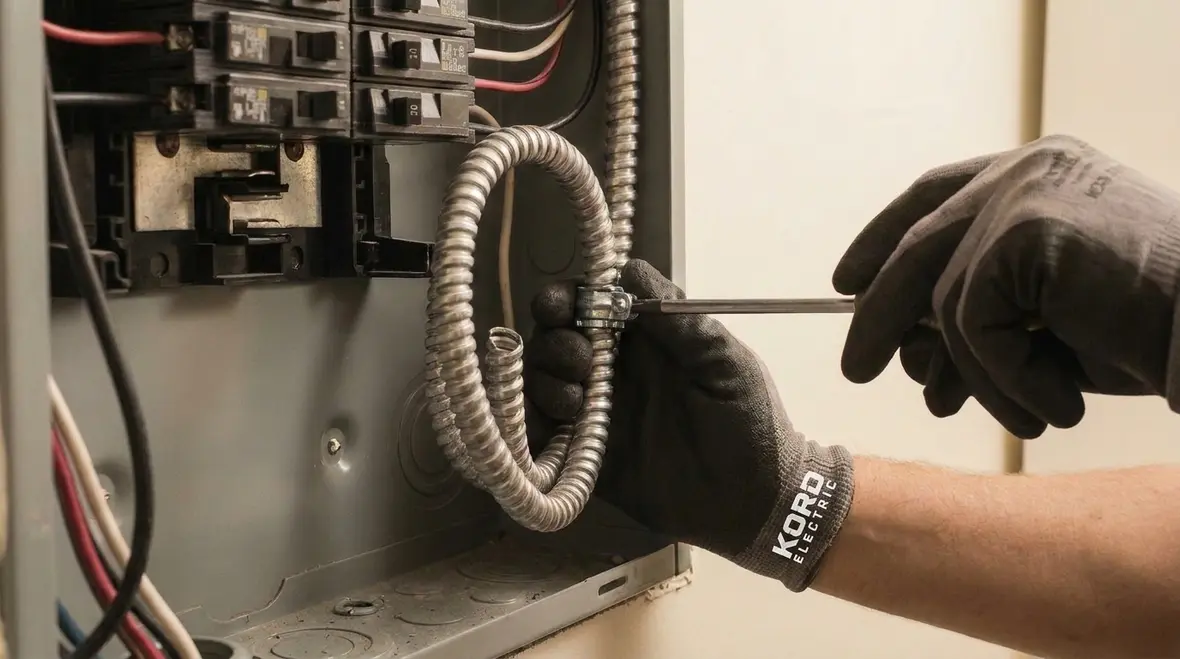
In commercial and industrial facilities, we cannot treat cable like it is furniture that can “just sit there.” At Kord Electric, we secure and support NEC MC cable securing supporting with the care it deserves, because NFPA 70 Section 322.30 sets the expectations for how Multi conductor cable, also called MC cable, stays protected and properly routed. In the first place, that matters for safety. Next, it helps crews avoid future failures caused by stress, heat, or vibration. And yes, even when someone swears the cable is “fine,” our expert service staff explains what is actually happening behind the wall, where the fun stuff lives.
We also connect this day-to-day securing and support work to broader NFPA 70 guidance. Many of our commercial and industrial clients read our resource on Understanding NFPA 70: The National Electrical Code Explained for 2026 so they can see how Section 322.30 fits into the rest of the NEC picture and why support hardware, routing choices, and workmanship all have to cooperate instead of working at cross purposes.
What Section 322.30 Requires for Supporting MC Cable in Real Buildings
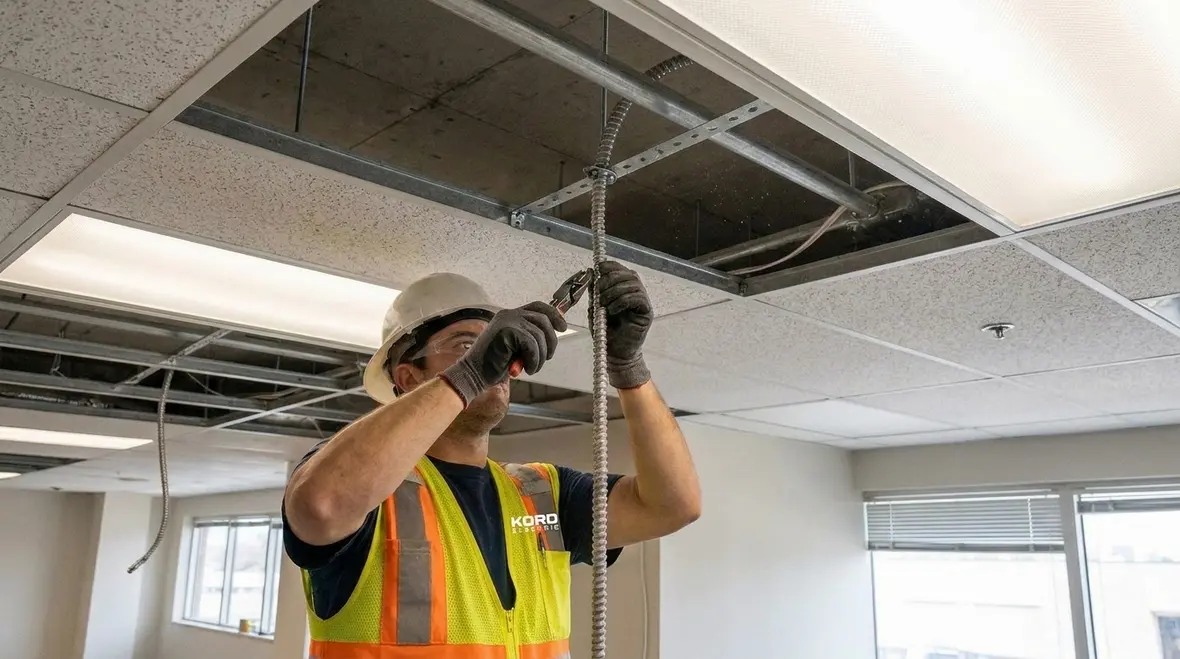
Third party inspectors, and even our own technicians during field checks, tend to look for the same basic evidence. First, the cable must be installed so it does not place undue strain on terminations. Second, it must remain supported in a way that helps prevent physical damage as conditions change. Section 322.30 focuses on how MC cable gets secured and supported along its run. Therefore, we plan support based on the route, the environment, and the type of load the cable experiences.
When facilities face vibration, people moving equipment, or even door slams that shake the ceiling, the cable sees forces. Over time, those forces can fatigue terminations and degrade insulation. Consequently, we use support methods that keep the cable stable, reduce stress at bends, and maintain spacing so the cable stays aligned with the routing plan.
We also remind facility managers that “code compliant” is not the same as “installed like a professional.” Code compliance often means documentation plus field reality. Our teams verify installation practices match the intent of the NEC, not just the letter written on a page. When clients walk their sites with us, we connect specific support choices back to Section 322.30 so they can see how hardware, spacing, and routing all support the same safety goal.
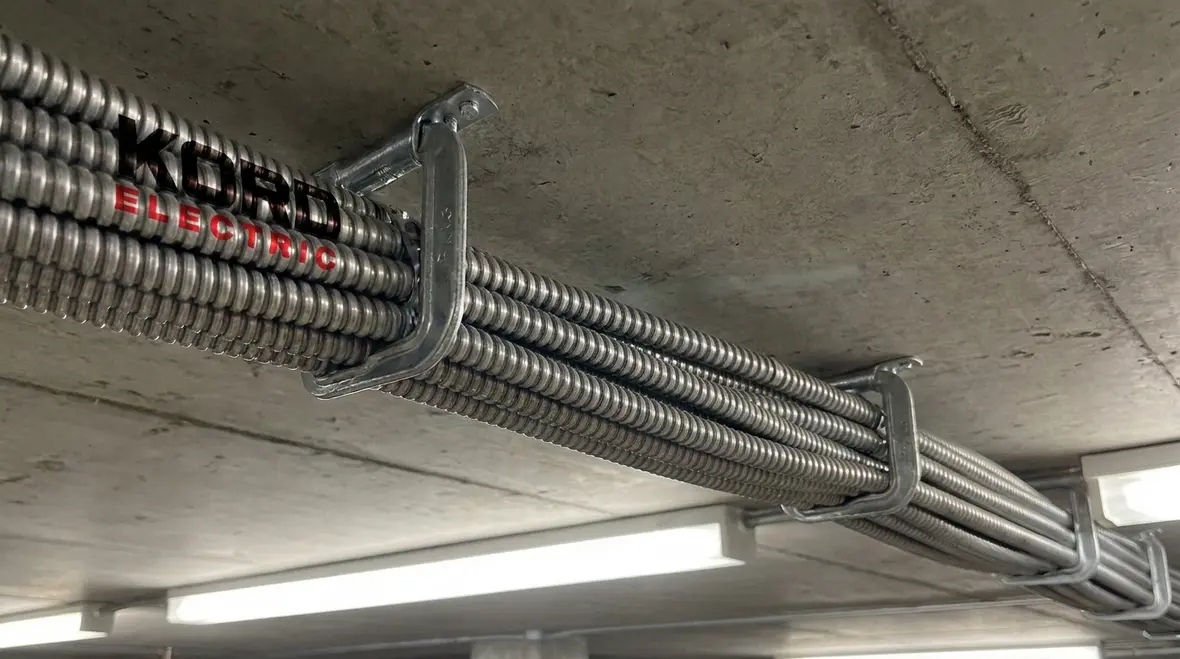
How We Plan Support Spacing and Route Control for Commercial Runs
In busy commercial and industrial spaces, routing rarely stays simple. Equipment gets moved. Renovations happen. Raceway paths change. Even so, the support plan needs to stay consistent with the NEC requirements for securing and supporting MC cable.
To keep runs safe and stable, we build the plan before a single cable gets pulled. Then we validate it during installation. This approach helps us avoid common problems such as excessive cable sag, tight bends that stress the jacket, and long unsupported spans that increase the chance of damage. Moreover, we account for transition points like where the cable leaves a tray, enters a wall, or changes direction.
Our technicians then select support locations that control movement. We use anchors, straps, brackets, and appropriate fittings based on the system. As a result, the cable does not “wave” during normal building activity. Think of it like steady hands at a magic show. If the cable shifts, the trick fails, and the next thing you know everyone is staring at a breaker that refuses to behave.
When runs get longer or cross multiple zones in a major property building, we also coordinate MC cable routing with the broader NEC wiring strategy from our NEC wiring planning fundamentals guide. That way, the securing and supporting layout lines up with conductor sizing, raceway choices, and labeling instead of acting like a separate “mystery layer” above the rest of the design.
Securing Practices That Reduce Stress at Terminations and Bends
Section 322.30 does not only care about keeping cable off the floor. It also aims to prevent harmful forces where the cable meets devices and equipment. For example, terminations and connections need stability. If the cable can move, the connection takes the hit instead.
At Kord Electric, our expert service staff explains this in plain terms to our clients. When cable moves, the connector and conductor interface can experience micro movement. Over time, that can raise heat, loosen connections, and create intermittent faults. Therefore, we secure the cable so it remains still near enclosures, panels, and devices.
We also manage bends carefully. Tight bends can stress the jacket and internal conductors. Likewise, poorly supported bends can become stress points. Hence, we support so that cable changes direction smoothly and stays under controlled tension.
When our crews review existing installations, we often find that the problem is not the cable itself but how the last team handled bend radius, clamp placement, or transition fittings. We revisit those details and bring them back in line with both the manufacturer’s instructions and the NEC intent, so the termination does not have to act like a shock absorber every time someone bumps a panel door.
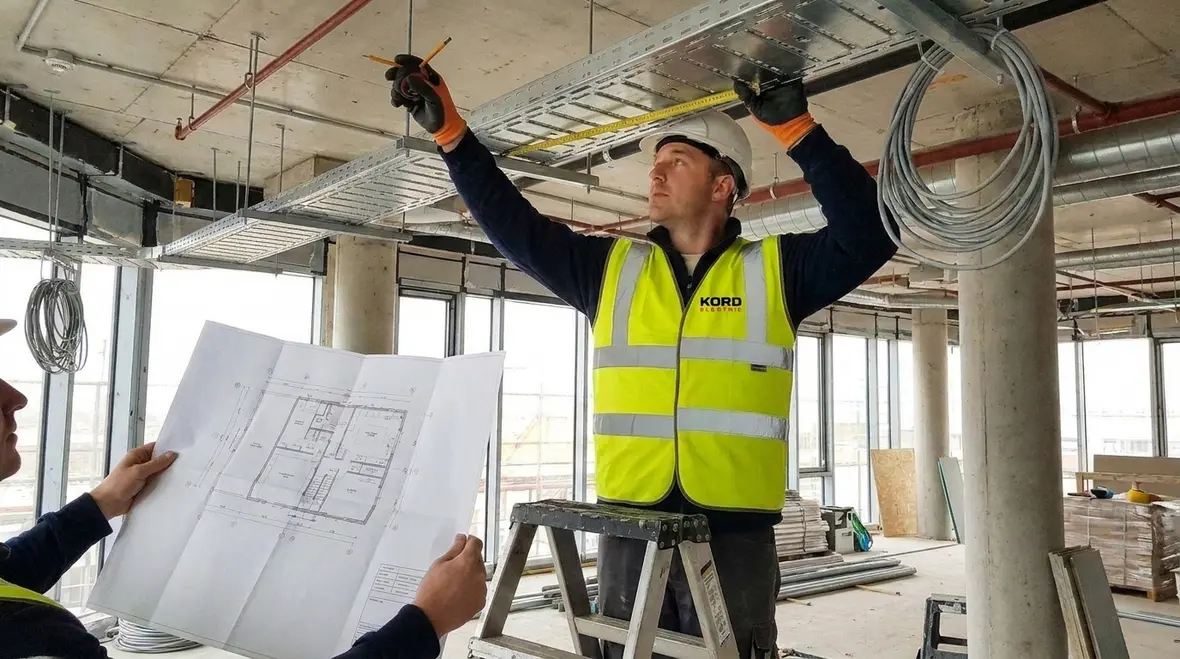
When MC Cable Meets Trays, Conduit, and Equipment Interfaces
In a major property building, MC cable often travels through a mix of spaces: cable trays, suspended ceilings, risers, and equipment rooms. Each area adds different risks. A tray section may face vibration. A ceiling void may trap heat. Equipment rooms can run hot and include frequent maintenance access.
So we treat the whole system as one connected path. When MC cable moves from tray to an enclosure, we secure it so the transition does not create strain. When it enters a panel or junction box, we ensure the cable remains aligned and properly supported. We also coordinate with other trades to keep supports intact during construction changes.
Additionally, we follow manufacturer installation guidance where it supports NEC compliance. That combination matters. For instance, a cable might allow certain bend characteristics but still need additional support under real job conditions. We do not guess. We verify.
And yes, we have seen what happens when someone “helps” by rerouting cable without updating the support layout. The cable becomes the ultimate scapegoat, like an extra in a movie who gets blamed for the plot twist. When we clean up those situations, we realign tray exits, connectors, and clamps so Section 322.30 support expectations are met at every interface instead of just where it looks neat from the floor.
Environmental Conditions and Why Support Needs to Match the Site
Commercial and industrial facilities do not all behave the same. Some areas experience moisture. Some have corrosive atmospheres. Some have constant vibration from HVAC equipment or rotating machinery. As a result, the securing and support plan cannot stay generic.
We consider the environment along the cable route. Then we adjust support choices so the cable remains protected. For example, supports must maintain cable position without creating abrasion against the jacket. Likewise, supports must not loosen over time due to temperature changes or building settling.
Our technicians also think about future service. If the facility expects frequent access, the cable route must tolerate planned maintenance activities. Therefore, we plan supports so maintenance staff can work without damaging cable or moving it out of position.
On projects where we review NEC application scope and wiring approaches with facility managers, we often connect these environmental choices back to broader planning tools like our 2026 NEC application requirements guide and NFPA 70 scope overview. That way, teams see how MC cable support fits into a bigger system that also covers grounding, overcurrent protection, and service clearances instead of treating it as a one-off decision in a noisy corner of the plant.
Dual Columns: What Our Technicians Check on Every MC Cable Support Job
| Field Check | Why It Matters |
| Support locations along the run | Helps prevent sag, strain, and physical damage over time |
| Stability near boxes, panels, and equipment | Reduces stress at terminations and helps prevent intermittent faults |
| Routing transitions and direction changes | Controls movement at bends where cable experiences added forces |
| Support compatibility with the environment | Maintains protection in real commercial and industrial conditions |
| Documentation and installation verification | Supports inspections and confirms NEC intent on the job site |
We pair these checks with broader NEC reviews during commissioning walkdowns so teams can spot patterns. If MC cable support is weak, we often discover other issues nearby, such as mislabeled panels or undersized feeders, which we then resolve using the same practical, code-driven approach we describe in our section-by-section NFPA 70 resources.
FAQ on NFPA 70 Section 322.30 and MC Cable Support
Conclusion: Bring Us In Early for Safer, Cleaner Cable Installations
When a facility wants reliable power and smooth inspections, cable support cannot be an afterthought. We at Kord Electric plan NEC MC cable securing supporting around your real building conditions, then our technicians verify the details that inspectors and maintenance teams will care about later. If you manage a commercial or industrial property and you want an installation plan that holds up under pressure, reach out to us. We will review your route, support approach, and compliance needs, and we will do it with calm confidence.
For owners and managers across the region, our Los Angeles County commercial and industrial electrical services team coordinates MC cable support work with panel upgrades, feeder sizing, and grounding improvements so your project does not have to juggle multiple contractors just to keep one run of cable in line with NFPA 70. One call sets up a field-ready plan, an NEC-aligned installation, and documentation that makes the next inspection feel predictable instead of stressful.


