
NEC Minimum Conductor Sizes Code and Section 110.6
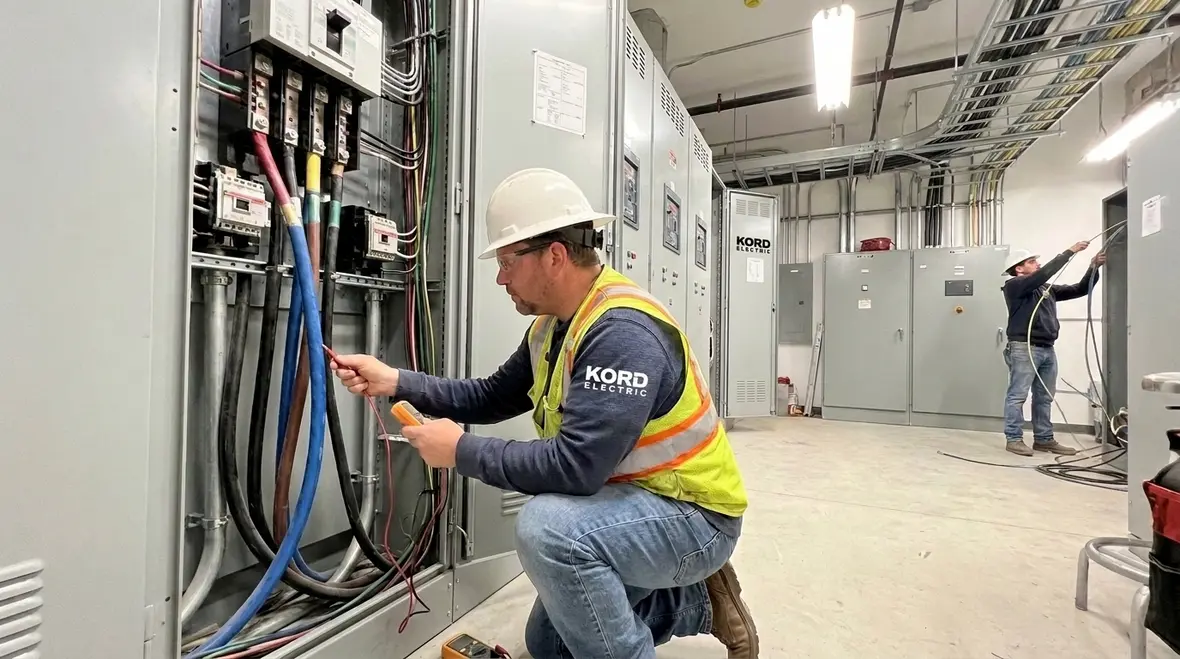
In commercial and industrial facilities, electrical safety does not play games, and neither do the rules. In many installs, NFPA 70 Section 110.6 becomes the quiet gatekeeper for how small conductors can be before someone gets hurt. Our NEC minimum conductor sizes code approach starts with the basics: when an installation requires a conductor size for protection, that size cannot be smaller than the minimum values allowed by the NEC. From there, we help our clients plan conductors that match the job, not guesswork that looks “fine” until load calculations and inspections show up. And yes, if someone tells you “we will just use whatever fits,” our technicians have a gentle way of explaining why that is like using duct tape to hold up a bridge. Kord Electric sets the standard for major property buildings, because compliance and reliability are the real luxury.
Why NFPA 70 Section 110.6 matters for commercial power
NFPA 70 Section 110.6 deals with minimum conductor size rules, and it matters because the NEC connects conductor size to safe operation. In commercial and industrial settings, people assume more power means more complexity, and they are right. However, the safety logic stays consistent: conductors need to be able to handle the current, the installation conditions, and the required protection. Therefore, when conductors are undersized, heat can build, insulation can age faster, and performance can drop under real-world loads.
Now, you might think “we already sized breakers and wire,” and that is a fair thought. Yet we still see mistakes when teams reuse older layouts, swap equipment, or try to simplify upgrades. Consequently, our expert service staff walks clients through the reasoning so they understand the difference between “it passes the first test” and “it stays safe for years.”
How the NEC minimum conductor sizes code connects to protection
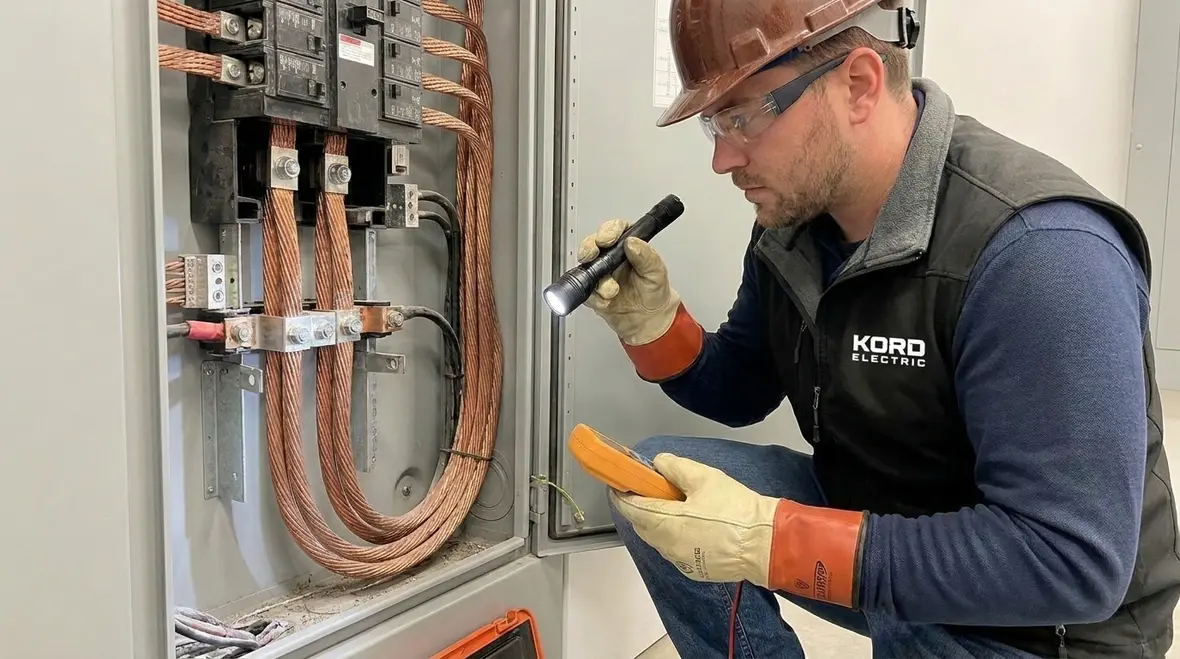
To understand the NEC minimum conductor sizes code in practice, we look at how equipment protection and conductor limits work together. First, the electrical system relies on protective devices and wiring to prevent damage during overloads and fault conditions. Second, the NEC sets minimum conductor size rules so conductors maintain safe temperature rise and mechanical integrity under expected conditions.
Also, the conductor selection process rarely happens in isolation. It involves equipment nameplate data, operating duty, ambient temperature, number of current carrying conductors in a raceway, and how the cable is installed. Then, once conditions are defined, the NEC table based approach guides what minimum conductor size should be used. When facilities ignore the table logic, they might end up with conductors that fail compliance even though the installation works on day one.
Our technicians handle this step with calm precision. They explain each adjustment factor in plain language, and they document the “why” so facility managers and contractors can follow the logic later. Because in a commercial environment, the real work is not just installing. It is proving the install holds up to inspection and future changes.
What Kord Electric checks before a conductor decision gets locked
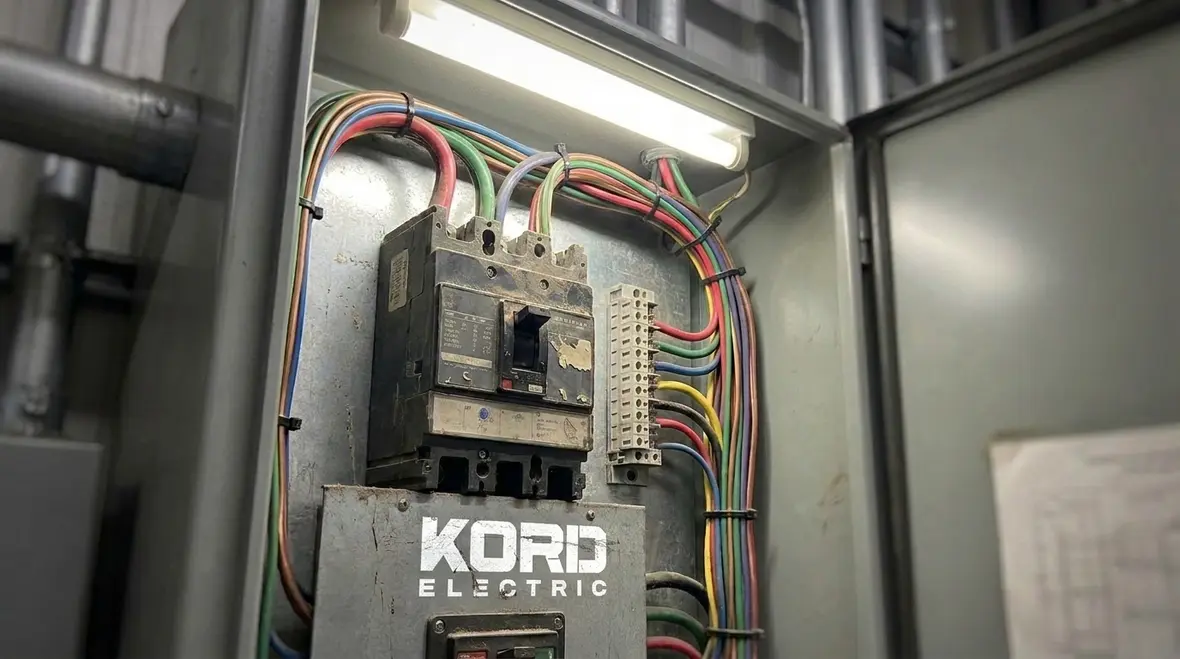
We keep the process steady, so the end result fits the code and the site. During planning and during field verification, our team checks the key inputs that influence minimum conductor size rules. Those inputs often include service type, feeder paths, equipment connected loads, and the physical installation method.
Then we verify how the conductors will be grouped. For example, when multiple current carrying conductors share the same raceway or cable assembly, heat dissipation changes. As a result, the conductor can need a larger size even if the breaker rating seems to match the load. Similarly, ambient temperature in equipment rooms or mechanical spaces can push conductors toward limits faster than teams expect.
Next, we confirm that the conductors match the protection scheme. If protective devices and conductors do not align with the intended fault protection, the minimum sizing logic becomes meaningless. Our experts treat this like a chain: every link must be solid. And if one link is weak, we fix it before it becomes a maintenance headache or, worse, a safety issue.
To keep things engaging, we sometimes tell clients this: the NEC is not trying to ruin your day. It is trying to save your electricians from doing troubleshooting at 2 a.m. That is not a fun hobby, unless someone is training for a superhero origin story.
Common commercial mistakes we see on minimum conductor sizes
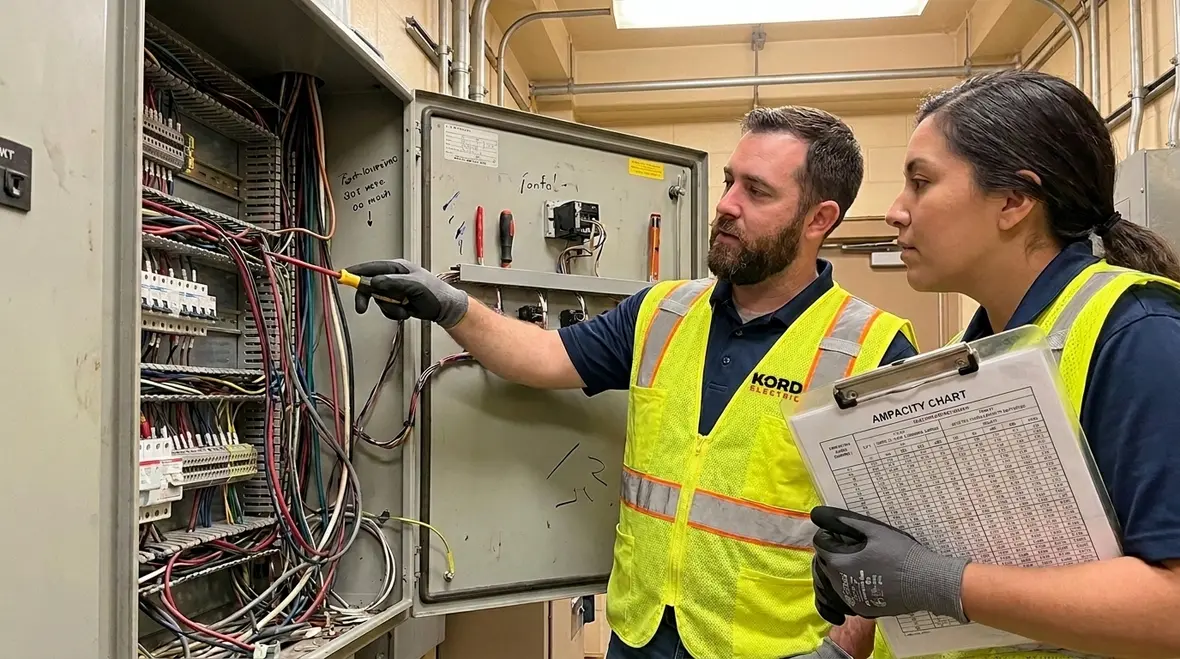
Even well run projects can stumble. First, teams reuse older wire sizes during remodels or tenant fit outs without re checking load calculations and installation conditions. Next, they substitute cable types or installation methods to reduce cost, then forget that derating and adjustment can change what the conductor must be. Also, some teams focus on ampacity alone and do not fully account for minimum conductor sizing requirements tied to the rest of the code rules.
Another frequent issue involves transitions between systems. Facilities upgrade equipment, add motors, or change HVAC control panels, and they assume the feeder and branch conductor sizes can stay the same. However, equipment updates often change load characteristics and operational duty. Therefore, the minimum conductor size rules may shift even when the “overall” circuit looks similar.
Finally, documentation gaps cause confusion during inspections. Inspectors do not only look at the installed wire. They also look for a clear basis for the design. When design documents lack conductor size logic, facilities lose time and credibility. Our staff helps by keeping clean records and by explaining the basis directly to the people who manage the building.

Designing for real inspections and long service life
Inspections do not reward luck. They reward traceable logic. That is why we advise facility teams to build conductor decisions on the NEC minimum conductor sizes code framework early, not late. When planning happens early, the project avoids redesign and change orders when a reviewer flags a minimum conductor size issue.
In addition, we consider long term service life. Proper conductor sizing supports temperature stability, which reduces insulation stress and helps equipment maintain performance over time. Meanwhile, stable conductor sizing can reduce nuisance trips and voltage drop problems that show up later when tenants add loads or expand operations.
Our approach also supports coordination across building systems. We work with teams managing fire pumps, life safety systems, and power distribution. For facilities that coordinate fire and emergency loads, conductors must meet strict requirements, and minimum conductor size rules must be consistent across the entire path. In that world, small decisions compound quickly, like stacking streaming subscriptions you forget to cancel. Eventually, you pay for the convenience.
For readers who want broader context on the NEC, we also point them to resources from Kord Fire, including its NEC overviews at https://kordfire.com/nfpa-70-all-about-the-national-electrical-code-nec/ and the Kord Fire site at https://kordfire.com.au/. For fire pump focused guidance, https://firepumps.org/ can help teams understand how the electrical design supports pump reliability. We then apply those concepts to the minimum conductor sizing rules in the actual installation.
If you are also mapping broader NEC strategy for upcoming work, Kord Electric’s guide Understanding NFPA 70: The National Electrical Code Explained for 2026 is a helpful companion read while you plan conductor sizing and protection.
Dual column example: selecting conductors with minimum rules
Below is a simple planning style that our technicians use for commercial and industrial projects. It shows how minimum conductor size rules connect to the rest of the decision process. This is not a substitute for a full design, and your specific design still must follow the NEC text and the project documents.
| Step | What we confirm |
|
1 Define circuit duty |
We verify load type, duty cycle, and equipment ratings so the minimum conductor size rules start from real data. |
|
2 Map installation conditions |
We check conduit type, cable assembly, ambient temperature, and conductor grouping for correct adjustment. |
|
3 Apply NEC minimum limits |
We use the required NEC minimum conductor sizes code logic tied to the protection and installation method. |
|
4 Verify protection alignment |
We confirm that breaker and protection settings match the chosen conductor and the expected fault behavior. |
|
5 Document for inspection |
We provide clear rationale so the reviewer sees a consistent path from design intent to installed conductors. |
NFPA 70 Section 110.6 and common upgrade scenarios
When a commercial and industrial facility upgrades, it often does so in phases. Therefore, the minimum conductor size rules must survive the transition. If a building replaces HVAC equipment, updates lighting, or adds distribution for new process loads, conductor sizing must reflect the updated equipment and the current installation conditions. Then, when teams keep existing feeders “because they look good,” they may overlook how the minimum conductor size rules interact with the overall protection scheme.
Another scenario involves tenant changes in major property buildings. Tenants rarely add loads that match the original design. Meanwhile, the facility needs consistency across shared systems. Our expert service staff helps coordinate with facility leadership and contractors so conductor selections stay aligned with safety requirements, not just with what can be pulled easily through the existing pathways.
And yes, we occasionally hear: “We will change the equipment now and handle conductors later.” That plan often turns into a late project scramble. Our team prefers to get conductor minimums right up front, so the upgrade moves forward smoothly.
When upgrades extend into larger infrastructure changes, facilities often pair conductor reviews with broader design planning. Articles like Kord Electric’s Building Electrical System Design: Planning Power for Commercial Facilities show how conductor sizing, protection, and distribution planning work together for long term reliability.
FAQ: Minimum conductor size and Section 110.6
Conclusion: talk to Kord Electric before the conductors get locked
Electrical upgrades move fast, but compliance has a way of slowing projects down when conductor sizing decisions are made late. At Kord Electric, we help commercial and industrial facilities apply NEC minimum conductor sizes code logic correctly from the start. Our technicians explain the reasoning in plain language, document the basis for inspection, and coordinate with major property building requirements. If you want fewer surprises during review and smoother system performance afterward, reach out to Kord Electric for an expert review of your minimum conductor sizing approach.
For facilities across the region that want full support from design through installation, Kord Electric also delivers field proven crews through its dedicated Los Angeles County electrical services, helping projects keep conductor decisions, protection schemes, and inspections aligned from the first drawing to final sign off.


